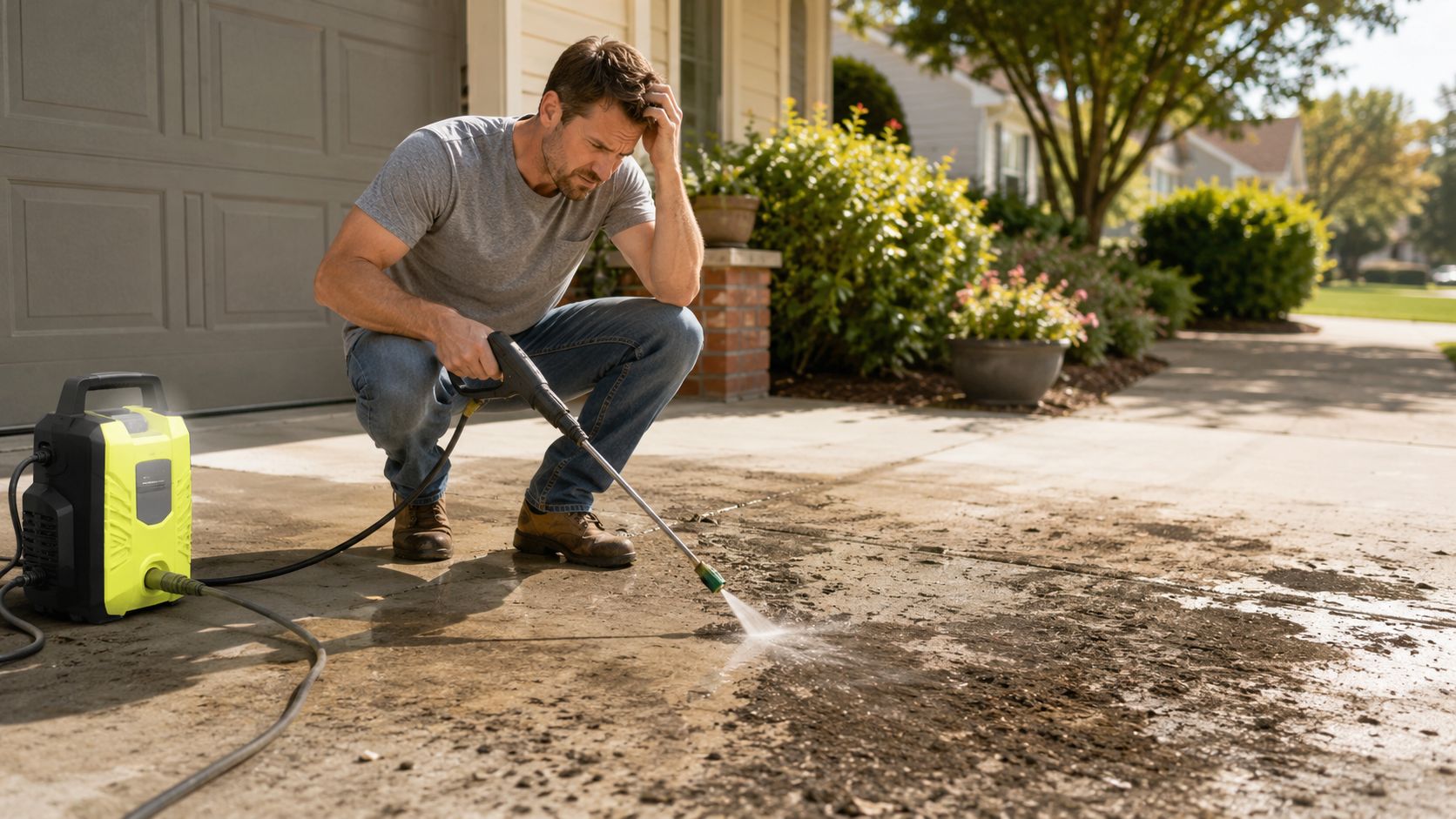
You've probably seen the problem already: a patio that looks gray after winter, pavers with dirt packed into the joints, or a driveway where tire marks and organic buildup make the entrance look neglected. Then the pressure washer comes out. An underpowered electric unit leaves you making slow, repeated passes, while an overly aggressive setup can roughen concrete, strip joint sand, or leave visible stripes.
The best pressure washer for patios and driveways isn't automatically the machine with the highest PSI rating. The right choice balances pressure, water flow, surface condition, equipment control, and the practical realities of Colorado Springs homes, including storage, water access, noise, and mixed hardscape materials.
Why Choosing the Right Pressure Washer Matters
A Saturday cleaning project can go wrong in two opposite ways. A small electric washer may loosen surface dirt but fail to rinse it away efficiently across a full driveway. A powerful gas unit may remove grime quickly, yet leave etched areas when the nozzle stays too close to decorative concrete or older, weathered paving.
Colorado hardscapes often combine poured concrete, pavers, flagstone, exposed aggregate, and sealed surfaces in the same property. Each material responds differently to concentrated water pressure. A setting that works well on sound concrete can disturb joint sand in pavers or remove loose material from an older patio.
The cost of choosing by PSI alone
PSI, or pounds per square inch, describes force. It matters because the water needs enough impact to break the bond between dirt, oil residue, algae, and the surface. But force alone doesn't determine how quickly a large area becomes clean. Water flow, measured in GPM, controls how efficiently loosened debris moves away and helps a surface-cleaner attachment rotate and rinse.
That distinction explains why a machine can look impressive on a box and still feel frustrating on a driveway. Peak PSI may be high, but low flow can leave the operator moving slowly and repeating passes. For hardscape work, a balanced machine usually produces a more useful result than a maximum-pressure machine used cautiously.
Practical rule: Buy for the surface you have, not for the biggest number printed on the packaging.
What a good buying decision should account for
Before comparing machine types, identify the material, the size of the area, the kind of staining, and how much control you have over the wand. A compact electric unit can suit a small patio where quiet operation and easy storage matter. A gas machine may make more sense for a broad driveway with stubborn embedded grime, provided the operator can control the spray safely.
The decision also includes accessories. A surface cleaner can distribute water more evenly than a handheld wand, while the wrong narrow nozzle can create striping or concentrate force in one small spot. The machine, nozzle, detergent, and technique work as one system.
Understanding PSI and GPM for Hardscape Cleaning
Pressure and flow solve different parts of the same problem. PSI provides impact, helping lift bonded grime from a hard surface. GPM provides rinse volume, carrying loosened soil away and supporting faster coverage across large sections.
A washer with more PSI isn't necessarily faster if it delivers insufficient water. On a driveway, the operator can spend more time rinsing and revisiting dull areas. Flow also matters to surface cleaners because the rotating spray bars need adequate water delivery to maintain effective movement and leave a consistent finish.
Working ranges for patios and driveways
Guidance for residential machines commonly places concrete driveways around 2,500 to 3,500 PSI with 3 to 5 GPM. Larger areas depend heavily on flow because GPM influences rinsing speed and surface-cleaner rotation. For patios, pavers, and driveways, another practical buying range is 1,800 to 2,700 PSI with 2.0 to 3.0 or more GPM. These ranges are summarized in pressure-washer PSI and GPM guidance by surface.
| Surface Type | PSI Range | GPM Range | Notes |
|---|---|---|---|
| Patio and pavers | 1,800 to 2,700 | 2.0 to 3.0 or more | Use controlled pressure and protect joints |
| Concrete driveway | 2,500 to 3,500 | 3 to 5 | Flow improves rinsing and large-area productivity |
| Larger hardscape areas | Around 3,000 cleaning units or higher | Prioritize useful flow | A balanced machine works better than peak PSI alone |
For patios and pavers, independent buying guidance converges around 2,000 to 2,700 PSI and 2.0 to 3.0 or more GPM. Driveways generally benefit from roughly 2,500 to 3,500 PSI and at least 2.3 GPM, especially when the goal is faster cleaning without repeated passes. See this driveway and sidewalk pressure-washer buying guide for the practical relationship between pressure, flow, and cleaning units.
Translate specifications into actual work
Start with the surface, then consider coverage. Sound poured concrete can tolerate more working pressure than porous pavers or weathered decorative stone, but higher output still demands better technique. A modest pressure increase won't make up for a machine that rinses slowly across a broad driveway.
Cleaning units, often used as a way to consider PSI and GPM together, can help compare machines more realistically. A washer around 3,000 cleaning units or higher is generally the more useful direction for larger hardscape areas, because additional GPM can shorten cleanup time more effectively than a small PSI increase alone.
The numbers are starting points, not permission to use maximum output everywhere. Nozzle angle, distance, pass speed, detergent, and surface condition determine the force reaching the material.
Electric vs Gas vs Cordless Pressure Washers
The machine category should match the job and the property. Electric, gas, and cordless washers can all be useful, but they don't serve the same cleaning scenario.
Electric machines
An electric washer is practical for a small stamped-concrete patio, front walk, or occasional maintenance project. It starts easily, stores neatly, and is generally quieter than a gas machine. That matters in a townhouse where HOA expectations or close neighbors make noise a concern.
The limitation is usually working output and mobility. You need a suitable outdoor outlet and a hose connection, and lower-flow models can feel slow on a broad driveway. An electric unit can handle light to moderate hardscape cleaning when the operator uses detergent, works in sections, and accepts a slower pace. It may not be the most efficient choice for extensive concrete with stubborn tire marks.
Gas machines
Gas units are more common for heavy patio and driveway work because they often reach 2,500 to 4,000 or more PSI and 2.0 to 4.0 GPM, compared with typical electric ranges of 1,300 to 2,700 PSI and 1.1 to 2.3 GPM. Those ranges are detailed in residential pressure-washer PSI and GPM guidance.
For a large aggregate driveway, gas power can provide the flow and sustained output needed to cover the area efficiently. It also eliminates dependence on an electrical outlet. The trade-offs include louder operation, fuel management, engine maintenance, and greater risk if the operator assumes more power automatically means better results.
A gas washer still needs the correct nozzle and distance. High output applied carelessly can damage older concrete, expose aggregate unevenly, or displace material from joints.
Cordless machines
Cordless pressure washers address a different priority, portability. They can help homeowners clean outdoor furniture, grills, small patio sections, and areas where connecting to a power outlet is inconvenient. Industry coverage for 2026 points to continued interest in portable equipment, electric motor-driven systems, foam extensions, cordless pressure washers, and AI-powered solutions, as discussed in pressure-washing and detailing industry trends for 2026.
A cordless model may be the right tool for light, localized work, but driveway-scale cleaning requires careful attention to runtime, water supply, and output. Battery convenience doesn't remove the need for adequate flow or surface control. For a full driveway, a conventional electric or gas machine is usually more practical when sustained cleaning capacity matters.
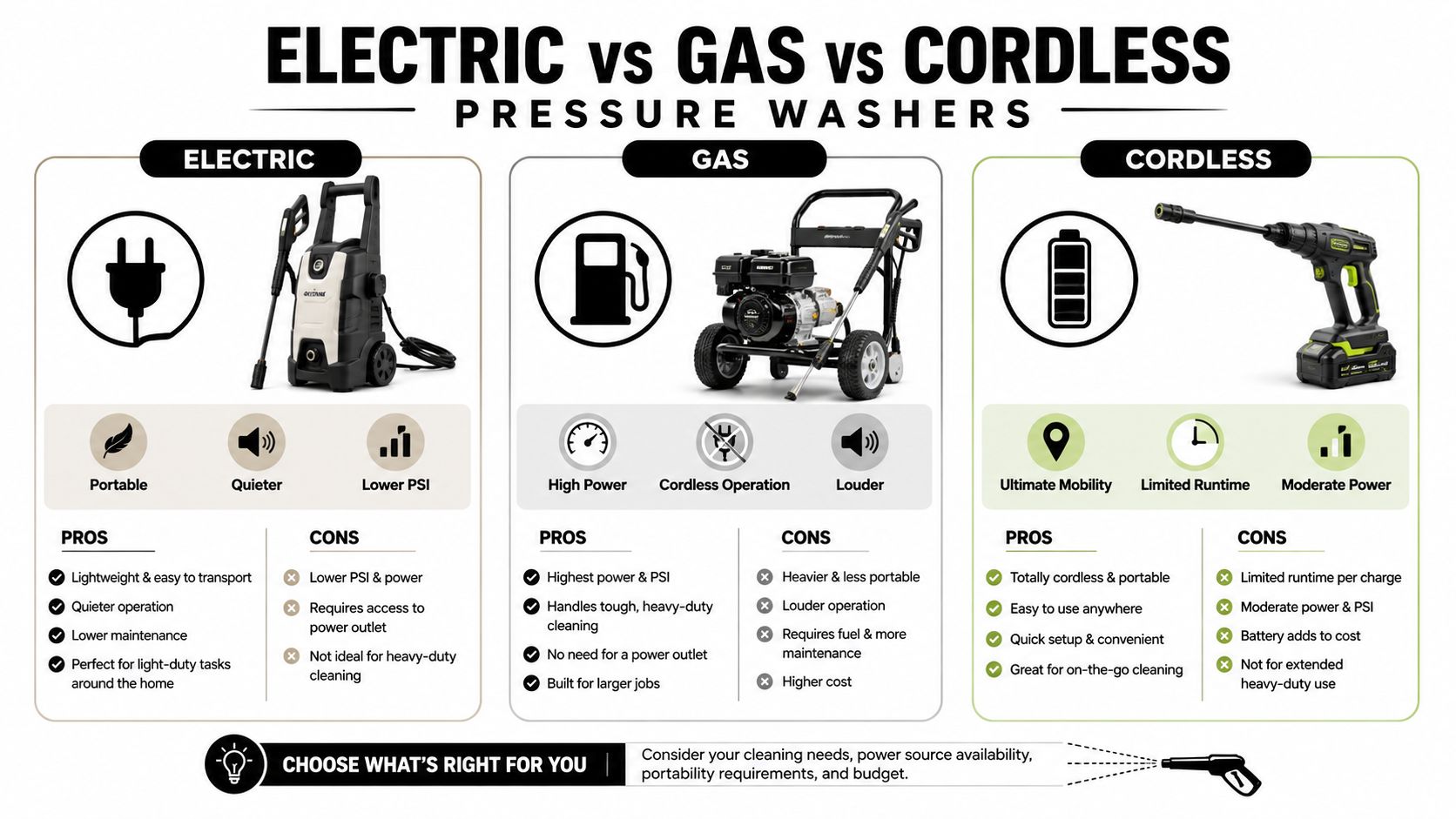
A simple decision works well: choose electric for convenient small-area maintenance, gas for larger and tougher jobs, and cordless when mobility matters more than driveway productivity.
Protecting Your Patio and Driveway Surfaces
The safest pressure washer is the one you can control. Surface damage usually comes from a mismatch between force and material, or from holding the wand too close, too long, in one place.
Standard residential concrete commonly falls within a working range of 2,500 to 3,000 PSI, with some guidance extending to 3,500 PSI for tougher stains. Exceeding 3,500 PSI can risk surface etching, which permanently roughens the finish, according to this concrete driveway pressure-washing guide.
Match the technique to the material
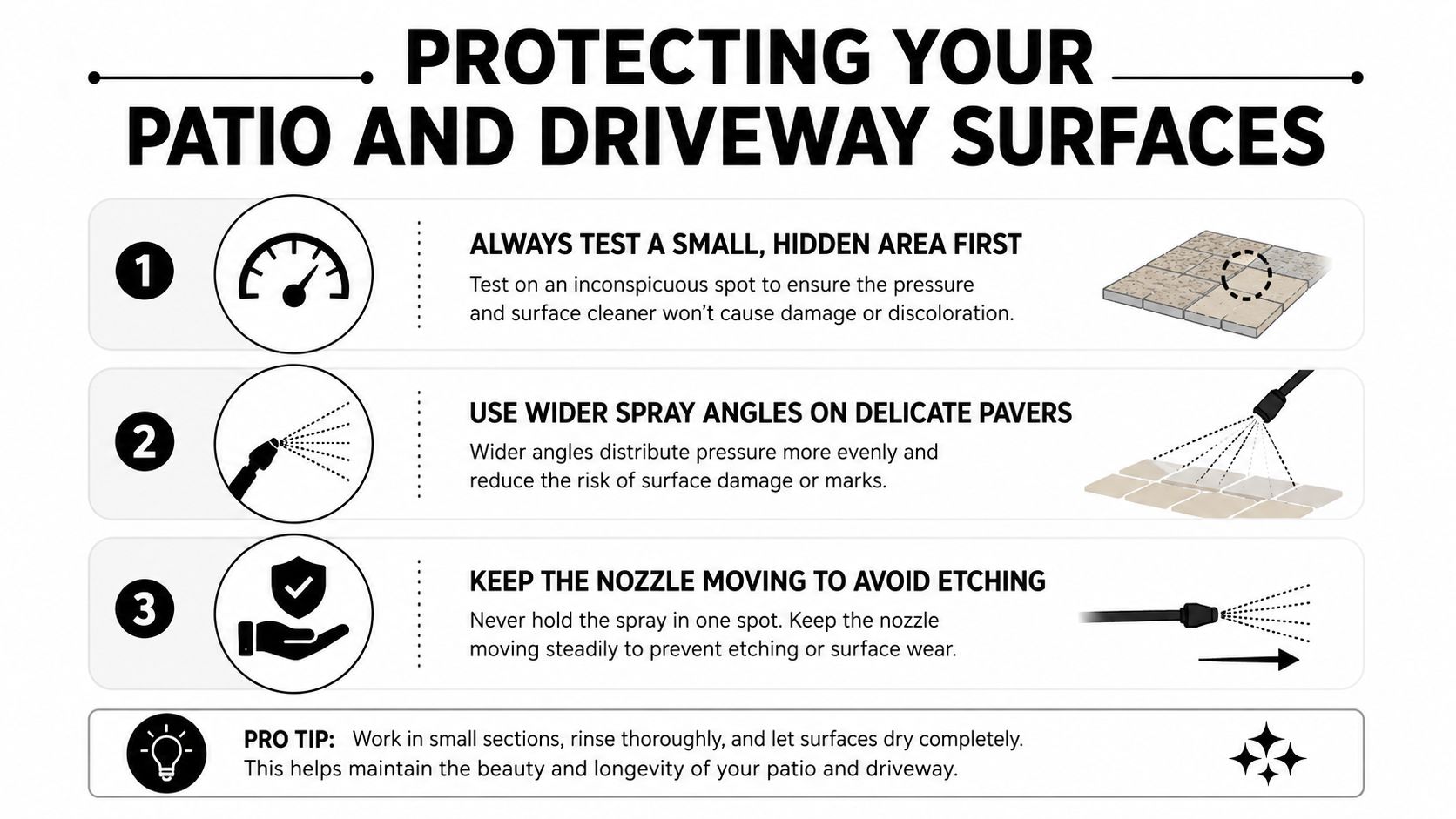
Pavers need special care because pressure can remove joint sand. Once the joints lose material, pavers may become less stable and more vulnerable to movement. A wide fan spray, controlled distance, and steady passes reduce the chance of cutting into the joints.
Decorative flagstone and exposed aggregate also demand restraint. Uneven textures can collect dirt in recesses, tempting the operator to bring the nozzle closer. That approach can create inconsistent cleaning, expose aggregate, or leave a visibly different texture where the spray lingered.
Older poured concrete deserves a careful test because weathering can make the surface more porous and fragile. Test a small hidden area first, then adjust distance and spray angle before committing to the visible section.
Keep the wand moving. A stationary spray can mark concrete even when the machine seems appropriate for the job.
Prevent stripes and uneven passes
Striping appears when the spray pattern overlaps inconsistently or the operator moves too slowly in one area. A surface cleaner often performs better on broad concrete because it keeps the spray bars enclosed and distributes cleaning more evenly. It also reduces the temptation to wave a narrow wand across the surface.
The correct choice isn't always the machine with the highest peak PSI. It may be a lower-output setup that lets you maintain an even pass speed and protect delicate material. For additional guidance on paver-specific methods, see pressure washing patio pavers safely. Oil contamination can require a separate treatment approach, and this resource on how to remove oil from block paving offers useful surface-care context.
Nozzle Tips and Detergents for Every Surface
Accessories determine whether the machine works cleanly or creates more work. A pressure washer can have suitable PSI and GPM, yet perform poorly when the operator selects a narrow nozzle for a broad surface or skips pre-treatment on oil and organic growth.
Choose the spray pattern first
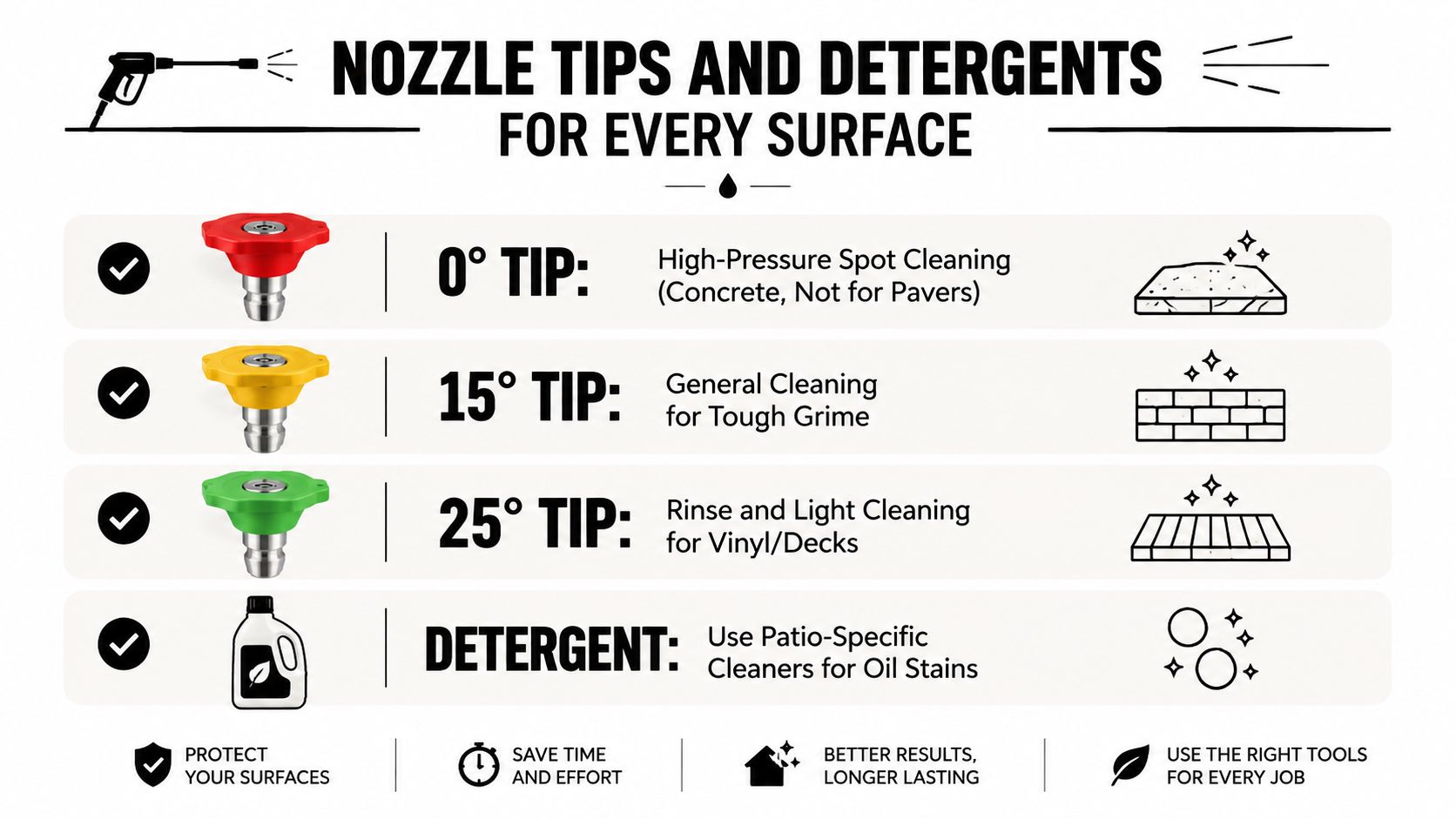
A zero-degree tip concentrates water into a very narrow stream. It can help with a localized mark on sound concrete, but it isn't a sensible default for pavers, decorative stone, or older surfaces. The concentrated impact can cut into the material or remove joint sand.
A 15-degree tip provides a more useful compromise for tougher grime on durable concrete. Keep it moving and avoid treating the narrow spray as a substitute for detergent or dwell time.
A 25-degree tip spreads the force over a wider area and suits rinsing or lighter cleaning on more sensitive surfaces. A wider fan pattern is often the safer starting point for pavers, weathered concrete, and mixed hardscape.
Why a surface cleaner is usually the better upgrade
For a driveway, a surface cleaner is often more valuable than chasing a higher peak PSI rating. The enclosed head helps maintain a consistent distance, while rotating spray bars cover the surface in a controlled pattern. That reduces wand striping and makes long concrete sections easier to work in overlapping passes.
Use detergent before rinsing when grime is bonded or organic growth has settled into texture. Select a hardscape-safe cleaner for the material, and follow the label's application and runoff instructions. Oil stains may need a targeted degreasing treatment rather than repeated high-pressure passes.
A useful setup commonly includes:
- Wide fan nozzle: Start safely on pavers, flagstone, and weathered surfaces.
- Narrower cleaning nozzle: Reserve for controlled spot work on sound concrete.
- Surface cleaner: Use for broad, durable areas where an even finish matters.
- Hardscape-safe detergent: Pre-treat soil, organic buildup, or oil-related staining before rinsing.
The machine removes loosened material. Detergent helps separate it first, which can lower the temptation to increase pressure.
DIY Pressure Washing vs Hiring a Professional
DIY pressure washing makes sense when the area is small, the surface is familiar, and the homeowner can work patiently. A modest stamped-concrete patio used for seasonal maintenance is a reasonable project if the operator tests first, controls the wand, and uses appropriate accessories.
The calculation changes with property size and surface complexity. A large driveway with deep-set staining takes sustained effort, consistent passes, and enough flow to rinse efficiently. Mixed hardscape, such as pavers beside poured concrete and flagstone, requires different settings and more careful transitions.
DIY works best when control is simple
Consider doing the work yourself when:
- The surface is sound: Uniform concrete is easier to assess than weathered or repaired paving.
- The area is manageable: Smaller patios reduce fatigue and make consistent passes more realistic.
- You can test first: A hidden test area reveals whether the spray is too aggressive.
- You have the right attachment: A surface cleaner can help prevent uneven wand marks.
The physical demands matter too. Long periods of pulling hoses, managing recoil, bending, and repeating passes can make a job less appealing than it looked at the store.
Professional service earns its place on higher-risk jobs
Hiring a professional becomes more sensible when the property includes large areas, difficult stains, hard-to-reach sections, or multiple materials. Experience helps the operator choose pressure, flow, distance, nozzle angle, detergent, and pass speed without treating every surface the same way.
A local option is Cultivate House Detailing, which provides pressure washing for patios, walkways, and driveways in Colorado Springs and surrounding communities. The company also handles exterior cleaning services, giving homeowners a practical choice when equipment storage, physical labor, or surface-damage risk outweighs the appeal of a weekend project.
The cheapest machine isn't always the cheapest path. A damaged surface, replacement joint sand, or an uneven finish can cost more than careful professional cleaning.
For Colorado Springs homeowners, weathered concrete, decorative stone, and pavers deserve particular caution. If you can't confidently identify the material or control the spray consistently, professional service can remove the learning curve while keeping the focus on surface preservation.
Your Pressure Washer Buying Checklist
Use this checklist before buying a machine or requesting a patio and driveway cleaning quote:
- Identify the surface: Separate poured concrete, pavers, flagstone, exposed aggregate, and sealed areas.
- Balance PSI and GPM: Use enough pressure to lift grime, but prioritize useful flow for broad areas.
- Choose the machine category: Electric suits convenient smaller work, gas supports demanding driveway jobs, and cordless favors mobility and light cleaning.
- Plan the accessories: A surface cleaner can improve consistency on large concrete, while wider spray patterns offer more control on delicate materials.
- Treat stains before blasting: Oil and organic buildup may respond better to suitable detergent and dwell time than repeated high-pressure passes.
- Test before committing: Check a hidden area and watch for etching, joint-sand loss, striping, or uneven color.
- Know when to hire help: Large areas, mixed materials, stubborn stains, and uncertain surface condition all raise the value of professional service.
For Colorado Springs homeowners who want the work handled carefully, Cultivate House Detailing offers professional patio, walkway, and driveway pressure washing with equipment and techniques selected for the surface. Visit Cultivate House Detailing to request service information or arrange a quote for your hardscape cleaning project.
Prefer to leave it to a professional? Cultivate House Detailing offers pressure washing in Colorado Springs. Get a free quote.