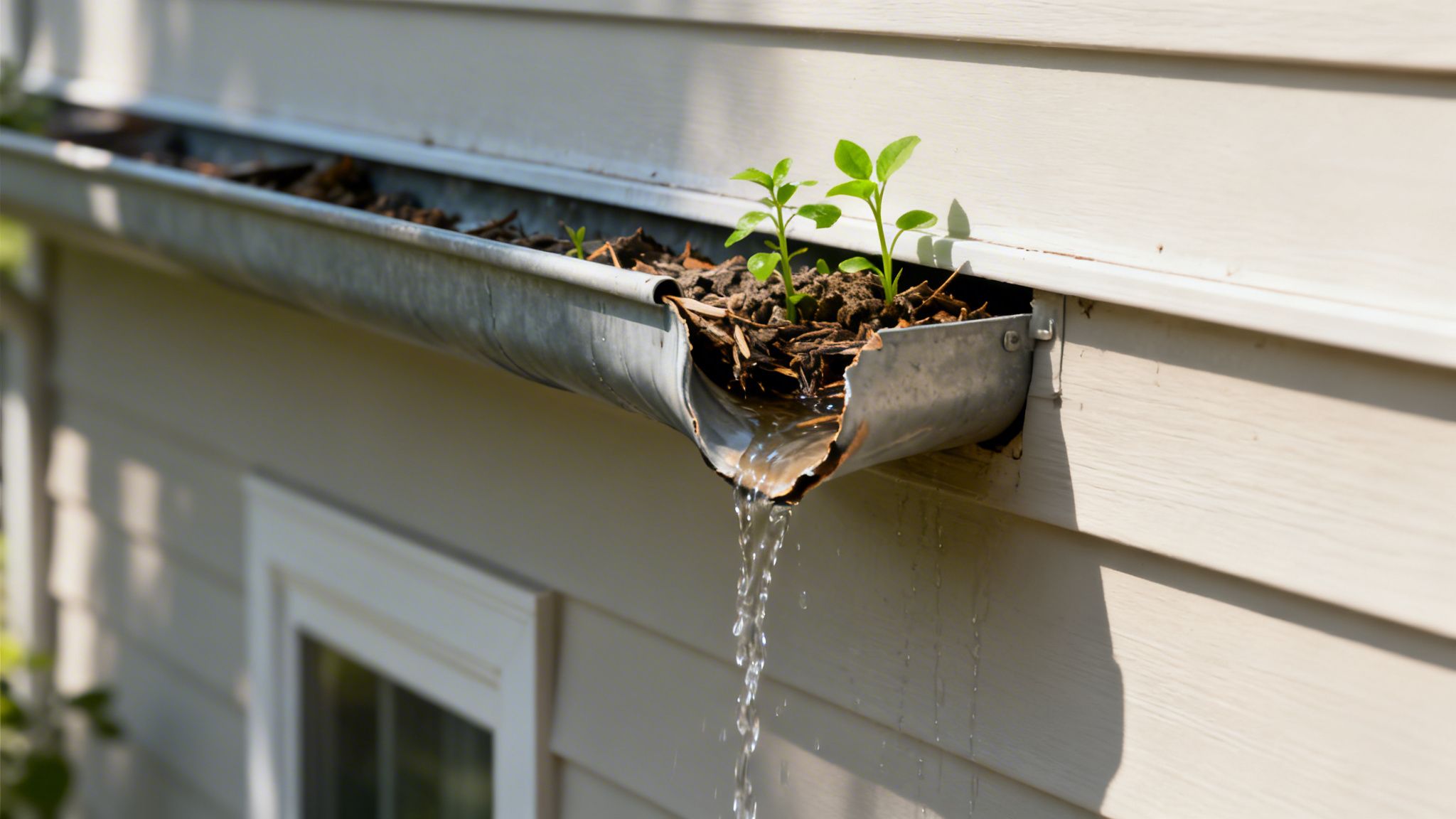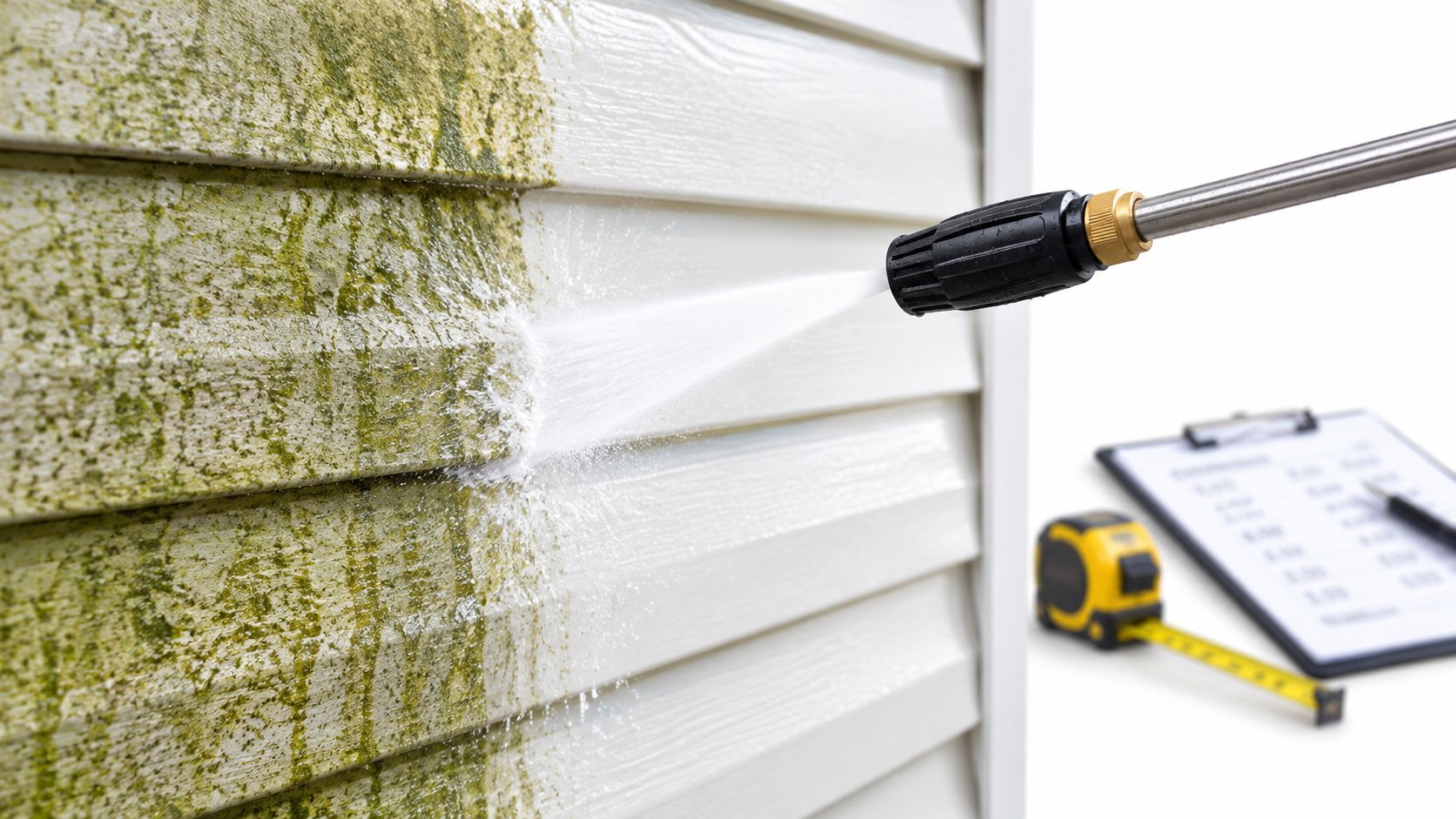
You spray an eco-friendly cleaner on a Colorado Springs window, wipe it twice, and step back expecting a clear view. Instead, the pane shows gray smears, white sprinkler spots, or a haze that only appears when the high-altitude sun hits it. That's not a failure of “green” cleaning. It's a sign that the glass needs the right method for the soil on its surface.
For homeowners searching for window cleaning near me or window cleaning in Colorado Springs, CO, the practical answer is simple: use low-impact chemistry for light dirt, but don't mistake a green formula for hard-water stain removal. Professional window cleaning should leave the glass streak-free while protecting frames, screens, tracks, coatings, and the property around them.
Why Green Cleaning Alone Often Leaves Streaky Glass
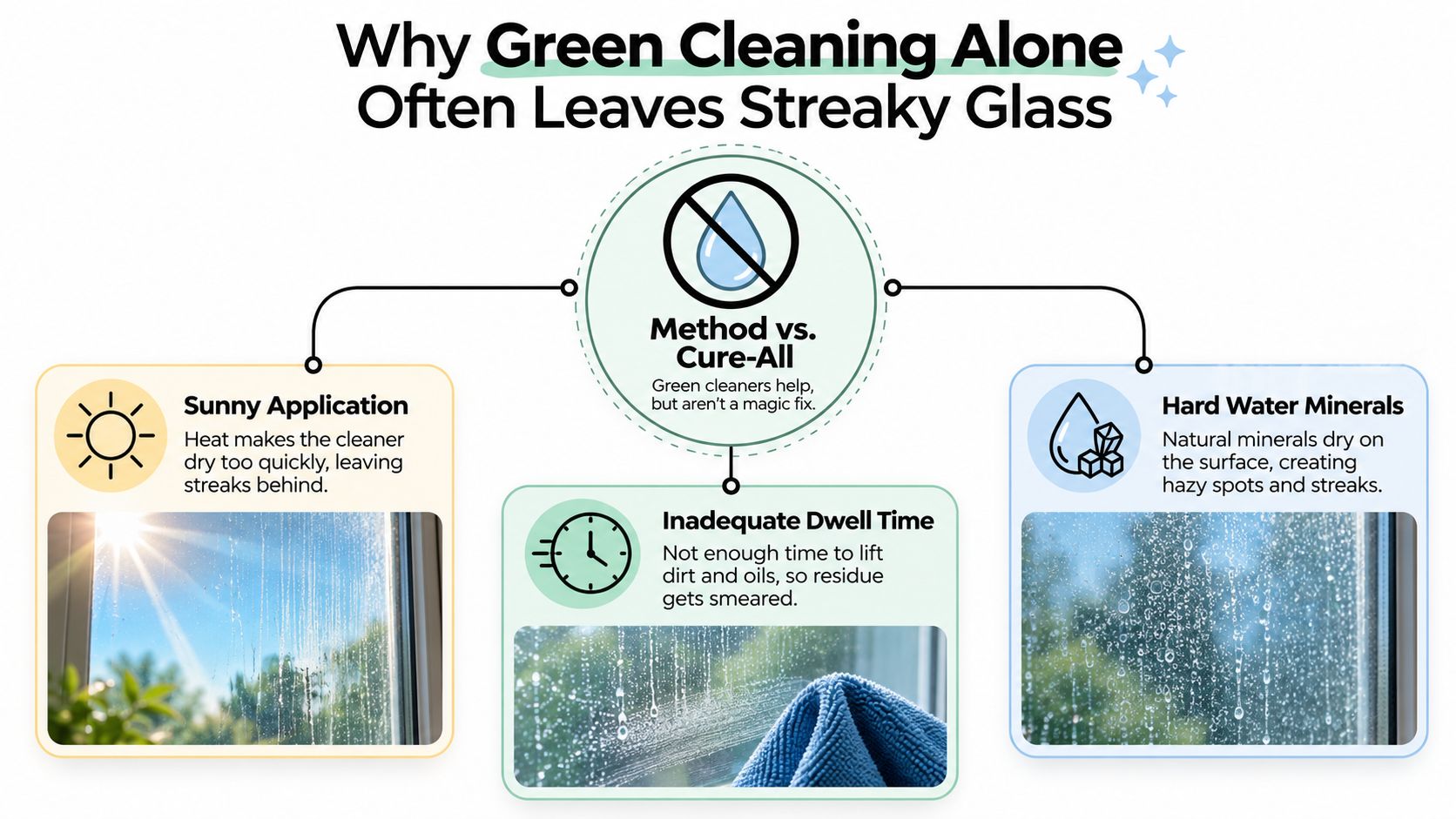
Green cleaning is a method, not a cure-all. You can spray vinegar on a sunny pane, wipe until it looks clear, and still find streaks or chalky dots after the moisture evaporates. The problem may be the wiping technique, the product, the water, or a mineral deposit that ordinary glass cleaner was never designed to remove.
Why Colorado Springs glass dries differently
Colorado Springs combines dry air, strong high-altitude sun, dust, and frequent irrigation exposure. Sprinkler overspray can leave calcium and magnesium deposits on exterior glass, while mineral-rich dust settles into the same areas. Those deposits can look like streaks, but they're a bonded mineral layer rather than ordinary soil.
A cloth can also create the problem. Hot glass dries the solution before you can remove it, a dirty microfiber redistributes oil, and too much product leaves a film. Vinegar may cut light mineral residue, but soap can attract residue and essential oils can leave their own coating.
Practical rule: If the marks remain after a clean rinse and careful drying, stop adding cleaner. Diagnose the glass before changing products.
Start by identifying the contamination. Fingerprints, cooking film, and dust usually respond to a mild cleaner. A rough white spot, recurring haze, or crust along the lower pane points toward mineral treatment. If the glass is scratched or etched, cleaning won't restore the original surface.
Sustainability and clear glass work well together when the process is controlled. Use cool water, a clean lint-free cloth, light application, and shade. For exterior window cleaning in Colorado Springs, correcting irrigation overspray can matter more than switching between bottles labeled “natural” and “green.”
Green Glass Clean Basics for Light Interior Soiling
Light interior dirt doesn't require an aggressive product. Fingerprints, ordinary dust, and a thin cooking film usually respond to a small amount of mild solution, careful wiping, and a proper dry finish.
A low-impact starting routine
Use one of these simple options:
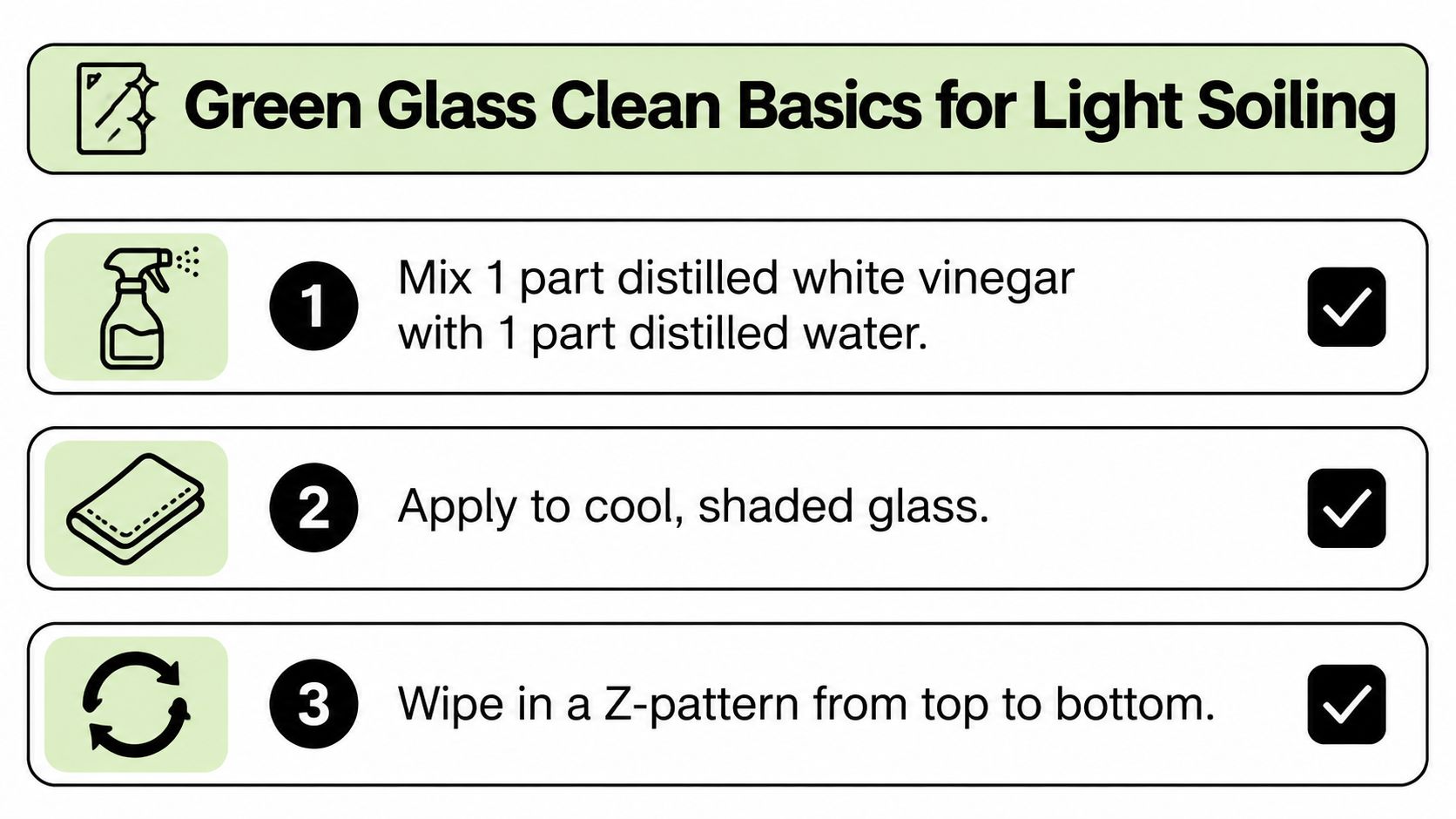
- Vinegar solution: Combine one part distilled white vinegar with one part distilled water in a labeled spray bottle.
- Mild soap solution: Add a few drops of mild, fragrance-free dish soap to a bucket of cool water.
- Distilled water: Choose it when spotting is a concern, since dissolved minerals in water can dry onto the pane.
Vacuum or dust the tracks and glass edges first. Otherwise, loose debris falls into the wet solution and creates a muddy line along the frame. Mist the glass lightly, rather than soaking the pane or surrounding trim.
Work with a clean microfiber or lint-free cloth. Use overlapping vertical or horizontal strokes, then follow with a second dry cloth. Change the cloth as soon as it becomes damp or dirty. A barely damp tool gives you more control than a saturated towel, especially around painted wood, metal hardware, and seals.
What this method can't fix
Don't clean hot glass or a pane sitting in direct sun. The mixture will dry before you can level it out, leaving the same streaks you're trying to remove. Avoid paper towels on polished or coated glass, and keep vinegar away from painted wood, natural stone, and sensitive metal.
Never combine vinegar with bleach or ammonia. Test an inconspicuous area first, particularly if the window has a film or specialty coating. This light-soiling routine isn't appropriate for hard-water scale, construction residue, scratched glass, or moisture damage inside an insulated unit.
For a neutral commercial alternative, technical glass-cleaner sheets commonly describe water-based formulas near neutral pH, including ranges of 7.0 to 8.0 and 7.5 to 8.5, with low-solvent formulations intended to reduce residue and improve wipe-off consistency, as documented in this technical glass-cleaner sheet. The same principle applies at home: less product, better water, and a dry final pass.
Cleaner Chemistry vs Mineral Deposit Problems
The right green glass clean method depends on what's on the pane. A neutral cleaner lifts fingerprints, grease, and dust. It won't reliably dissolve a mineral crust left by repeated irrigation overspray.
Try a controlled test before treating the entire window. Rinse a small area with distilled water and dry it immediately. If the pane clears, your cleaner or rinse water may be leaving residue. If a rough, chalky film remains, you're dealing with mineral buildup, etching, or sprinkler damage.
Match the Glass Problem to the Treatment
| Problem | Typical Signs | Starting Treatment | Avoid |
|---|---|---|---|
| Dust and fingerprints | Light smudges, dull film, visible handprints | Mild neutral cleaner and clean microfiber | Heavy application and dirty cloths |
| Soap or cooking residue | Greasy haze, especially near kitchens or bathrooms | Light detergent solution, followed by a clean rinse | Leaving soap film to dry |
| Fresh hard-water spotting | White dots or a thin mineral veil | Small-area diluted vinegar or citric-acid treatment | Letting acid dry on the pane |
| Heavy mineral scale | Rough texture, crust, recurring white deposits | Glass-safe mineral-removal workflow or professional service | Steel wool, abrasive powders, and aggressive scrubbing |
| Etched or damaged glass | Haze remains after careful cleaning, texture may feel altered | Professional inspection | Repeated acid applications and abrasion |
Guidance on glass-cleaner use and residue control warns that overly strong cleaner can create filmy, streaky, or hazy marks. Architectural-glass care also favors clean rinse water, quality squeegees, and mild products over harsh or alkaline cleaners.
Don't assume every pane can receive the same treatment. Low-E, tempered, tinted, reflective, laminated, and solar-control glass may have coatings or films that react poorly to acids, abrasives, or excessive moisture. Identify the defect and the glazing type first, then choose the mildest method that can solve the actual problem.
Removing Hard Water Stains Without Damaging Glass
Hard-water stain removal starts with diagnosis. A surface deposit may be removable, while etched glass or damage from repeated sprinkler exposure may require restoration or replacement advice. Colorado Springs irrigation overspray is especially frustrating because a pane can look clean after washing, then show the same white crust again after the next watering cycle.
Use a controlled dwell-and-rinse process
Pre-clean oily residue first. Treat the mineral layer in sections of about 12 inches, which keeps the solution wet during its working time, as described in this hard-water glass stain removal guide.
For fresh spots, apply diluted vinegar or citric acid to the small section and leave it wet for 5 to 10 minutes. Don't let the solution dry. A dry solution can reduce the reaction, leave residue behind, and allow dissolved minerals to settle back onto the surface.
Use a microfiber applicator and gentle pressure. Don't attack the pane with abrasive powders, steel wool, or rough pads. Steel wool is specifically warned against for glass because it can scratch the surface. Avoid razor blades on coated glass, and keep acidic solutions away from tinted edges, seals, stone, and metal frames.
Rinse the treated area completely, then dry it with a lint-free towel. A professional crew may use controlled water and squeegee techniques to prevent dissolved minerals from drying back onto the glass. Inspect under side lighting, because direct viewing can hide a remaining haze.
Know when to stop
If rough texture remains after two careful rounds, escalate rather than scrubbing harder. The recommended workflow is to move toward a specialized glass-safe treatment or professional hard water stain removal, not stronger household chemistry.
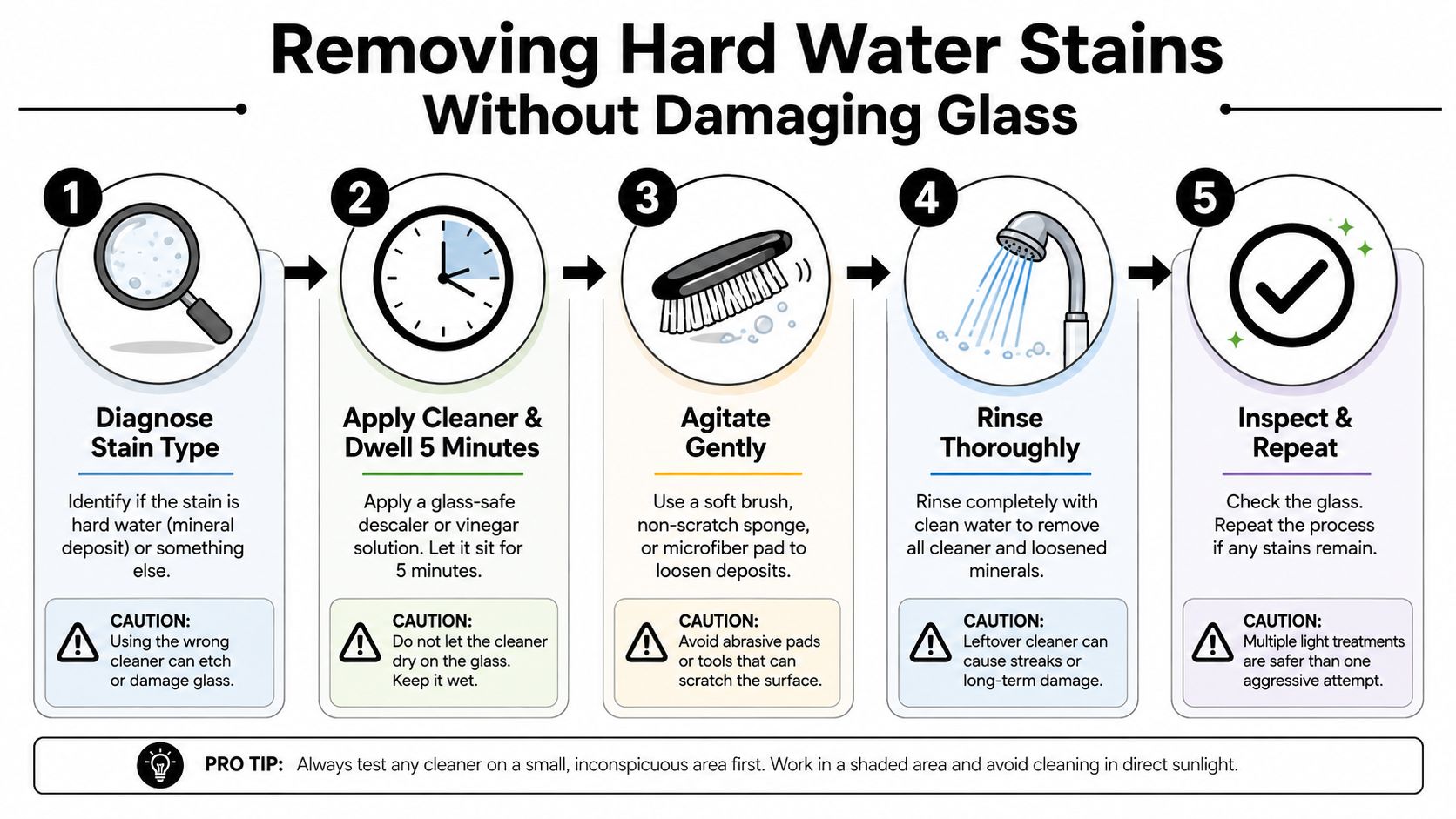
For a visual walkthrough of the process, review the embedded demonstration below. Keep in mind that the correct product and tool still depend on the glazing type and the condition of the pane.
Safe Methods for Tinted and Reflective Glass
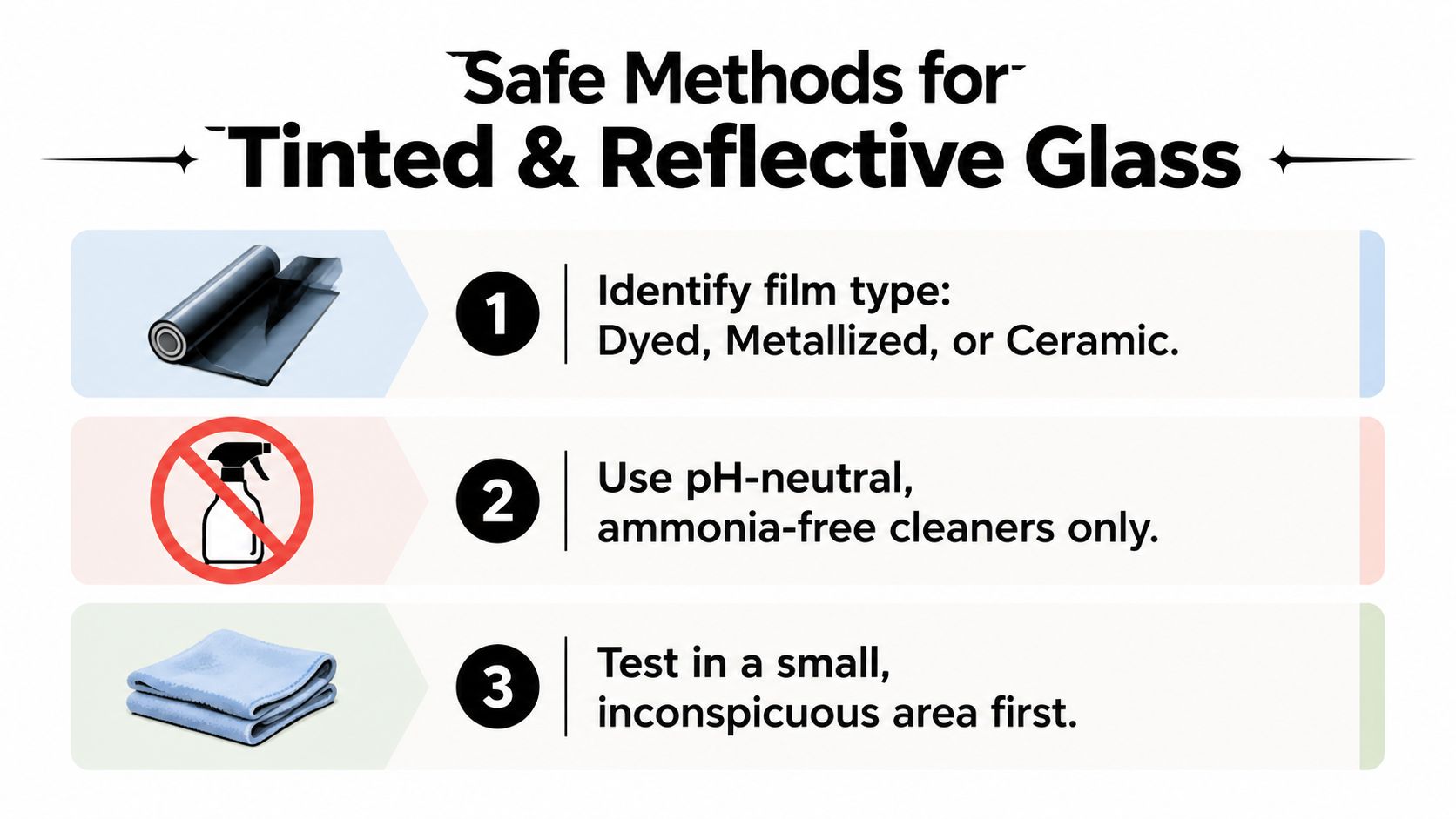
A cleaner that works on plain, uncoated glass isn't automatically safe for tinted, reflective, or solar-control glazing. That assumption causes avoidable haze, edge damage, and film problems, especially on south-facing windows, skylights, sunrooms, and large picture panes exposed to intense Colorado sun.
Identify the surface before applying solution
Look for low-E glass, reflective privacy glass, ceramic tint, or aftermarket film. If you're unsure, check the window paperwork, ask the installer, or test only a discreet location. Don't assume a vinegar, citrus, or ammonia formula is harmless because the label uses eco-friendly language.
Manufacturer guidance for architectural glass recommends avoiding direct sunlight when cleaning tinted and reflective panes, using mild soap or slightly acidic solutions, and avoiding hydrofluoric-acid products and abrasives. The architectural glass care guidance also supports a conservative approach for coated surfaces.
Use a dye-free, fragrance-free, near-neutral product tested for glass. Apply minimal moisture near the perimeter seal. For reflective panes, use a two-rag process: the first pass lifts loose dust, while the second, barely damp cloth cleans the surface without pushing moisture toward the edge.
Keep the glass cool and shaded. A sunroom pane or skylight can heat quickly, causing the solution to flash-dry and leaving a visible film. Don't keep reapplying acid to a surface with an unknown coating.
Coating warning: If a window has a film warranty, visible delamination, bubbling, edge discoloration, or persistent haze between layers, stop experimenting and call a specialist. Cleaning can't repair a failed film or insulated glass seal.
For property managers and commercial clients, this distinction matters as much as appearance. Green Seal's glass-cleaner standard focuses on measurable performance such as soil removal, smearing, and streaking, which reinforces the practical point: buyers need safe chemistry and a clean result, not an environmental claim alone.
When to Call a Pro for High or Hard-to-Reach Windows
A second-story pane above a sloped roof isn't a normal ladder job. Great-room windows over vaulted entries, clerestory glass in stucco homes, skylights, and bedroom windows over landscaping all create access problems that a homeowner can't solve safely with a longer pole and more confidence.
Cornell's window-washing program requires workers cleaning from an interior sill 4 feet or more above the ground to attach both harness terminals to separate anchors before work begins, with 100% fall protection during the operation, according to its window-washing safety program. The same guidance says someone must hold the foot of ladders over 18 feet long.
Height changes the work plan
OSHA-related guidance summarized by Racine safety guidance for window cleaners identifies fall hazards beginning at 4 feet in general industry and 6 feet in construction, while also emphasizing three points of contact on ladders. The University of Toronto's window-cleaning standard requires protective equipment when a worker may fall 3 meters or more, including when standing on a sill or frame at that height.
The exact method depends on the building. A qualified professional may use water-fed extension poles, anchor-rated hardware, harnesses, rope-access systems where appropriate, and properly supported ladders. Insurance and trained access planning matter because the risk involves people, siding, roofing, landscaping, and glass, not just the cleaning result.
Professional window cleaning also solves the access problem without skipping the detail work. A crew can combine exterior window washing with interior window cleaning, screen cleaning, track cleaning, and hard-water stain removal when the condition of the glass calls for it.
For commercial window cleaning, storefronts, restaurants, offices, dealerships, and multi-level buildings need an access plan that protects workers and keeps customer areas functional. If you're comparing window cleaning near me providers, ask how the crew handles height, anchors, ladders, and coated glass before you compare products.
Your Green Glass Clean Routine for Colorado Springs
A sustainable routine uses the mildest effective method first, then escalates only when the glass shows a real deposit problem. That means less chemical waste and less repeat scrubbing, not just buying a bottle with a green label.
For light interior dust, start with a dry microfiber or soft squeegee. Apply a small amount of neutral-pH, biodegradable solution to the tool rather than flooding the pane, work in overlapping top-to-bottom passes, and finish with a dry microfiber before direct sun dries the surface.
Keep exterior problems from becoming permanent
Inspect exterior glass regularly for white spots, irrigation overspray, and mineral buildup. Wipe sprinkler mist from low windows after watering when practical, and adjust irrigation that repeatedly strikes the panes. Vinegar or baking soda isn't a substitute for a glass-safe mineral remover when scale is heavy or etching has started.
Use less detergent, never mix cleaning products, and keep acidic solutions away from stone, metal frames, tinted films, and reflective coatings. Schedule routine interior cleaning during mild weather, while upper-story and difficult-access work belongs with insured professionals using suitable ladders, anchors, and fall protection.
For local service, Cultivate House Detailing provides interior and exterior residential and commercial window cleaning, along with screen cleaning, track cleaning, and hard-water stain removal. The company serves Colorado Springs and nearby communities, including Black Forest, Monument, Manitou Springs, and Woodland Park.
The practical definition of green cleaning is simple: choose the right chemistry, control the application, prevent repeat contamination, and avoid damaging the glass while chasing a streak. That approach keeps windows clearer and makes professional maintenance more efficient when the pane needs specialized treatment.
If your Colorado Springs windows have streaks, sprinkler spots, hard-to-reach panes, or coated glass that needs careful handling, Cultivate House Detailing offers streak-free residential and commercial window cleaning, including interior glass, exterior glass, screens, tracks, and hard-water stain removal. Visit the site to request a quote and schedule a safer, greener window cleaning service for your home or business.
Want it handled by a local crew? Cultivate House Detailing offers residential window cleaning in Colorado Springs. Get a free quote.