For a typical two-story home in Colorado Springs, professional Christmas light installation labor usually runs about $264 to $380. That gives most homeowners a realistic starting point before details like rooflines, peaks, trees, and whether you’re supplying the lights change the final quote.
If you're staring at a tangled tote of lights in the garage, watching the weather turn colder, and wondering whether this is the year to stop climbing the ladder, you're not alone. Holiday lighting always sounds simple until you’re on a roof edge with frozen fingers, a half-working strand, and wind moving through the pines.
Around Colorado Springs, the holiday season comes with real excitement. Families drive neighborhoods looking for displays, local traditions fill downtown, and homes from Black Forest to Manitou Springs start glowing against the mountain backdrop. The city’s holiday spirit shows up in events like the annual Festival of Lights Parade, which features nearly 100 illuminated floats, and an Angi survey cited in local coverage says 67% of homeowners plan to decorate with holiday lights (local holiday coverage).
That demand is one reason professional christmas light installation colorado springs services book up quickly. The other reason is practical. People want the look, but they don’t want the stress, safety risk, or uneven result that often comes with doing it themselves.
Your Guide to Dazzling Holiday Lights in Colorado Springs
There’s a familiar pattern every year. A homeowner starts with a clear plan: outline the roofline, wrap the front tree, maybe add a little warmth around the porch. Then the challenges of a Colorado Springs winter show up. The ladder doesn’t sit right on the slope. One clip keeps popping off. A strand that worked in the garage suddenly fails on the roof.
That’s where professional holiday lighting starts making sense. Not because homeowners can’t hang lights, but because the job gets harder fast once height, wind, timing, and electrical safety enter the picture.
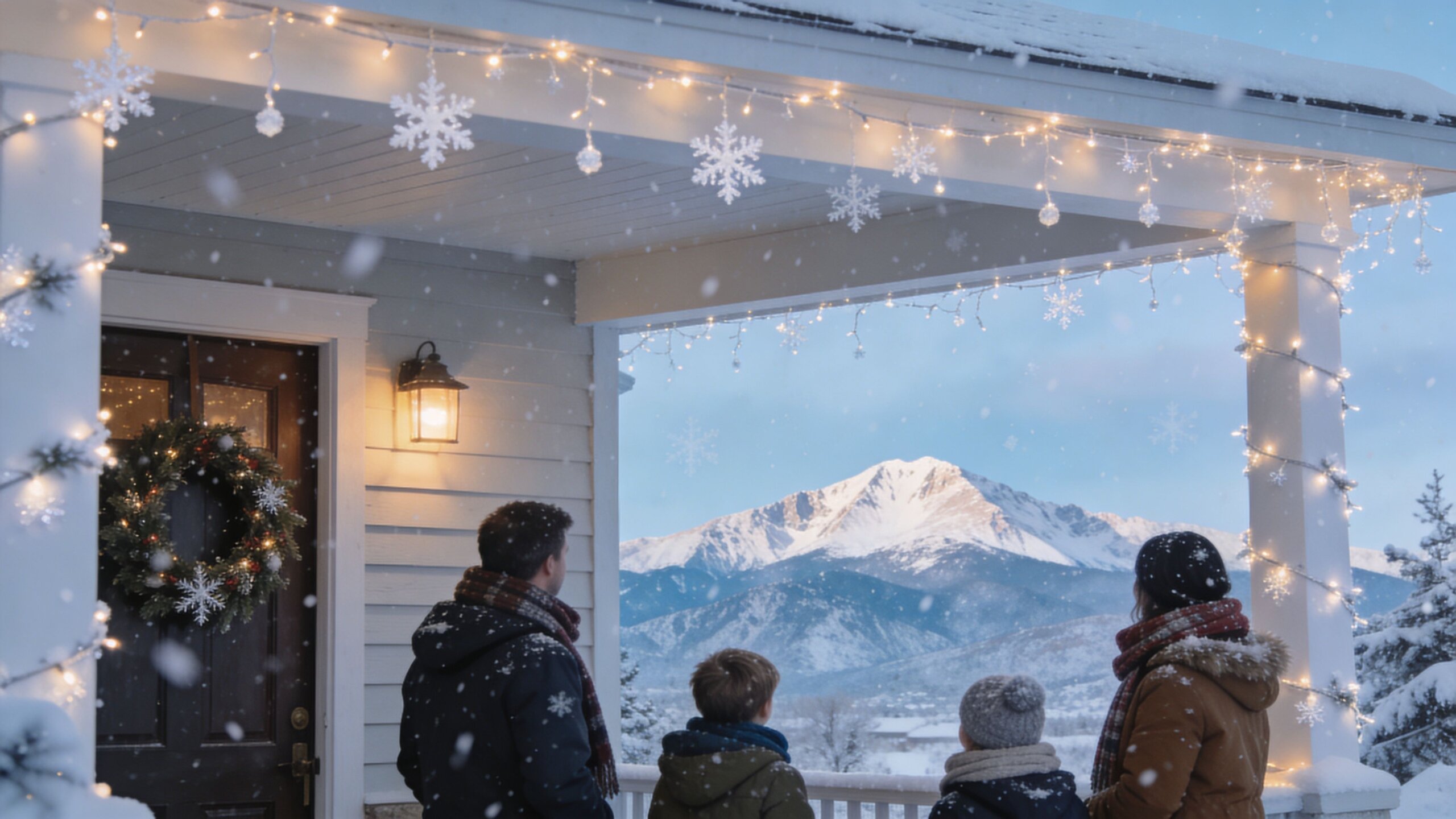
Why this is a different job in Colorado Springs
Homes here aren’t all simple ranches with easy roof access. Many properties have steep pitches, multiple peaks, tall entryways, and exposed corners that catch gusts. Add early ice, dry vegetation, and the usual holiday time crunch, and a basic decorating project can become a frustrating weekend.
A professional installer approaches the job differently:
- Rooflines are planned first. Clean lines matter more than often realized. The display looks polished when spacing and symmetry are handled intentionally.
- Attachment points are chosen for the home. What works on one gutter or fascia style may not work on another.
- Weather is part of the design. Colorado Springs installations need to stay put through wind and temperature swings.
- Removal is part of the decision. A display only feels fun when someone has a plan for January.
A good holiday display should look effortless to the neighbors because someone else handled the hard parts.
The local goal isn’t just more lights
Most homeowners don’t need the biggest display on the block. They want a home that feels festive, clean, and welcoming. That usually means a design that fits the architecture instead of overwhelming it.
Warm roofline lighting, a lit wreath, wrapped trunks, and simple entry accents often beat a cluttered mix of retail strands and extension cords. The best result is usually the one that makes the house look better in daylight too, because the layout respects the shape of the property.
Professional installation makes that possible. It turns a seasonal chore into a finished exterior detail that looks intentional from the curb.
Beyond Beauty The Benefits of Professional Light Installation
Hiring out holiday lighting isn’t just about avoiding a cold weekend on a ladder. It’s a practical choice for homeowners who want a better result with less risk and less disruption.
What professionals solve that DIY usually doesn’t
Most DIY problems aren’t dramatic. They’re the small issues that add up. Crooked lines. Sagging cords. Broken clips. Strands that look bright in one area and dim in another. Then there’s the part people underestimate most: getting everything mounted securely without damaging trim, gutters, or shingles.
Professional installation helps because the work is planned and executed as one system instead of a series of last-minute fixes.
- Safety on ladders and rooflines. Multi-story homes, steep sections, and winter surfaces create obvious hazards.
- Cleaner visual lines. A display looks more expensive when the spacing is even and the attachment points disappear from view.
- Less stress during the season. Homeowners don’t have to spend evenings troubleshooting timers, loose bulbs, or sections that stop working.
- Time back during the busiest month. Families can enjoy the season instead of giving up a weekend to setup and later takedown.
Why the finished look is different
Professional displays usually stand out for one reason: consistency. The bulbs match. The color temperature is uniform. The roofline follows the architecture. Trees and shrubs feel connected to the house instead of decorated as separate projects.
That matters whether the goal is classic warm white, bold color, or a balanced mix of both.
Practical rule: If the lights don’t match the shape of the home, the display will never look finished, no matter how many strands you add.
It protects more than your schedule
A lot of homeowners think of professional lighting as a convenience purchase. It is convenient, but that’s not the whole story. It also protects the property. When installers use the right clips, plan cord routing, and avoid improvised fastening methods, they reduce the chance of damage to roofing edges, painted surfaces, and exterior fixtures.
For homes that are already well maintained, holiday lighting should add appeal without creating repair work in January. That’s one of the biggest differences between a rushed setup and a professionally handled one.
Custom Holiday and Permanent Lighting Solutions
Some homeowners want a classic seasonal display that comes down after the holidays. Others want a year-round lighting system that can shift from subtle architectural accent lighting to festive colors when the season changes. Both approaches work well in Colorado Springs. The right choice depends on how often you want to use the system and how much flexibility matters to you.
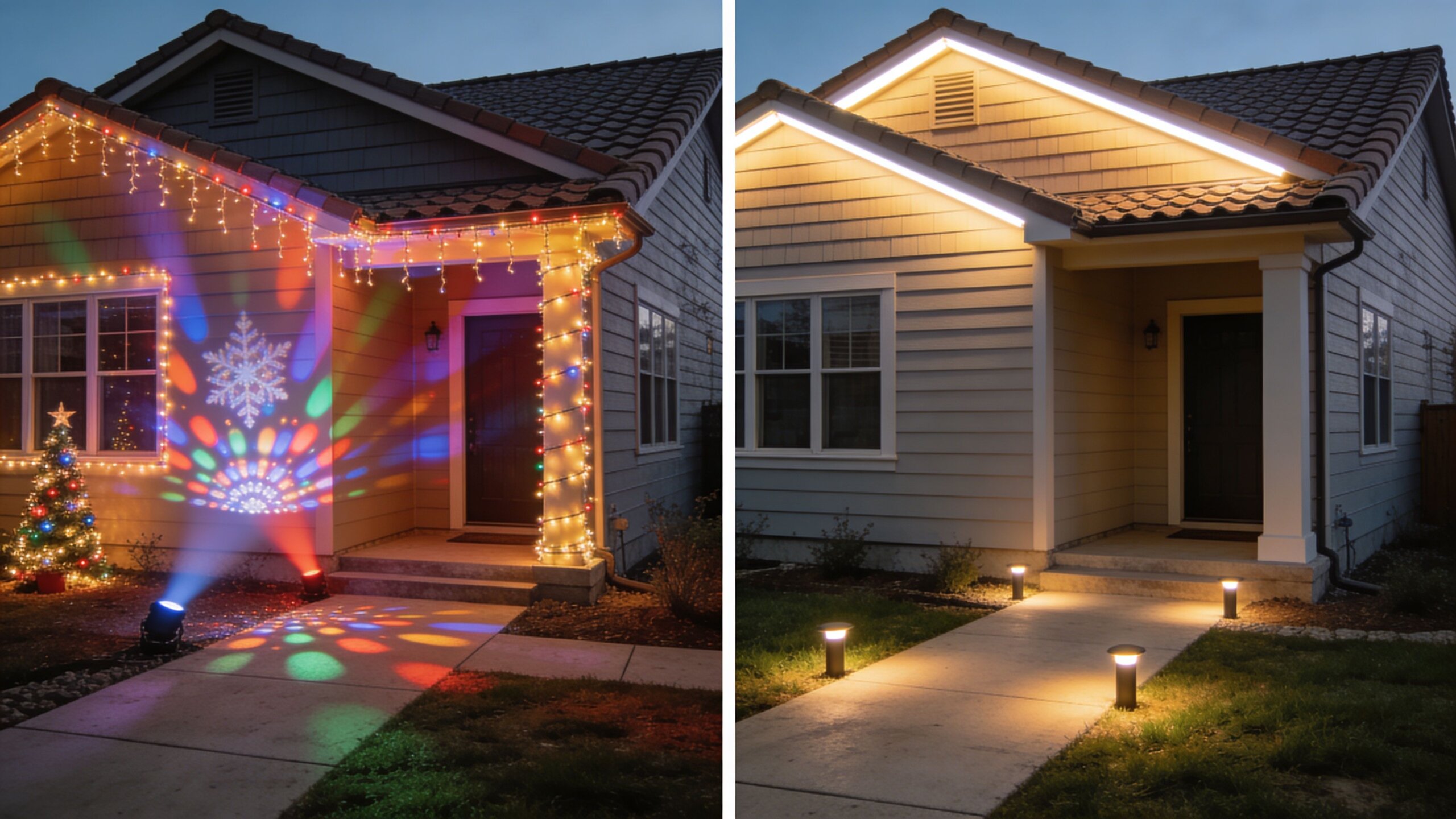
Seasonal lighting for the classic holiday look
Seasonal lighting is still the right fit for many homes. It gives you the traditional holiday feel without leaving visible equipment as part of the exterior all year.
Typical seasonal designs include:
- Roofline lighting. Clean outlines on eaves, ridges, and peaks.
- Tree and trunk wraps. Great for front-yard focal points and entry approaches.
- Wreath and garland accents. Useful around porches, columns, and doors.
- Walkway and yard highlights. These help carry the display beyond the roof edge.
This option works especially well for homeowners who want a specific holiday style each year and prefer a full setup and takedown cycle.
Permanent lighting for year-round flexibility
Permanent lighting has become a smart option for homeowners who want more than a December display. These systems stay discreet during the day and can shift colors or patterns depending on the occasion. That means holiday lighting in winter, team colors on game day, soft accent lighting for outdoor gatherings, and subtle architectural definition the rest of the year.
For homeowners comparing long-term options, permanent home lighting systems are worth considering because they can reduce the annual setup cycle while giving you more control over the look.
Commercial-grade components make a big difference here. Professional systems can use 3 LED lights per port, which delivers approximately 300% more brightness than typical single-LED consumer products while also reducing energy costs by 40% to 60% compared to old incandescent bulbs (commercial-grade LED system details).
That extra brightness matters on larger homes and properties where the display needs to read clearly from the street without looking harsh up close.
A lot of design ideas carry over from broader outdoor lighting too. If you're thinking beyond holiday use, this guide on how to transform your Brisbane backyard has useful examples of layering light for architecture, pathways, and gathering spaces.
A quick visual helps show how modern systems can shift from festive to understated.
What works best for most properties
Seasonal lighting fits homeowners who want tradition and simplicity. Permanent lighting fits homeowners who want versatility and repeated use throughout the year.
Either way, the best installations use materials that are designed for exterior performance, not leftover retail strands pushed through another winter. That’s where professional-grade systems separate themselves from what’s available on a big-box shelf.
What to Expect When You Hire Us in Colorado Springs
The easiest holiday lighting projects are the ones with a clear process. Homeowners want to know who’s showing up, what happens first, and whether they’ll have to manage the details themselves. A full-service approach removes most of the friction.
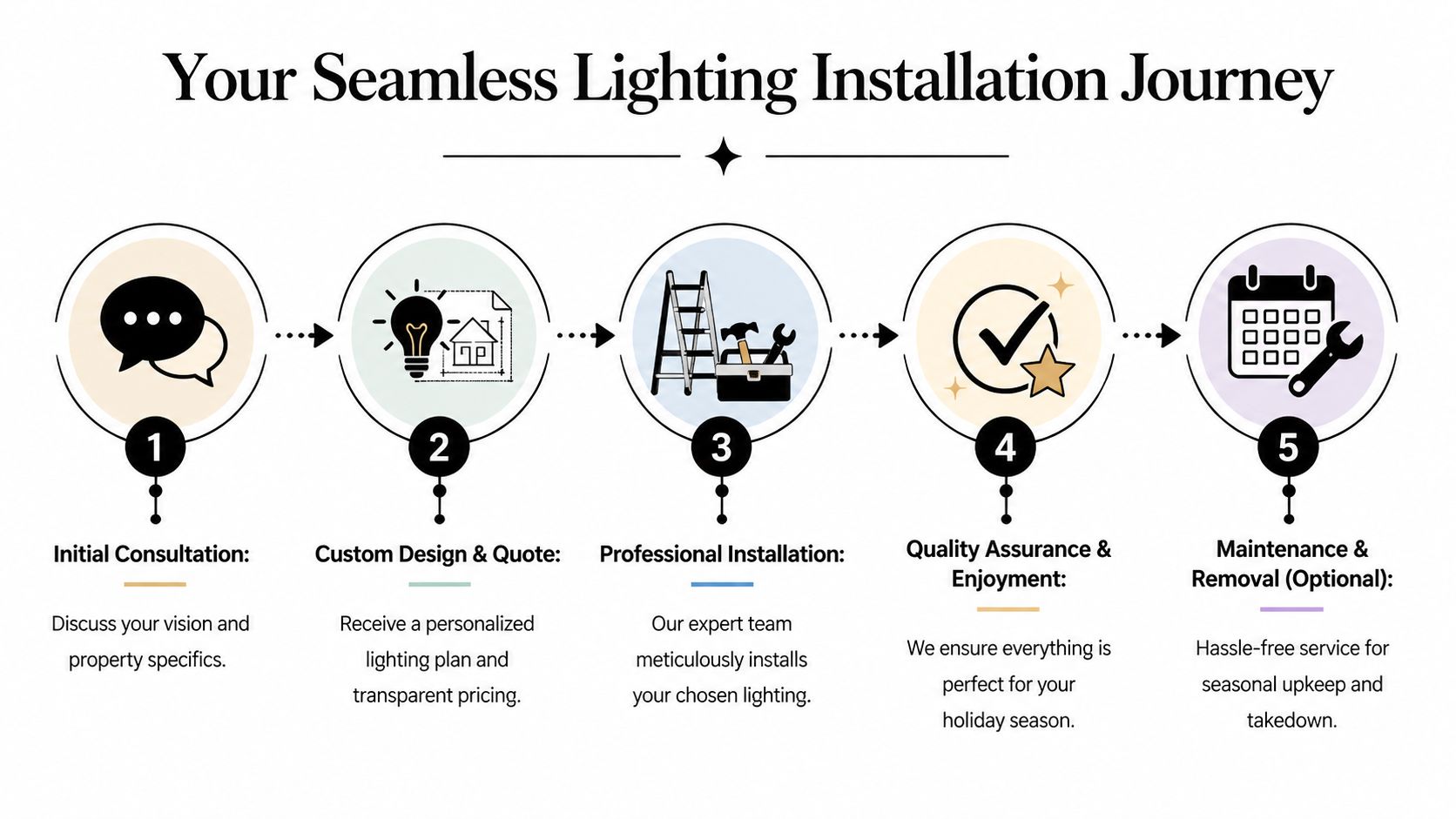
Consultation and design
The process starts with the property, not a preset package. Rooflines, entry features, trees, access points, and power layout all affect the design. A good quote should reflect what makes sense for your home.
At this stage, the useful questions are simple. Do you want warm white or color? Do you want the roofline only, or should the landscaping be included? Do you want the display to feel subtle, traditional, or more visible from the street?
Installation and quality control
Once the design is approved, the installation should be handled as a coordinated exterior service. That means proper mounting, tidy cord management, secure connections, and a final review once the system is lit after dark.
Professional firms use an end-to-end service model that includes custom design, secure installation, seasonal maintenance, and takedown with storage. This approach is associated with a 95% reduction in property damage claims compared to DIY attempts and supports compliance with safety standards (integrated installation and takedown model).
The best install day is uneventful. The crew arrives with a plan, finishes cleanly, tests everything, and leaves you with lights that simply work.
Support during the season
Even a well-installed display may need attention during the season. A timer adjustment, a connection issue, or weather-related repositioning is much easier when the installer is already responsible for the system.
That support matters because homeowners shouldn’t have to go back onto the ladder after the display is up. If the service includes in-season maintenance, the season stays easy.
Takedown and storage
Removal is where many DIY projects stop being fun. Lights come down after the holidays, but then they need to be sorted, packed, labeled, and stored in a way that makes next year easier.
A professional service can handle that closeout step too. The display comes down on schedule, the materials are stored properly, and the exterior returns to normal without leftover clips, wires, or frustration.
For homeowners who want one provider for exterior upkeep and seasonal lighting, Cultivate House Detailing offers holiday light installation alongside other exterior home services in Colorado Springs.
A Smarter Safer Approach for Colorado Springs Homes
A lot of holiday lighting advice is too generic for this area. It focuses on simple electrical reminders and skips the local risks that matter more in Colorado Springs. That’s a problem, especially for homes near pines, open space, and wind-exposed neighborhoods.
Fire safety has to be part of the plan
In Colorado Springs, over 20,000 homes are located in high fire-risk zones. For those properties, holiday lighting isn’t just about visual design. It has to account for vegetation clearance, heat output, and secure exterior connections. Stronger local protocols include low-heat LED bulbs under 100°F, 10-foot clearance from pine fuels, and wind-rated clips designed to withstand gusts over 70 mph (local fire-aware lighting considerations).
That’s not overkill here. It’s appropriate planning for the region.
What doesn’t work well in this climate
Some common decorating habits create avoidable problems:
- Overloading one area of the yard. Dense lighting near dry vegetation needs more attention, not less.
- Using mixed hardware. A display is only as secure as the weakest clip or connection.
- Treating wind as an afterthought. A nice-looking install on a calm day may not stay nice once the weather shifts.
- Running cords wherever they fit. Convenience routing often creates the messiest and least protected setup.
A basic homeowner guide like Four Seasons Roofing on home holiday decor can be helpful for understanding safe decorating habits, but properties in the Pikes Peak region often need a more site-specific approach.
If your house backs to trees or sits in an exposed area, holiday lighting should be planned with the same seriousness you’d use for any other exterior electrical project.
Why local judgment matters
The difference isn’t just technical. It’s local awareness. A home in Black Forest has different concerns than a sheltered property in a denser neighborhood. An installer who understands the area will look at tree proximity, roof exposure, and wind direction before choosing hardware and layout.
That kind of judgment often determines whether the display still looks clean and secure deep into the season.
Understanding Christmas Light Installation Costs
Homeowners usually ask the right question first. What’s this going to cost for my house, not for an average house somewhere else? The short answer is that labor for a typical Colorado Springs home often falls into a predictable starting range, but the final price depends on layout and scope.
According to Colorado Springs Christmas light installation cost data, the average labor cost for a typical home ranges from $264 to $380. That aligns with common two-story installations where the roofline and access are fairly standard.
What changes the final quote
Two houses on the same street can price differently. The main cost drivers are usually the ones you can see from the curb:
| Factor | Why it affects price |
|---|---|
| Roofline complexity | More peaks, gables, and transitions require more planning and install time |
| Home height | Taller sections slow the job and increase equipment needs |
| Design scope | Roofline-only work costs differently than roofline plus trees, garland, or pathways |
| Light ownership | Labor-only projects price differently from full-service installs that include materials |
What you’re actually paying for
The value isn’t just the finished photo at night. It’s the complete service around it.
- Accurate design work so the display fits the architecture
- Professional installation labor on the sections homeowners least want to handle
- Secure mounting methods built for local weather exposure
- Convenience if takedown and storage are included in the package
If you want a closer look at pricing factors before requesting service, this guide to holiday lighting installation cost details can help you understand how estimates are typically built.
A custom estimate is still the most useful next step. It gives you pricing tied to your roofline, your goals, and whether you want a simple seasonal outline or a more detailed display.
See Our Work Across the Pikes Peak Region
The most helpful way to judge holiday lighting is to see how different styles look on real homes. A classic warm-white roofline in a quiet neighborhood creates a very different effect than a colorful display on a storefront or a permanent architectural system on a modern build.
In the Pikes Peak region, the strongest displays usually share the same traits: clean lines, balanced brightness, and a design that matches the property instead of fighting it. That might be a family home with crisp eave lighting, a front-yard tree wrap that draws the eye from the street, or a subtle permanent setup that disappears in daylight and comes alive after sunset.
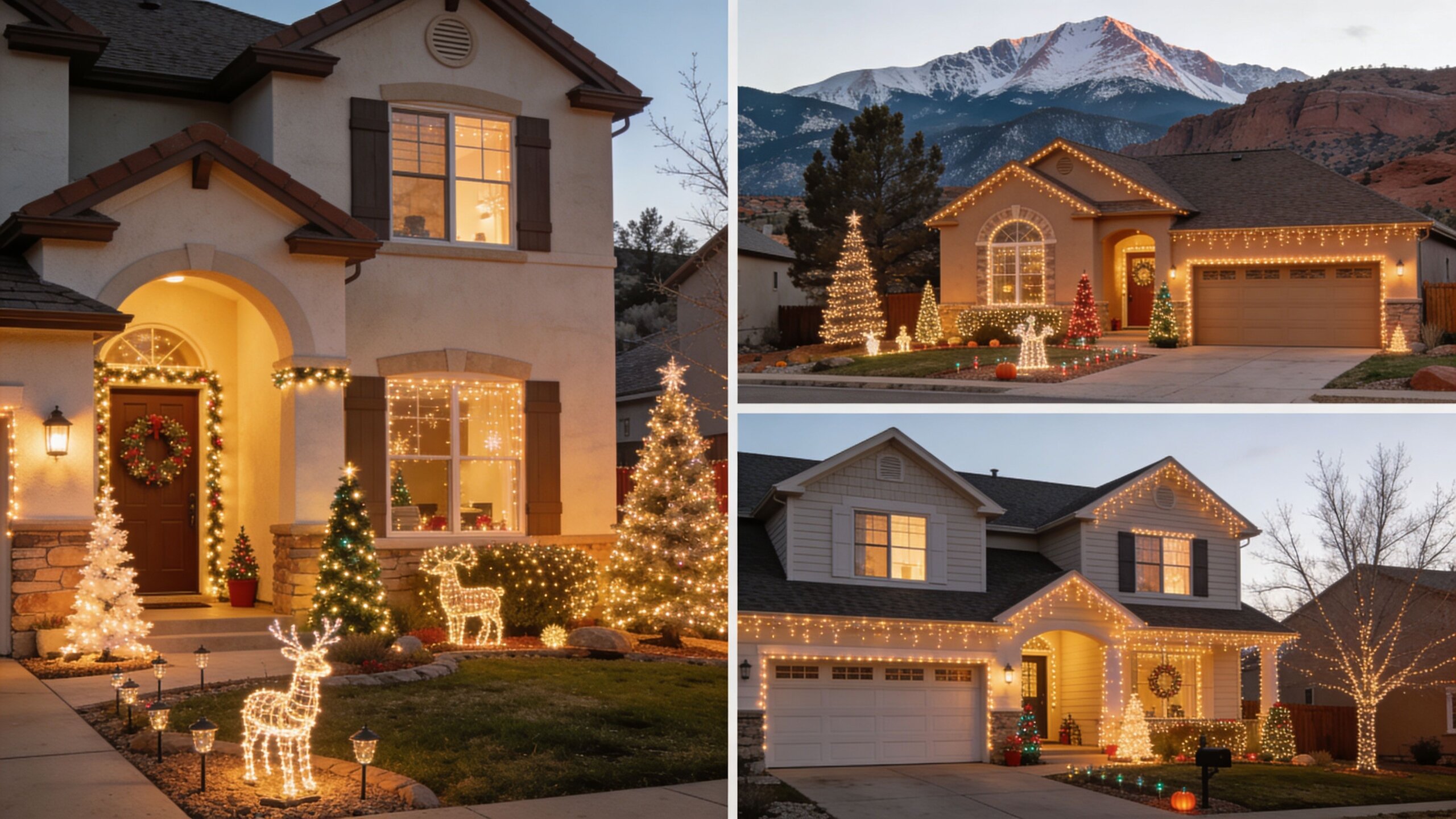
If you already have ideas, photos, or a style you want to recreate, bring those into the conversation. A clear reference point makes the design process faster and usually leads to a result that feels more personal to your home.
Your Holiday Lighting Questions Answered
When should I book my installation?
Earlier is better. Holiday calendars fill up as the season gets closer, especially once colder weather settles in. If you want the best choice of timing, reach out before you’re ready to decorate this weekend.
Do I need to provide the lights?
Not always. Some homeowners already own lights they want installed. Others prefer a full-service setup with materials selected for the property. The right option depends on the condition of the lights you have and the look you want.
Do I need to be home during installation?
Usually, you don’t need to be present the entire time as long as access and design details are handled in advance. Clear communication before the appointment makes the day go much more smoothly.
What if something stops working during the season?
That depends on the service arrangement, but in-season support is one of the biggest reasons homeowners hire professionals in the first place. If maintenance is included, you won’t be the one climbing back up to troubleshoot.
Can you install lights on tall homes?
Yes, if the provider is equipped for multi-story exterior work. That’s especially important in Colorado Springs, where many homes have higher entry lines, steep sections, and architectural features that are difficult to reach safely.
Is permanent lighting a better option than seasonal lights?
It can be, especially if you want year-round flexibility. Seasonal lighting is still a great fit if you love the traditional setup and prefer a temporary display.
If you want a clean, safe, and locally informed plan for your holiday lighting, Cultivate House Detailing is a practical place to start. Request a quote, share a few photos of your home, and get a design that fits Colorado Springs conditions as well as your style.
Rather not do it yourself? Cultivate House Detailing offers holiday lighting installation in Colorado Springs. Get a free quote.
Serving Manitou Springs and the surrounding Colorado Springs area — see our window cleaning services in Manitou Springs.