White spots on the outside of your windows usually show up at the worst time, after sprinkler season, after a windy stretch, or right when the Colorado sun starts shining straight through them. If you've been staring at chalky glass and wondering whether a bottle of vinegar will fix it, the answer is often yes for light buildup, but not always for older, baked-on stains. The trick is knowing whether you're dealing with removable mineral deposits or glass that's already been chemically altered.
For homeowners looking for window cleaning in Colorado Springs, CO, that distinction matters. Colorado Springs properties see a lot of overspray, sun exposure, and mineral-heavy residue, so hard water stain removal windows isn't just about making glass look better, it's about choosing the right fix before the damage gets worse.
Why Colorado Springs Windows Get Hard Water Stains
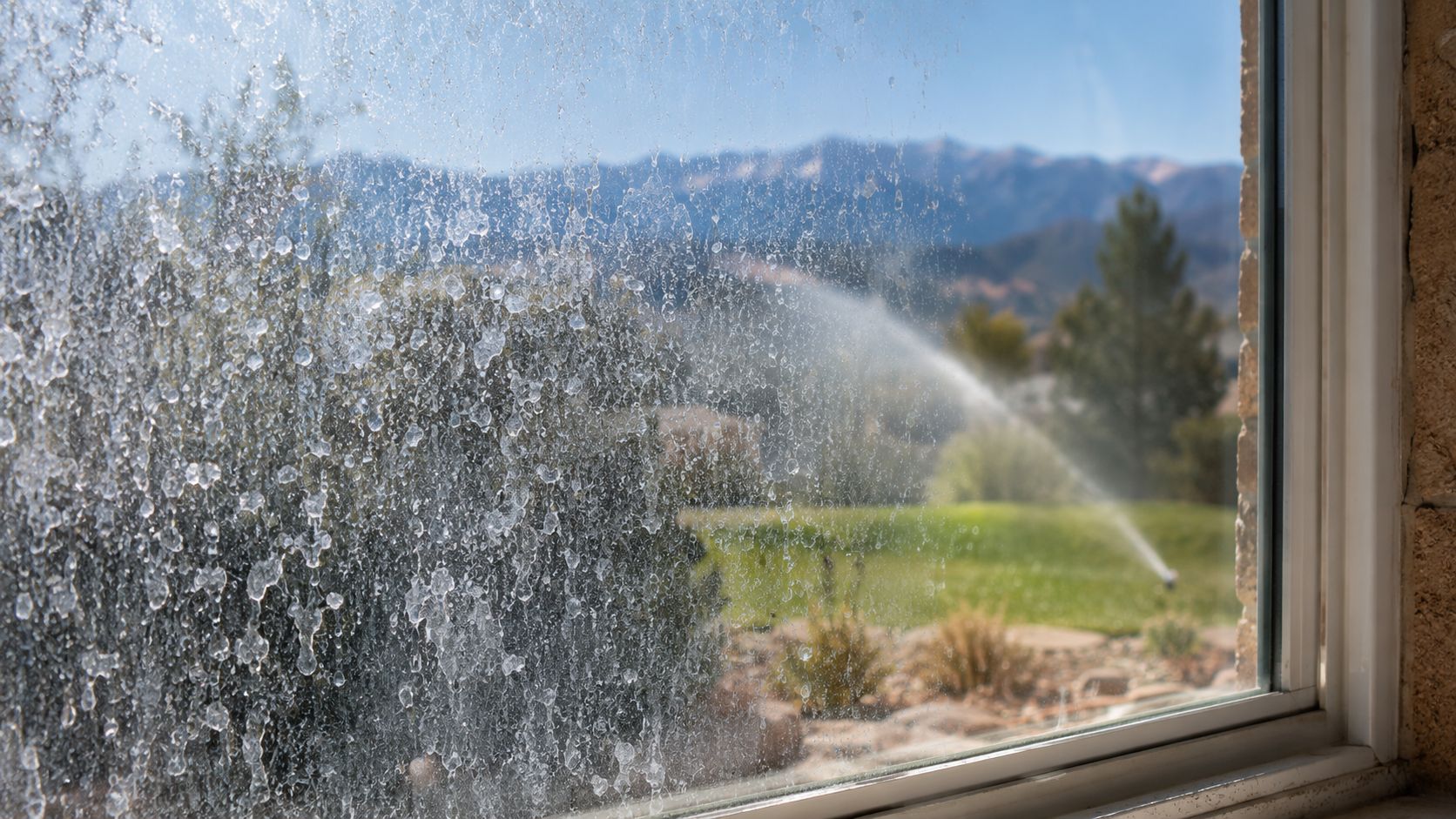
A lot of Colorado Springs homeowners notice the same thing first. The sprinklers run through the summer, the sun comes out hard in the afternoon, and suddenly the lower half of the windows has a white, cloudy fringe that won't rinse off. That's classic hard water staining, and it's usually mineral residue left behind after water evaporates from the glass.
What those white spots really are
The spots are usually calcium and magnesium deposits that stay behind when water dries on the pane. Window-cleaning guidance consistently points to this mineral buildup and recommends prevention habits like drying glass after irrigation or rain, plus adjusting sprinklers so they don't hit the windows in the first place, because the removal process is partly about chemistry and dwell time, not brute-force scrubbing alone. That same guidance also favors distilled water for rinsing so you're not putting more minerals back onto the glass surface. You can see that approach reflected in standard cleaning advice from Sparkle Tech Window Washing.
Why the problem is worse here
Colorado Springs has a lot of the ingredients that make stains stubborn. Overspray from lawn irrigation lands on siding and glass, then the strong sun bakes the residue onto the pane. South- and west-facing windows usually take the hardest hit because they get the most direct light and heat during the day.
Practical rule: If water reaches the glass regularly, and the sun dries it fast, stains tend to set in faster too.
That's why homeowners in the area often see hard water spots after sprinkler season more than after a single rain. If your home has chronic overspray, the issue is usually not the window itself, it's the water pattern hitting it over and over. For a related example of how mineral buildup is handled in another home system, protect your Keurig with PureHQ offers a useful look at why descaling matters anywhere water leaves mineral residue behind.
DIY Hard Water Stain Removal Methods That Work
Light to moderate staining usually responds best to simple tools and patient application. The biggest mistake homeowners make is scrubbing too soon, before the cleaner has time to break down the minerals. Acidic cleaners need a few minutes on the glass, not a quick spray and wipe.
Start with vinegar and distilled water
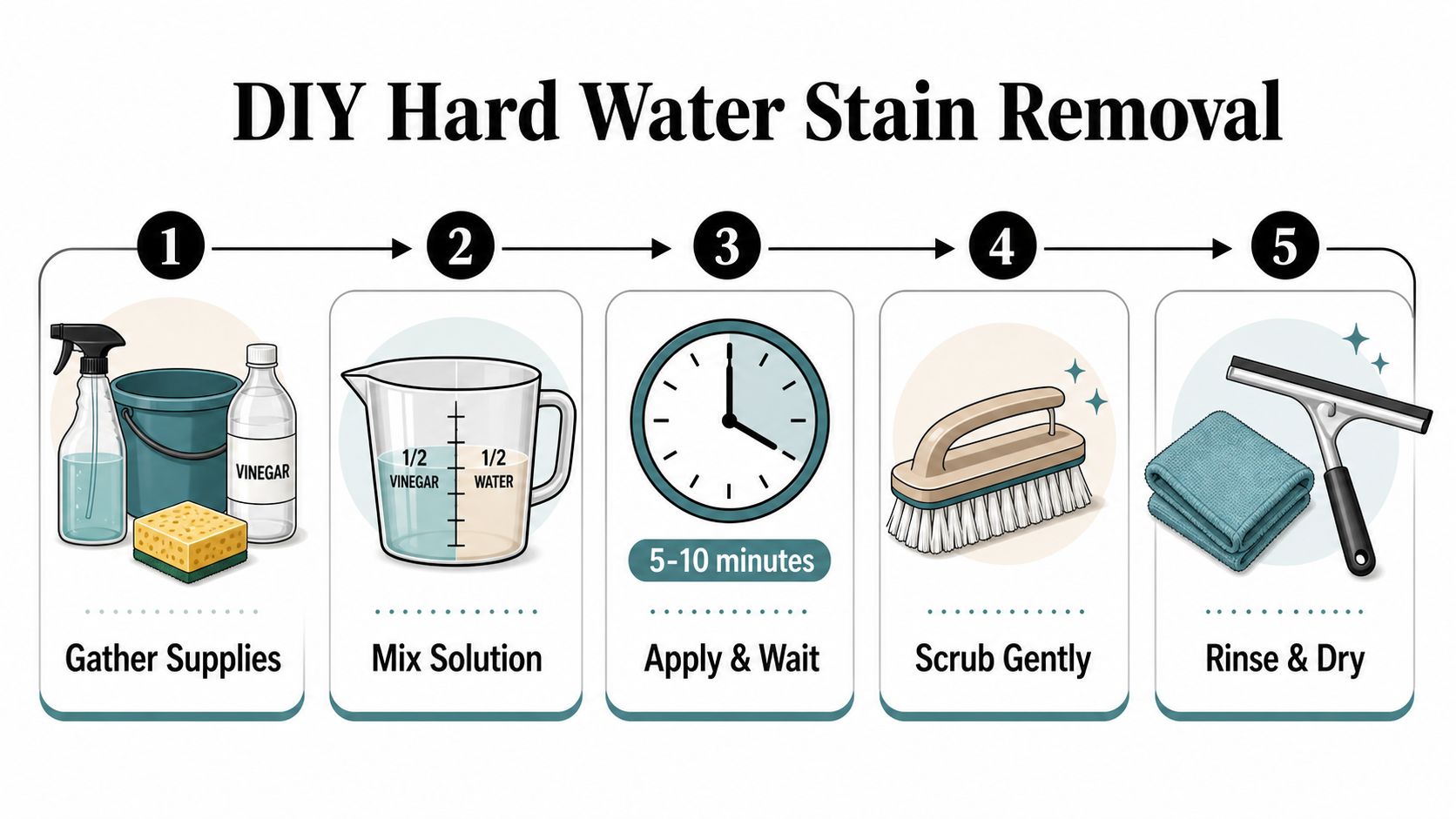
The most common homeowner method is a 50/50 mix of white vinegar and distilled water. Apply it with a microfiber cloth or towel, let it sit on the stain for about 5 to 10 minutes, then wipe, rinse, and dry the glass. That dwell time matters because it gives the vinegar time to loosen calcium-based buildup instead of just moving it around.
For heavier spots, a cloth soaked in the same mix can be pressed against the glass for 5 to 10 minutes before wiping. A few passes like that usually work better than aggressive scrubbing, especially on exterior panes where deposits have had time to bake in. Standard how-to guidance from HowStuffWorks points homeowners to the same vinegar-and-water approach.
Move up carefully if the stain stays
If the vinegar mix softens the stain but doesn't finish the job, extra-fine #0000 steel wool can be used with care on glass. It has to be the very fine grade, and it should be used lightly, not pressed hard into the pane. The goal is to lift residue, not grind at the surface.
Good judgment matters here. If the glass is older, tinted, coated, or already scratched, test a small area first before touching the whole window.
For stubborn buildup, some homeowners turn to commercial descalers like CLR or Lime-A-Way. Those products can help, but they need to be labeled safe for glass, and they must be rinsed and dried thoroughly so they don't leave streaks or damage behind. A practical walkthrough of the stronger end of the DIY spectrum is also covered in this quick DIY glass detailing fix, which is useful context if you're trying to decide whether a stubborn spot is still within home-repair range.
Don't skip the finish
No matter which cleaner you use, finish with a full rinse and dry. That last step is what keeps dissolved minerals and leftover cleaner from drying back onto the pane. A clean microfiber cloth or squeegee is usually enough if the stain has been properly loosened first.
How to Tell If Your Glass Is Stained or Permanently Etched
The hard part isn't always cleaning the window. It's deciding whether the spot is still on the surface or whether the glass has already been changed by the minerals. If that decision gets missed, homeowners can spend hours on a stain that won't move no matter how good the cleaner is.
Simple at-home checks
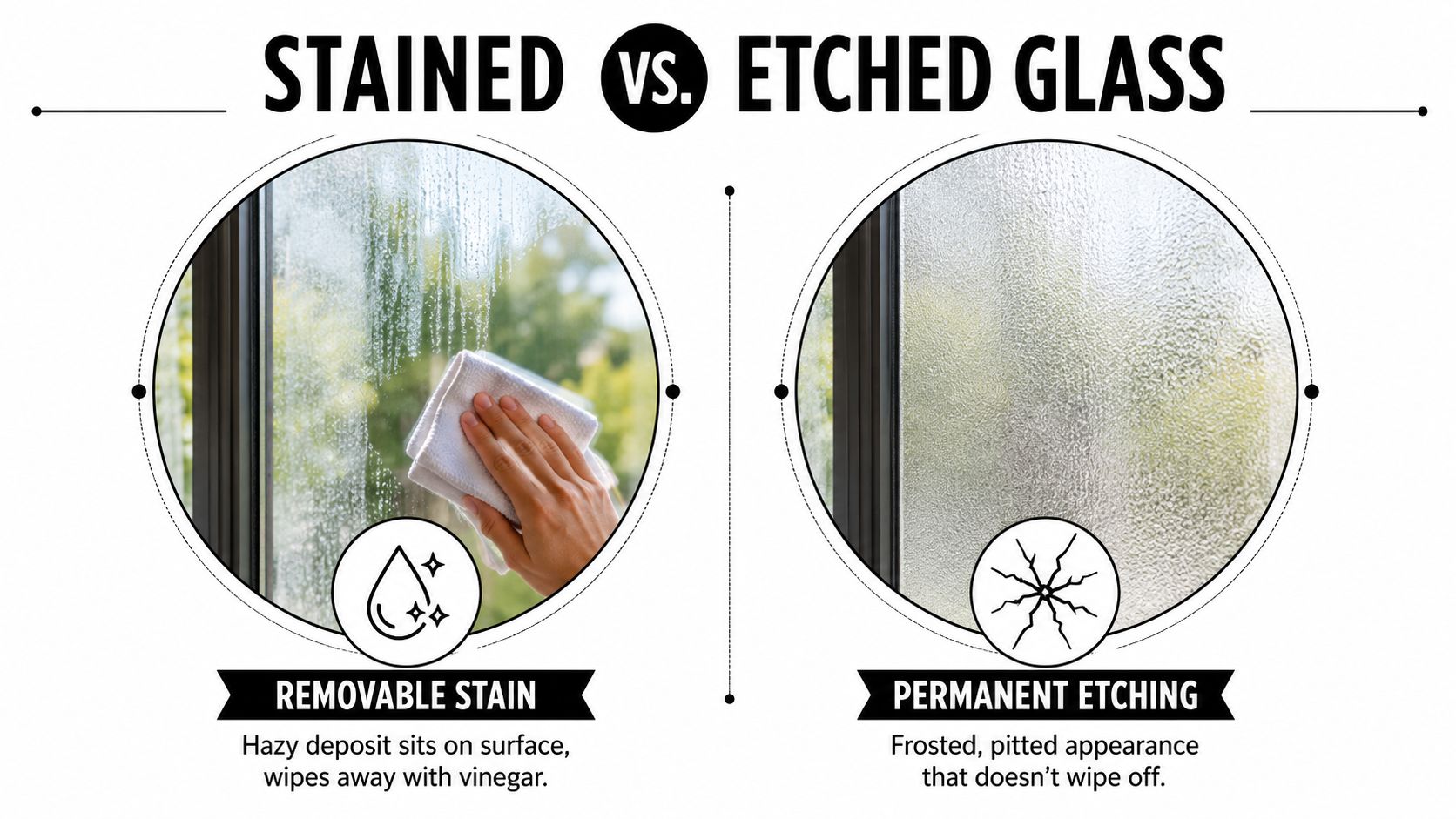
Run a clean fingernail across the area. If you feel roughness or a raised edge, that suggests buildup is still sitting on top of the glass. If the spot feels smooth but still looks hazy after a proper vinegar treatment, etching becomes more likely.
Look at the window from different angles in direct sunlight. Surface deposits often catch the light as chalky streaks or cloudy residue, while etched glass can look frosted, dull, or permanently hazy even after cleaning. A helpful reminder from a practical video guide is that if the glass still looks cloudy after the minerals are dissolved, the problem may be etching or a stubborn layer that needs light polishing, which is a very different situation from ordinary buildup. That point is discussed in the earlier decision-making resource at this window restoration video.
What DIY can't fix
When minerals sit on glass long enough, they can alter the surface itself. At that point, vinegar and scrubbing won't restore full clarity because the issue isn't just what's sitting on the window, it's the glass itself. That's where homeowners need an honest answer, not another round of rubbing with the same result.
If the stain disappears in spots but leaves a dull outline behind, you may be looking at damage rather than residue.
A practical rule is simple. If the stain lightens with vinegar, it's probably removable. If the stain stays put after proper dwell time, careful wiping, and a full rinse, the pane may need polishing, restoration, or replacement depending on how far the etching has gone.
When to Hire Professional Window Cleaning in Colorado Springs
DIY works best when the stain is light, recent, and easy to reach. Once the buildup is on upper-story windows, spread across a whole elevation, or mixed with possible etching, professional cleaning makes more sense. Trained crews bring tools that most homeowners don't have, and they can spot the difference between a removable deposit and a window that needs a different approach.
What professionals can do differently
Professional crews use water-fed pole systems and purified water that doesn't leave behind mineral residue. That matters on Colorado Springs properties because purified water helps avoid adding new spots while cleaning exterior glass. It also lets technicians reach higher windows safely, including second-, third-, and fourth-story panes, without leaning ladders into delicate landscaping or roofing.
They also know how to work around older glass, coatings, and fragile frames. That experience matters when a homeowner has already tried vinegar, a descaler, or light abrasion and still can't clear the haze. In those cases, the issue may not be a cleaning problem anymore, it may be a restoration problem.
Why it helps homes and businesses
For homeowners, professional residential window cleaning usually includes more than the glass. Screen cleaning and track cleaning help finish the job so the windows open cleanly and look right from inside and out. For businesses, the same service supports a sharper appearance for storefronts, offices, auto dealerships, retail buildings, and restaurants where dirty glass sends the wrong message before anyone walks in.
A commercial crew also brings a maintenance mindset. Industry guidance recommends setting a window-cleaning schedule so spots don't have time to “bake in”, and that advice fits Colorado Springs well because the sun here works fast on mineral residue. That maintenance-first approach is part of the broader mindset behind professional window care from sources like Unger Global.
What to expect when you book service
Most homeowners want a simple process. Estimate first, then a scheduled visit, then a final walkthrough once the glass is clean. A good crew should communicate clearly, protect surrounding surfaces, and leave the windows streak-free without making the rest of the property look like it went through a construction zone.
If you've already spent a weekend on a stubborn pane, that convenience matters. So does safety, especially on steep lots, tall homes, and glass that's too high to reach comfortably from the ground.
Preventing Hard Water Stains From Coming Back
Once the glass is clean, the key is keeping it that way. Recurring hard water stains usually come from the same source every time, such as sprinkler overspray, runoff, or mineral-heavy exterior water. If that source stays in place, the stains come right back.
Fix the source, not just the symptom
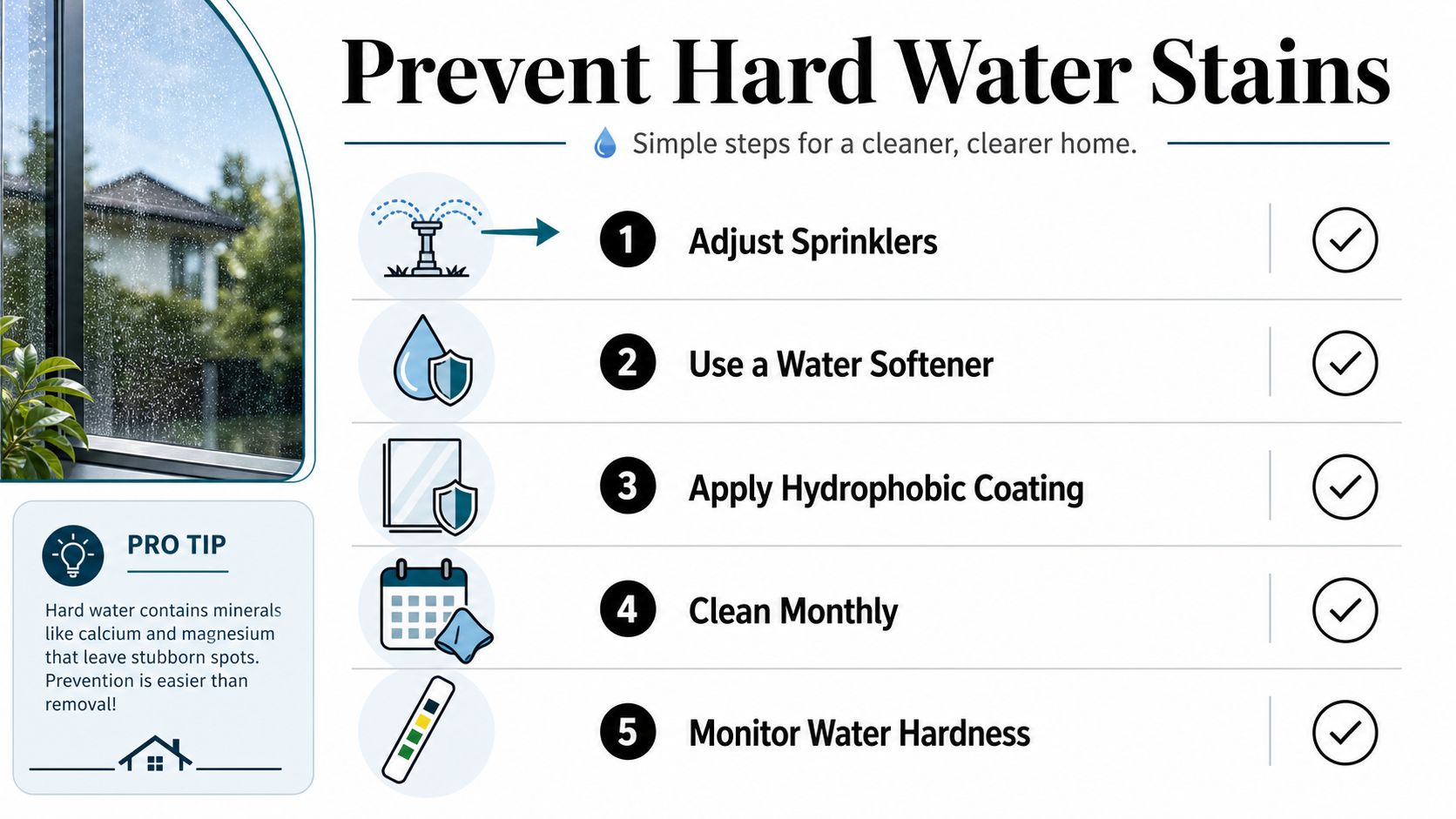
Start with irrigation. Reposition sprinkler heads so they don't spray the windows, and consider switching to drip lines near glass where possible. That cuts down on overspray and keeps mineral-laden water off the pane in the first place.
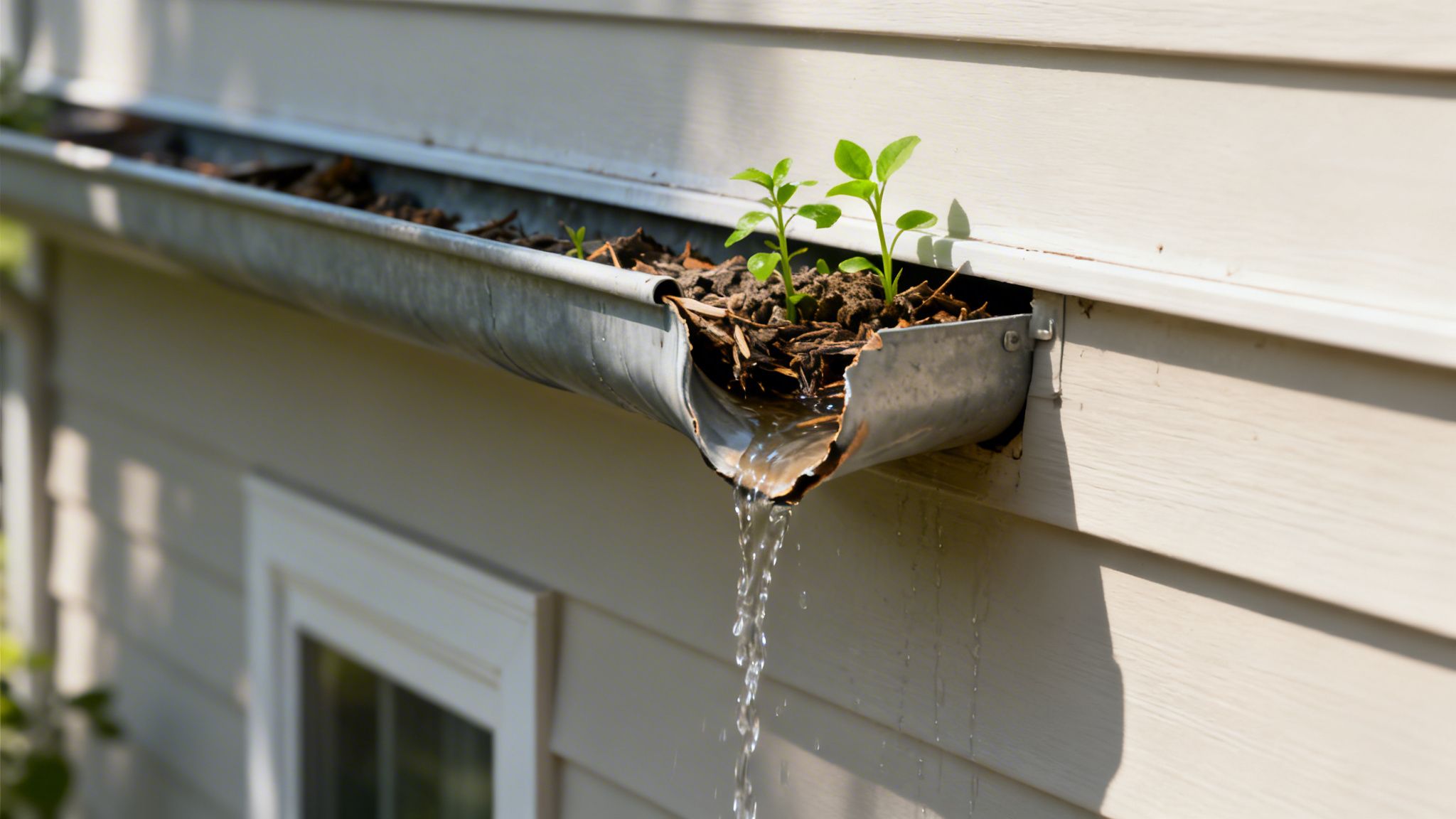
Drainage matters too. Roof runoff and gutter overflow can send dirty water across siding and windows, especially during fast-moving weather. Keeping gutters clear and making sure water drains away from the wall helps limit the repeated wetting that leads to mineral buildup.
Preventing the next stain is always easier than removing the last one.
Add protection and keep a schedule
Protective hydrophobic glass sealants can make it harder for minerals to bond to the surface. They don't stop water from landing on the pane, but they can buy you time and make future cleaning easier. Homes with chronic staining sometimes also benefit from filtered or softened water at exterior taps, especially when the water source itself is part of the problem. A related example of whole-home water treatment can be found in whole house water filtration Eastbourne, which shows how homeowners think about reducing mineral issues at the source.
A seasonal maintenance rhythm helps too. Windows that get cleaned before deposits harden are much easier to keep clear than windows that only get attention after a year of buildup. For homeowners who want a more practical prevention plan, this guide on how to prevent hard water stains on glass is a useful companion.
For Colorado Springs homes in places like Black Forest, Monument, Manitou Springs, and Woodland Park, that prevention mindset pays off because irrigation and sun exposure can work against you all summer long. It's a maintenance issue, not just a cleaning issue.
Your Path to Streak-Free Windows in Colorado Springs
A window that still looks cloudy after vinegar, a soaked cloth, or a careful pass with #0000 steel wool is telling you something different from a fresh mineral deposit. If the spot lifts, you're dealing with hard water residue. If the glass stays hazy, especially after repeated treatment, the surface may already be etched, and that changes the job completely.
Colorado Springs makes that call harder than it is in many other places. Hard water, strong sun, and irrigation-heavy landscaping work together to set stains fast, especially on windows that take overspray from sprinklers. I see this often on homes and businesses across the city, where one season of constant water contact can turn a clean pane into a stubborn, cloudy surface.
That's why I look at two things before I recommend a next step, what the stain is doing and what is hitting the glass. If the contamination is still removable, a careful cleaning can solve it. If the source keeps returning, or the glass has been chemically marked, the correct fix is either a better maintenance plan or a professional restoration attempt that uses the right tools and the right water.
For homeowners and property managers who want a cleaner long-term solution, professional window cleaning in Colorado Springs, CO can do more than remove spots. It can improve curb appeal, brighten interior light, protect glass longevity, and cut down on the cycle of repeated scrubbing. If the job calls for purified water, deionized water window cleaning can help reduce new spotting during the wash, and if you also need pressure washing, gutter cleaning, or seasonal lighting, it helps to work with one local team that keeps the whole property looking right. If your windows have mineral spots that won't budge, Cultivate House Detailing can help with residential and commercial window cleaning, hard water stain removal, and careful exterior care across Colorado Springs and nearby communities, so you can get a clear answer on whether the glass can be saved or needs a different approach. Visit Cultivate House Detailing to request a quote and schedule service that fits your home or business.
Want it handled by a local crew? Cultivate House Detailing offers residential window cleaning in Colorado Springs. Get a free quote.