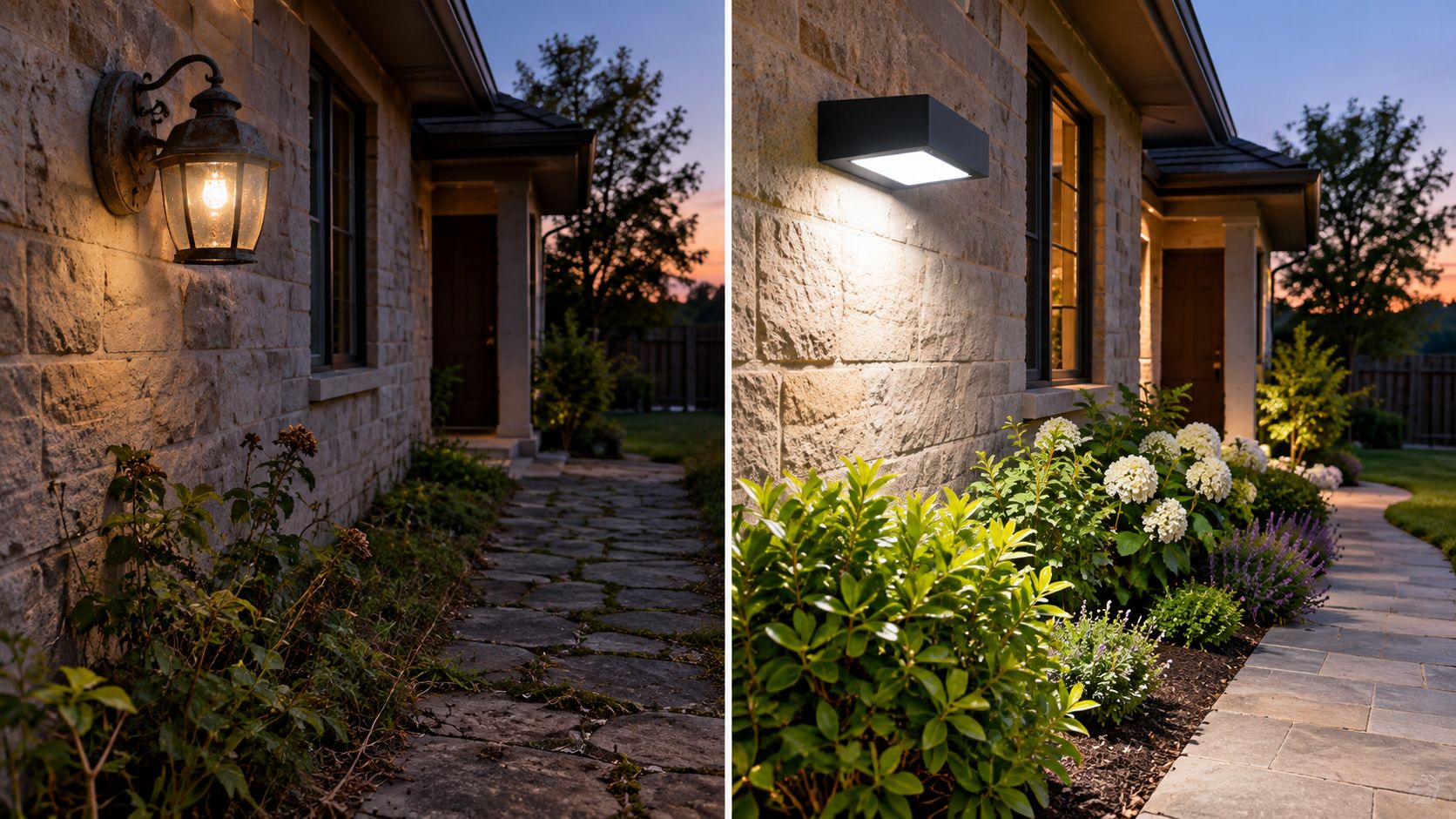
Most outdoor LED lights are rated for 25,000 to 50,000 hours, or roughly 11 to 22 years when they run for 8 hours each night. In real outdoor conditions, though, service life is often shorter because heat, moisture, and driver quality usually matter more than the LED chip's advertised rating.
So why can one path light keep working for years while another begins flickering after a few seasons? The answer isn't found in the hours printed on the box alone. The weakest part may be the power supply, a cracked seal, a corroded housing, or a fixture that traps heat in direct Colorado sun.
This guide explains what homeowners should inspect before buying or replacing outdoor lighting. It also helps separate a gradual loss of brightness from a sudden electrical failure, so you can decide whether a fixture needs cleaning, repair, a new driver, or complete replacement.
What to Expect From Outdoor LED Lifespan
How long should an outdoor LED light really last? A quality fixture commonly carries a rated life of 25,000 to 50,000 hours, according to guidance on outdoor LED service life. At eight hours of nightly use, those figures represent approximately 8 to 17 years, although actual service life depends on the fixture's design and surroundings. The U.S. Department of Energy outdoor area lighting guidance uses 50,000 hours or more as a benchmark for outdoor LED longevity and compares it with roughly 15,000 to 35,000 hours for many conventional outdoor lighting technologies.
The rating describes expected LED performance under controlled conditions. It does not guarantee that every part of the fixture will work perfectly for the same period. Outdoor equipment must handle temperature swings, moisture, dust, irrigation spray, insects, soil contact, and power disturbances. Any of these conditions can shorten practical service life.
The three parts that determine failure
An outdoor fixture is only as strong as its three main links:
- LED chip: The solid-state light source usually loses brightness gradually instead of failing without warning.
- Driver: This component regulates electrical power. Heat, voltage events, and moisture can damage it before the LED reaches its rated life.
- Housing: The body, lens, gasket, and mounting hardware shield the electronics from weather and impact.
The first failed link often determines whether the light dims slowly or stops working suddenly. A premium LED chip inside a poorly sealed housing cannot deliver its advertised value if the driver overheats or water reaches the circuit board.
Budget fixtures commonly pair thinner housings with less durable seals and inexpensive drivers. Before replacing a light, inspect which component is likely to give out first in your yard, rather than relying on the hour figure alone.
For ideas about fixture construction, placement, and outdoor design, browse premium lighting at urbanmancaves.com.
Understanding the L70 Rating and What It Means
The L70 rating marks the point when an LED produces about 70% of its original light output. It measures gradual brightness loss, not the moment the fixture stops working. An LED can still illuminate a walkway after reaching L70, but its reduced output may no longer provide adequate visibility for a driveway, sign, or security area.
Unlike an incandescent bulb that often fails abruptly, an LED usually fades over time. The rated-hours figure therefore describes a brightness benchmark for the light source, not a promise that the driver, seal, wiring, or housing will last equally long.
Usage changes the calendar conversion
A fixture's schedule determines how quickly it accumulates rated hours. An evening accent light controlled by a timer adds hours more slowly than a security floodlight that runs throughout the night. A dusk-to-dawn fixture reaches the same hour total sooner because it operates during more of each night.
| Daily Usage | 25,000-Hour Rating | 50,000-Hour Rating |
|---|---|---|
| 8 hours per night | About 8.5 years | About 17 years |
| 12 hours per night | About 5.7 years | About 11.4 years |
| 24 hours per day | About 2.9 years | About 5.7 years |
These calendar conversions use the rated-hour figures and do not account for heat, water, poor wiring, or failure of another fixture component. The DOE outdoor lighting reference provides useful background on outdoor lighting performance and service-life ratings.
A homeowner usually replaces an outdoor light when its output becomes visibly weak, its color shifts, or it no longer performs its intended job. That point may come before or after the L70 estimate, depending on how much light the location needs.
Practical rule: Use the L70 number as a brightness benchmark. Then check the driver, weather sealing, and housing, because the weakest part can end the fixture's useful service before the LED chip reaches that rating.
Environmental Factors That Shorten LED Life
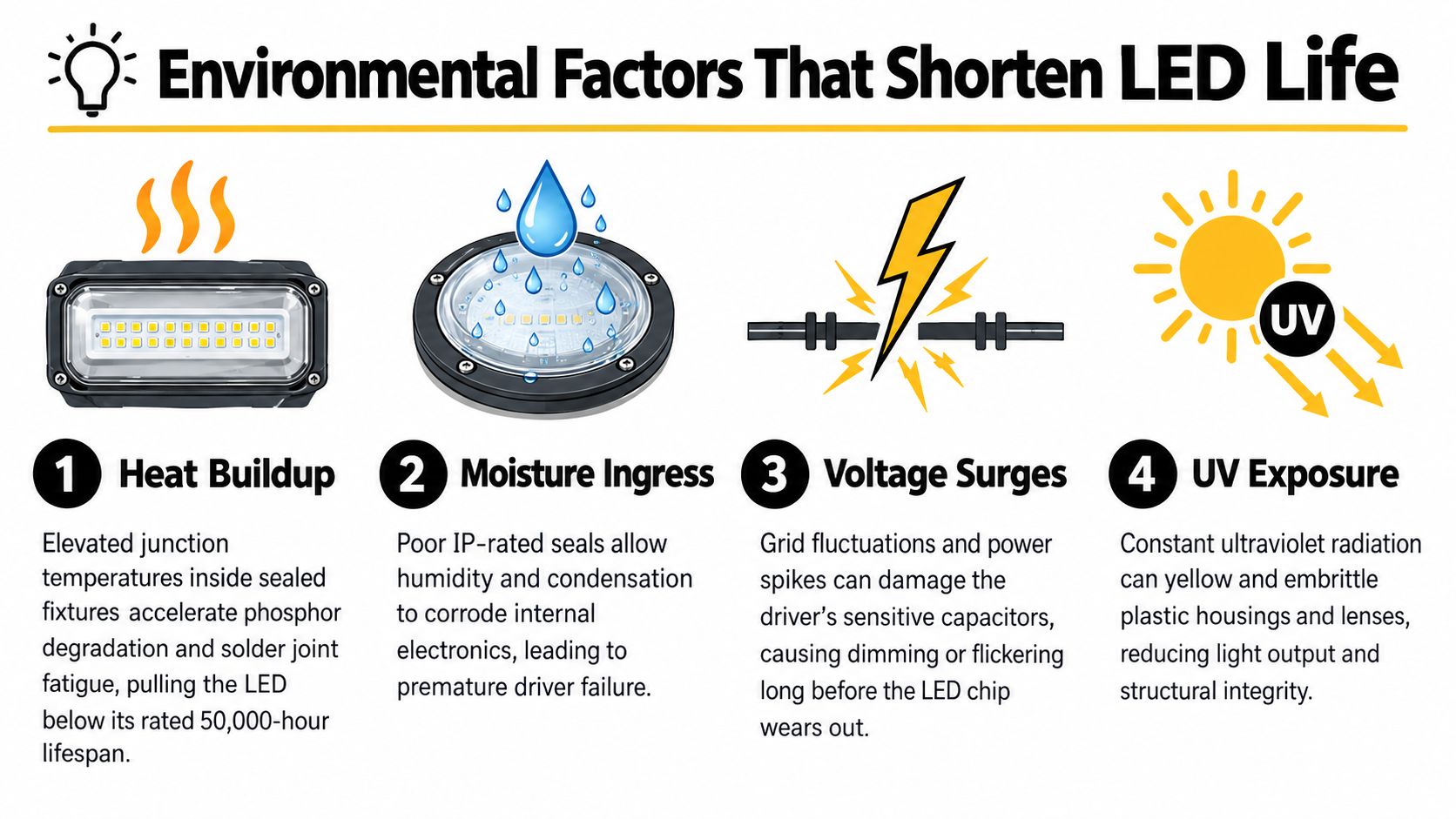
Could the installation environment shorten an outdoor LED's life before the chip reaches its rated hours? It can. Heat, moisture, voltage problems, ultraviolet exposure, and physical damage place stress on the driver, seals, wiring, lens, and housing. The fixture usually fails at whichever component handles those conditions least effectively.
Heat is a common starting point. A sealed fixture in direct sun can trap heat around its electronics, especially when a dark housing absorbs sunlight and has little room to release it. Higher temperatures speed light depreciation and stress solder joints and driver components. Leaves, mulch, or a tight enclosure can block airflow and create the same problem.
Moisture causes a different kind of damage. A gasket may flatten, shift, or crack. Irrigation spray can enter through a lens seam, and condensation can form inside after temperature changes. Once humidity reaches the electronics, corrosion can affect the driver even when the fixture's exterior still looks sound.
Look at the installation, not only the bulb
Freeze-thaw movement can stress plastic housings and seals. Soil chemistry may corrode metal around in-ground well lights, while lawn equipment can hit exposed fixtures or pull on buried cable. Older transformers and unstable power can also send voltage fluctuations through a low-voltage system.
Ultraviolet exposure gradually weakens plastic lenses and composite bodies. In Colorado's Front Range, higher-altitude UV exposure can accelerate lens yellowing and brittleness compared with installations near sea level. A damaged lens transmits less light and may give water an easier path into the electronics. Irrigation minerals, winter moisture, road debris, salt, and repeated temperature changes add more stress.
Before blaming the LED chip, inspect the whole fixture. Check for unusual heat, fogging inside the lens, a loose seal, damp mulch or soil around the housing, and signs of impact. The DOE outdoor area lighting guidance offers background on outdoor lighting design and operating conditions, while the practical diagnosis starts at the installation itself.
Why the Driver Often Fails Before the LED
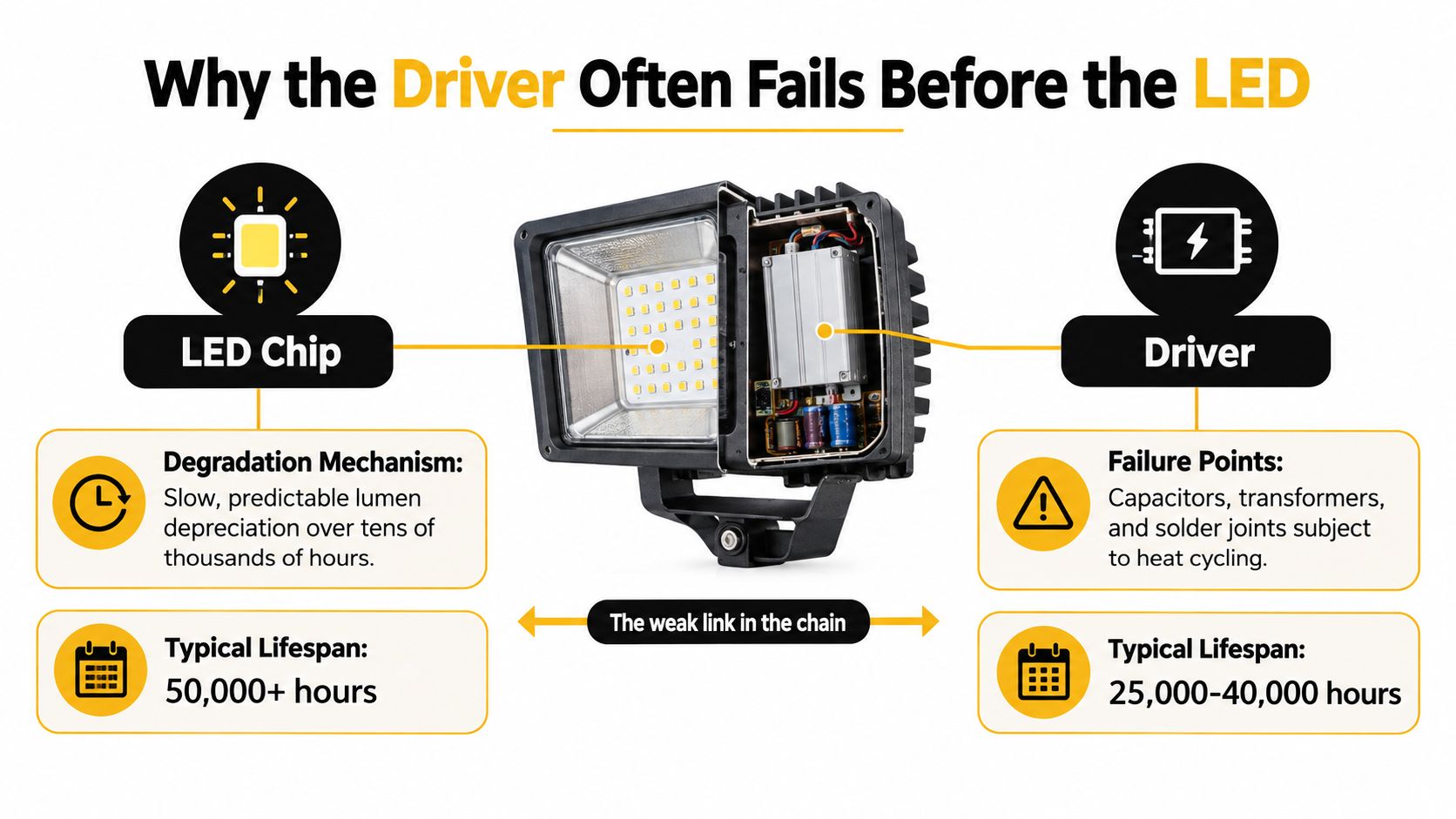
An outdoor LED fixture contains a light-emitting chip and a driver, the electronic component that controls the power reaching that chip. The chip is solid-state and commonly loses brightness gradually. The driver contains parts such as capacitors, resistors, transformers, and solder connections that respond more sharply to heat cycling, moisture, and voltage events.
Reliability references indicate that LED chips can exceed 100,000 hours, while average driver life is often around 20,000 to 30,000 hours. Severe heat inside an outdoor enclosure can reduce effective driver life to roughly 12,000 to 18,000 hours (outdoor LED driver and lifespan data).
That explains a familiar symptom: the light flickers, goes dim, or stops working, but the LED emitter itself remains usable. A qualified technician can test driver output with a multimeter. If the driver produces no voltage or unstable voltage, replacing that component may restore the fixture without replacing the entire housing.
What to look for before buying
A replaceable, documented driver gives you more maintenance flexibility than a sealed fixture with no service parts. Ask whether the manufacturer identifies the driver model, provides replacement components, and protects the electronics with a suitable heat sink.
A nearby lightning event or a grid disturbance can damage a driver instantly. In that situation, the chip may not have aged at all, but the fixture still appears dead. For safe troubleshooting and repair guidance, homeowners can review how to fix broken light fixtures safely in Colorado Springs.
A long LED rating doesn't protect a fixture from an undersized, overheated, or unserviceable driver.
Fixture Materials and Long-Term Durability
The housing determines how well an outdoor LED manages heat, water, ultraviolet exposure, and physical contact. A durable chip inside a weak enclosure can still produce a short-lived lighting system.
The material comparison below reflects recent outdoor fixture guidance, which identifies sharply different expected calendar lives for common housing materials (outdoor fixture material guidance).
| Material | Expected Service Life | Strengths | Weaknesses |
|---|---|---|---|
| Brass | 20+ years | Corrosion resistance, durable body, protective patina | Higher purchase price, heavier construction |
| Copper | 20+ years | Corrosion resistance, good heat transfer, durable exterior | Higher purchase price, develops patina |
| Cast aluminum | 3 to 7 years in some outdoor guidance | Lightweight, affordable, useful heat dissipation | Quality varies, can pit or corrode |
| Plastic or composite | 1 to 3 years in some outdoor guidance | Lightweight, low initial cost, easy to shape | UV brittleness, cracked seals, weaker impact resistance |
Brass and copper generally make strong choices for permanent outdoor installations because the body can remain serviceable while the LED or driver is repaired. Aluminum can perform well when it has a durable coating and adequate thickness, but untreated or thin material is more vulnerable to pitting.
Plastic isn't automatically unsuitable. It can work for temporary, sheltered, or low-cost applications. It deserves closer inspection around the lens, mounting point, and cable entry. A metal housing also acts as a heat path, helping move heat away from the driver and chip.
When two fixtures have similar light ratings, examine the body, gasket, lens, cable, and serviceability before paying extra for a higher chip rating. The enclosure may control the replacement cycle.
Maintenance Tips to Maximize Outdoor LED Life
Outdoor fixtures benefit from simple attention. A homeowner doesn't need specialized equipment for many routine checks, but the work should be done with power disconnected when inspecting wiring or opening a fixture.
Start with the ground around path lights and well lights. Remove leaves, mulch, soil, and standing debris so water can drain away and the housing can release heat. Trim plants that press against lenses or hold damp air around the fixture.
A practical inspection routine
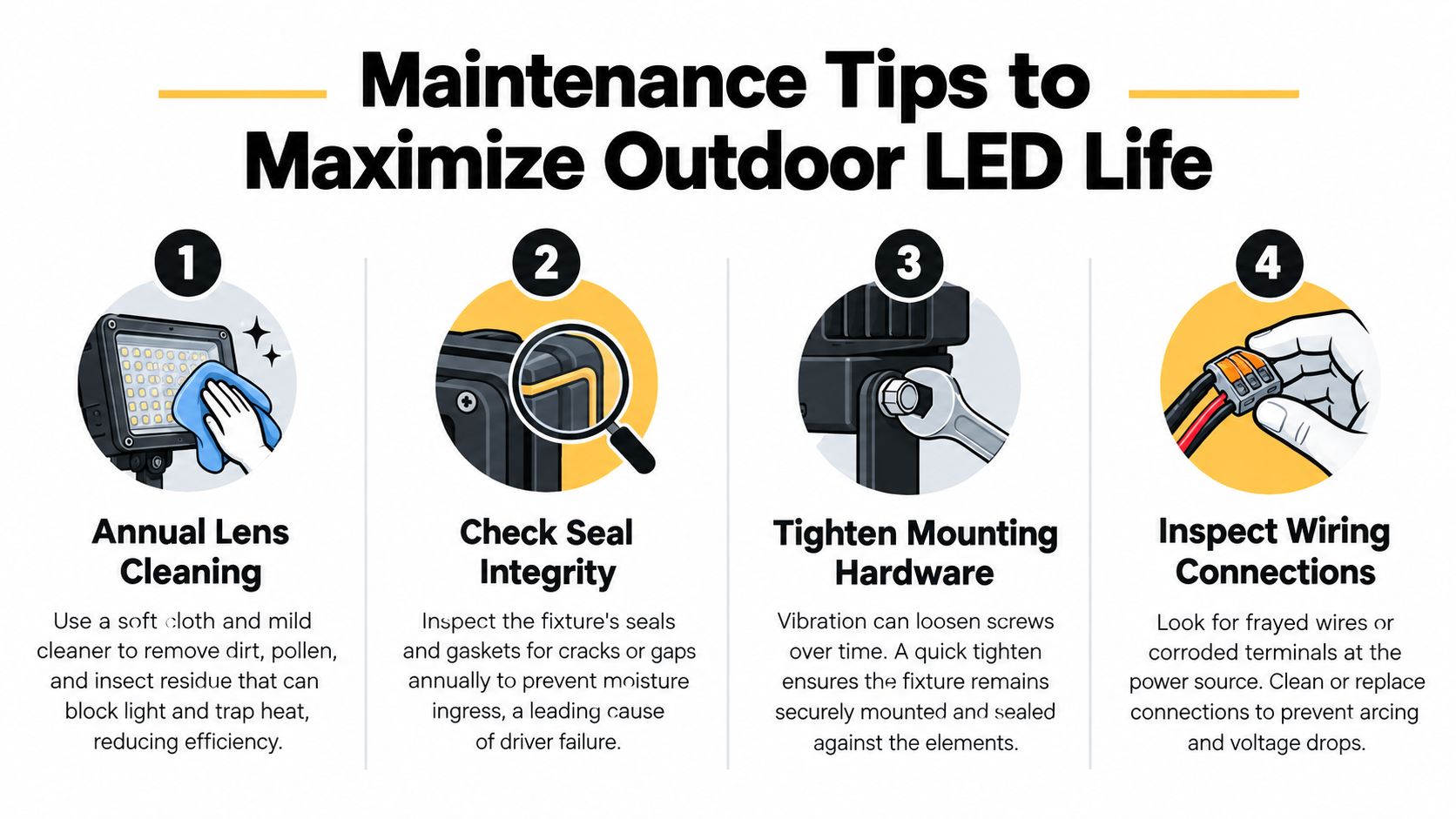
- Clean the lens: Use a soft cloth and mild soap to remove dust, pollen, insects, and mineral residue. Abrasive cleaners can scratch plastic and reduce light transmission.
- Inspect the seal: Look for gaps, flattened gaskets, fogging, or a lens that no longer sits evenly. Water often enters through a seal that shifted during vibration or temperature changes.
- Check the mounting: Tighten loose screws and brackets. A fixture that moves in wind can stress its seal, wiring, and cable entry.
- Examine connections: Check the transformer and fixture terminals for corrosion, loose conductors, or damaged insulation. Dielectric grease can help protect suitable exposed low-voltage connections.
- Protect the power supply: A surge protector at the transformer can reduce the risk that a voltage spike reaches multiple drivers.
- Watch the light output: Dimming, flicker, delayed startup, or a changed color can signal a developing problem rather than normal operation.
A spring and fall inspection works well for many properties because it catches debris, seal, and wiring issues before harsh weather or heavy plant growth makes access difficult. For design considerations around low-profile applications, review these exterior LED strip lighting design tips.
If a fixture is flickering or showing moisture inside, don't keep cycling it on and off while water may be present. Turn off the circuit and have the fixture, driver, and connections checked.
Cost vs Longevity and How Warranties Fit In
A low purchase price doesn't always produce a low long-term cost. A plastic path light may be inexpensive to replace, but repeated failures create extra work and can make an entire outdoor lighting system look uneven. A brass or copper fixture costs more initially, yet its housing may remain useful through multiple driver or emitter repairs.
Compare these factors before choosing a tier:
- Body material: Brass and copper have the strongest long-term durability profile in the available material guidance, while plastic and composite bodies have the shortest.
- Driver access: A replaceable driver can preserve the housing and wiring.
- Seal construction: Look for a gasket that can be inspected and replaced rather than a body that is permanently sealed without service information.
- Warranty language: Parts-only coverage isn't the same as labor-inclusive coverage. Check whether the warranty is prorated, transferable, and clear about water damage or installation requirements.
- Access difficulty: A fixture mounted high on a building or embedded in finished landscaping may cost more to diagnose or replace than an accessible path light.
The table below is a decision framework for a 12-fixture system. It avoids pretending that every property has the same purchase or labor cost, because the actual figures depend on the fixture, installation, wiring, access, and warranty.
| Cost Factor | Budget Plastic | Mid-Range Aluminum | Premium Brass/Copper |
|---|---|---|---|
| Initial fixture cost | Lower | Moderate | Higher |
| Housing durability | More vulnerable to UV and cracking | Depends heavily on coating and thickness | Strong corrosion resistance |
| Driver serviceability | Often limited | Varies by product | More likely to support long-term repair |
| Maintenance exposure | More frequent inspection may be needed | Moderate | Lower when seals and construction are sound |
| Warranty questions | Check exclusions closely | Review parts and labor terms | Often paired with stronger construction, but verify terms |
| 12-fixture planning | Lower entry cost, higher replacement risk | Balanced purchase and maintenance decision | Higher entry cost, stronger long-term value potential |
A permanent system deserves a design and installation review, such as the service information for permanent outdoor lighting installation. The right choice is a value equation. Consider the fixture body, driver, service access, warranty, and installation conditions together rather than comparing sticker prices alone.
Common Questions About Outdoor LED Longevity
How can I tell when an outdoor LED is failing?
Gradual dimming, flickering, delayed startup, or a color shift can signal trouble. Check the lens, connectors, and housing too. A dark lens, corrosion, or trapped moisture can imitate an LED failure. Clean the fixture and inspect its connections first. If the symptom remains, a technician can test the driver before you replace the entire unit.
Do cold or hot climates shorten LED life more?
Each creates a different risk. Heat ages electronic parts faster when the housing cannot release heat. Freezing temperatures and repeated thawing can crack plastic, loosen seals, and let water reach the electronics. In Colorado Springs, inspect fixtures for summer heat exposure as well as winter moisture damage.
What lifespan is realistic for landscape path lights?
Judge a path light by how well it maintains useful light, not only by its rated hours. Ask whether the specification identifies expected lumen maintenance at L70, the point at which output has fallen to about seventy percent of its initial level. The housing and mounting method also matter. A stake-mounted light sits close to irrigation spray, wet soil, and lawn equipment, while a bollard-style fixture may keep its electronics higher and provide better drainage. Quality products are often rated around 25,000 to 50,000 hours, while premium outdoor products can reach 100,000 hours under optimal conditions (LED lifespan range and usage guidance). Treat those figures as controlled-condition guidance, then examine sealing, drainage, driver access, sun exposure, and irrigation before buying.
How do I claim a warranty if a fixture fails early?
Keep the receipt, model information, installation date, and photographs. Record whether the fixture flickers, stays dark, shows corrosion, or contains water. Before removing it, check requirements for approved installation, parts, labor, prorating, and exclusions. Those details can determine whether the manufacturer supplies a part, reimburses repair, or requires a complete fixture return.
Can an integrated LED module be replaced?
Some integrated fixtures accept a replacement LED board or driver. Others require replacing the entire fixture. Ask about part availability before purchase. A replaceable driver may restore operation when the LED board itself still works.
Does 12V or 120V outdoor lighting last longer?
Voltage alone does not settle the question. Driver quality, surge protection, sealing, heat control, wiring, and installation determine how the system handles outdoor stress. A properly installed low-voltage system can perform well, provided its transformer, connectors, and fixtures receive regular inspection.
Cultivate House Detailing installs permanent outdoor lighting systems with custom measurement, cutting, installation, setup, and ongoing support. The team can assess whether a failed fixture needs service or replacement. Visit Cultivate House Detailing to request a quote for permanent lighting, seasonal lighting, or exterior cleaning in Colorado Springs and nearby communities.