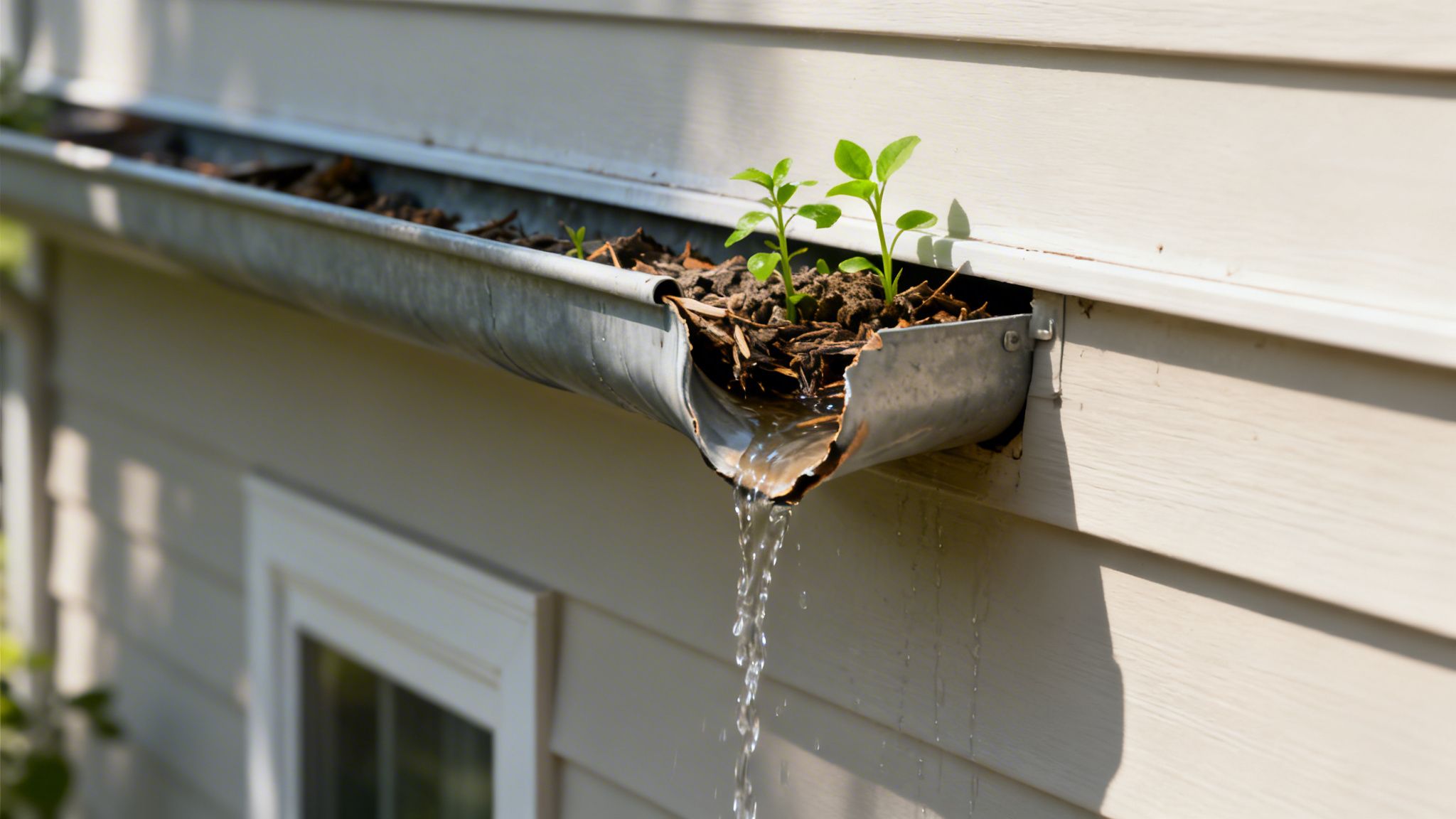
You're halfway through a Saturday morning when the rain forecast catches your eye. The ladder is in the garage, leaves are packed along the roofline, and one downspout has started spilling water beside the house. It looks like a quick cleanup, but gutter cleaning is really a water-management job with a real fall risk, especially on a sloped lot or a roofline you can't reach safely.
For homeowners in Colorado Springs, CO, there's another consideration: pine needles and dry debris can become combustible fuel. Knowing how to clean gutters means knowing when to stay on the ground, when a ladder setup is unsafe, and when to hand the job to a trained crew.
Why Gutter Cleaning Deserves More Respect Than You Think
A gutter can look like a simple trough, but its job is to move roof runoff away from your home. The U.S. Department of Energy's Building America Solution Center guidance on roof drainage treats gutters and downspouts as parts of a whole-house water-control system. That system includes the roof, flashing, grading, and drainage around the foundation. If water spills over the gutter or drains beside the house, it can saturate soil and contribute to erosion or water problems near the foundation.
That's why a cleaning visit shouldn't end when the leaves are gone. Check whether the downspout carries water away from the building, whether the outlet is connected, and whether discharge is eroding soil or splashing against siding. The department's guidance calls for downspouts to discharge at least 5 feet from the foundation, or into an underground catchment at least 10 feet away. It also recommends lateral drainage piping sloped away from the building at a minimum 5% grade, about 5/8 inch per foot. These are useful reference points for understanding why a clear gutter alone doesn't guarantee good drainage.

The ladder is the other part of the job homeowners tend to underestimate. CDC and NIOSH data recorded 161 workplace fatalities and 22,710 workplace injuries involving ladders in 2020, including 5,790 injuries in installation, maintenance, and repair occupations (CDC/NIOSH ladder safety data). Ladder work isn't automatically safe because a house is low or the task feels routine.
For more on how clogs can affect the whole exterior, see this guide to how gutter debris impacts drainage, siding, and landscaping. Clear gutters should move water continuously and safely away from walls, soil, walkways, and foundations. If reaching them requires a risky climb, the right move is to step back.
Ground-Level Inspection and the Tools You Need
After a Colorado Springs storm, inspect the property from the ground before hauling out a ladder. Check roof pitch, gutter height, and downspout outlets. Look for overhead power lines, loose fascia, separated joints, and landscaping that blocks access. Pay attention to sloped ground and foothill ice where the ladder base would sit.
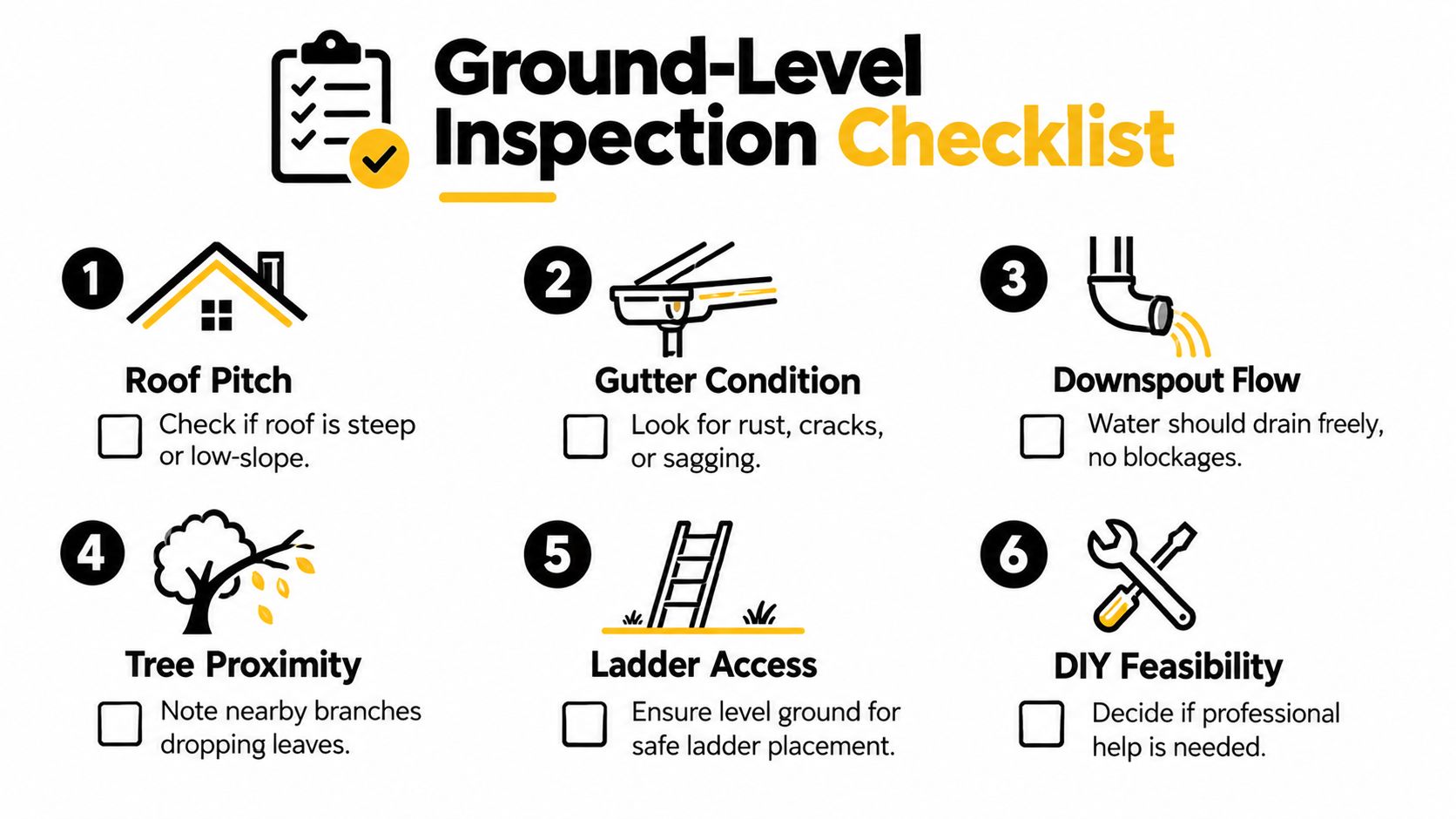
To protect your home from water damage, identify both the drainage problem and a safe way to reach it. Pine needles deserve attention as potential wildfire fuel, but spotting debris doesn't make climbing the right decision. Inspect the ladder for damage before use and keep damaged equipment out of service. Choose stable, level footing and check for wiring before moving equipment, precautions also covered in this guide to cleaning gutters safely.
If the access check fails, leave the ladder down.
Gather tools before you climb
For reachable gutters with safe access, gather a sturdy extension ladder, heavy-duty gloves, and a gutter scoop. Gloves protect your hands from sharp debris; the scoop lets you lift packed material without pushing it toward an outlet. Use a bucket or tarp to collect debris instead of dropping it beside the foundation or washing it into a storm drain.
Keep a garden hose with an adjustable nozzle ready for the flush after debris removal. Bring a flexible downspout rod for blockages, but don't force it through brittle joints. Arrange tools so retrieving them won't require a sideways reach.
Use a clear handoff rule: DIY only when you can reach the gutters from a stable ladder position without approaching wiring or working over icy, uneven ground. A high roofline, steep slope, damaged attachment, or unsafe setup means calling a professional. Buying another tool won't fix unsafe access.
The Safe Cleaning Workflow From Ladder Up to Final Flush
Once you've confirmed the access is safe and the equipment is ready, work in a deliberate sequence. For an extension ladder, use the 4:1 setup: place the base approximately 1 foot away from the wall for every 4 feet of ladder height. If you must step onto a higher surface, extend the ladder at least 3 feet above the landing. Don't climb with tools in your hands or reach sideways to save yourself a repositioning.
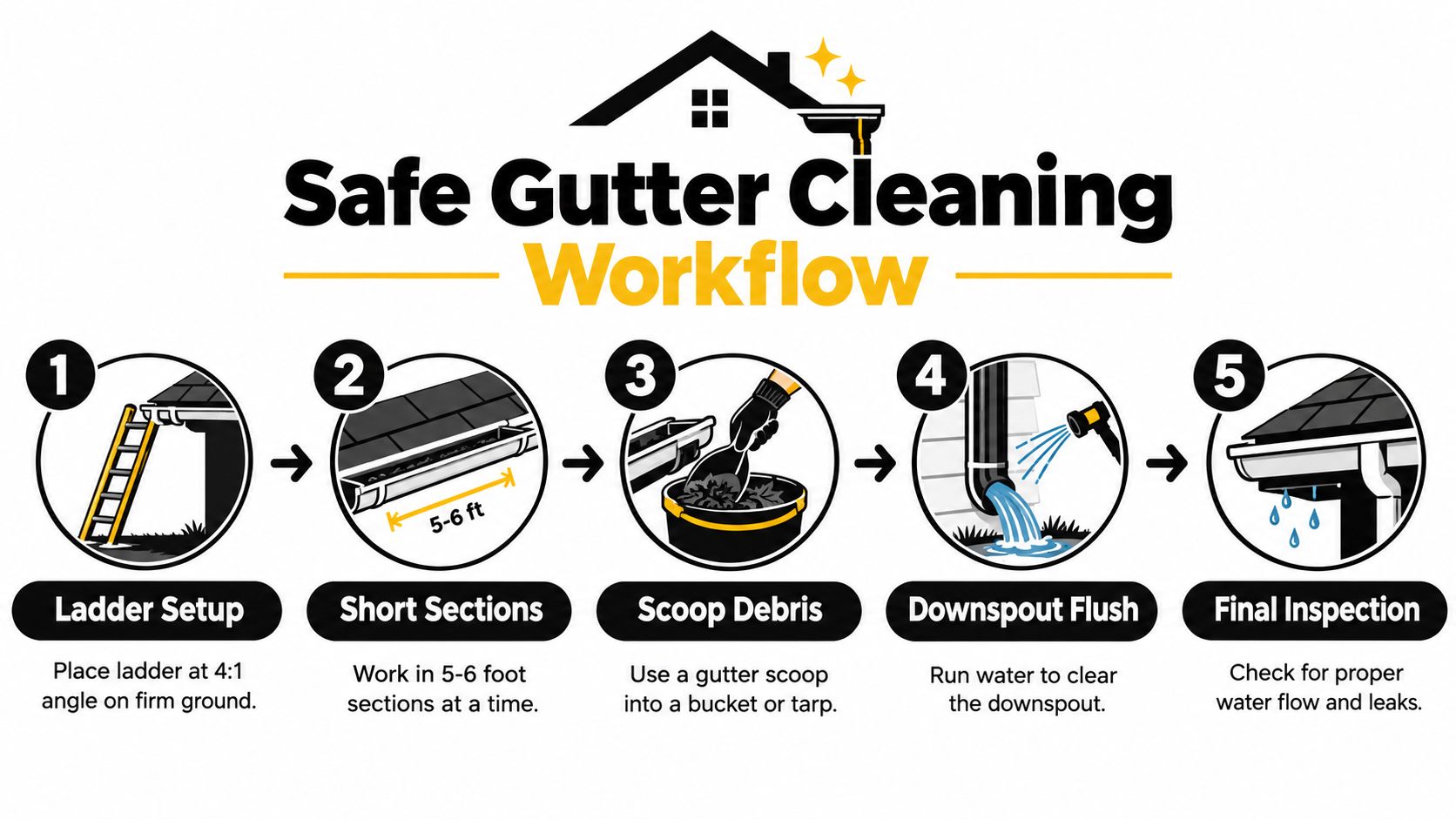
Work in short sections, moving the ladder as needed rather than leaning beyond the rails. Scoop leaves and sediment into a bucket or onto a tarp. Don't push packed material toward the downspout, and don't hose debris over the edge onto walkways, landscaping, or the foundation. If the gutter is slick, the weather changes, or the ladder shifts, stop and reassess.
After removing visible debris, flush each section with controlled low-to-moderate water flow toward the downspout. Watch the water as it travels. If it backs up, stop the flush and isolate the blockage instead of turning up the pressure. Clear the downspout from the outlet upward with a suitable flexible rod, then run water again to verify that it exits freely.
Finish with a condition check
A clean trough isn't the whole job. Inspect end caps, seams, hangers, and downspout connections for gaps, sagging, or movement. Photograph defects so you can track them or share clear details with a repair professional.
Quality check: The job is finished only when the trough is visibly clear and water passes through every downspout without backing up.
Don't rely on a pressure washer aimed at a joint. High pressure can strain weak connections without fixing the underlying obstruction. If a blockage keeps returning, note where it occurs and have the drainage system checked rather than repeatedly forcing water through it.
Ladder Safety and How Often You Should Clean
A gutter full of storm debris can wait when the ladder footing is icy. In Colorado Springs foothill neighborhoods, make that call before carrying tools outside. A short climb still exposes you to a serious fall, and clearing a drainage problem is never worth creating a ladder emergency.

Ladder setup deserves the same attention as the cleaning itself. Inspect the ladder before use, follow its setup instructions, and place it on stable, level ground. Keep your body centered between the rails. Skip the job in wet or windy conditions, and never use an awkward reach to compensate for poor access.
Use this handoff rule: if you cannot establish stable footing and reach the gutter from a secure working position, leave the ladder down and hire a professional.
The gutter-cleaning safety guide offers guidance on ladder access and working conditions before you begin.
Let the property set the schedule
Set inspection frequency around what lands on your roof. Leafy trees, pine cover, roof pitch, snowfall, and wind exposure affect how quickly gutters collect material. Start with ground-level checks and use what you find to decide when cleaning is needed, rather than climbing because a calendar reminder appeared.
After strong wind or snow, check for fresh debris and visible overflow once conditions are safe. Pine-needle buildup also deserves attention as wildfire fuel. In the foothills, wait for icy footing to clear before considering ladder work.
Cultivate House Detailing provides gutter cleaning and fire-mitigation clearing alongside exterior cleaning services for households that prefer scheduled maintenance. Arrange cleaning around recurring buildup, then reassess after storms.
Gutter Guards, Pine Needles, and the Colorado-Specific Angle
Gutter guards can reduce how often you need to clean, but they don't make inspection unnecessary. In homeowner-survey reporting, 58% of respondents said they cleaned their gutters at least twice a year before installing guards. After installation, 41% reported cleaning annually, while nearly 17% said they no longer needed cleaning (gutter-guard survey findings). That's a useful reality check: guards may reduce maintenance, but they don't promise a maintenance-free roofline.
Fine debris can pass through some designs, and leaves or needles can accumulate on top. A blockage can also develop during a storm. Look for overflow, staining, sagging, erosion near outlets, or wet soil by the foundation. Inspect after wind and snow, and don't assume a covered gutter is clear just because you can't see inside it.
Colorado homeowners also need to think about fire fuel, not just drainage. The state's ignition-resistant construction guidance advises keeping gutters clear of leaves and pine needles and cleaning them regularly when covers aren't installed. Colorado Springs guidance puts property mitigation responsibility on homeowners and recommends concentrating defensible-space work within the first 30 feet around a structure.
In communities around Colorado Springs, Black Forest, Monument, and foothill areas, pine needles deserve particular attention. Clean gutters are only one part of wildfire preparation, so coordinate this work with checks of the roof, eaves, vents, and nearby vegetation. Guards still need inspection, and they don't replace broader fire-mitigation work.
When DIY Ends and a Pro Takes Over
If clearing a blocked outlet means leaning past the ladder rails, stop. My rule is simple: DIY ends when you can't set the ladder securely and work within reach. A single-story home with level access and no electrical hazards can suit a capable homeowner. Steep roofs, damaged fascia, recurring blockages, or exposed concrete below call for professional help.
| Factor | DIY Is Suitable | Call a Pro |
|---|---|---|
| Height and access | Gutter is reachable from a stable ladder | Roofline is high, steep, or awkward |
| Ground conditions | Ladder base rests firmly on level ground | Ground is sloped, soft, uneven, or icy |
| Gutter condition | Trough and supports appear sound | Fascia is loose, joints separate, or hangers sag |
| Drainage | Water flows freely after clearing | Blockages recur or involve underground drainage |
| Hazards | No overhead wiring or unsafe weather | Electrical hazards, wet conditions, or uncertain access |
In Colorado Springs foothill conditions, ice is a reason to postpone access, even when storm debris needs attention.
Ask a professional how the crew handles work at height. OSHA requires employers to inspect personal fall-protection systems before initial use during each shift, remove defective components, and train employees before use. Its requirements generally limit free-fall distance to 6 feet and specify a minimum breaking strength of 5,000 pounds for lanyards and vertical lifelines (OSHA fall-protection requirements). Equipment selection and use also matter; review the OSHA fall-protection guidance.
Ask who inspects equipment, how difficult access is handled, and how a fallen worker would be rescued. This overview of gutter cleaning services explains the service. Choose a crew that addresses drainage problems as well as debris removal.
For the safety reasons behind the handoff, read why professional gutter cleaning is safer than climbing ladders yourself. If height, slope, or access fails the checks above, contact Cultivate House Detailing rather than forcing the job.
Scheduling a Safe, Local Clean Before the Next Storm
A good gutter-cleaning decision starts from the ground. Check the roofline, downspout outlets, ladder access, nearby trees, and any signs of overflow before choosing between DIY and professional service. In Colorado Springs, treat pine needles as both drainage debris and potential fire fuel, and inspect again after wind or snow.
Don't wait for water to spill over the edge before taking action. A blocked outlet can send runoff toward siding, landscaping, and the foundation, while a rushed ladder climb can turn ordinary maintenance into a serious fall. If access is awkward, the roof is steep, or the ground won't support a stable ladder, make the call before you climb.
Cultivate House Detailing serves Colorado Springs and surrounding communities with gutter cleaning, fire-mitigation clearing, and exterior cleaning services. Request a quote before the next storm season and let a trained crew handle roofline access when your inspection says the job isn't safe to do yourself.
For gutter cleaning, fire-mitigation clearing, and exterior cleaning in Colorado Springs and nearby communities, contact Cultivate House Detailing. Request a quote and schedule a safe, thorough clean before blocked gutters and storm debris become a bigger problem.