You can scrub a window until your shoulders ache, then step back and still see thin gray trails the moment the light changes. In Colorado Springs, the usual culprits are mineral-heavy tap water, high-altitude sun, and dirty tools, and all three can ruin a pane that looked clean a minute ago. Professional streak-free window cleaning starts by controlling those causes, not by spraying more product and hoping for the best.
If you've been searching for window cleaning near me or comparing window cleaning in Colorado Springs, CO, the difference usually comes down to technique, timing, and whether the glass was ready to be cleaned in the first place. The homes I see around town often have the same problem pattern, hard-water haze on the outside, dusty frames, and a wipe-down that just smears soil around instead of removing it. That's why a real residential window cleaning or commercial window cleaning visit has to solve more than one issue at once.
Why Your Windows Still Streak After All That Wiping
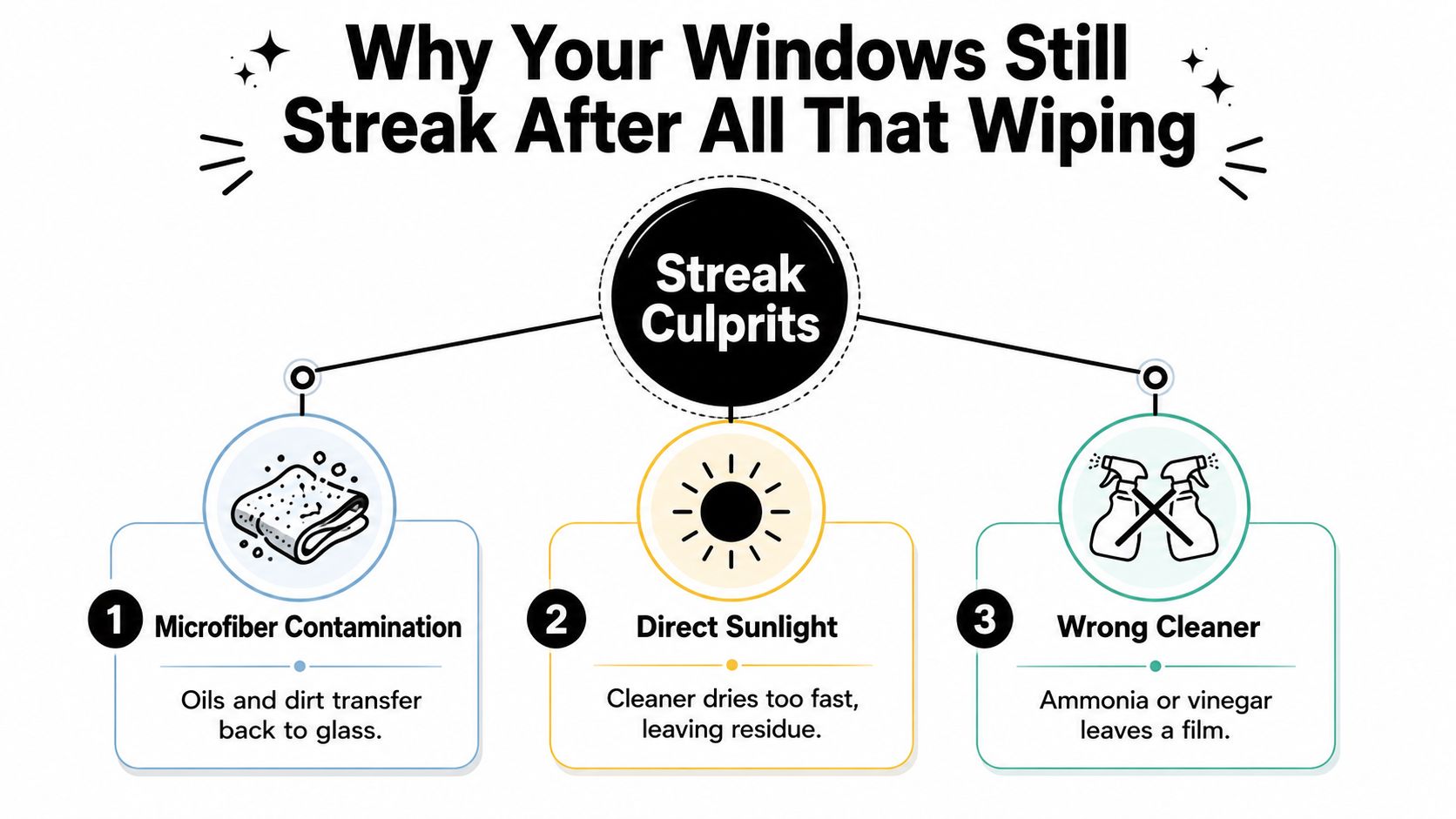
The three quiet culprits are mineral residue, contaminated cloths or squeegee rubber, and cleaning in direct sun. If any one of those is off, a window can look worse after cleaning than it did before.
The problem usually starts before the glass is wet
Dust and grit on the pane act like fine sand. When you drag a cloth across that layer, you spread it into the cleaner and turn a small mess into a full-panel smear. That's why a dry prep step matters so much, and why one article on streak-free results puts the squeegee-after-rinse workflow ahead of paper towels and spray by a wide margin in estimated success rate, while also warning that pooling solution leaves residue on the glass streak-free results guide.
In Colorado Springs, there's another issue. Tap water and sprinkler overspray can leave minerals behind, and those deposits dry into haze or spotting that doesn't wipe away cleanly. A window can be technically “washed” and still look cloudy because the residue was never removed in the first place.
Sun exposure can undo careful work fast
A lot of homeowners clean when the schedule opens up, not when the glass is ready. That's where streaks show up. In direct sun, cleaner dries too quickly, and the residue stays behind before the squeegee can pull it away.
Practical rule: if the pane feels hot, don't clean it yet.
That lines up with professional guidance to work in shade or low light, use a light cleaner mix, and keep the process moving before evaporation outruns the wipe. A technician's job is to control drying, because once the water flashes off too fast, the film left on the glass becomes the visible problem.
Dirty tools are streak-makers
A microfiber towel that picked up grease yesterday can move that grease right back onto today's window. The same is true of a worn squeegee edge. If the rubber carries grit, every stroke can redeposit a line you then have to chase.
That's why the fix is a system, not just a product. Clean the pane first, keep the tools clean as you go, and finish with a dry edge detail so leftover moisture doesn't creep back onto the glass later in the day.
Choosing the Right Cleaning Solution for Hard Colorado Water
The right solution matters, but it isn't a magic trick. In hard-water country, the cleaner has to work with the water quality, not fight it.
Four common DIY mixes and how they behave
Vinegar-and-water can cut light mineral film, which is why people keep reaching for it. The downside is that if you use too much, or if the glass is already dirty, you can leave a faint film or smell behind. Dish soap is gentle and easy to find, but it can rinse poorly in hard water, so any leftover soap becomes a streak risk instead of a fix.
Store-bought ammonia-based sprays dry fast, which can help on shaded glass. They're less forgiving in sun because they can flash off before you've removed the residue. A distilled-water rinse is the one most homeowners skip, yet it's often the simplest upgrade because distilled water doesn't leave the same mineral trail as tap water.
| Solution | Hard-Water Performance | Streak Risk | Best For |
|---|---|---|---|
| Vinegar and water | Good on light mineral film | Moderate if over-applied | Quick cleanup on lightly spotted glass |
| Diluted dish soap | Fair, but rinsing can be tricky | Moderate to high in hard water | Dirty panes before a full rinse |
| Ammonia-based spray | Good in shade, weaker in hot sun | Moderate | Fast interior touch-ups |
| Distilled-water rinse | Strong for spotting control | Low when tools are clean | Final rinse and exterior finishing |
If you're sorting out whether your whole home needs a water strategy, it can also help to compare water filtration systems and think through how mineral content affects more than just glass.
What actually helps, and what quietly hurts
A small amount of cleaner helps. Too much cleaner leaves more residue to remove. That's the part people miss. The article on streak-free field technique from Cultivate House Detailing's internal guidance points homeowners toward deionized water for the same reason, because low-mineral water reduces spotting on the final pass, especially on exterior panes that catch dust and sprinkler mist.
For a deeper local example of pure-water finishing, see the company's note on deionized water window cleaning. That approach makes the most sense on exterior glass where a tap-water rinse would just replace one problem with another.
Squeegee Technique That Beats Streaks
In Colorado Springs, streaks usually start before the squeegee moves. Mineral-heavy tap water leaves residue on the glass, high-altitude sun dries the film too fast, and a dirty blade drags that residue right back across the pane. Once those three show up together, even careful work can finish with haze if the pass sequence is sloppy.
The sequence pros rely on
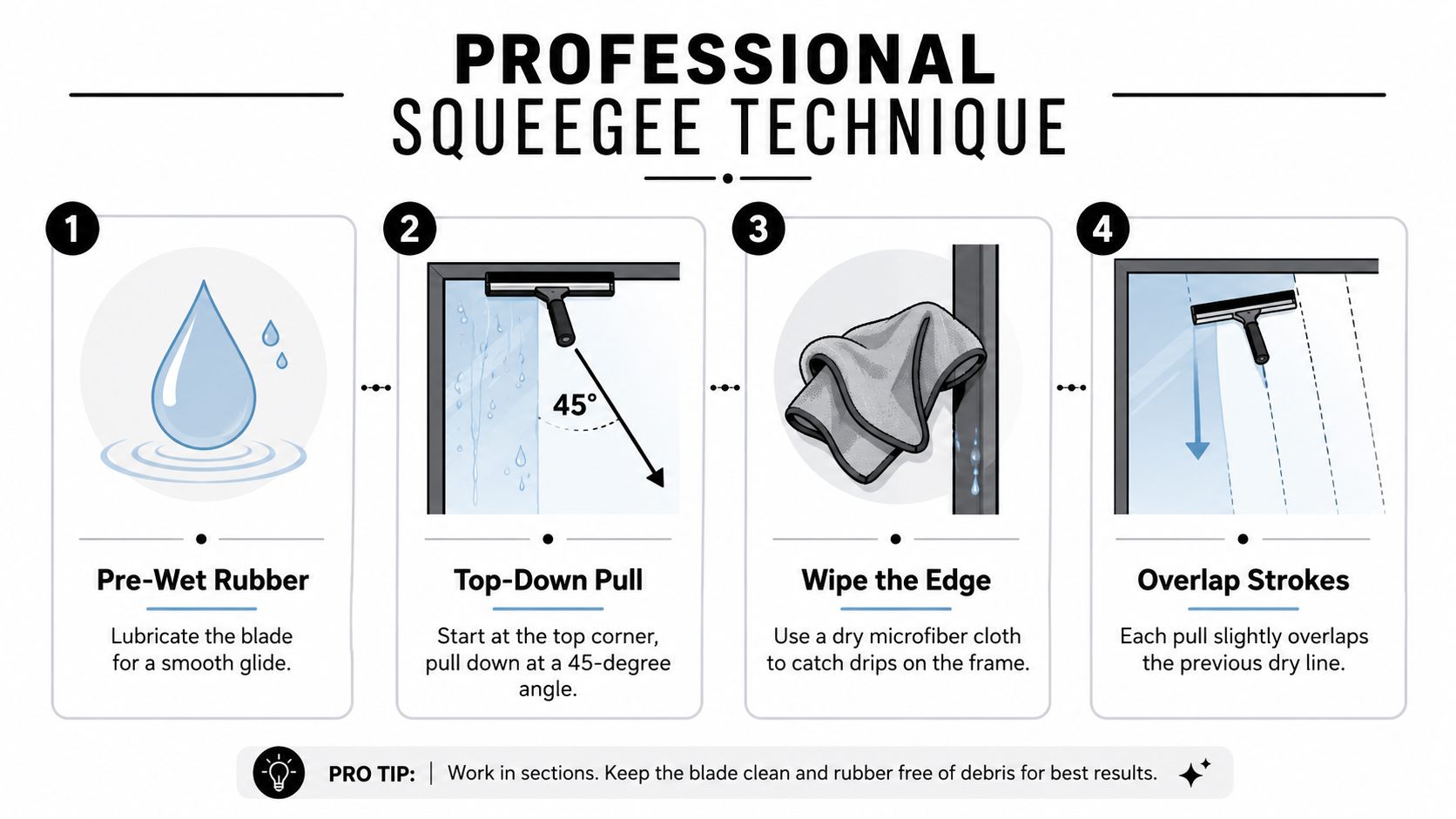
Start with clean rubber that is slightly damp, not dripping. That small amount of moisture helps the blade glide instead of chatter, and it keeps the edge in steady contact with the glass so the water film moves in one controlled sheet. Set the squeegee at the top corner and pull it down at about a 30-degree angle, with roughly 1-inch overlap between strokes so no water line is left between passes. Wipe the blade after every pull, because grit on the rubber turns into a streak line fast.
The finish matters as much as the main pass. Use a clean, dry microfiber corner to catch the bead that stays along the frame and at the lower edge of the pane. That edge work is usually what separates a decent cleanup from a streak-free window cleaning result.
A wet blade controls the film, and a clean edge controls the leftovers.
Common mistakes that waste the whole effort
- Too much solution: pooling leaves residue that shows after drying.
- Wrong angle: the blade skips or drags, which leaves chatter marks.
- Dirty rubber: grit gets pulled across the pane and makes new lines.
- Skipping the edge finish: moisture creeps back and reappears later.
The cleaner loosens the soil, but the blade has to remove the film cleanly. If the rubber is nicked, the angle is off, or the overlap is inconsistent, the glass can still dry with a gray look even when the wash solution itself was fine.
Professional crews keep a second cloth in hand for a reason. One cloth handles the wet work around the frame and blade, and the dry one finishes the surface without pushing liquid back into the glass. That slower rhythm takes more attention, but it keeps streaks from reappearing after the pane dries.
To see the movement in action, this walk-through is helpful:
When to Clean and Why Timing Matters More Than You Think
A window can look perfect at 9 a.m. and show every line by 2 p.m. That's not bad luck, it's drying speed.
A Colorado Springs homeowner often learns this the hard way after a Saturday afternoon wash. The front glass looks fine while it's wet, then the sun slides across it and exposes every missed edge and every bit of residue. That happens because cleaner evaporates before the final wipe can lift it away, especially on panes facing direct light.
The best conditions are simpler than people think
Cloudy mornings are easier than bright afternoons. Shaded exterior panes are easier than glass baked by the sun. Interior glass is easier when the room isn't hot and the surface isn't loaded with cooking film.
Professional guidance also points to cooler conditions rather than hot sun, because cleaner dries too fast on sunlit panes and leaves residue behind Kärcher's window care guidance. That's the rule I lean on most in the field. Work the shaded side first, then move with the light instead of fighting it.
Clean the most forgiving side first
If both sides need attention, start inside when the outside glass is baking. Interior windows usually give you more control over drying, and they're less affected by wind and sprinkler splash. Then move outdoors when the temperature drops or the pane is out of direct sun.
Plain rule: if you can't keep the glass wet long enough to remove the film, you're cleaning at the wrong time.
That's why a schedule beats a scramble. The windows that get cleaned on the right day, in the right light, almost always look better than the same windows cleaned in a hurry on a hot afternoon.
Hard Water Stains and Film Removal Beyond a Basic Clean
Some streaks aren't streaks anymore. Once minerals bond to the glass, the problem is no longer just surface dirt.
Light haze is fixable, etched spots are a different job
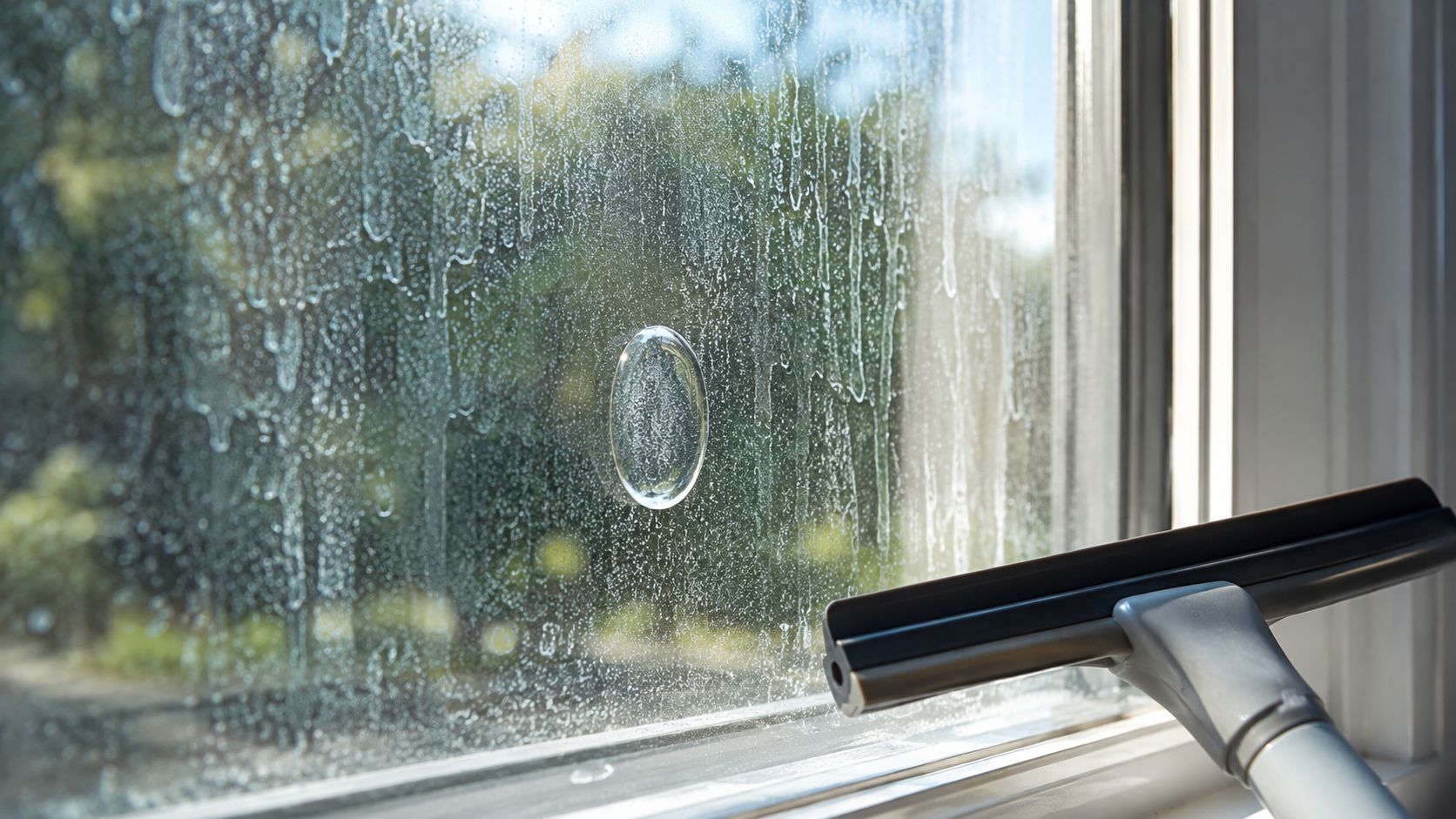
A vinegar soak can handle light buildup. That's the first line of attack when the glass just looks cloudy from mineral film. For heavier spotting, a dedicated hard-water remover or an oxalic-acid-based product can do more work, but it still depends on how the minerals have bonded.
The key question is whether you're seeing film or damage. Film sits on the surface and responds to removal. Etching changes the glass itself, so no amount of wiping will bring back a perfect finish. That's where homeowners often stop short of the answer and keep scrubbing a pane that needs restoration or replacement.
If you want a deeper cleanup path, the company's hard water stain removal guide lays out the difference between surface deposits and damage that won't polish away.
Why Colorado Springs homes get hit hard
Sprinkler overspray is a major culprit on local exteriors. Add wind-blown dust, sun exposure, and repeated drying cycles, and the glass starts collecting mineral marks faster than it would in a milder climate. That's why a simple wash often isn't enough on the street-facing side of the house.
If the pane is already pitted or permanently etched, a guide to replacing windows in East Texas can be useful as a general reminder that sometimes the right fix is beyond cleaning, even though the weather and region are different. A damaged pane doesn't improve with more detergent.
A practical decision rule
If the mark wipes away after a short mineral treatment, keep going. If the spot stays dull, rough, or ghosted after proper removal work, it's time to stop chasing it. That saves time, protects the glass, and keeps a homeowner from grinding an already damaged surface harder than necessary.
Safety for Windows Up to the Fourth Story
Second-, third-, and fourth-story glass changes the job completely. At that height, the biggest risk is not a streak, it's a fall.
Ground-based tools beat risky ladder work most of the time
Extension poles and water-fed brush systems let a technician keep feet on the ground while reaching higher glass. That matters because a ladder only works when the footing is solid, the angle is right, and the reach isn't being forced. A homeowner who stretches for just a little more height usually shifts the ladder and loses stability.
The safest setup starts before the first step. Use a stabilizer or a spotter, inspect the ladder for damage, and set it on level, firm ground. While cleaning, keep three points of contact, never overreach, and move the ladder instead of leaning sideways. A tool belt helps keep hands free. Pockets do not.
Some windows belong on a quote, not a ladder
Casements over porch roofs, transoms above a deck, and large panes over sloped grade are the kinds of windows that deserve professional access gear. Those are awkward even for experienced hands. The angle is wrong, the footing is compromised, or the reach is too awkward to finish cleanly.
Cultivate House Detailing handles up-to-fourth-story work with the right equipment, which is the safer choice when the access is ugly or the height starts to feel uncomfortable. That's also where reactive cleaning becomes a problem, because waiting until the glass is visibly bad usually means more ladder time and a harder job.
A simple seasonal rhythm helps
A good local cadence is easier to keep than a rescue mission. Spring pollen and dust cleanup keeps the glass from baking in grime. Mid-summer exterior washing cuts sprinkler splash and dust film. Fall is the time to pair window work with gutter cleaning before winter, and a quick winter touch-up on the front-facing panes keeps the home looking maintained.
For busy homeowners thinking about a sale, staging, or a long-overdue refresh, the preparation advice in Alp Perez's selling guide pairs well with clean glass because curb appeal starts before a buyer ever reaches the front door.
What to Expect When You Book Cultivate House Detailing
A professional visit should feel organized from the first message to the final walkthrough. You reach out by text or online request, get an arrival window, and then a technician does a quick walk of the property before touching the glass.
Interior windows usually come first, with drop cloths in place to protect floors and trim. Exterior glass follows with the right combination of rinse, squeegee finish, and edge detailing. Screens and tracks can be cleaned during the same visit, which matters because dirty tracks and dusty screens make clean glass look unfinished.
The seasonal cadence is straightforward. Spring is a smart time for pollen cleanup. Summer works well for a pre-listing polish or a mid-season exterior wash. Fall is ideal for a gutter-and-window combo before the weather turns. Winter touch-ups make sense on the front-facing panes that show every footprint and water mark.
Cultivate House Detailing also handles related exterior maintenance that often gets bundled with window service, including screen repair, gutter cleaning, and seasonal lighting install. For homeowners and property managers trying to keep the whole place looking cared for, one scheduled visit can solve several small headaches at once.
If your windows keep streaking no matter how carefully you wipe them, Cultivate House Detailing can handle the hard-water buildup, high-story access, interior glass, exterior window washing, and the small finishing details that make a pane clear. Visit Cultivate House Detailing to request a quote, schedule service, or set up a recurring window cleaning routine for your home or business in Colorado Springs, CO.
Looking for a professional to take care of it? Cultivate House Detailing offers residential window cleaning in Colorado Springs. Get a free quote.