Glass windows became common in ordinary homes in England by the early 17th century, though the transition started in the 16th century and didn't become broadly affordable until the early 1800s with inexpensive rolled window glass. If you're standing in a Colorado Springs home right now, looking at sunlight, dust, or streaks on the glass, you're seeing the end result of a long shift from luxury material to everyday necessity.
Most homeowners don't think about that history when they search for window cleaning near me or compare professional window cleaning options in Colorado Springs, CO. They just want clear views, cleaner rooms, and glass that looks cared for, especially when hard water marks, pollen, and seasonal buildup keep showing up again. That's where the past becomes useful, because once you know how rare glass windows once were, it's easier to appreciate why keeping them clean and protected matters today.
When Did Glass Windows Become Common in Homes
A lot of people ask when did glass windows become common because the answer sounds simpler than the story behind it. In everyday English homes, glass windows became common by the early 17th century, but the shift was already underway in the 16th century. In other words, common use didn't happen overnight. It happened as glass moved from a prestige feature into something ordinary families could realistically have in their homes. Clera Windows describes that turning point clearly, and The NBS ties it to manufacturing changes that made larger, cheaper panes possible.
Why that timing matters for homeowners
Before glass was common, most houses used unglazed openings, shutters, paper, or oiled cloth. Even after glass appeared, it stayed limited for a long time because it was expensive and difficult to make at scale. That means the window in your home today, whether it's a picture window facing Pikes Peak or a simple kitchen pane, sits inside a much bigger story of craftsmanship, trade, and industrial progress.
Practical rule: if a material was once a luxury item, its modern upkeep usually deserves more attention than people give it.
For Colorado Springs homeowners, that matters because windows are no longer special just because they exist. They're expected to perform, look good, and handle sun, wind, and dust without constant frustration. That's why streak-free care, regular cleaning, and attention to detail are part of normal home maintenance now, not an extra luxury. If you live here and want your windows to look the way they should, Cultivate House Detailing fits into that modern expectation with service built around clarity and convenience.
Ancient Origins and Medieval Window Milestones
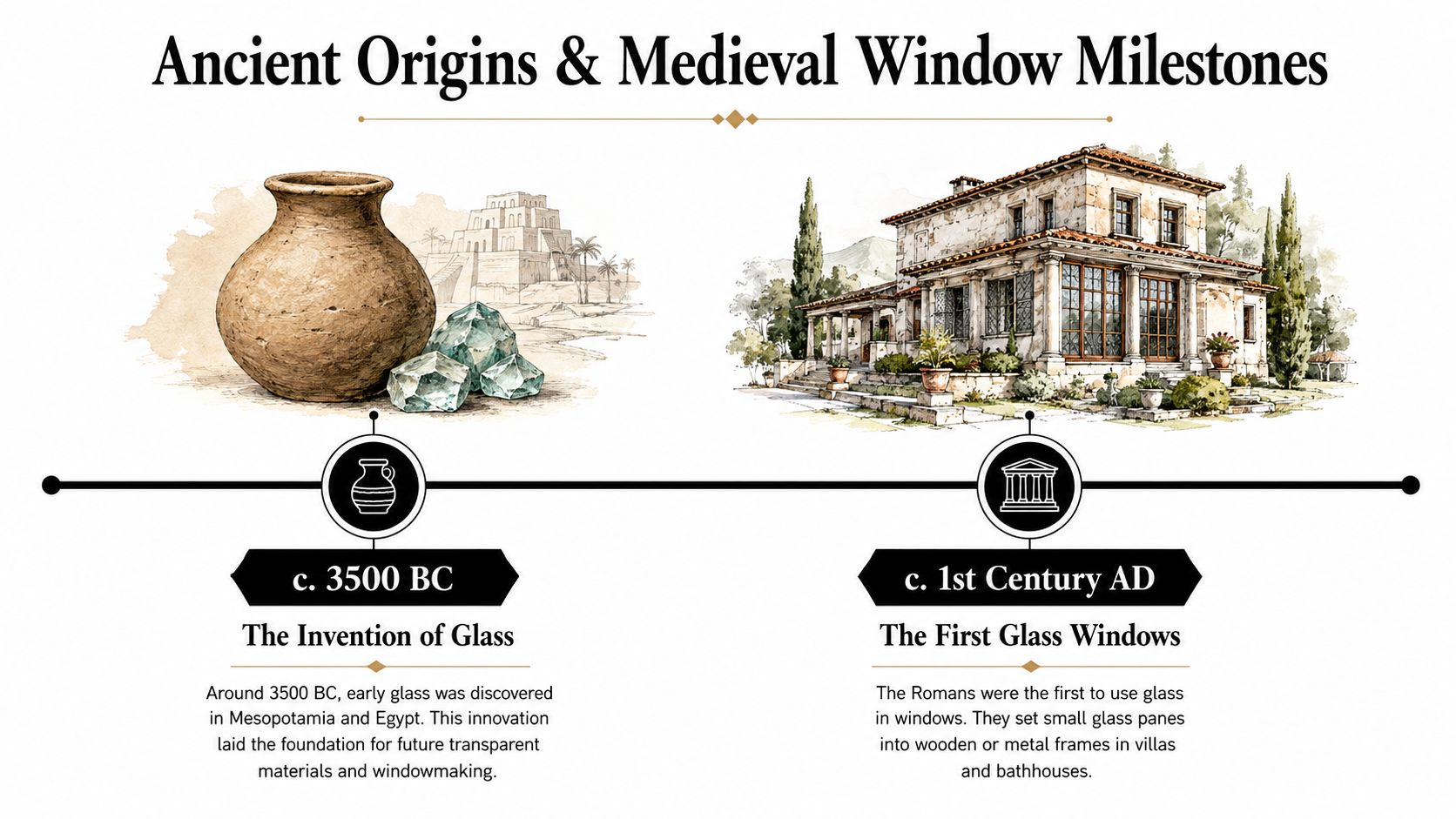
Glass first appeared long before it became part of a window frame. In Mesopotamia and Egypt, people were making glass around 3500 BC, but they used it for objects and ornament, not for clear openings in a wall. The shift to windows came much later during the Roman period, when glass began to move from a crafted material into a building material. That long delay helps explain why glass windows stayed unusual for so long, and why they were once tied to status instead of everyday use.
What people used before glass became normal
Before glass windows became familiar, a home's opening often depended on whatever could block weather without shutting out every bit of light. People used shutters, paper, oiled cloth, or thin sheets of horn. Those choices worked like early versions of privacy and weather protection, even if they did not give the clear view people expect now. A room with one of those coverings felt brighter than a sealed wall, but it still lacked the openness of a true glazed window.
Historical accounts suggest that glass windows became common in ordinary homes only after a long climb from luxury item to practical feature. The Square PHX places that wider adoption in the 16th century, while other sources point to common use in England by the early 17th century. Those dates fit the same pattern, wealthy buildings and public spaces got glass first, then ordinary homes followed once supply caught up with demand. That slow spread is the reason a clear pane could feel remarkable for generations, the way a polished mirror or a fine piece of crystal once did.
For homeowners, especially anyone studying older properties through data-driven old home investing, that history is more than a trivia point. Older homes often preserve the logic of a time when builders had to choose between light, comfort, and cost in very different ways. In Colorado Springs, that old story still matters today because modern glass has to do a new job, it should help with energy efficiency, resist hard water stains, and stay clear enough to make the home feel cared for. That is where professional window cleaning in Colorado Springs becomes part of the picture, and why Cultivate House Detailing connects historic appreciation with practical upkeep.
Manufacturing Breakthroughs That Made Glass Affordable
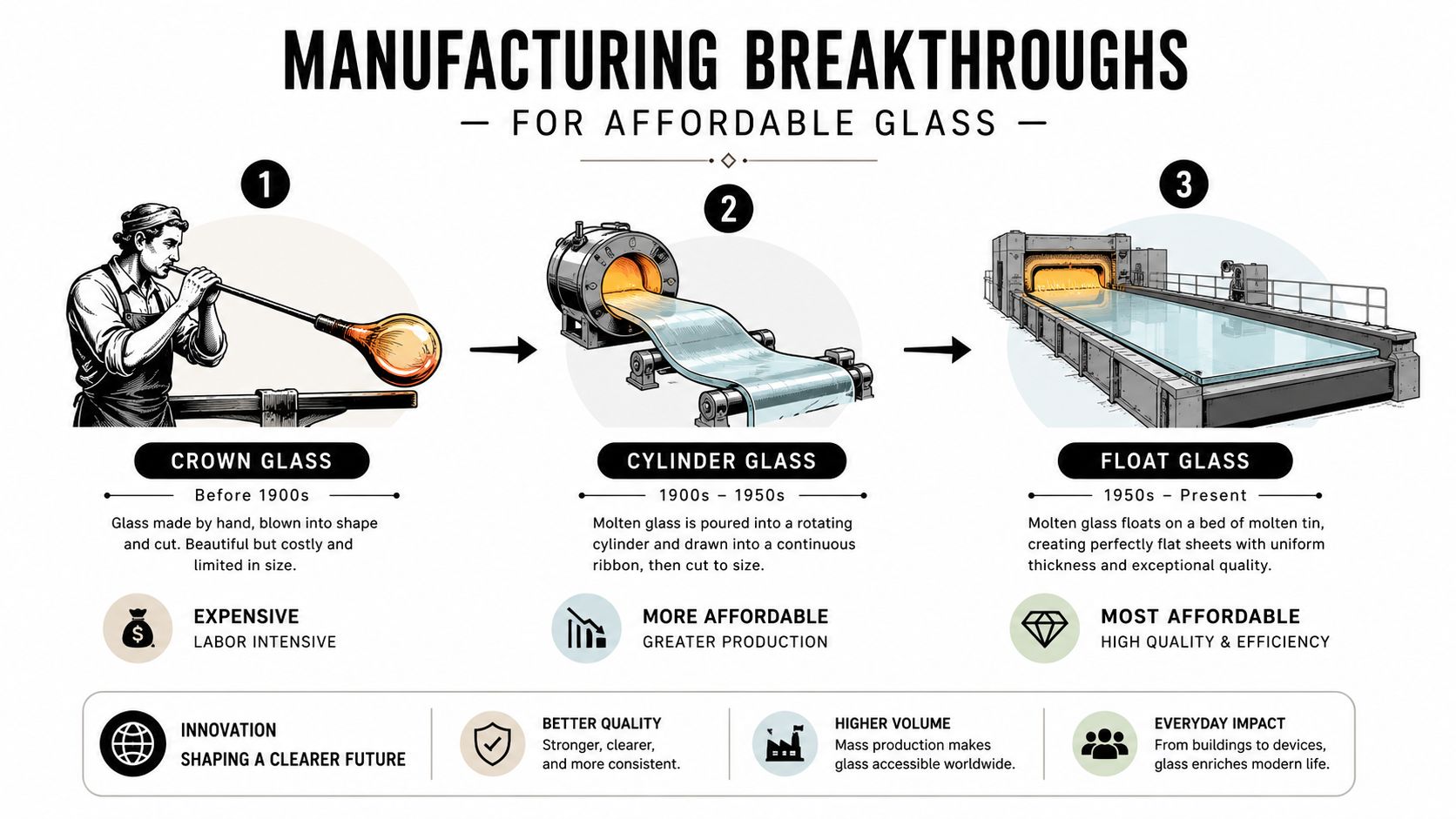
Glass windows became common because the way they were made changed. As production improved, panes got larger, costs came down, and glass moved from a rare finishing touch to a standard part of home building. Early crown glass was still expensive and difficult to make in large quantities, so panes remained small and were often set into leaded assemblies. University of Houston Engines shows how those manufacturing limits shaped what ordinary homes could realistically use.
From small panes to broad sheets
The turning point came with larger, cheaper sheet-glass production. Once manufacturers could make glass in a more practical format, windows stopped signaling only wealth and began fitting everyday housing. That shift followed industrial progress, not just changing taste. In the early 1800s, inexpensive rolled window glass made domestic glazing broadly affordable in major markets, and home interiors changed with it. Eco-Strip describes how continuous mechanized production changed the economics around that time. For homeowners comparing upgrades, efficient home upgrade ideas can help frame the bigger picture of how windows fit into a whole-house approach.
You can trace the progression clearly:
- Crown glass: attractive for its era, but costly and difficult to produce in large sizes.
- Sheet glass: more practical, with larger panes that made everyday use more realistic.
- Rolled window glass: affordable enough to bring glazing into more homes.
- Float glass: the modern standard, with one source saying it still accounts for about 90% of flat glass production today.
Those changes also help explain why older windows often look uneven or distorted compared with modern glass. The material itself improved, and so did the consistency of what homeowners could expect from it.
Why that matters for modern windows
Those manufacturing gains made today's windows bigger, clearer, and more uniform. They also explain why homeowners now expect clean glass, easy light, and less visual distortion than older systems could provide. When windows are large and bright, every streak, mineral mark, and smudge stands out, which is why interior window cleaning and exterior window washing matter so much in a place with intense sun and changing weather.
Clear glass only looks effortless when someone maintains it well.
That is also why professional maintenance still matters. Modern windows are a product of industrial progress, but they still need careful cleaning to stay attractive and functional, especially when dust, pollen, and hard water keep building up on the surface. A closer look at how clean windows support home energy efficiency shows why appearance and performance often travel together, even now.
How Modern Windows Evolved for Energy Efficiency
If you stand in front of a bright window on a cold morning, you can feel the difference between glass that lets light in and glass that helps a house stay comfortable. That difference is what changed modern windows from a basic opening in the wall into part of the home's energy system. Glass windows became ordinary long before they became efficient, and that shift matters to homeowners who want both clear views and lower energy waste. The history of glass windows shows that the big leap was not just about making more glass, it was about improving how the whole window assembly performed over time.
From visibility to performance
Older single-pane windows mostly served one purpose, they brought in daylight. Modern windows do much more, because Low-E coatings, improved seals, and insulated glass units help manage heat transfer as well as visibility. That is why the conversation changed from asking whether a home had glass to asking how well that glass held up in real weather. For homeowners comparing upgrades, efficient home upgrade ideas can help place windows in the broader context of whole-house improvements.
The practical lesson is straightforward. Clean glass can still sit inside a drafty or aging frame, and a window can look fine while the unit itself is struggling. Age, construction, and overall condition all affect how well the window works. Homeowners usually notice both appearance and performance together, because a window that looks good but feels cold still leaves work to do.
For a closer look at how maintenance connects with efficiency, see how window cleaning improves energy efficiency in your home.
In Colorado Springs, that connection matters even more. Strong sunlight, dry air, and temperature swings put extra pressure on window systems, and grime can make the problems harder to spot. Clean glass will not repair a failing seal, but it does help a window do its job by keeping buildup from masking issues and by letting more light reach the room instead of a film of dust and residue.
What modern homeowners should notice
- Condensation patterns: These often show that a window needs attention beyond a routine wipe-down.
- Visible mineral buildup: Hard water stains can cling more stubbornly than ordinary dirt.
- Dirty frames and tracks: These can make a good window seem older than it is.
- A dull finish after cleaning: That usually points to residue left behind, not glass that cannot be improved.
Modern glass works like part of a larger system. When the panes, seals, frames, and surfaces are cared for well, the window does a better job of keeping your home bright, comfortable, and easier to maintain.
Common Window Cleaning Challenges in Colorado Springs
A clean pane in Colorado Springs can look different from one hour to the next. Bright sun exposes streaks quickly, dry air leaves fine dust behind, and sudden weather changes can push grit onto exterior glass, screens, and tracks. Hard water stains and seasonal buildup make the job even more stubborn, so even a careful DIY cleaning session can leave windows looking hazy or uneven. For a closer look at how local weather patterns affect maintenance, how Colorado's seasons challenge your windows year-round offers a helpful companion read.
Why DIY cleaning often falls short
Homeowners usually begin with a spray bottle, paper towels, and good intentions. Glass is honest, and it shows small mistakes right away. A bit of soap residue, a dirty microfiber cloth, or mineral-heavy water can leave a visible film behind, especially in strong light. On multi-story homes, the job becomes harder because upper windows need safe access and steady handling.
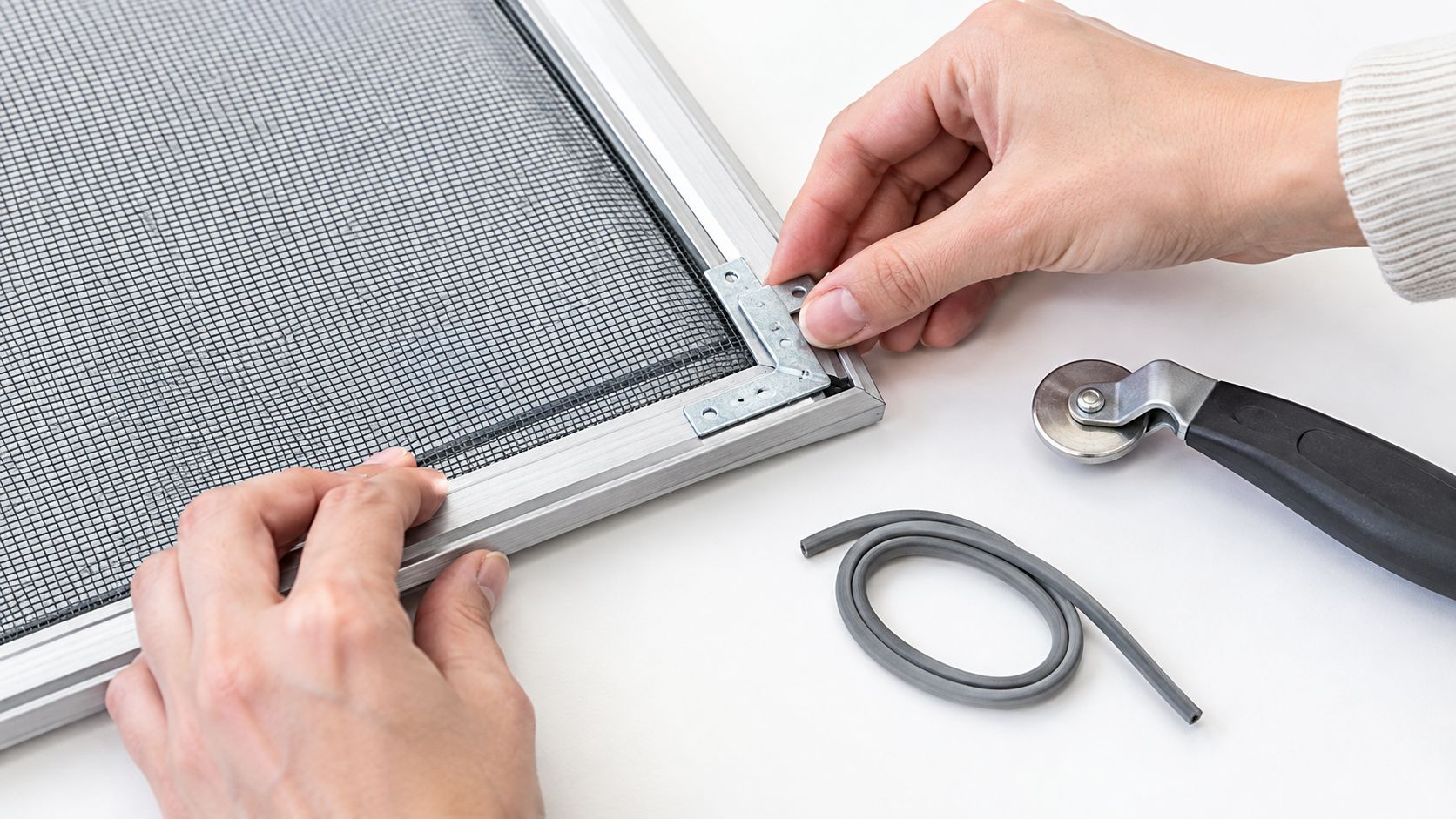
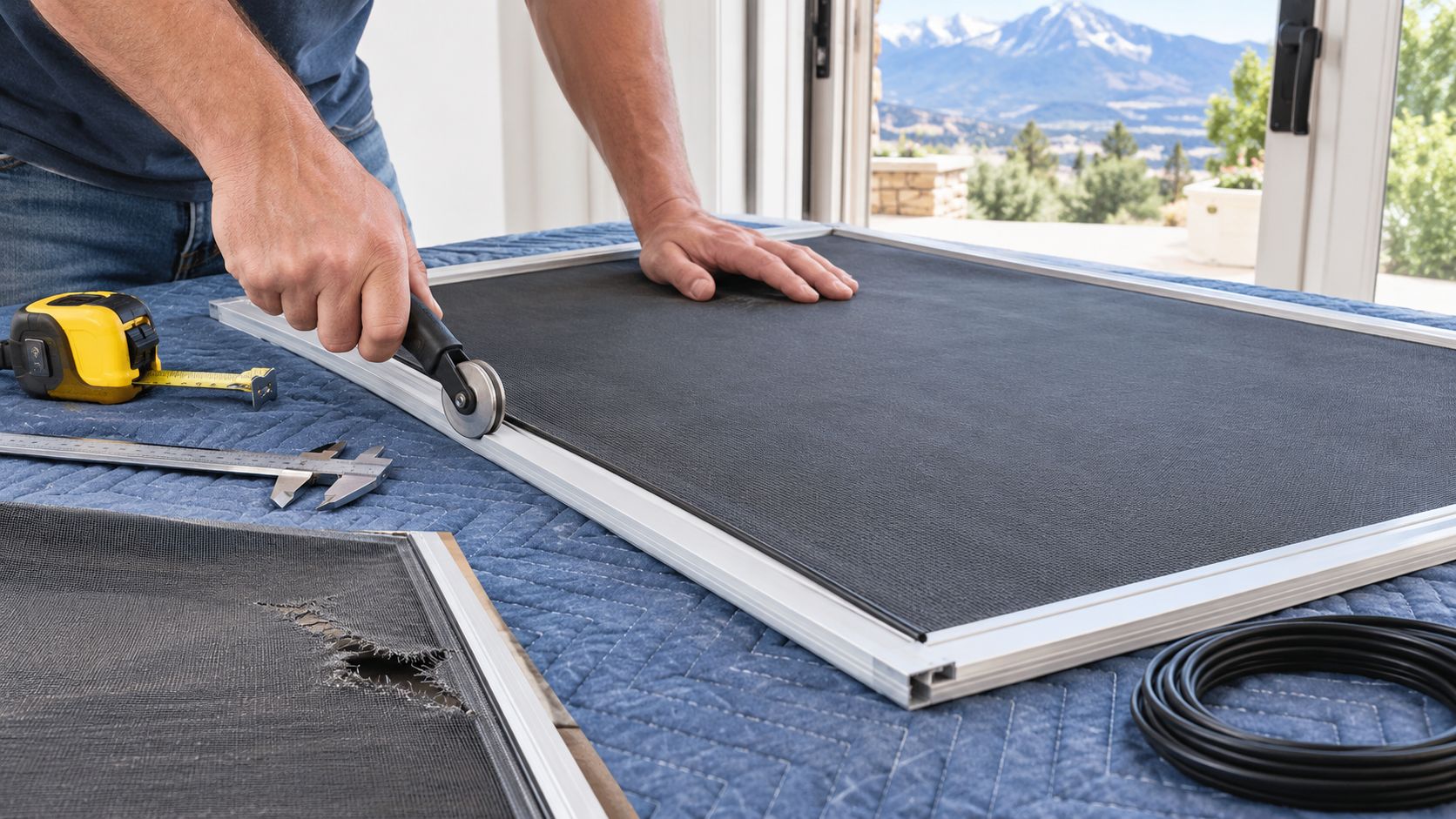
Frustration builds fast when the glass still looks cloudy after an afternoon of work. Screens may still hold dust, and tracks can keep collecting grit, which makes the whole window area feel unfinished. Instead of a fresh finish, the result can feel like time spent without the payoff.
When the window still looks worse in direct sun, the cleaning method is usually the problem rather than the weather.
The problems that show up most often
- Hard water marks: These cling to glass and can be stubborn without the right process.
- Streaks and film: DIY methods often leave behind cleaner lines that show up once the sun hits the pane.
- Screen buildup: Dirty screens can make glass look dusty again almost immediately.
- Track grime: If tracks are ignored, the whole window area feels unfinished.
- Hard-to-reach panes: Upper-story glass is difficult to handle safely without proper tools.
These are practical issues, not cosmetic nitpicks. Clean glass improves curb appeal, and it also helps a property feel cared for. That matters for listings, tenant impressions, storefronts, and any home where natural light shapes the room. In Colorado Springs, commercial window cleaning and residential window cleaning both work best with a local approach, since the weather pattern keeps testing glass, seals, and frames in different ways over the year.
What to Expect From Professional Window Cleaning Services

A professional window cleaning visit should feel organized from the first estimate to the final look at the glass. A strong service does more than wipe the panes. It looks at the whole window system, since screens, tracks, frames, and buildup all affect how the window looks and works.
What a solid service visit usually includes
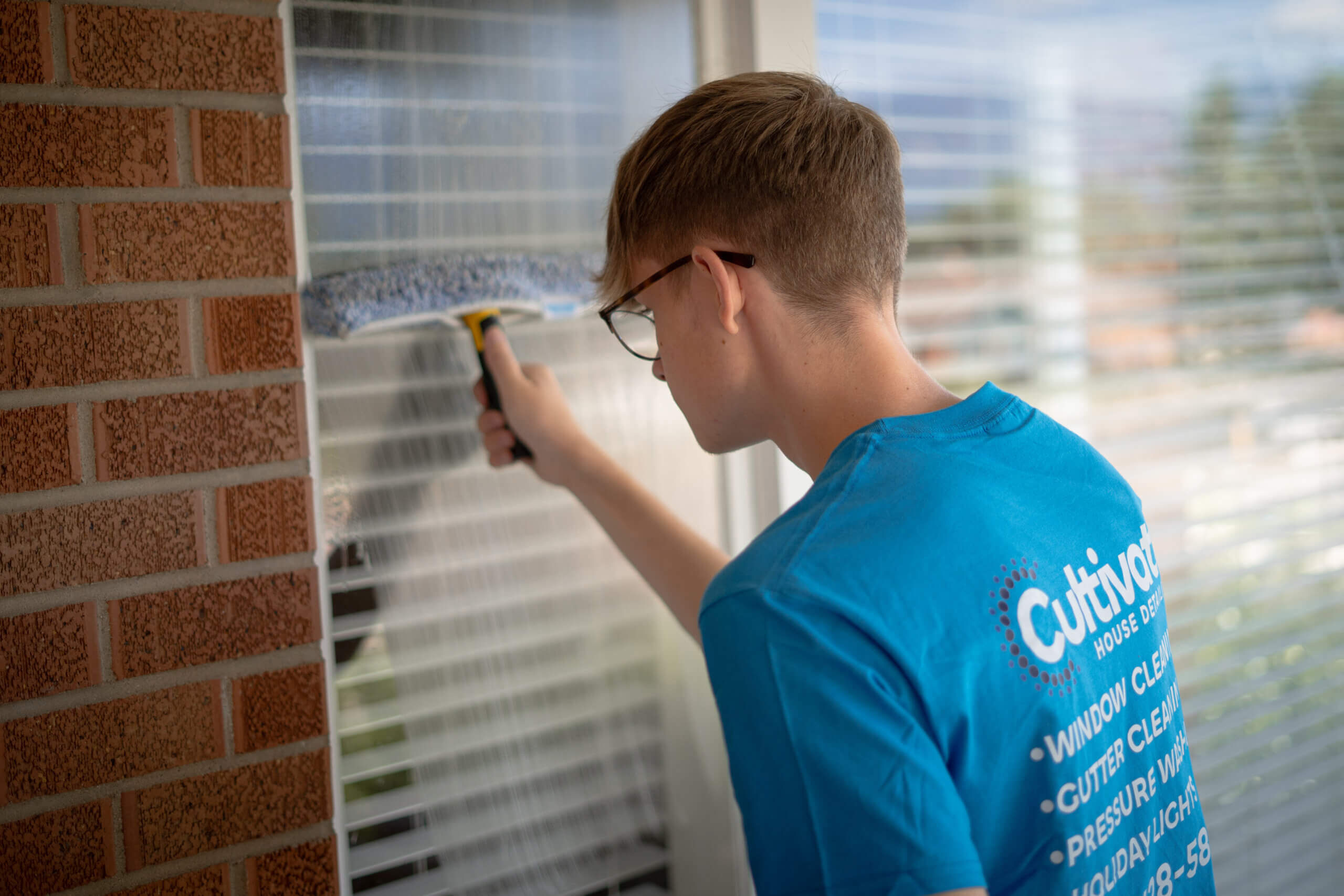
A thorough appointment usually includes interior window cleaning, exterior window cleaning, screen cleaning, and track cleaning. It should also handle hard water stain removal if mineral spots are already on the glass, because those marks can keep the pane from looking fully clean even after a careful wash. On taller homes and buildings, the same standard should hold on upper windows too, with proper tools and safe access making the difference between a partial result and a finished one.
A good process usually follows a clear order. First comes inspection, so the cleaner can check glass condition, buildup, and access points. Then the team cleans panes, frames, and problem areas separately, which helps avoid spreading grit around the window. Screens and tracks get their own attention, so dust and debris do not come right back onto freshly cleaned glass. The visit ends with a final review in changing light, because streaks often show up only after the sun shifts across the pane.
Why the result lasts longer
Professional cleaning helps slow the wear caused by mineral buildup, grit, and repeated residue. That matters in places like Colorado Springs, where local water and weather can leave glass looking cloudy again faster than a homeowner expects. Clean windows also let in more natural light, which changes how a room feels without changing anything else in the house.
For business owners, that clean finish affects storefront presentation just as much as it helps a home's curb appeal. For homeowners, it also supports energy efficiency by letting daylight do more of the work during the day, while keeping the glass clearer for regular inspection of spots, seals, and frame issues. Good service does not stop at shine. It leaves the windows easier to maintain between appointments.
If you are comparing exterior window cleaning options in Colorado Springs, CO, look for punctual service, clear communication, and a team that understands local weather and water conditions. Those details matter because windows are one of the most visible parts of a property, and they hold up best when they are maintained with care. In Colorado Springs, commercial window cleaning and residential window cleaning both benefit from a local approach that accounts for hard water, dust, and the way mountain weather tests glass over time.
Rather not do it yourself? Cultivate House Detailing offers residential window cleaning in Colorado Springs. Get a free quote.