A lot of Colorado Springs business owners notice the same problem at the wrong time. You open the front door in the morning, step back, and suddenly see what customers have been seeing for weeks: dusty siding, darkened concrete near the entry, gum spots by the curb, and runoff stains that make the whole property look tired even when the business itself is run well.
That disconnect matters. A clean lobby and a strong reputation can get undercut by an exterior that suggests neglect. In a market where customers make fast judgments, your storefront, office entrance, restaurant patio, or retail walkway starts shaping trust before anyone speaks to your staff.
Pressure washing for businesses isn't just about appearance. In Colorado Springs, it also touches safety, liability, maintenance planning, and how long your exterior materials hold up in a dry, dusty climate with winter residue and heavy sun exposure.
Your Business's First Impression Starts at the Curb
A business exterior usually gets dirty gradually. That's why owners often stop noticing it. Customers don't.
A storefront may have clean signage but still show traffic film around the base of the building. An office entry can have glass that looks fine from inside while the sidewalk outside has dark buildup near the threshold. Restaurant patios often collect a mix of dust, spills, and grease transfer that doesn't come off with a quick hose-down. In Colorado Springs, wind, road residue, and seasonal grime make that buildup show up fast.
What customers notice first
Customers don't walk up thinking about pressure washing. They notice whether a place feels cared for.
That judgment happens at the curb, the parking lot edge, the dumpster area, the sidewalk to the front door, and the concrete right under the sign. Real estate professionals talk about the same principle when they discuss how to boost curb appeal in Central California. The location is different, but the idea carries over well to commercial properties here. Exterior condition affects perception before a customer ever evaluates your product or service.
A clean exterior signals that the property is actively managed. A dirty one raises quiet questions about everything behind the door.
What business owners usually see too late
The issue usually isn't dramatic staining. It's the accumulation of small negatives:
- Entry concrete that looks permanently dark from foot traffic, dust, and embedded grime
- Building faces that collect dirt bands near splash zones and landscaping edges
- Patios and service areas that feel dingy even after routine sweeping
- Corners and edges that hold organic growth longer than the open surface
Those details don't always trigger an urgent maintenance call. They do affect how polished the property feels.
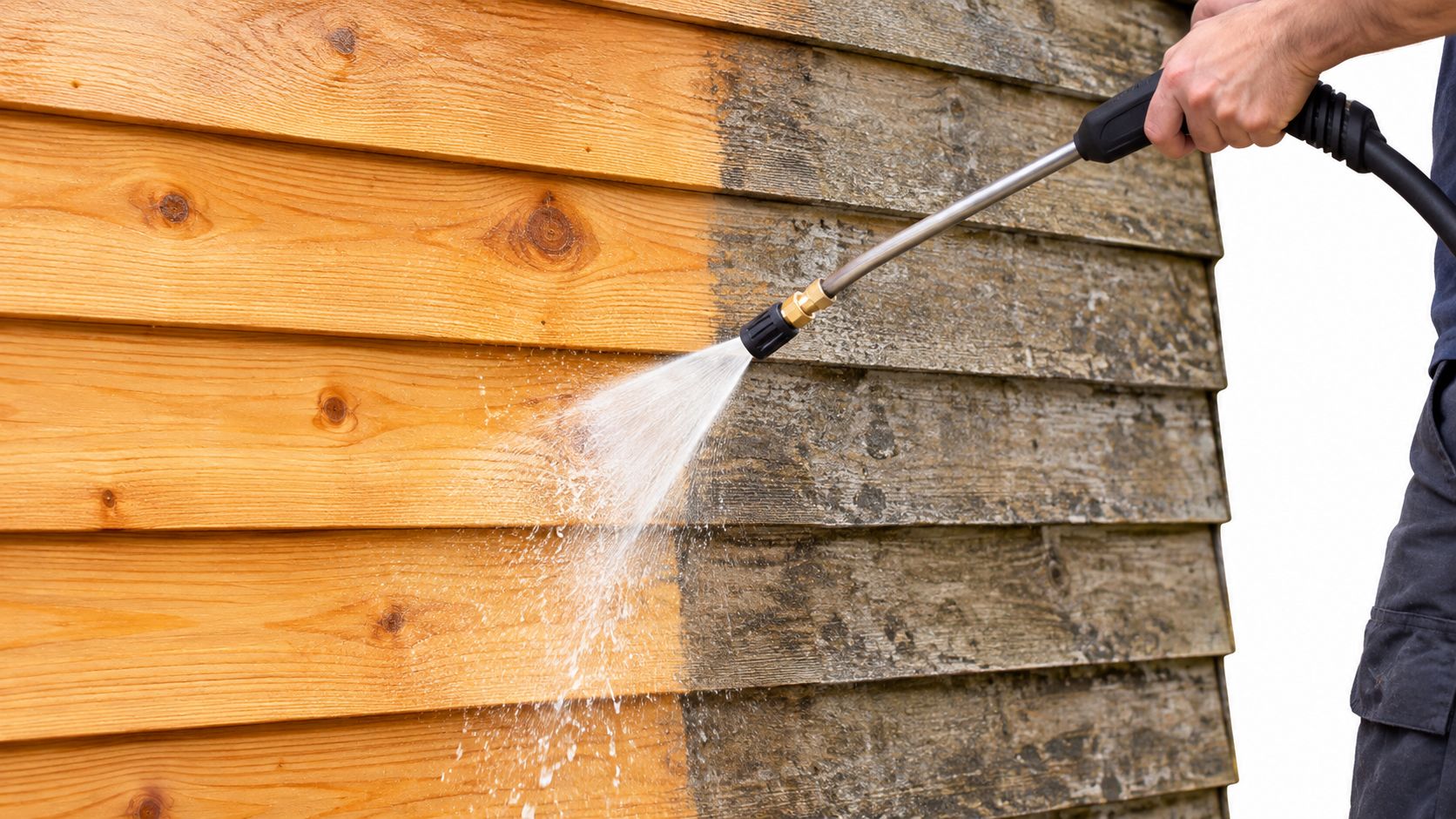
For local businesses, that's where a professional exterior cleaning plan earns its keep. Pressure washing gives owners a practical way to reset the appearance of walkways, siding, drive lanes, patios, and other high-visibility surfaces without waiting until the property looks neglected.
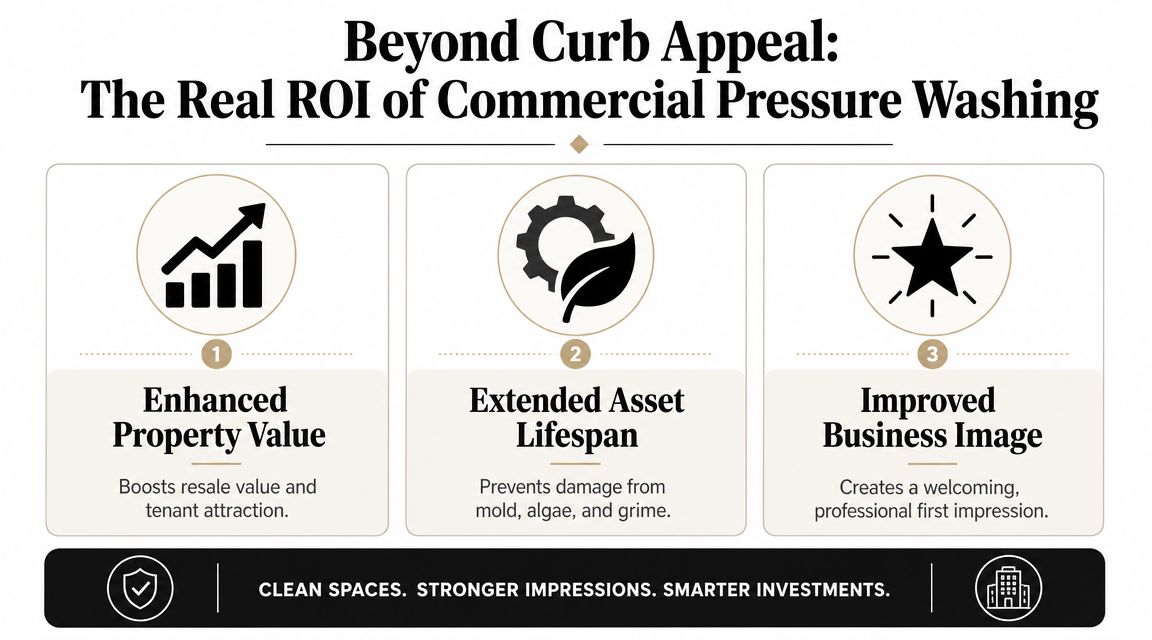
Beyond Curb Appeal The Real ROI of Commercial Pressure Washing
Pressure washing for businesses gets dismissed too often as cosmetic work. That's a mistake. The return usually shows up in three places that matter more than appearance alone: safety, preservation, and customer confidence.
To frame the big picture, this visual captures the business case well:
Cleaner walkways reduce avoidable risk
A dirty surface isn't always just an ugly surface. It can also become a hazard.
NIOSH and OSHA guidance on walking-working surfaces consistently treats wet, dirty, or contaminated floors and exterior surfaces as a major slip hazard, and the hazard is often amplified by algae, grease, and winter residues on commercial walkways and entries according to this commercial safety discussion. That's especially relevant for businesses with public entries, restaurant patios, loading zones, and shaded walkways.
Pressure washing helps when it's handled as part of a risk-management process, not a one-off cleanup. That means thinking about drying time, traffic routing, temporary signage, and cleaning logs.
It protects the materials you already paid for
Concrete, masonry, painted surfaces, and exterior trim last longer when contamination isn't allowed to sit.
What hurts buildings isn't only visible grime. It's the layer of soil, residue, and biological growth that holds moisture, stains porous material, and makes routine wear worse. Owners usually feel this later as premature repainting, surface discoloration, or replacement work that could've been delayed.
A scheduled cleaning plan is often cheaper than letting buildup turn into restoration work.
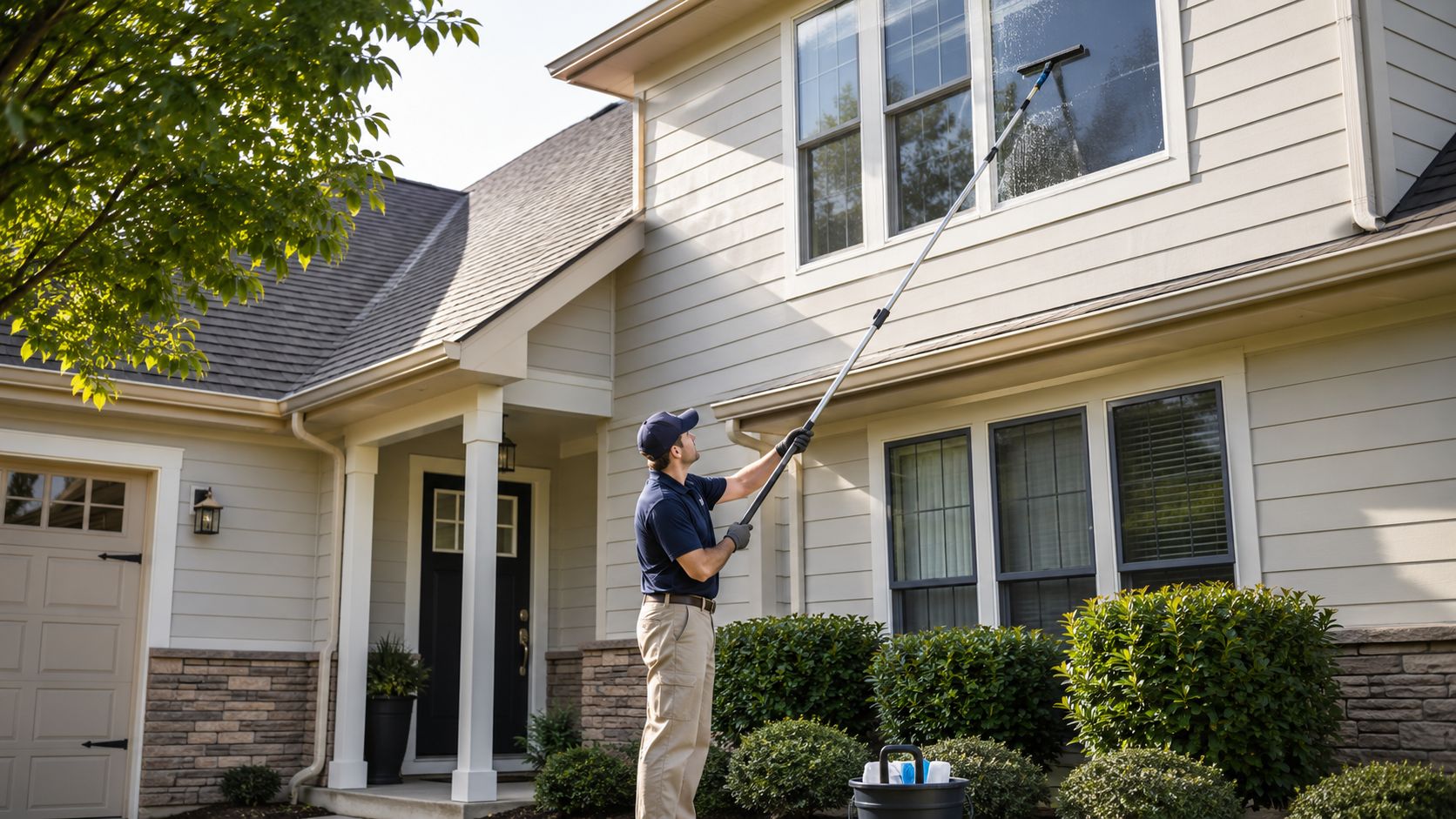
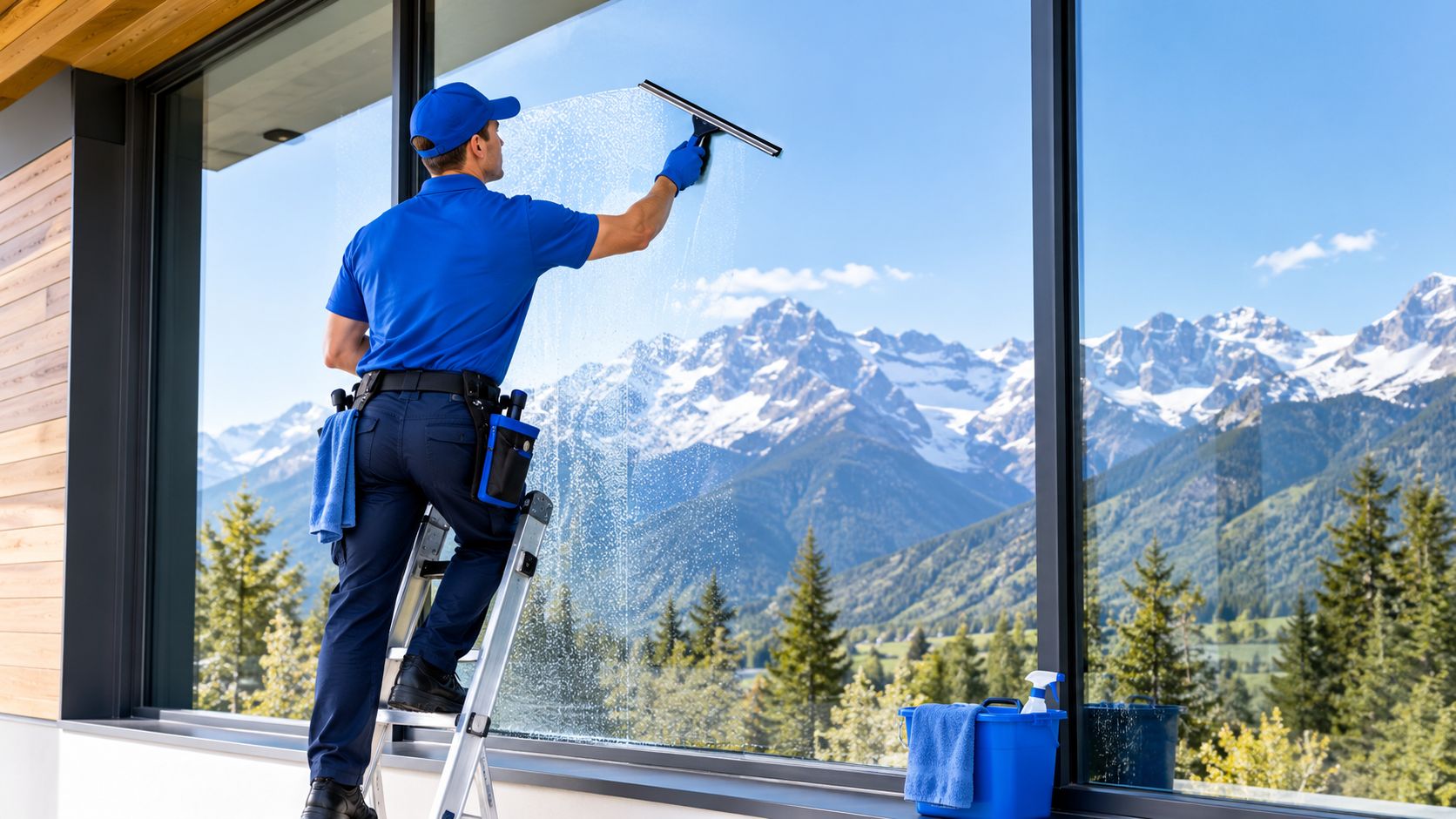
Here's where coordinated exterior maintenance matters. Many properties benefit from pairing surface cleaning with glass care so the whole building reads as maintained. For businesses comparing options, commercial building window cleaning often fits naturally alongside pressure washing because customers rarely separate dirty sidewalks from dusty glass when they judge a property.
It changes how the business feels to visitors
Customers may never compliment your cleaned concrete. They absolutely notice when a place feels fresh, orderly, and open for business.
The difference is strongest in:
- Retail entrances where foot traffic highlights every stain near the door
- Medical and office properties where cleanliness supports professionalism
- Restaurants and service businesses where guests connect exterior condition with overall standards
Later in the buying process, visual trust still matters. A property that looks maintained creates fewer questions and fewer objections.
A short overview of commercial cleaning in action helps make that visible:
Practical rule: If the surface customers use every day looks neglected, you're already paying a price. You just may not see it on a cleaning invoice.
The Right Method for Every Surface
One of the biggest mistakes in commercial exterior cleaning is treating every surface like concrete. It isn't.
The true skill in pressure washing for businesses isn't owning a powerful machine. It's knowing when to use pressure, when to use heat, when to reduce force, and when to rely more on chemistry and rinse volume than brute impact.
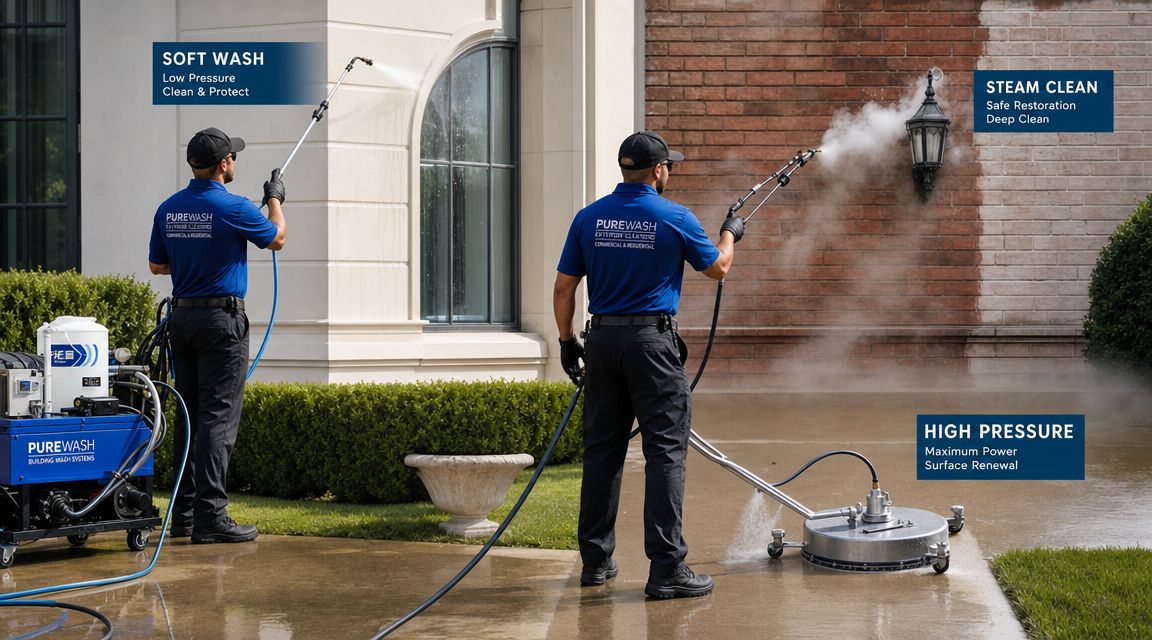
Pressure washing, power washing, and soft washing
The terms get used interchangeably, but they solve different problems.
| Method | Best fit | Main advantage | Main risk if misused |
|---|---|---|---|
| Pressure washing | Concrete, hard exterior surfaces | Strong soil removal | Etching or surface damage |
| Power washing | Grease-heavy commercial areas | Hot water improves oil removal | Damage to sensitive finishes |
| Soft washing | Stucco, painted surfaces, delicate siding | Lower pressure protects material | Poor results if chemistry is wrong |
For commercial work, output matters, but balance matters more. For many commercial jobs, professionals use gas-powered systems in the 3,000 to 4,000 PSI range with 5 to 12 GPM flow, and hot water systems reaching about 200°F are essential for removing oils and grease common at restaurants or service centers by lowering viscosity and accelerating soil release, as explained in this guide on choosing a pressure washer for business use.
That last part is easy to underestimate. PSI breaks the bond. GPM clears the surface. If flow is too low, operators spend more time chasing dirty water and suspended soil. If pressure is too high for the substrate, the cleaning itself creates the damage.
Matching the method to the property
Colorado Springs businesses often have a mix of surfaces on one site. That's why a one-setting approach doesn't work.
- Concrete walks and dumpster pads usually benefit from higher cleaning power and even surface coverage.
- Restaurant pads and service bays often need hot water because grease doesn't behave like ordinary dust.
- Stucco, EIFS, painted trim, and some siding call for lower pressure and a more controlled wash process.
- Wood accents, coatings, and older brick details need extra caution because aggressive pressure can scar or strip them.
For flatwork, surface cleaners usually produce a more even finish than an open wand. They reduce streaking and keep operators from leaving obvious pass lines.
Use the least aggressive method that reliably removes the contamination. That's how you clean thoroughly without creating repair work.
A capable provider should also carry the small gear that prevents big delays: nozzle options, pressure gauges, fittings, O-rings, and downstream chemical injection when detergents are needed.
Understanding Commercial Pressure Washing Costs
Commercial pressure washing bids make more sense once you look past square footage. Two properties with the same footprint can carry very different cleaning costs because the price is tied to labor hours, surface risk, scheduling limits, and whether the job needs runoff control.
For Colorado Springs businesses, that difference matters. Windblown dust, winter sand, grease near service areas, and hard water residue can turn a simple maintenance wash into a more involved job. A low bid can look attractive at first, but if it skips the right method, enough labor time, or water recovery where conditions call for it, the savings usually show up later as repeat cleaning, surface damage, or compliance trouble.
What changes the price most
Surface area still matters. More sidewalks, walls, loading zones, and entryways mean more production time.
Condition matters just as much. Light dust and traffic film clean faster than gum, grease, organic buildup, rust-like stains, or dumpster-pad residue. Those heavier soils often require more dwell time, hotter water, stronger detergents, or multiple passes.
Access changes cost in a hurry. An open storefront with easy hose routing is straightforward. A busy retail center with parked cars, pedestrian traffic, limited water access, and a requirement for after-hours work takes more planning and more time on site.
Why similar properties can price very differently
A useful quote breaks the job into the factors that drive labor and risk.
| Cost driver | Lower-complexity example | Higher-complexity example |
|---|---|---|
| Surface condition | Dusty walkway | Grease-stained entry or gum removal |
| Access | Open sidewalk | Tight patio, active storefront, obstacles |
| Material sensitivity | Plain concrete | Painted surfaces, delicate finishes |
| Operational requirements | Normal daytime scheduling | Off-hours work, traffic control, special coordination |
That last row gets overlooked all the time. If a crew has to work around tenants, cordon off customer paths, protect landscaping, and recover wastewater near drains, the quote should reflect it. Those steps are not add-ons for appearance. They reduce business interruption and help limit liability.
Cost is only one side of the decision
The cheaper proposal is not always the lower-cost choice over a year.
If a contractor underbids and cleans too aggressively, you can end up paying for paint touch-ups, etched concrete, damaged signage, or premature wear on coated surfaces. If the scope is too light, dirty high-visibility areas come back fast and your team ends up scheduling another visit sooner than planned. On commercial properties, the better question is whether the service interval, cleaning method, and site handling protect the asset and reduce risk.
That is where return on investment shows up. Fewer slip hazards. Fewer complaints about dirty entries. Less long-term staining. Less chance of a runoff problem becoming a management issue.
Questions to ask before approving a quote
A clear proposal should answer practical questions without a lot of sales language:
- What soils are included in the price, so you know whether the bid covers dust, grease, gum, organic staining, or only light washing
- What cleaning method is planned for each surface, especially if the site includes painted areas, stucco, brick detail, or coated concrete
- Will the work happen during business hours or after hours, and who is handling cones, access control, and customer safety
- Is runoff control included where needed, or is that being treated as a separate service
- What result should you realistically expect after one visit, especially on older stains that may improve but not disappear completely
Good pricing is specific. It tells you what is being cleaned, how it will be cleaned, what limitations exist on the site, and what level of coordination is built into the job. That kind of quote is easier to compare, easier to budget, and far less likely to create expensive surprises later.
Safety and Environmental Compliance in Colorado Springs
A business can get the cleaning result right and still handle the job wrong.
The issue is runoff. Commercial pressure washing often moves more than dirt. It can move grease, detergent, sediment, oils, and whatever else is sitting on the surface into places that create environmental and legal problems.
This is the compliance side most property owners don't hear enough about:
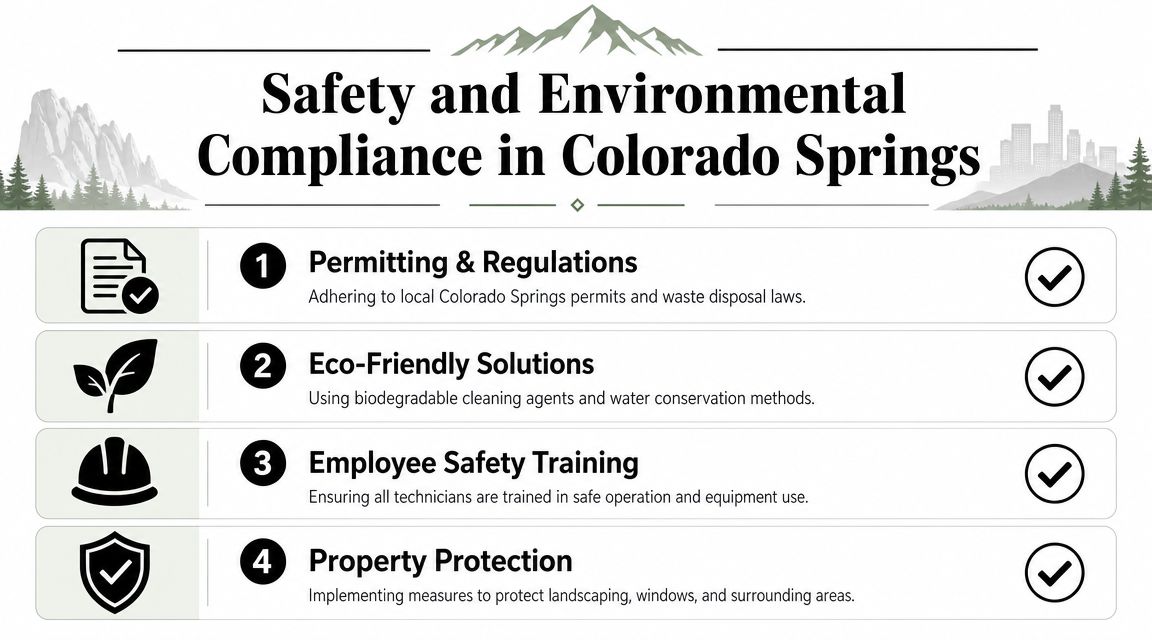
Runoff is part of the job
Wastewater from pressure washing can carry oil, grease, detergents, and sediments. According to EPA guidelines, discharging this water into storm drains is often restricted or prohibited, making professional water capture, filtration, or vacuum recovery a critical compliance consideration for businesses, as outlined in this article on commercial pressure washing services and wastewater management.
That matters for restaurants, auto-related businesses, shopping centers, office parks, and any site where wash water can reach storm infrastructure.
"Eco-friendly" only tells part of the story. A biodegradable product doesn't solve the problem if contaminated water is still flowing into the wrong drain.
What good jobsite control looks like
A compliant commercial wash plan usually includes more than equipment setup.
- Drain awareness means identifying where water will travel before cleaning starts
- Containment steps may include blocking flow paths or directing wastewater to controlled recovery points
- Capture and recovery can involve vacuum recovery or filtration when the site conditions call for it
- Disposal decisions need to reflect the type of contaminants removed from the surface
Safety on site matters too
The cleaning process itself creates temporary risk if it's rushed.
Pedestrian traffic needs to be managed. Entry points may need to be sequenced instead of cleaned all at once. Wet-surface signage has to be visible, and some properties are better served by early morning, evening, or closed-hour scheduling.
The cleanest result isn't the best result if customers have to step through hoses, wet slurry, or poorly marked walkways to reach your door.
For Colorado Springs businesses, professional pressure washing distinguishes itself from basic washing. The work has to respect both the property and the operating environment around it.
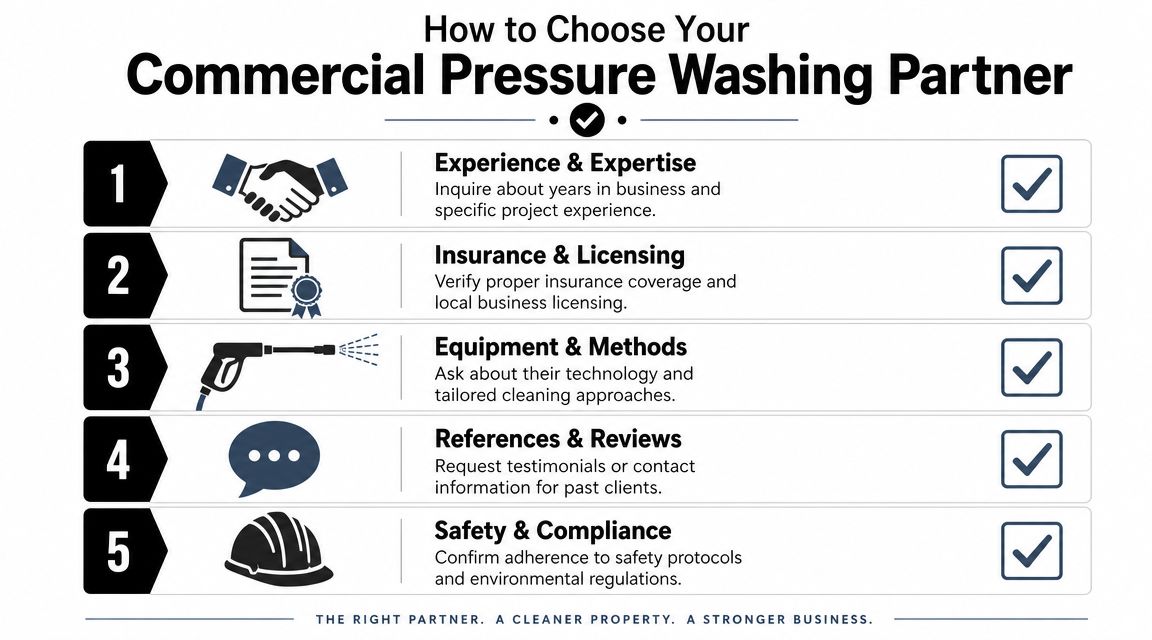
How to Choose Your Commercial Pressure Washing Partner
There are a lot of companies offering this service. That's not automatically a problem, but it does mean buyers have to vet carefully.
IBISWorld reports 32,193 businesses in the U.S. pressure washing services industry in 2024, and the industry grew at a 5.8% CAGR from 2019 to 2024, while industry revenue was about $1.2 billion in 2024 with only 0.6% CAGR over that period according to IBISWorld's industry overview. In plain terms, there are a lot of operators competing for work, and the number of firms has grown faster than revenue. That makes it even more important to screen for professionalism instead of buying on price alone.
What to verify before you hire
Some checks are simple and worth doing every time:
- Insurance first. Ask for proof of general liability and workers' compensation coverage where applicable.
- Commercial experience. A contractor who mainly cleans small residential jobs may not be set up for active business properties.
- Method fit. Ask how they plan to clean your specific surfaces, not just whether they can "pressure wash it."
- Runoff knowledge. If they can't explain wastewater handling in plain language, keep looking.
- Written scope. The estimate should say what areas are included, what method is planned, and what conditions could change the job.
Signs you're talking to a serious operator
A strong contractor usually sounds specific, not flashy.
They ask about grease, gum, organic growth, business hours, water access, pedestrian traffic, and drain locations. They explain what can be cleaned safely and where lower pressure or hot water may be needed. They don't promise the same result on every surface.
You can also learn a lot from how a company presents itself online. For businesses in the service trades, resources like The Cherubini Company's website solutions show what a clear, professional digital presence looks like. A polished website alone doesn't prove field quality, but vague service pages and weak communication are often warning signs.
One useful local filter
If you're comparing providers in this market, start with companies that already describe their commercial service clearly. A page like commercial pressure washing near me in Colorado Springs, CO gives you a baseline for the questions a local contractor expects from business owners.
Price matters. Clarity matters more. The cheapest bid becomes expensive fast when the wrong method damages a surface or the crew isn't prepared for a live commercial site.
Get a Spotless First Impression with Cultivate House Detailing
Most business owners don't want to manage exterior cleaning in pieces. They want the property to look sharp, stay safe for customers, and get serviced without creating extra work for staff.
That's the value of a straightforward commercial process. First comes the site review and estimate. The property gets assessed based on surface type, buildup, access, traffic flow, and any timing concerns. After that, scheduling should be simple. If certain areas need off-hours service or staged cleaning to keep entrances usable, that should be planned before the crew arrives.
What a good service experience should feel like
From the owner's side, the process should be easy to follow:
- Clear scope up front so you know which areas are being cleaned
- Convenient scheduling that works around customers, tenants, or staff
- Professional on-site communication when access, signage, or sequencing matters
- A final walkthrough so nothing important gets missed
That kind of consistency matters more than sales language. It's one reason many buyers use broader service-vetting resources before hiring any specialty contractor. For example, this guide to finding trustworthy mold companies focuses on a different service category, but the screening logic is useful here too. Look for responsiveness, clear process, and a company that can explain how it protects your property.
Why local context matters in Colorado Springs
Colorado Springs properties deal with a mix of dust, seasonal residue, and fast-changing weather. A cleaning plan has to fit the site, not just the machine.
Retail storefronts need front-entry work that doesn't disrupt customers more than necessary. Office properties need a clean, professional look that supports the tenant experience. Restaurants and service businesses often need targeted cleaning in the places that collect the heaviest buildup.
When the process is handled well, pressure washing feels less like a reactive cleanup and more like part of regular property care. That's where the investment starts paying off in appearance, maintenance, and day-to-day confidence in the condition of the site.
If your storefront, office entry, patio, sidewalks, or building exterior in Colorado Springs needs attention, contact Cultivate House Detailing for a quote. You'll get a clear assessment, practical recommendations, and professional exterior cleaning that helps your business look cared for from the curb in.
Want it handled by a local crew? Cultivate House Detailing offers pressure washing in Colorado Springs. Get a free quote.