Cold hands, a bundle of half-working strings, one bad ladder angle on a frosty driveway. That's how outdoor Christmas lighting starts for a lot of homeowners in Colorado Springs.
Then the weather shifts. Wind picks up, a light snow moves in, and what should feel festive starts feeling like a chore you're trying to finish before your fingers go numb. If you've done that routine more than once, permanent outdoor Christmas lights start making a lot of sense.
They're exactly what they sound like. A low-profile lighting system is installed along the roofline or trim and stays in place year-round. During the day, the goal is for it to blend into the home. At night, it can give you Christmas color, warm everyday accent lighting, game-day themes, or holiday scenes without dragging bins out of the garage.
For homeowners in Colorado Springs and nearby communities, the big questions usually aren't whether the lights look good. They do. Instead, the questions are whether they hold up in our climate, whether the cost makes sense, and what separates a clean professional install from a setup that causes trouble later.
The End of Tangled Lights and Teetering Ladders
A lot of people start looking into permanent outdoor Christmas lights right after one of two moments. They either spend a cold weekend untangling lights and replacing dead sections, or they have one ladder climb that feels riskier than it used to.
That pattern is familiar around Colorado Springs. You wait for a decent weather window, pull out the old boxes, and realize a strand that worked last year doesn't work now. Then you're trying to clip lights onto a roofline while watching for ice on the driveway and gusts coming off the Front Range.
Permanent lighting changes that routine because the work happens once, in a planned install, instead of every late fall in whatever weather shows up.
What homeowners usually want
Most homeowners aren't asking for a flashy commercial display. They want three things:
- A clean daytime look that doesn't make the house look decorated in July.
- Simple control so they can switch scenes without climbing back outside.
- Less seasonal hassle because storage, setup, takedown, and repairs get old fast.
That's why the best permanent systems don't look like temporary strings left up too long. They're built to sit tight against the architecture and disappear as much as possible during daylight.
Permanent lights make the most sense when you already know you'll decorate year after year. The convenience is what people notice first. The safety factor is what matters most over time.
Why this matters more in Colorado
Colorado weather is rarely cooperative on a decorating schedule. A mild afternoon can turn into a freezing evening quickly, and homes in places like Black Forest, Monument, and Woodland Park often deal with stronger wind, deeper snow, and more roofline exposure than a national article ever accounts for.
That's where a permanent system becomes more than a holiday upgrade. It becomes a practical exterior feature. You stop treating lighting as a yearly project and start treating it like part of the house.
For homeowners who want that done neatly, the details matter more than the pitch. Mounting location, track choice, wiring layout, and weather sealing all affect how the system looks and how long it lasts.
Understanding the Different System Types
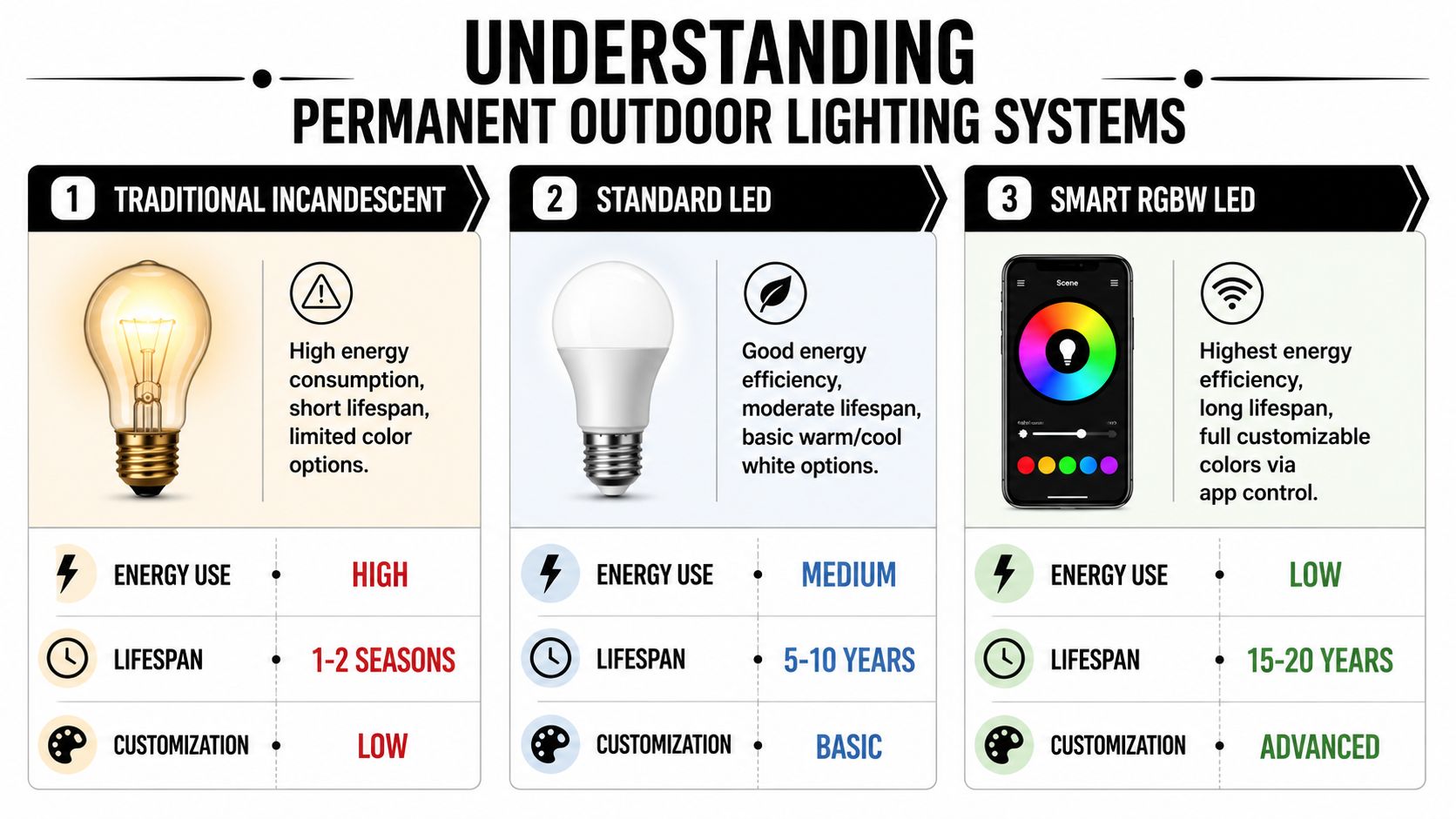
Permanent outdoor Christmas lights aren't one single product category. Homeowners usually run into two broad formats first: integrated LED fixture systems and LED rope or strip-based systems. They can both light a roofline, but they don't behave the same way once they're installed.
Integrated fixtures versus strip systems
Integrated fixture systems use individual light nodes or purpose-built housings set into a track or channel. These tend to look more architectural and usually hold up better on rooflines where appearance matters from the street.
Strip or rope systems can work well in the right application, especially for accent areas, patios, or under-rail lighting. But on a front elevation, they often need more careful planning to avoid looking improvised.
Here's the simple comparison homeowners should understand:
| Feature | Integrated LED Fixtures | LED Rope/Strip Lights |
|---|---|---|
| Daytime appearance | More discreet when matched to trim | Can be harder to hide cleanly |
| Mounting style | Usually set into channels or tracks | Often attached with clips or adhesive systems |
| Serviceability | Better for whole-home permanent installs | Better for selective accent use in some layouts |
| Roofline use | Strong fit for fascia and soffit lines | Can require more planning for a polished finish |
| Long-run consistency | Typically better when professionally designed | More sensitive to layout and power planning |
Why pros favor low-voltage layouts
Most professionally planned systems use low-voltage lighting, and for good reason. Permanent outdoor Christmas lights typically operate at 12V rather than 5V to reduce voltage drop over long distances, which allows longer runs while keeping brightness more even. A standard 12V 30A power supply can drive about 1,000 LEDs according to The Smart Home Hookup's 12V power planning breakdown.
That matters on a real house. Once you start running lighting across multiple roof sections, garage returns, peaks, and porch areas, voltage consistency becomes the difference between a clean uniform display and a system that fades as it goes.
Practical rule: If a layout needs long runs, corners, and multiple elevations, power planning isn't a side issue. It's one of the main reasons some installs look sharp and some don't.
What works and what doesn't
A good system uses hardware that fits the home and the climate. A poor system gets chosen because it looked inexpensive online.
What usually works best:
- Trim-matched channels that visually disappear against fascia or soffits
- 12V systems for longer run stability
- Secure mechanical mounting instead of relying too heavily on adhesive alone
- Controls that are simple enough to use regularly
What often causes trouble:
- Overly visible tracks on prominent rooflines
- Weak planning for power injection on long runs
- Cold-weather adhesive installs on dirty surfaces
- DIY layouts that look fine up close but uneven from the street
Permanent lighting should feel built into the home, not attached as an afterthought.
The True Cost and Long-Term Value
A lot of Colorado Springs homeowners start in the same place. They are tired of paying for seasonal lights every year, but they also do not want to spend thousands on a system that only sounds good in a sales pitch.
That hesitation is reasonable.
For a typical professionally installed system, the upfront investment usually lands between $2,000 and $8,000, with many homes needing 100 to 200 linear feet at about $20 to $40 per linear foot installed, according to HomeGuide's permanent Christmas lights cost guide. HomeGuide also notes that these systems often pay for themselves in about 4 to 5 years and use 80% to 90% less energy than traditional incandescent Christmas bulbs.
The biggest pricing mistake is comparing permanent lighting to one retail cart of temporary lights. A better comparison is your full yearly cycle: seasonal install labor, takedown, replacement strands, storage, and the cost of doing it again next year.
Where the investment starts making sense
Annual professional holiday lighting service often adds up fast. If your home needs custom roofline work, repeat service calls, or a larger display, the ongoing spend can rival a permanent system sooner than many homeowners expect.
That matters even more in our climate. In Colorado Springs, snow and ice are hard on seasonal clips, cords, and light strings. Temporary products get brittle, fasteners loosen, and mid-season repairs are common after wind or a freeze-thaw swing. A permanent system costs more upfront, but it avoids the yearly reset and usually holds up better under repeated winter stress when it is installed correctly.
If you want a local pricing breakdown with examples from real homes, Cultivate has a detailed guide on permanent Christmas lights cost in Colorado Springs.
Operating cost stays low
Energy use matters, especially for homeowners who like to run lighting well beyond December. LED permanent systems are far less expensive to operate than old incandescent setups, so using the lights for holidays, game days, backyard gatherings, or simple warm accent lighting does not usually create the kind of power bill surprise people remember from older string lights.
That changes the value equation. The system gets used more often, and the cost of using it stays relatively low.
Homeowners usually notice the savings in labor first, then in convenience, then in how often they actually use the system year-round.
The return on investment is not only financial
There is also a safety and wear-and-tear side to this decision. Fewer trips up a ladder means less risk to you and less chance of scraping shingles, bending gutters, or damaging trim while hanging temporary lights in cold weather.
For homes with exposed fastener metal roofing, snow management can also protect the areas around lighting and roof edges over time. In those cases, snow retention products may be part of the broader exterior plan. Browse Snow Defender 4500 products if you are evaluating how snow movement is handled on that type of roof.
Year-round flexibility is another part of the value. The same lighting can handle Christmas colors, soft everyday architectural lighting, Broncos game days, graduation parties, and warm white curb appeal without another installation appointment. For homeowners who decorate consistently and plan to stay in the house, that mix of lower recurring cost, easier use, and better performance in Colorado winters is usually what makes the investment pencil out.
Built for Colorado Weather and Maintenance Needs
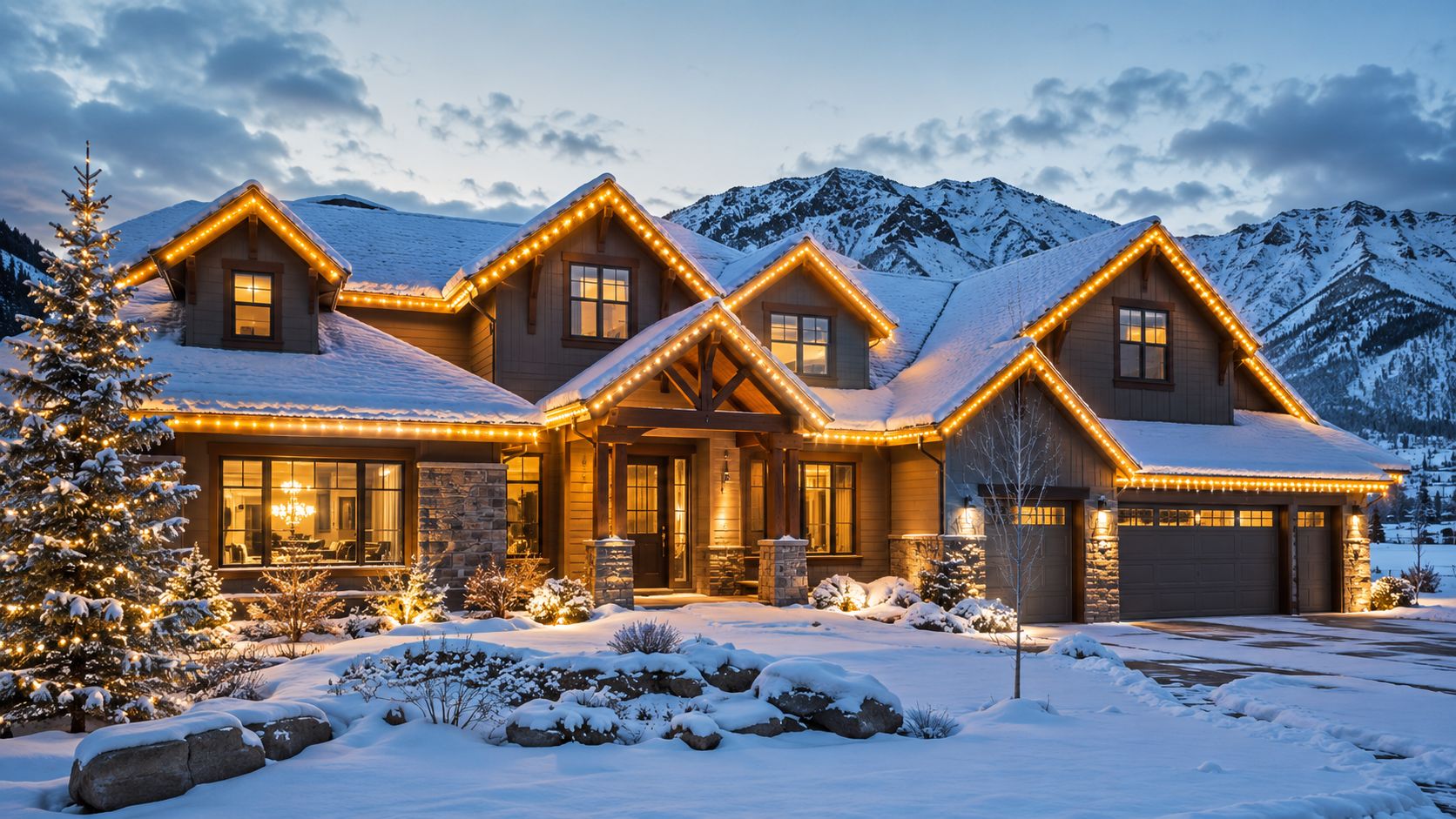
Colorado is where marketing claims get tested. A light system can look impressive in a catalog and still struggle once it faces wind, snowpack, ice, and repeated freeze-thaw cycles on a real roofline.
What harsh weather actually does to a system
The local issue isn't just “cold.” It's movement. Ice forms, melts, shifts, and refreezes. Snow drifts build in odd places. Wind catches any part of a system that isn't seated tightly. If a track is mounted under an eave without considering runoff or snow load, it can get buried or pushed out of alignment over time.
That's especially important in higher-exposure communities. Guides often call permanent lights durable, but they usually skip the Colorado-specific reality that ice dams and heavy snowdrift can bury or displace tracks installed under eaves, which is a key concern in areas like Woodland Park and other high-altitude freeze-thaw environments, as noted in this Colorado weather-focused permanent lighting discussion.
The hardware details that matter
A durable system starts with commercial-grade LED components and weather-resistant housings. Permanent lights are commonly built around LED technology rated for long service life, and many systems are designed with IP67 or higher protection against water and dust ingress, according to Lux Lights' overview of permanent light lifespan and durability. That kind of protection matters when the system never comes down.
Mounting strategy matters just as much as fixture rating. On some homes, the right answer is a soffit-mounted channel. On others, fascia placement or drip-edge planning creates a better result. The roof shape, gutter profile, snow pattern, and exposure all influence what will stay put and what won't.
If a roofline gets heavy runoff or frequent snow buildup, the cleanest-looking install on day one may not be the smartest install for year three.
Maintenance in snowy areas
Good permanent lighting should be low maintenance, not no-thought-required. Homeowners in snowier parts of the Pikes Peak region should pay attention to roof behavior, especially where meltwater sheds and where drifts form.
If your roof already deals with sliding snow or exposed panel areas, it helps to understand adjacent snow management products too. For example, roofing professionals often use systems like Browse Snow Defender 4500 products when evaluating how snow movement affects exterior components. That isn't a lighting product. It's a useful reference point for understanding how seriously snow retention and shedding need to be taken on mountain and foothill homes.
The bottom line is simple. In Colorado Springs and nearby higher-elevation communities, permanent outdoor Christmas lights should be designed around the house's winter behavior, not just the summer install day.
Designing Your Year-Round Lighting Display
The fun part starts after the install is done right. Permanent outdoor Christmas lights aren't limited to red and green, and that's where many homeowners start seeing the feature differently.
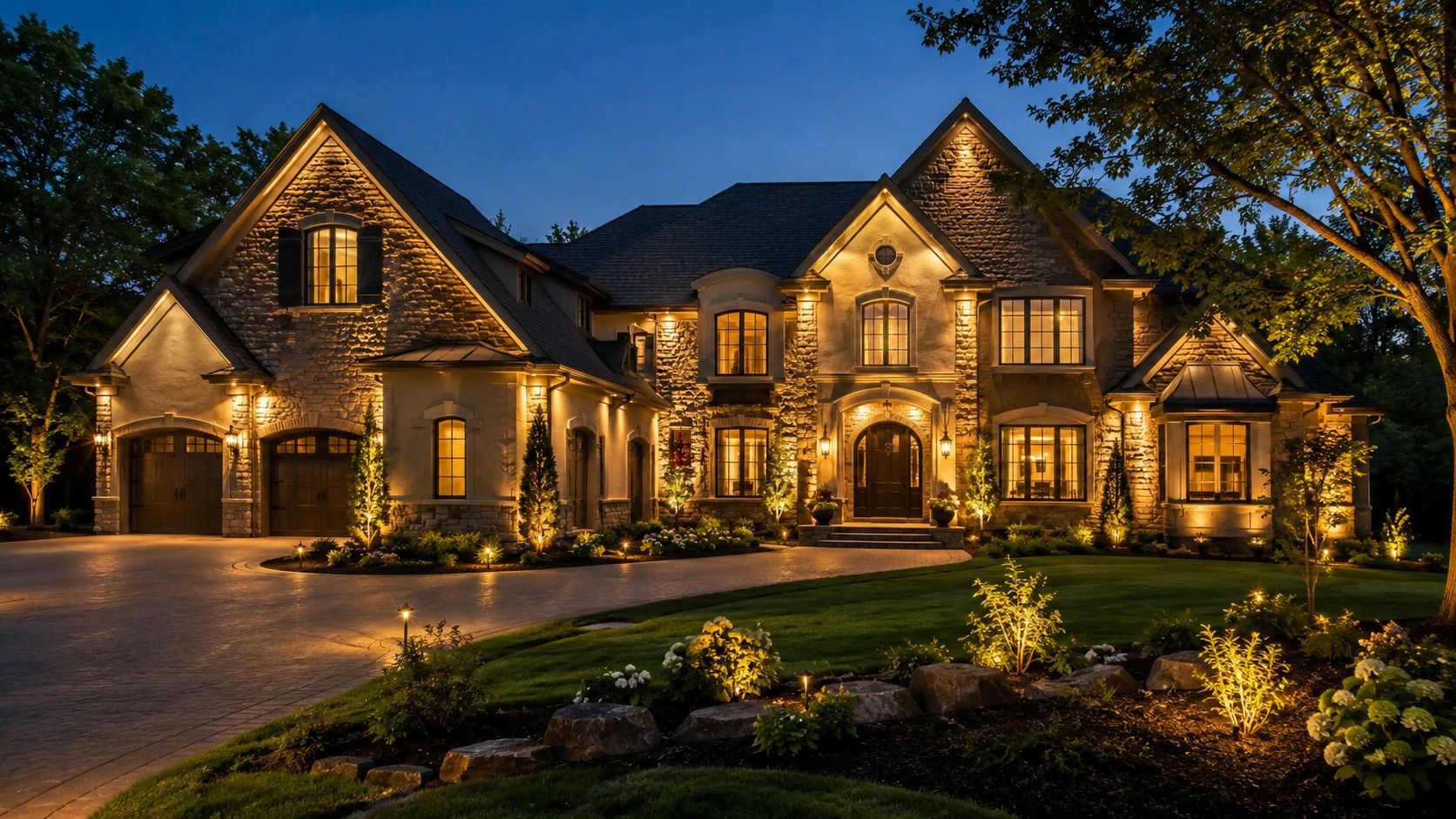
A clean roofline in soft warm white can make the house feel finished every evening. Then October comes around and the same system shifts to orange and purple. December gets the classic holiday look. A Broncos game day might call for team colors. The Fourth of July gets a different scene entirely.
Everyday lighting versus event lighting
The biggest design mistake is treating a permanent system like it has to perform every night. It doesn't. On many homes, the most useful setting is the quietest one.
Three display modes tend to get the most use:
- Warm architectural glow for everyday curb appeal
- Holiday scenes for Christmas, Halloween, and other seasonal moments
- Celebration colors for birthdays, graduations, or game days
That flexibility is why these systems work for people who want more than a short holiday window. The house can stay understated most of the year and still be ready for something more expressive when the moment calls for it.
App control should feel simple
The best lighting app is the one you'll use. Homeowners don't need a complicated control system with a steep learning curve. They need presets, schedules, and color choices that are easy to manage from a phone.
Cultivate House Detailing offers permanent lighting in Colorado Springs as a custom-fitted LED system that gives homeowners app-based control for year-round use. If you want to see the kind of exterior lighting layouts that fit local homes, their lighting services in Colorado Springs page gives a practical overview.
For a different but related angle on low-profile outdoor accent lighting, fence and perimeter applications can also offer useful design ideas. This guide to Ottawa fence lighting solutions is worth a look if you're thinking beyond the roofline.
Here's a quick look at how these systems are often shown in action:
Keep the design tied to the house
The strongest installations don't try to do everything at once. They work with the architecture. A simple ranch home, a two-story suburban façade, and a mountain property with multiple gables all need different pacing and brightness.
A permanent system looks more expensive when the design is restrained. Strong outlines, balanced color, and good spacing beat clutter every time.
That's why whole-home lighting design should start with the house shape first, then the color scenes second.
Hiring a Professional Installer in Colorado Springs
A permanent lighting system is only as good as its installation. The hardware matters, but mounting quality, weather sealing, and roofline judgment matter just as much.
What to ask before you hire anyone
Professional installation typically involves mounting channels to soffits or fascia, with each light secured into position and sealed with caps or O-rings to prevent water intrusion, which helps the system stay discreet and weatherproof, as described in The Spruce's installation overview.
That means your installer shouldn't sound vague when you ask where the system will mount or how it will be sealed.
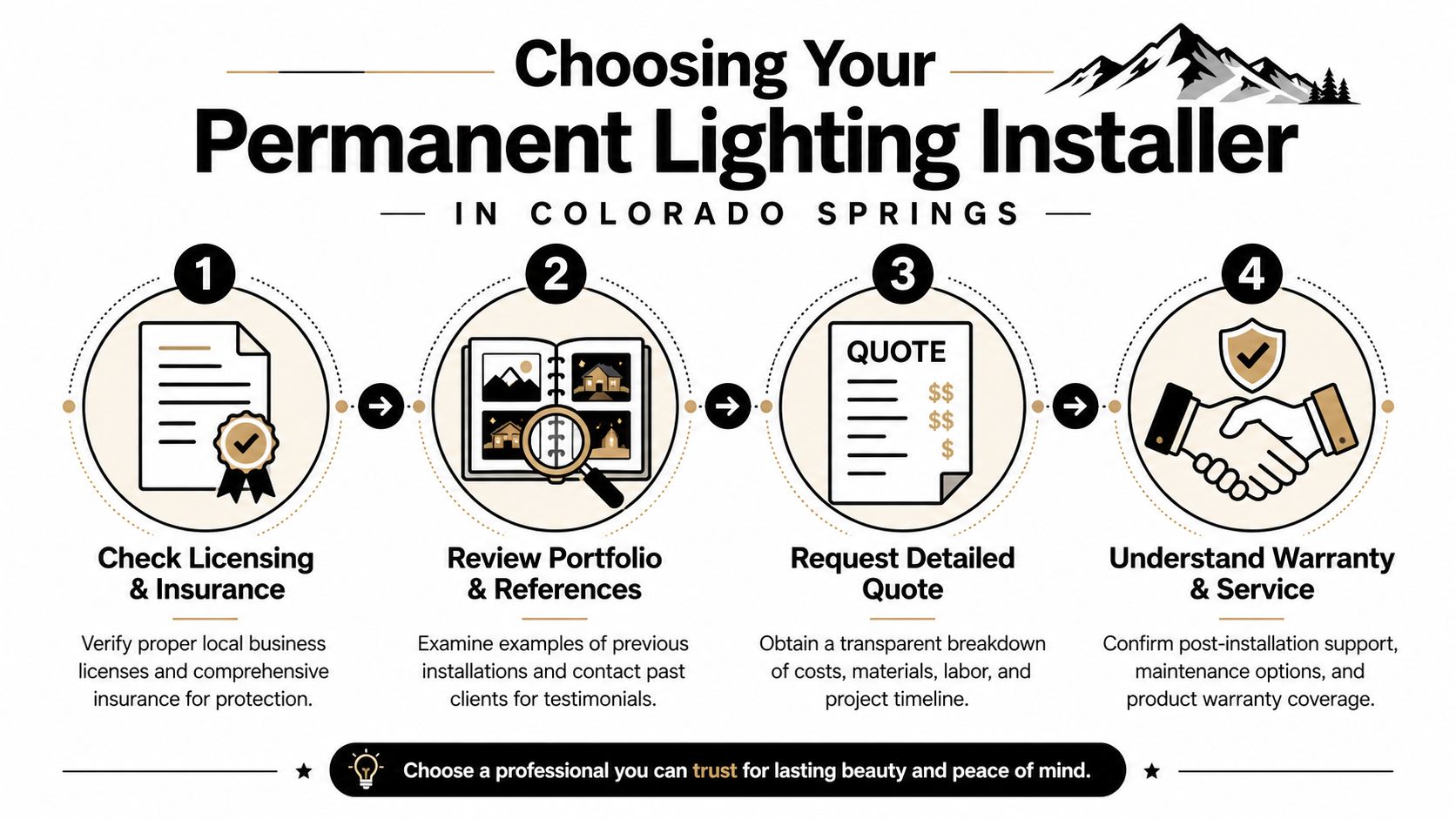
Ask direct questions like these:
- Where will the lights be mounted on my specific home, and why there?
- How will wiring be hidden across peaks, returns, and transitions?
- How do you account for snow and ice exposure on this roofline?
- What happens if a section needs service later
- What does the quote include for materials, labor, controls, and finish details?
If you want a broader homeowner checklist for vetting contractors in general, this article on how to spot red flags with exterior contractors is a useful read before signing any exterior project agreement.
Signs of a careful installation process
A good installer measures first and sells second. They pay attention to fascia shape, soffit depth, gutter details, outlet access, controller placement, and how the lights will look during the day.
The install itself should include:
- A layout plan that matches the home instead of forcing a standard kit onto it.
- A mounting method chosen for the roofline material and exposure.
- Weather-conscious placement around runoff paths and trouble spots.
- Clean finishing details so the system looks intentional from the street.
There should also be a clear explanation of what the homeowner controls after the install and what support looks like if anything needs adjustment.
What to expect locally
In Colorado Springs, the right installer should understand more than lighting. They should understand what our weather does to exterior systems over time.
That includes knowing when adhesive-backed components are a bad idea, where mechanical fastening is smarter, and how to avoid placement that invites snow-related damage. It also means being realistic. Some homes are ideal for a full roofline layout. Others need a more selective plan to keep the result durable and clean-looking.
When an installer can explain those trade-offs plainly, you're usually talking to someone who has spent real time on actual houses, not just sales appointments.
Light Up Your Colorado Springs Home with Confidence
Permanent outdoor Christmas lights solve a problem most homeowners know well. They get rid of the annual setup routine, reduce the need for risky ladder work, and give the house a finished look that works beyond the holiday season.
They also ask for a smarter buying decision than temporary strings. Cost, mounting method, weather exposure, and system design all matter. In Colorado Springs, those details matter even more because snow, wind, runoff, and freeze-thaw cycles can punish weak installations.
When the system is planned around the home, the value is easy to see. You get cleaner lines, easier control, year-round flexibility, and a lighting setup that feels like part of the property instead of a seasonal add-on.
If you're in Colorado Springs, Monument, Black Forest, Manitou Springs, Woodland Park, or nearby communities, it's worth getting a professional opinion on what your roofline can support and what type of system fits your goals. A good quote should leave you with clarity, not pressure.
If you're ready to stop wrestling with seasonal strands and want a cleaner long-term solution, contact Cultivate House Detailing to request a free, no-obligation consultation for permanent outdoor Christmas lights in Colorado Springs and nearby areas.