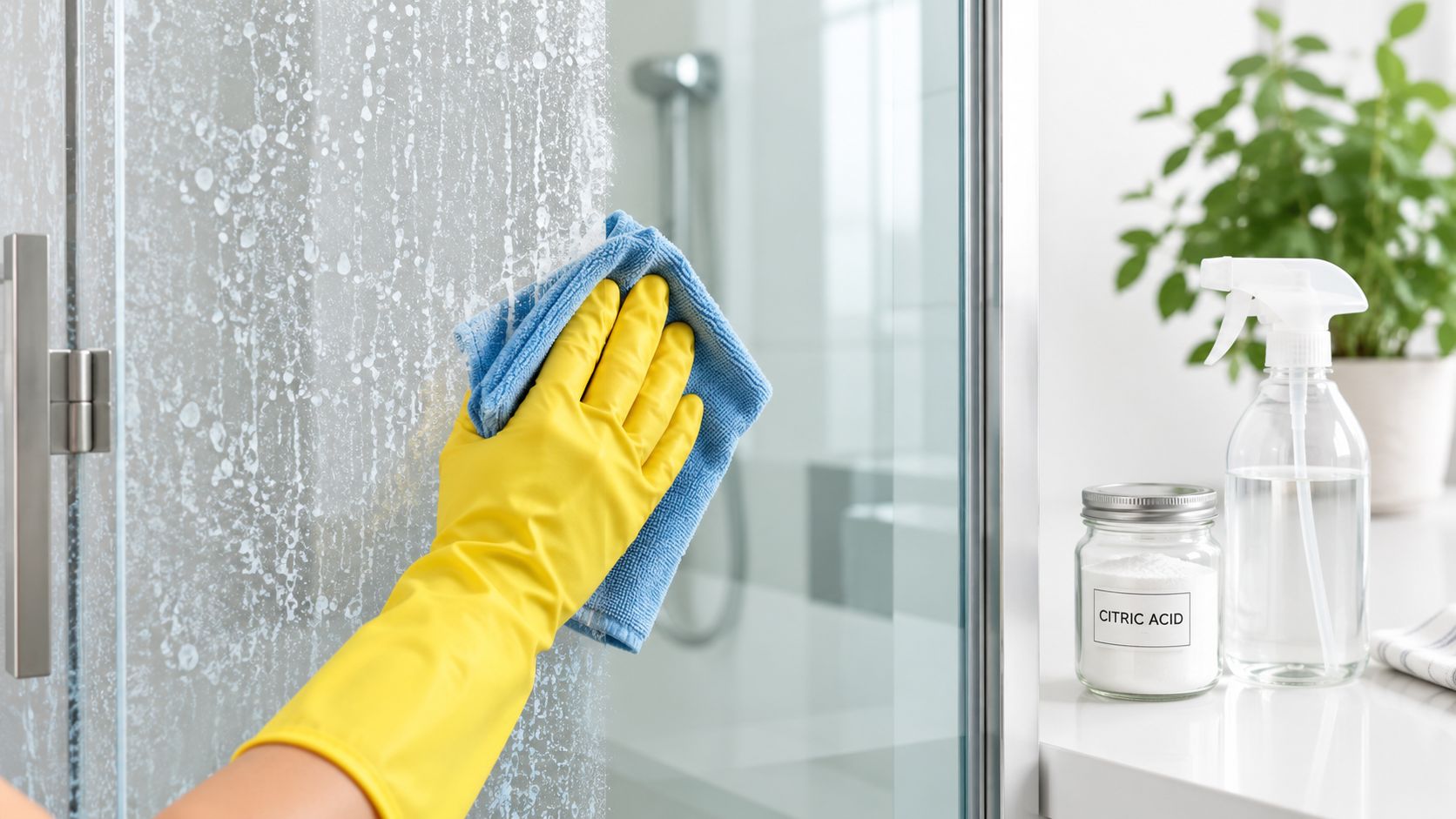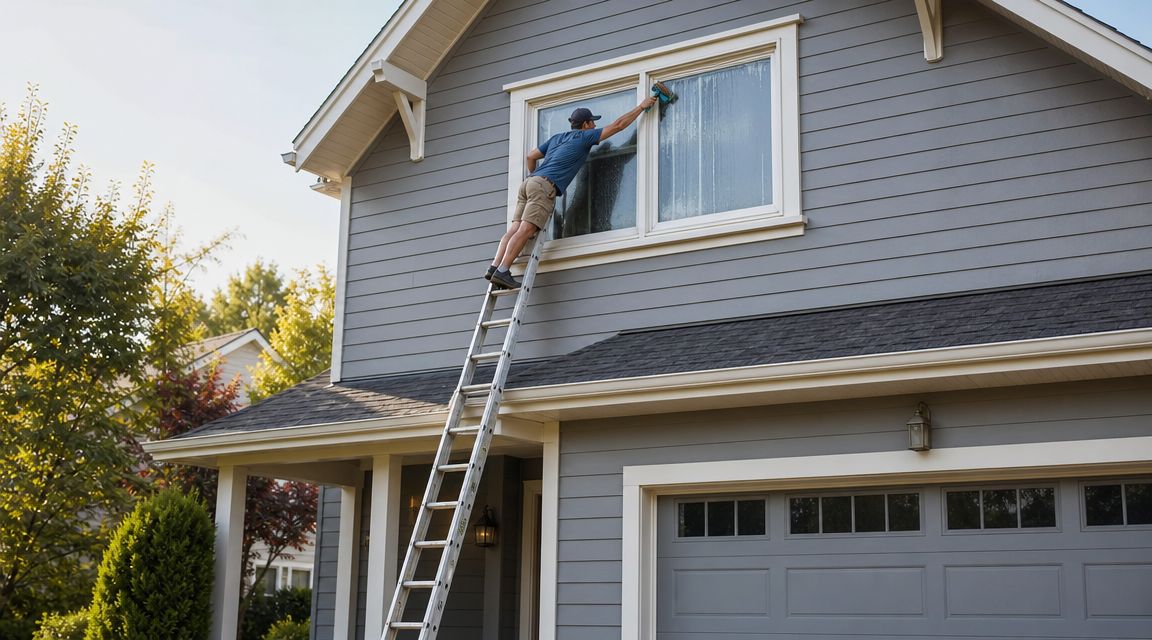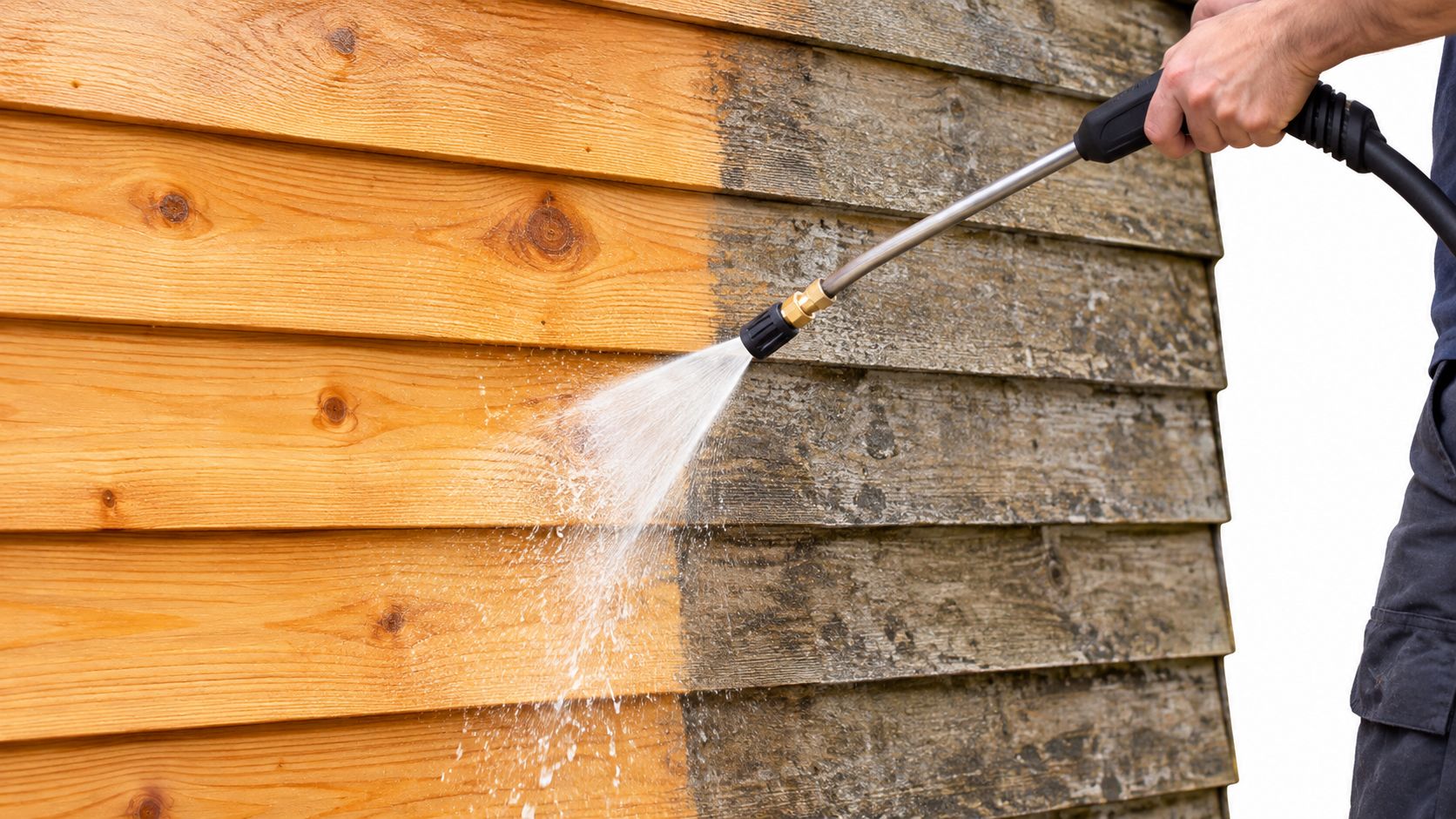
A customer pulls into your lot, slows near the entrance, and takes in the whole property before they ever read a sign or open a door. They notice the dark streaks under the awning, the gum spots near the curb, the dust baked into the walkway, and the grime collecting around the dumpster pad. That first glance shapes expectations fast.
In Colorado Springs, that buildup happens quicker than many owners expect. Wind, dust, snow residue, spring runoff, and busy foot traffic leave commercial surfaces looking tired long before the building itself needs repair. If you've been searching for commercial pressure washing services near me, you're probably not just trying to make the place look cleaner. You're trying to protect your image, avoid unnecessary wear, and keep the property easier to manage.
For property managers and business owners, exterior cleaning sits in the same category as lighting, landscaping, and glass care. It's visible, practical, and tied directly to how people judge the property. The same is true for professional window cleaning, commercial window cleaning, exterior window cleaning, and related upkeep that keeps a storefront or office looking sharp in Colorado Springs, CO.
Your Business's First Impression Starts at the Curb
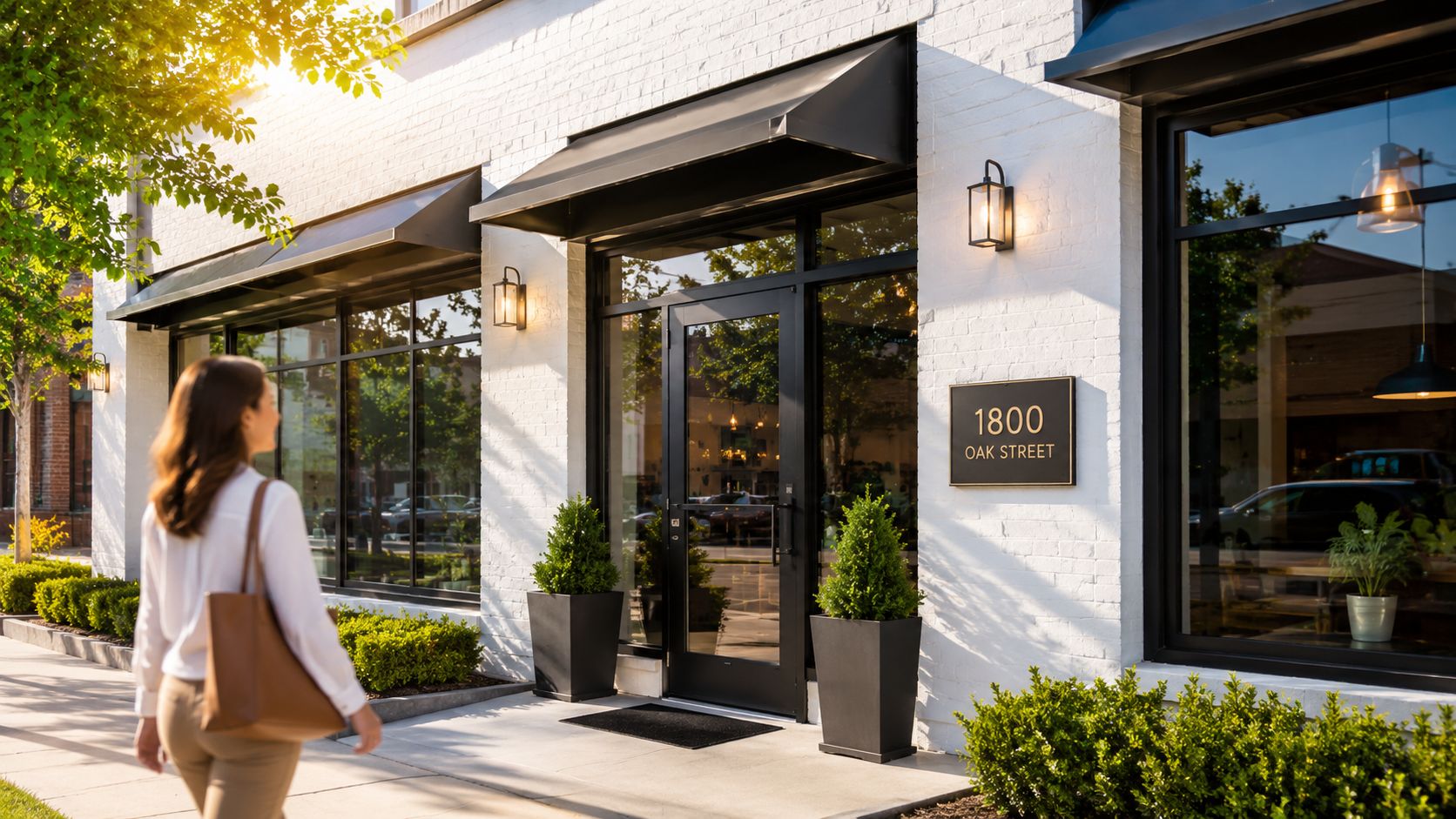
A retail center can have solid tenants, good signage, and a convenient location, but if the sidewalks are stained and the entry looks neglected, customers read that as poor maintenance. Office visitors do the same. Clean concrete, clean glass, and bright entry areas make a property feel active and well run.
That's one reason commercial exterior cleaning keeps getting more attention. The pressure washing industry is projected to see 3.2–4.1% growth in 2026, and the commercial sector accounts for 33–38% of total revenue according to Southeast Softwash's industry analysis. The same analysis notes that many established companies with dedicated commercial work generate 50–65% of revenue from commercial contracts, which reflects how valuable recurring maintenance has become for business properties.
What people notice first
Before anyone comments on your landscaping or lobby, they usually notice:
- Entry walks and curbs that show dirt, spills, and traffic patterns
- Storefront glass with dust, streaks, or hard water buildup
- Building faces and trim that look faded because grime is sitting on the surface
- Dumpster and service areas that suggest how the property is managed overall
For many commercial sites, pressure washing and window cleaning in Colorado Springs, CO work together. A freshly cleaned entrance still feels unfinished if the glass is streaked. On the window side, local pricing gives owners a practical benchmark. In Colorado Springs, a typical residential window cleaning visit often falls between $200 and $450, and many providers charge $4 to $8 per window plus a base rate of $150 to $300 according to Cultivate's Colorado Springs window cleaning cost guide.
A clean exterior doesn't just photograph better. It changes how people feel about walking in.
That matters for offices, restaurants, retail storefronts, and mixed-use properties. If your exterior has slipped from “normal wear” into “noticeably neglected,” customers can tell.
Beyond Dirt The True Cost of a Grimy Exterior
Dirty concrete and stained walls aren't just cosmetic problems. On commercial properties, they create management problems. Sidewalk algae, food grease, automotive residue, and built-up grime can turn into safety concerns, tenant complaints, and avoidable maintenance headaches.
A neglected exterior also makes every other part of the property look less cared for. Even if your landscaping is trimmed and your lobby is clean, grimy approaches and stained common areas make the site feel older and harder to trust.
Where the real cost shows up
Property managers usually feel the impact in a few predictable places:
- Slip risk on walking surfaces when residue, moisture, or organic growth stays in traffic areas
- Faster surface deterioration when contaminants sit on masonry, concrete, painted finishes, and trim
- Tenant and visitor perception when entrances, loading areas, and storefronts look ignored
- Scope creep in repairs because crews have to work around buildup that should've been removed earlier
Colorado Springs weather adds another wrinkle. Dust settles, snowmelt carries debris, and freeze-thaw cycles can make dirty surfaces look worse quickly. If grease or organic growth is left in place, cleaning later often takes more time, stronger methods, or more specialized equipment than routine maintenance would have required.
Neglect changes the job
A lightly soiled office walkway is one kind of project. A multi-tenant site with gum, oil, food runoff, and shaded areas that hold moisture is another. The second job usually means more prep, more careful chemical selection, and more attention to runoff control.
Practical rule: The longer grime sits, the less this is about appearance and the more it becomes a maintenance issue.
This is also where property owners can get caught by incomplete quotes. Many online estimates focus on simple square footage. That leaves out surface type, severity of buildup, access limitations, and cleanup needs. Those details are often what decide whether a job stays straightforward or turns complicated on service day.
For managers trying to stay ahead of costs, regular exterior cleaning isn't an extra. It's a way to reduce surprises.
Pressure Washing vs Soft Washing What Your Property Needs
Not every surface should be cleaned the same way. That's where a lot of commercial jobs go wrong. Some contractors treat every building like it's all concrete. It isn't. Sidewalks, stucco, painted siding, masonry, awnings, and trim all respond differently to water pressure.
For heavy-duty commercial applications, equipment may need to deliver 4,000–8,000 PSI and 6.5+ GPM, while lighter commercial work on sidewalks and storefronts may operate at 1,900–2,000 PSI to avoid surface damage, according to Clean Quote's guide to commercial building pressure washing. That same guidance makes the trade-off clear. Too much pressure can etch brick, wood, or softer materials. Too little pressure can leave behind oil-based contamination and waste time.
Choosing the Right Cleaning Method
| Attribute | High-Pressure Washing | Soft Washing |
|---|---|---|
| Best use | Concrete, parking areas, loading zones, durable hardscapes | Siding, painted surfaces, trim, delicate exterior materials |
| Water force | Higher pressure for bonded dirt and heavy buildup | Lower pressure with cleaning solutions doing more of the work |
| Surface risk | Can damage softer materials if misused | Safer for sensitive finishes when applied correctly |
| Common commercial applications | Sidewalks, curbs, dumpster pads, service corridors | Building exteriors, trim, façade areas with delicate coatings |
| What it solves well | Heavy soil, ground-in grime, gum, some oil residue | Organic growth, surface staining, general exterior refresh |
What works and what doesn't
High pressure works well when the surface can take it and the contamination is physically bonded to the material. Think concrete aprons, drive lanes, and hardscape around entrances.
Soft washing works better when the goal is to clean without stripping finish, forcing water behind siding, or roughing up painted surfaces. It's often the right choice for visible building faces where appearance matters as much as soil removal.
Here's a simple perspective:
- Use pressure when the surface is durable
- Use soft washing when the surface is vulnerable
- Combine methods on mixed properties
That last point matters. Many commercial jobs in Colorado Springs are mixed-surface jobs. You may need one approach for the entry walk, another for stucco, and another for trim and signage areas. If you want a closer look at how the methods differ, Cultivate's soft washing vs pressure washing guide gives a practical breakdown.
Related exterior care around the building
Pressure washing often solves the ground-level appearance problem, but properties also benefit from nearby services such as:
- Exterior window cleaning for storefronts and office glass
- Interior window cleaning in customer-facing spaces
- Screen cleaning and track cleaning where dust buildup collects around operable windows
- Seasonal window cleaning to keep glass clear after pollen, storms, or winter residue
That combination is often what gives a commercial property the finished look managers are after. Clean walls and walks help. Clean glass closes the loop.
Professional Equipment for Professional Results
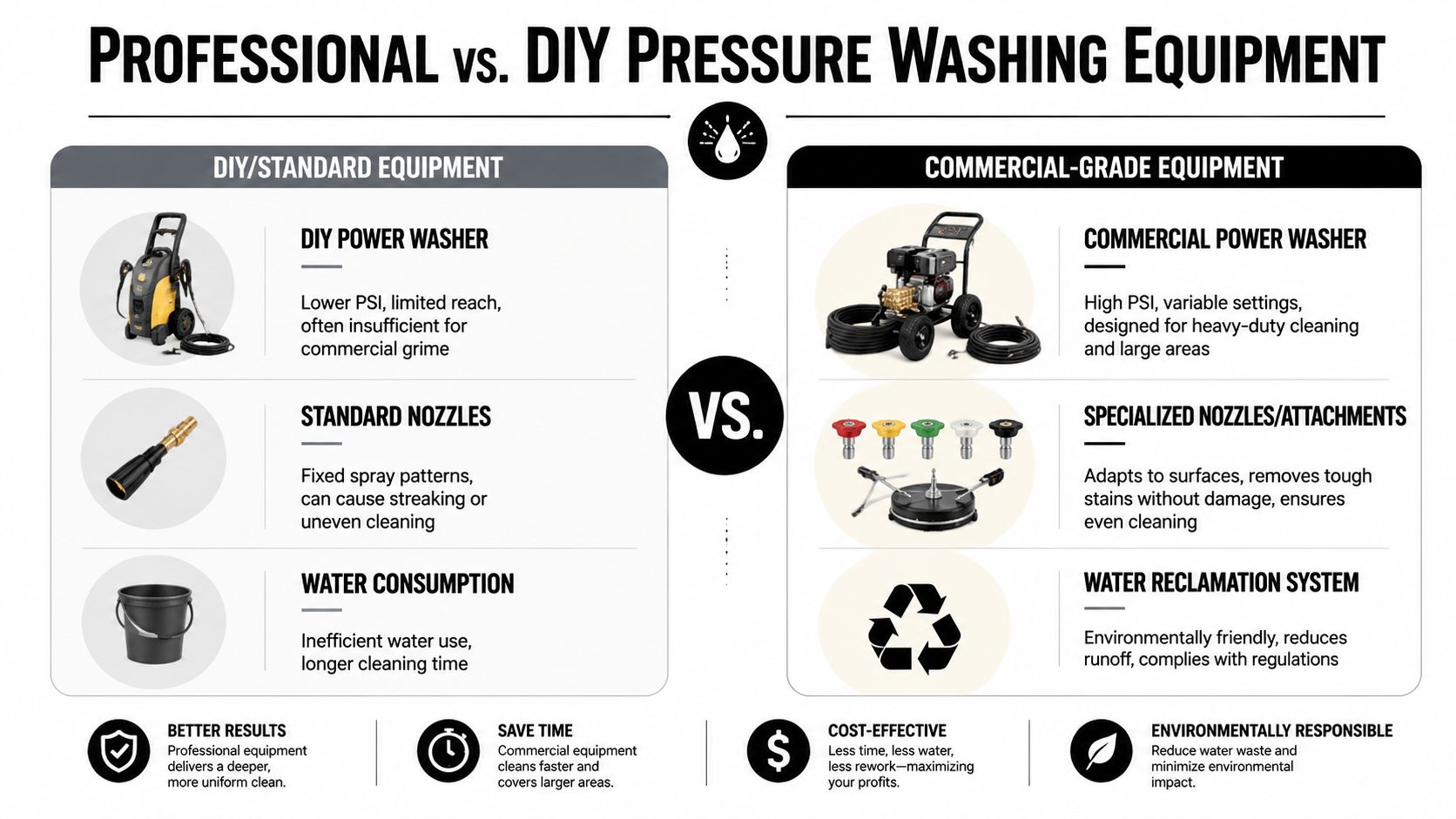
Commercial exterior cleaning looks simple from a distance. Water goes on, dirt comes off. In practice, equipment decides a lot. The machine, nozzle setup, hose reach, water temperature, and recovery plan all affect speed, consistency, and whether the surface comes out clean without damage.
A homeowner-grade unit may be enough for a small patio. It usually isn't enough for a grease-stained service lane, a restaurant pad, or a large retail walkway with deep traffic buildup.
Why flow rate matters
People often focus on PSI because it sounds like power. On larger commercial jobs, GPM is just as important, and often more important for production speed on broad horizontal surfaces. More flow usually means better rinsing, wider effective coverage, and less time spent chasing dirty water around a parking lot or loading area.
For large-scale work, true commercial-grade equipment should deliver at least 4,000 PSI and 6.5 GPM, and hot water systems that reach 80–100°C (176–212°F) are about 80% more effective at removing grease and oil than cold water alone, according to KV Cleaning's guide to large-scale pressure washing systems.
Hot water changes stubborn jobs
Cold water can handle loose dirt and mud. It struggles when the surface is holding oil, grease, and hydrocarbon residue. That's why restaurant back pads, dumpster areas, fleet zones, and service corridors often need hot water.
Hot water helps break down the bond in oily contamination so the crew doesn't have to compensate with excess force. That's safer for the surface and usually more efficient for the job.
Grease removal becomes a chemistry and heat problem long before it becomes a pressure problem.
Professional setup versus weekend equipment
The biggest differences usually show up in four places:
- Machine capability that can maintain output on long runs and larger areas
- Attachments like surface cleaners that produce more even results on flatwork
- Nozzle selection matched to the material instead of one spray pattern for everything
- Water management that keeps runoff controlled and the work area cleaner
A company like Cultivate House Detailing can handle pressure washing for walkways, siding, patios, and driveways as part of broader exterior maintenance, but what's important to understand is broader than any one provider. Commercial properties need equipment sized for commercial conditions. When a quote seems unusually cheap, it often means corners on setup, staffing, or cleanup.
Decoding Your Pressure Washing Estimate in Colorado Springs
If you've requested bids before, you've probably seen estimates that look easy to compare until you read the fine print. One quote lists a flat project cost. Another uses square footage. A third starts low and then adds charges for stain treatment, access, and wastewater handling. The numbers can look inconsistent because the scopes are inconsistent.
That's why the best estimate isn't always the shortest one. It's the one that explains what's included, what's excluded, and what might change once the crew sees the site conditions up close.
Square footage is only the starting point
Pricing ranges can be helpful, but they don't tell the whole story. Basic commercial cleaning may run $0.10–$0.35 per square foot, while intensive work involving grease or graffiti can run $0.40–$1.00 per square foot. Buildings over three stories or jobs with difficult access often move to $50–$150 per hour instead of a simple flat fee, based on HomeGuide's commercial pressure washing pricing breakdown.
That shift happens for good reason. A flat concrete pad with light soil is predictable. A multi-story building with mixed surfaces, tight access, and deep staining isn't.
What usually changes the final price
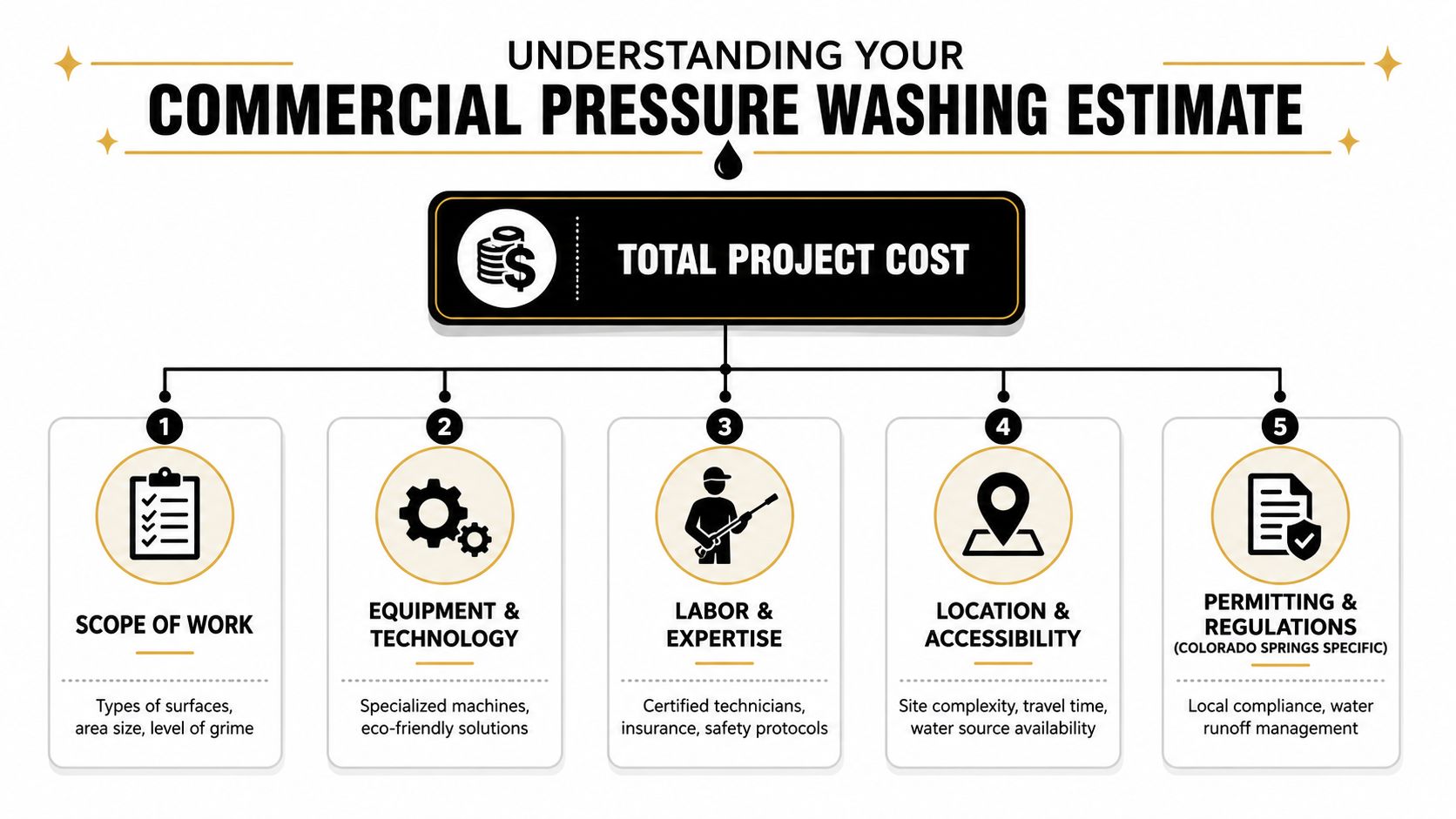
Here are the factors property managers in Colorado Springs should pay attention to:
- Surface type: Concrete, painted block, stucco, metal panels, and trim don't clean the same way.
- Soil severity: Dust and mud are one category. Grease, gum, graffiti, and organic buildup are another.
- Height and access: Lifts, hose routing, tighter safety plans, and staging all add labor.
- Water recovery and compliance: Some sites need tighter runoff control, containment, or reclamation.
- Scope clarity: Whether the quote includes pretreatment, post-rinse cleanup, and detail work around entries
One of the biggest blind spots in commercial estimating is environmental compliance. Some guidance notes that eco-focused practices like water reclamation and biodegradable cleansers can add 10–20% to project cost, while many “near me” search results still focus on simple per-square-foot pricing without addressing the cost of containment equipment or runoff management, as discussed in Brothers Cleaning's commercial pressure washing guide.
Transparency matters more than a low opening number
A useful estimate should tell you whether your property is priced as a routine wash, an intensive cleaning, or a specialty access job. That's what helps avoid disputes later. For managers who want a broader framework for evaluating service pricing, Facility Management Insights' expert guide is a helpful outside read.
If you want a local reference point, Cultivate's commercial pressure washing rates page can help you understand how scope affects pricing in practical terms.
Our Seamless Process From Quote to Clean
Commercial exterior work goes smoother when everyone knows what happens before the crew arrives, during service, and after the job wraps. That matters even more on active properties where tenants, customers, employees, or delivery traffic still need to move through the site.
The pressure washing industry also has a labor reality that property managers should keep in mind. 62% of operators report difficulty filling positions, and seasonal turnover reaches 40–60%, according to IBISWorld's pressure washing industry data. In plain terms, stable teams matter. Training, consistency, and communication don't happen automatically.
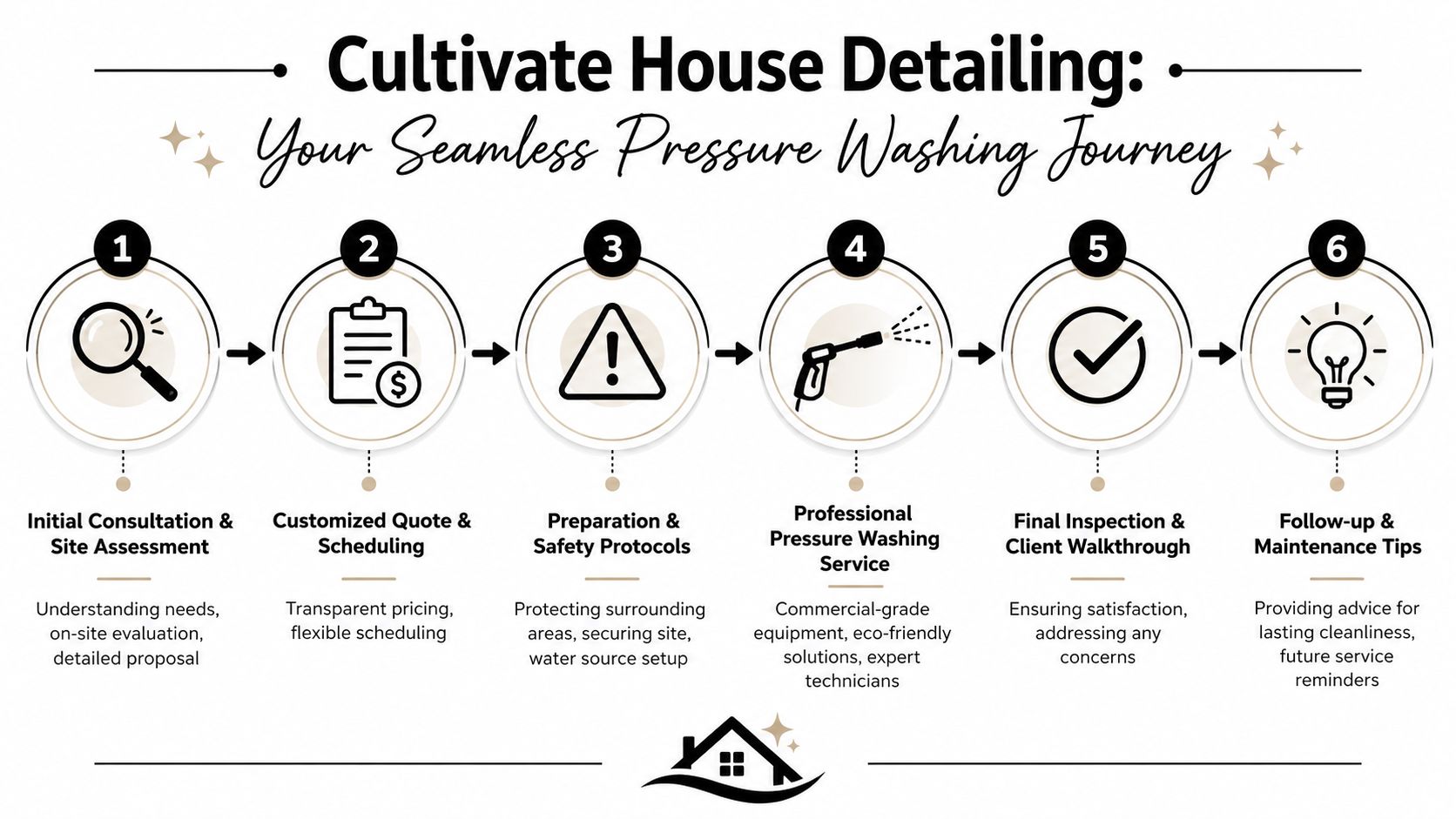
What a smooth commercial job looks like
Site review first
The crew or estimator looks at the surfaces, identifies stain types, checks water access, and notes safety or traffic issues before pricing is finalized.A written quote with scope details
Good proposals spell out what's being cleaned, what method will be used, and whether special issues like grease treatment or difficult access are included.Scheduling around your operation
Many businesses need early morning, off-hours, or low-traffic service windows. That should be worked out in advance.
What happens on service day
Prep and protection
Sensitive areas are noted, hoses are routed carefully, and the crew manages splash, overspray, and site safety.Cleaning matched to the surface
Durable flatwork may get one setup. Delicate siding, trim, or building faces may get another.Final walkthrough
The best service visits end with a clear review of results, plus notes on any stains that improved, fully lifted, or may need repeat treatment.
A professional process should feel organized before the water ever turns on.
What customers should expect
For Colorado Springs businesses, the experience should be simple:
- Clear communication before arrival
- Professional window cleaning or exterior window washing added when needed
- Respect for operating hours and customer access
- A stable crew that works methodically and leaves the area orderly
That same expectation carries over to related services like commercial window cleaning, interior window cleaning, and routine maintenance on storefronts and office buildings. The less you have to manage the vendor, the better the service usually feels.
Frequently Asked Questions About Commercial Pressure Washing
How often should a commercial property be pressure washed
It depends on traffic, exposure, and the type of business. Restaurants, gas-adjacent properties, retail storefronts, and high-footfall entries usually need more frequent service than low-traffic office sites. In Colorado Springs, windblown dust and changing weather also push some properties onto a more regular cleaning schedule.
A practical approach is to inspect the property by zone. Entry walks, dumpster areas, loading zones, and visible customer-facing surfaces usually need attention first.
Is pressure washing safe for every surface
No. That's why method selection matters. Concrete can often handle stronger cleaning than painted siding, stucco, trim, or older masonry. Some surfaces need soft washing instead of high pressure.
If a contractor treats every area with the same setup, that's a red flag. Mixed-surface properties should be cleaned with mixed methods.
What should be included in a commercial quote
A useful quote should identify the surfaces being cleaned, the method being used, scheduling assumptions, and any likely add-ons tied to access or heavier contamination. If the site has glass near storefronts or entry doors, it also helps to confirm whether window washing, track detailing, or surrounding cleanup are included.
For businesses comparing glass services at the same time, local commercial window cleaning rates in Colorado Springs commonly run $3 for exterior-only cleaning and $4 to $5 when interior cleaning is included, with an additional $1 per window often charged for scrubbing water stains or deep-cleaning tracks, according to Thumbtack's Colorado Springs window cleaning pricing information.
What about upper-story glass and access issues
Height changes both safety requirements and pricing. For window service, many cities require special permits or licensed certification to wash exterior windows above certain height thresholds, and proposals should clearly state whether sills, frames, tracks, and screens are included so there aren't surprise charges later, according to ProMatcher's Colorado Springs window washing cost overview.
That same logic applies to pressure washing. Once access gets more complicated, the estimate should reflect the actual work involved instead of pretending the job is simple.
Ready to Boost Your Colorado Springs Business's Curb Appeal?
A clean commercial exterior does more than improve appearance. It supports safer walkways, helps surfaces last longer, and makes the property easier to manage week after week. For busy owners and property managers, that kind of routine maintenance usually costs less than waiting until the site looks neglected.
If you've been looking for commercial pressure washing services near me, the next step is simple. Get a quote that accounts for surface type, access, stain severity, and the compliance details that generic online estimates tend to skip. If your property also needs commercial window cleaning, exterior window cleaning, or recurring glass care, it makes sense to plan those services together so the whole building looks finished.
Property appearance also affects how people find and judge your business online. If that matters to your team, local business online marketing guide from Mr. Green Marketing, LLC is a useful companion read on how presentation and visibility work together.
If you manage a property in Colorado Springs, CO or nearby service areas, request a clear estimate and get the exterior back to a standard you're proud to show tenants, customers, and visitors.
Need help with pressure washing, window cleaning, or exterior maintenance in Colorado Springs? Contact Cultivate House Detailing to request a quote and schedule service for your commercial property.
Rather not do it yourself? Cultivate House Detailing offers pressure washing in Colorado Springs. Get a free quote.