You've scrubbed the windows, changed the towel, and still see cloudy streaks when the Colorado sun hits the glass. Maybe mineral spots have built up after repeated watering, or the second-story panes are too risky to reach with a ladder. For homeowners and businesses searching for window cleaning near me or window cleaning in Colorado Springs, CO, the right glass cleaner company offers more than a quick shine. It provides safe access, dependable maintenance, and careful work that helps protect the appearance and long-term value of the property.
Why Colorado Springs Properties Need Professional Glass Care
Colorado Springs glass faces demanding conditions. Strong sunlight makes every streak visible, while wind can carry dust, pollen, and fine debris onto exterior panes. Water left behind after sprinklers, rain, or routine washing may dry into mineral deposits that household glass sprays can't dissolve.
A spray bottle works well for fingerprints and light dust. It won't reliably remove established hard water staining, and repeated scrubbing can spread residue across the pane. Professional exterior window cleaning uses the right combination of water, agitation, scraper control, squeegee technique, and spot-treatment methods for the condition of the glass.

Why DIY cleaning often falls short
Homeowners usually run into the same problems:
- Mineral buildup: Standard glass cleaner removes surface grime but may leave hard water deposits behind.
- Streaks and film: Too much product, dirty towels, or residue from previous cleaners can create a hazy finish.
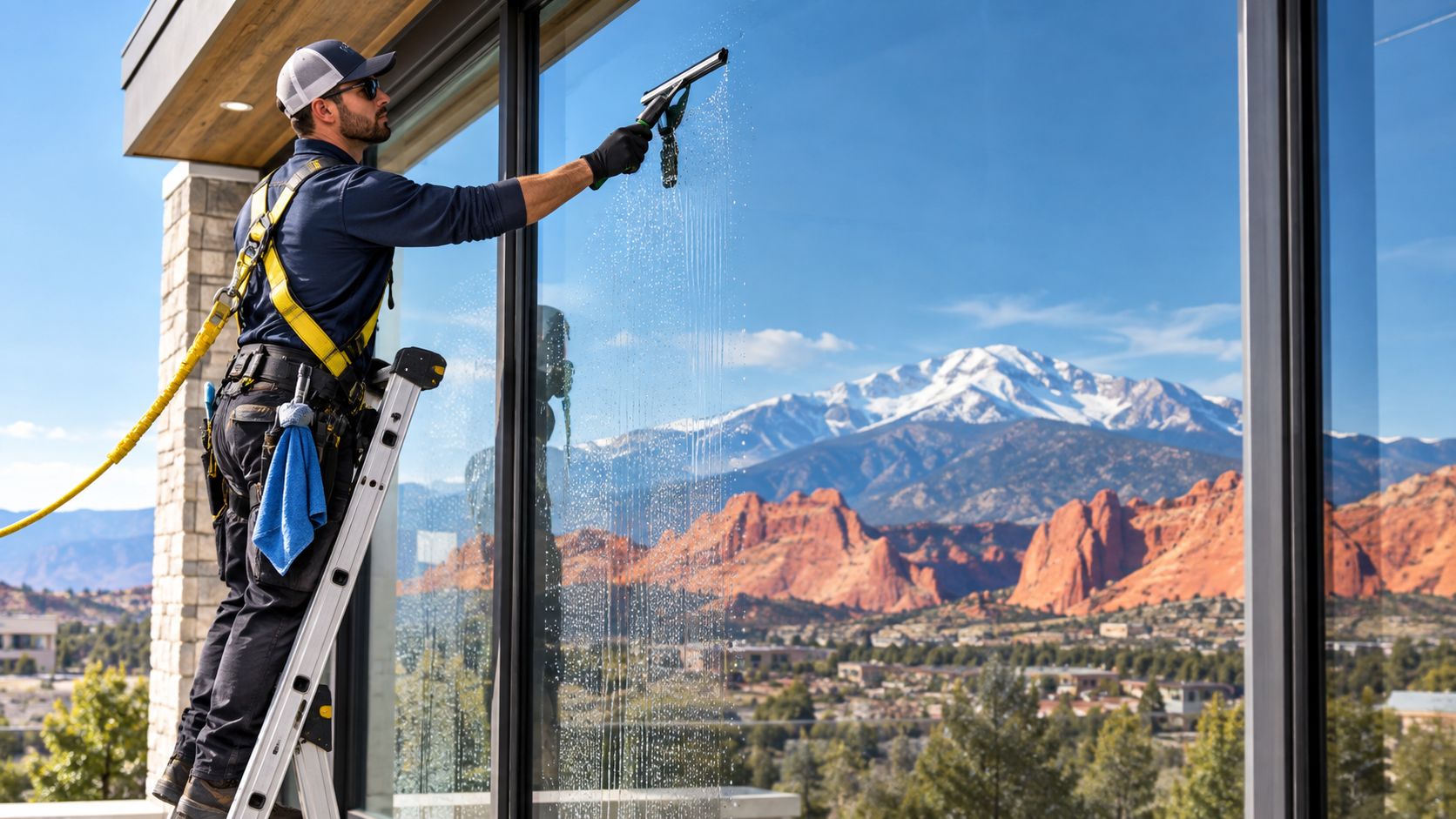
- Unsafe access: Reaching high exterior glass from a ladder can place the worker, siding, landscaping, and window frames at risk.
- Incomplete detailing: Screens, tracks, frames, and corners collect debris even when the center of the pane looks clean.
Professional window cleaning addresses the complete surface rather than treating the visible streak as the entire problem. A technician can identify whether the glass needs routine washing, hard water stain removal, or more cautious restoration work.
A local maintenance decision
Colorado Springs homeowners often wait until windows look noticeably dirty. That approach creates a larger cleaning job and can leave the property looking neglected between visits. A planned maintenance service keeps views clearer, reduces heavy accumulation, and makes seasonal cleaning easier to manage.
For businesses, clean glass supports a more polished storefront or workplace. A local provider also understands the practical concerns of occupied homes and commercial properties, including access, scheduling, surrounding surfaces, and minimizing disruption.
Residential and Commercial Window Cleaning Services Explained
Residential and commercial glass cleaning share the same basic objective, but the service plan shouldn't be identical. A homeowner may need detailed interior window cleaning before a gathering or listing. A property manager may need recurring exterior window washing that fits around customers, employees, deliveries, and operating hours.
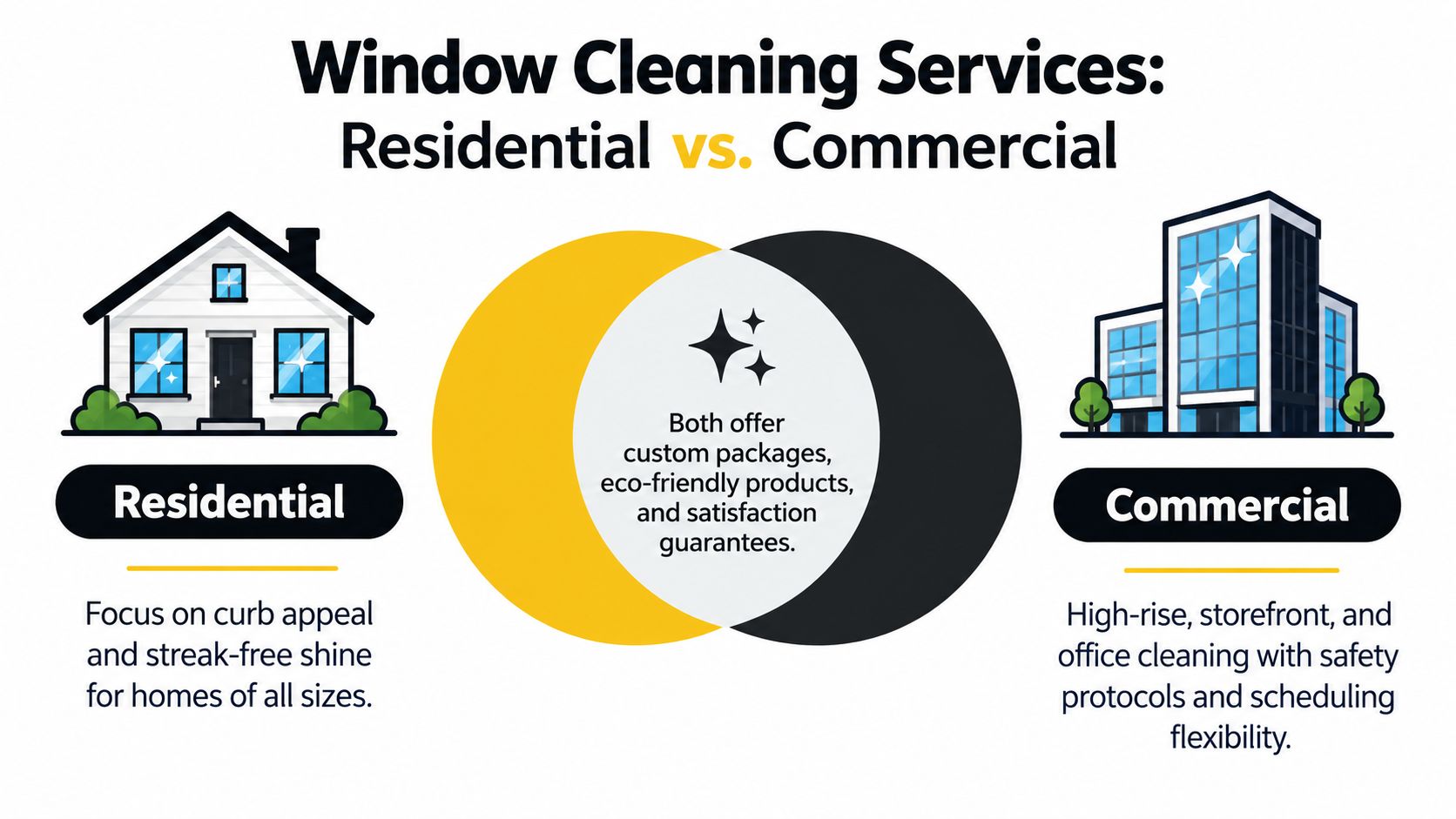
Residential window cleaning
For homes, a thorough visit may include:
- Exterior glass: Removal of dust, pollen, water spotting, and weather-related buildup.
- Interior glass: Careful cleaning around furniture, flooring, trim, and household fixtures.
- Screen cleaning: Removal of dust that can otherwise blow back onto freshly cleaned panes.
- Track cleaning: Clearing loose dirt and debris from sliding window channels.
- Hard water treatment: Focused work on mineral deposits when ordinary washing isn't enough.
The best residential window cleaning plan depends on the number of panes, glass condition, access, and whether the homeowner wants a one-time seasonal service or recurring maintenance. Real estate agents and sellers may also schedule a detailed visit before photography, showings, or an open house.
Commercial window cleaning
Commercial properties have different priorities. Auto dealerships need clear display glass, retail stores depend on clean storefronts, and restaurants must maintain a welcoming exterior. Office buildings and other facilities may need flexible scheduling so technicians can work without interfering with employees or visitors.
Commercial service can include interior glass, frames, and tracks, along with exterior windows that require specialized tools or high access. Larger buildings also benefit from a written scope that identifies which elevations, entrances, interior partitions, and high-visibility panes receive attention.
A helpful overview of planning, preparation, and service considerations is this guide to professional window cleaning. The property location differs, but the practical lesson applies locally: clarify the scope before work begins.
The Hidden Value of Hiring Professional Window Washers
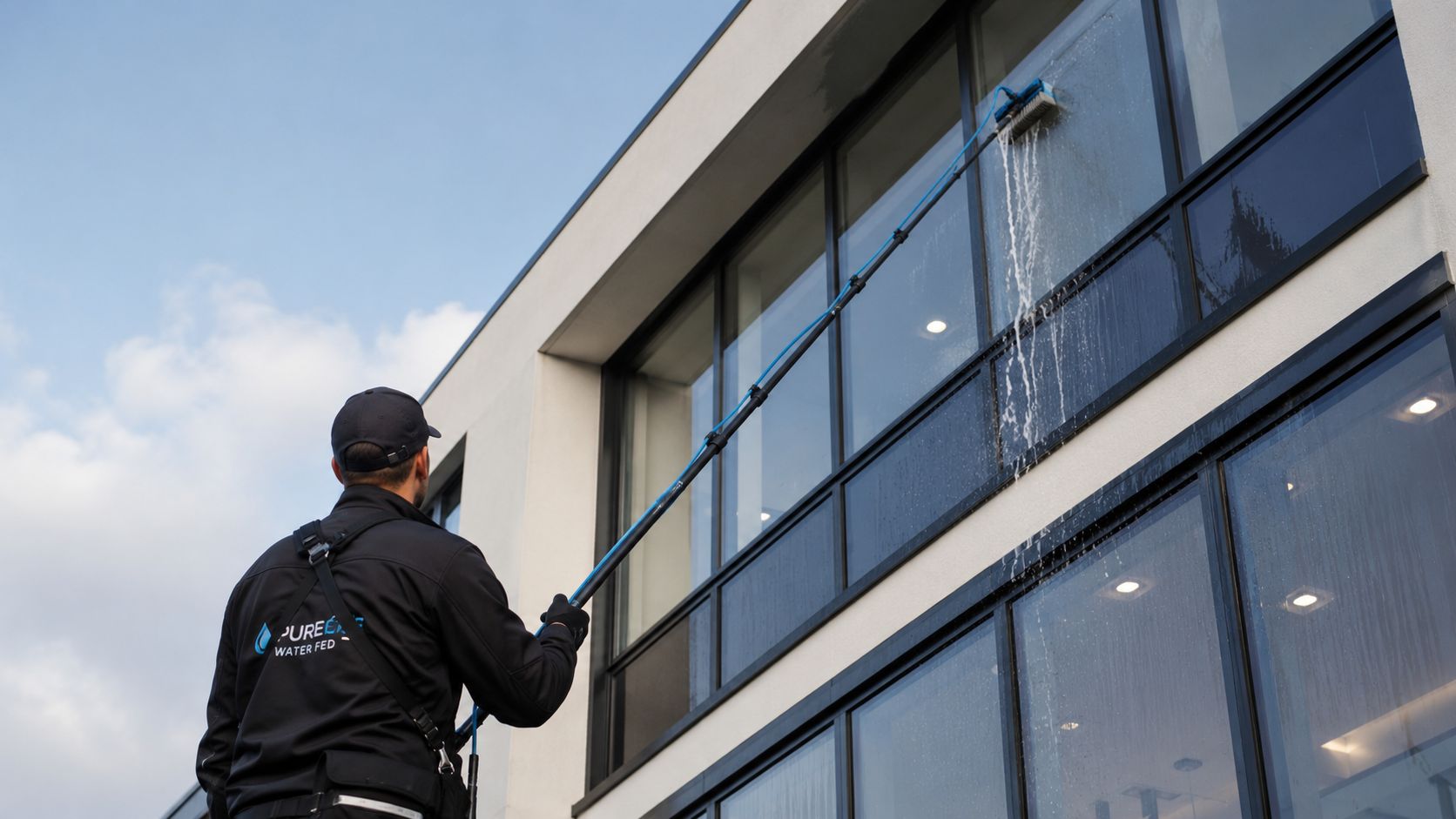
A clean window is the visible result. The less obvious value comes from safe access, controlled technique, and low-residue chemistry.
Working at height isn't a casual extension of household cleaning. OSHA identifies 29 CFR 1910.28 for general industry fall protection, 29 CFR 1910.140 for personal fall protection systems, and 1910.23 for ladders in its fall-protection standards OSHA's fall-protection standards. These rules matter to businesses, property managers, and homeowners because unsafe work can injure people and damage property.
Safety belongs in the estimate
A professional provider should explain how technicians will reach the glass, what equipment they'll use, and how they'll protect people below. Cornell's window-washing program requires workers to use 100% fall protection, keep both harness terminals attached to separate anchors during cleaning, and prohibits certain interior ladder work when the top of the window is more than 35 feet above the nearest interior floor Cornell's window-washing program.
OSHA states that personal fall arrest systems must prevent a worker from free-falling more than 6 feet. Its interpretation guidance also says roof anchorages for window-washing equipment must be permanent, sound, rigid, and capable of supporting the maximum intended load without displacement or deformation OSHA's roof-anchorage interpretation.
That level of planning protects more than the technician. It reduces the chance of dropped equipment, damaged landscaping, scratched frames, and unsafe conditions around customers or family members.
Chemistry affects the finish
Commercial glass cleaners are often formulated in a mildly to strongly alkaline range. Patent literature describes preferred finished-product pH around 9 to 12, with other anti-streaking formulations commonly kept above pH 7 and often around 10 to 11 glass-cleaner formulation patent literature. Alkalinity can help disperse soils, but leftover salts and nonvolatile builders may dry into film.
Low-film formulas take the opposite priority. Stepan's dilution concentrate uses nonionic surfactant technology for a low-film, low-streak system, while another published formulation reports a diluted-use pH of 3.75 with nonvisible streaking on ceramic and glass Stepan's low-film formulation data. The practical lesson is simple. Streak-free window cleaning depends on what remains after the water evaporates, not only on how aggressively the formula removes dirt.
For presentation and documentation, property owners can also review these cleaning photo tips from HomeProBadge when they want consistent before-and-after records.
Determining the Right Cleaning Frequency for Your Property
Cleaning frequency should follow the property's exposure and visibility, not a guess based only on the calendar. A home beside trees, active construction, or frequent irrigation may need attention sooner than a protected property. A storefront facing customers has a different standard from an occasional-use guest room.
A practical starting point for single-family homes is two to four exterior cleanings per year and one to two interior cleanings per year, according to the window-cleaning frequency guide. Commercial properties are often serviced monthly or quarterly, depending on business needs and the importance of consistently clean public-facing glass.
Recommended Window Cleaning Frequencies
| Property Type | Exterior Frequency | Interior Frequency |
|---|---|---|
| Residential single-family home | 2 to 4 times per year | 1 to 2 times per year |
| Commercial property | Monthly or quarterly, based on business needs | Monthly or quarterly, based on business needs |
Use those ranges as a starting point, then adjust for local conditions:
- Inspect exposure. Note sprinkler overspray, windblown dirt, tree pollen, bird activity, and nearby construction.
- Identify high-visibility glass. Entry doors, storefronts, dining-room windows, display glass, and street-facing panes usually deserve more consistent attention.
- Separate routine washing from restoration. Regular cleaning handles ordinary accumulation. Hard water stain removal may require a different assessment and method.
- Coordinate occupied-property access. Homes may be easiest to service seasonally. Businesses may prefer early, late, or low-traffic appointments.
- Review the result. If glass becomes heavily soiled before the next visit, shorten the interval. If it remains presentable, maintain the current cadence.
Higher-frequency maintenance can be better value than infrequent deep cleaning. Lighter visits usually make it easier to control buildup, reduce time on site, and keep appearance consistent across the year. The cheapest one-time quote isn't automatically the lowest long-term cost if it leaves a property cycling between neglected glass and expensive restoration work.
Crucial Questions to Ask Before Hiring a Local Provider
A low quote doesn't tell you whether the provider can safely reach the glass or remove the type of buildup on it. The United States window-washing industry was estimated at about USD 2.9 billion in 2026, and the top four companies together accounted for less than 5% of total revenue, according to an industry summary window-cleaning industry structure and statistics. That fragmentation means local operators vary widely in training, documentation, equipment, and follow-through.
Ask direct questions before you approve the work:
- Insurance: Can the provider verify liability and workers' compensation coverage?
- Methods: Will the estimate identify the tools, cleaning solutions, and approach for hard water stains?
- Access: How will technicians reach high or difficult panes, and what fall-protection procedures apply?
- Scope: Does the price include interior glass, exterior glass, screens, tracks, frames, or only the main panes?
- Quality control: Who performs the final inspection, and how are missed streaks or damaged surfaces handled?
- Pricing: Will you receive a written estimate that identifies possible additional charges before work starts?
A provider should be comfortable discussing safety without becoming vague or defensive. Watch for unclear answers about ladder use, no written scope, pressure to approve immediately, or promises that every stain will disappear without inspecting the glass first. Etching, coating damage, and mineral deposits don't all respond to the same treatment.
For a broader hiring checklist, review how to choose the best window cleaning service near you. Use it to compare communication, service boundaries, estimates, and customer-care policies before choosing a glass cleaner company.
What to Expect When You Schedule Your Service
A professional appointment should feel organized from the first conversation. The provider asks about the property, identifies interior and exterior priorities, discusses access, and gives you a clear estimate or service scope. You shouldn't have to guess whether screen cleaning, track cleaning, or hard water treatment is included.
On service day, the technician begins with a walkthrough. Existing scratches, failed seals, delicate finishes, landscaping concerns, and access limitations should be identified. Interior window cleaning requires care around furniture and flooring, while exterior window washing requires attention to siding, plants, walkways, and nearby entrances.
A careful service sequence
Expect the work to include:
- Preparation: Move or protect items near interior glass and secure the work area outside.
- Surface cleaning: Remove loose debris before applying the appropriate solution.
- Glass detailing: Use controlled squeegee passes and clean tools to limit streaks and transferred residue.
- Related maintenance: Complete agreed screen, frame, or track work without silently expanding the scope.
- Final inspection: Review the panes from practical viewing angles and address reachable areas that need another pass.
A reliable local team also communicates if weather, access, or glass condition changes the plan. For more detail about arrival, preparation, cleaning, and wrap-up, see what to expect during a professional window cleaning appointment.
Cultivate House Detailing serves Colorado Springs and nearby communities with residential and commercial window cleaning, including work up to the fourth story, along with related exterior maintenance services. The service should leave you with more than cleaner glass. It should leave you confident that the property was treated carefully and that the next maintenance decision is clear.
If your Colorado Springs home or business needs interior window cleaning, exterior window washing, screen cleaning, track detailing, or help with hard water buildup, visit Cultivate House Detailing to request a quote. Schedule a professional glass-care service and enjoy clearer views without the unsafe ladders, recurring streaks, or guesswork.