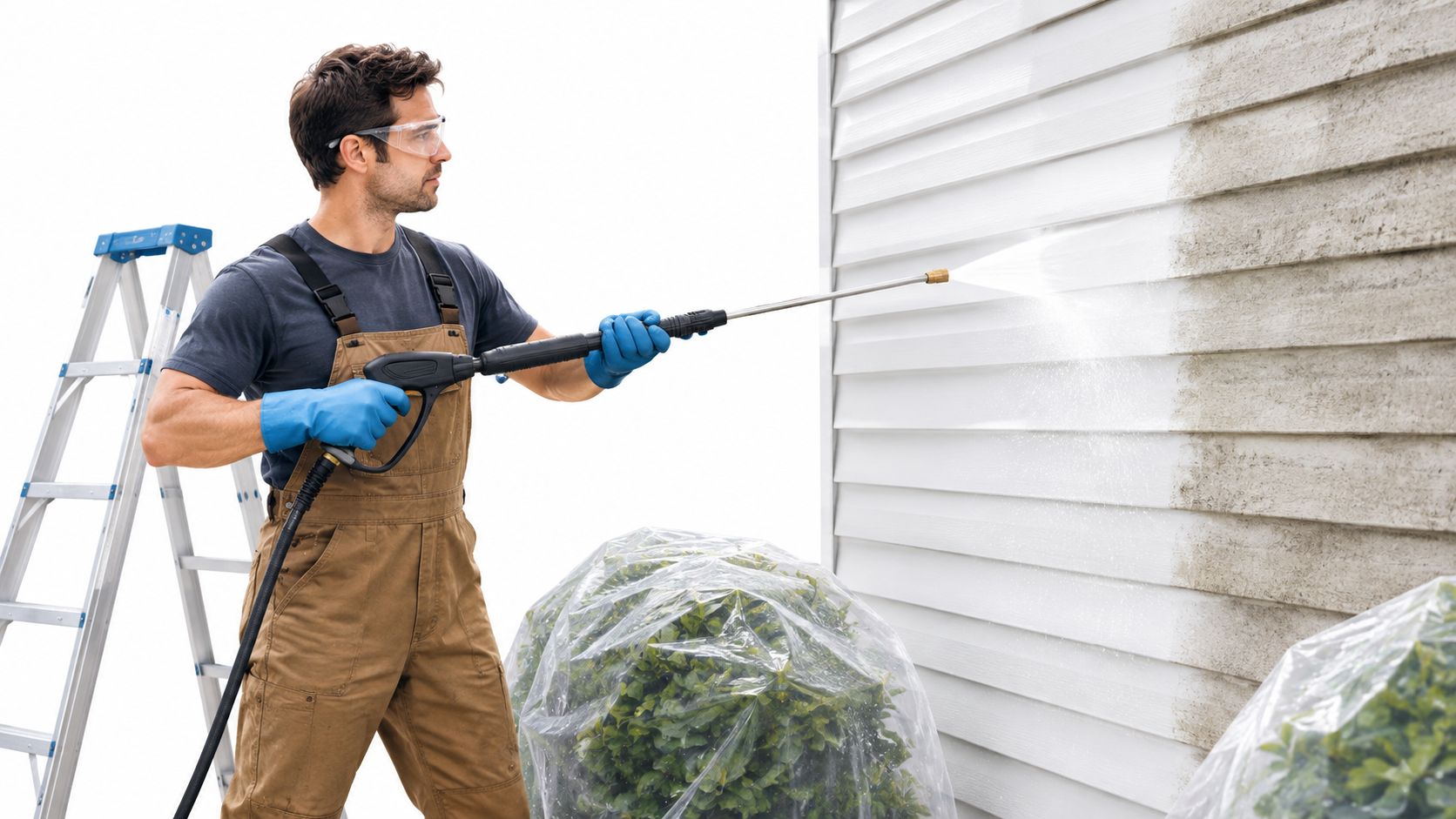
You're looking at a Colorado Springs home with dusty vinyl, pollen stuck to the shaded side, and dark streaks beneath the gutters. The siding needs attention, but blasting it with a powerful stream isn't the answer. How to pressure wash vinyl siding safely is really a lesson in controlled pressure, correct angles, suitable detergent, and patience.
A careful wash can brighten the exterior without forcing water behind the panels or leaving visible cleaning bands. The same low-pressure mindset also helps protect nearby windows, landscaping, trim, and painted surfaces. If the home is tall, the siding is fragile, or the stains don't respond to gentle cleaning, Cultivate House Detailing can handle the exterior work along with residential window cleaning, commercial window cleaning, and related maintenance in Colorado Springs, CO.
Why Vinyl Siding Needs a Gentle Approach in Colorado Springs
A south-facing wall in Colorado Springs can collect wind-blown dust and pollen while receiving intense sun. A shaded wall may hold organic buildup longer, especially where gutters overflow or shrubs remain close to the siding. By the time a homeowner notices the problem, the vinyl can look dull, streaked, or uneven from the sidewalk.
The temptation is to increase pressure until the grime disappears. That approach often creates a different problem. Vinyl is durable, but excessive force or an upward spray can push water behind the laps, damage seams, warp the surface, or expose weaknesses that weren't obvious before cleaning. A recent industry summary explains that vinyl can generally withstand pressure washing when the operator uses the right technique, while also emphasizing the risks of excessive pressure and incorrect spray direction. The pressure-washing guidance on vinyl siding also contrasts aggressive blasting with controlled, lower-pressure methods.
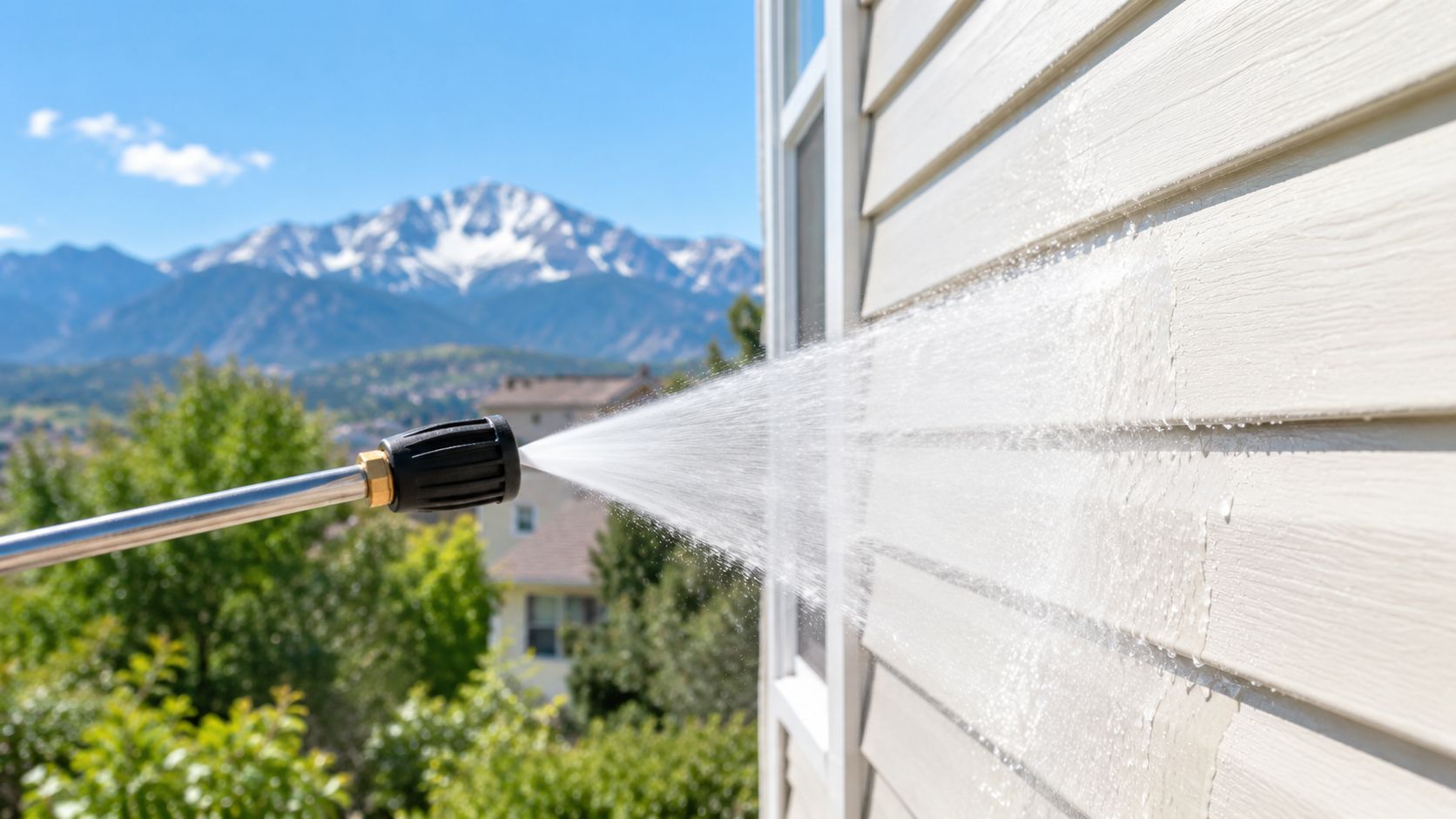
Clean siding comes from control
A good result isn't defined by the loudest machine or the strongest stream. It's defined by siding that looks evenly clean, with no tiger-striping, opened seams, cloudy detergent residue, or water intrusion behind the panels. Proper exterior cleaning can restore a brighter appearance and improve curb appeal without treating the siding like concrete.
The same care matters if you're considering a color change later. Before making that decision, this vinyl siding painting guide from I PAINT STUFF offers useful context about preparing and evaluating the material. For routine washing, the practical lesson is simple: chemistry should do much of the work, while pressure provides controlled rinsing.
What to Prepare Before You Spray
Preparation prevents most avoidable problems. Walk around the home before connecting the hose and look closely at every wall, especially corners, seams, window trim, vents, and areas beneath gutters. Mark or photograph cracked siding, loose panels, open joints, and failed caulking so you don't accidentally drive water into an existing weakness.
Windows and doors need attention too. Close them fully, check that screens sit properly, and protect vulnerable fixtures, outlets, vents, and exterior lights from direct spray. Move patio furniture, planters, decorations, and other loose items away from the walls. If you're working near a delicate surface, use plastic sheeting or drop cloths without trapping moisture against the home.

A practical go or no-go checklist
- Inspect the siding: Look for cracks, loose panels, gaps in caulking, and areas where water could enter.
- Protect surrounding surfaces: Pre-rinse landscaping, cover sensitive fixtures, and keep spray away from window seals and vents.
- Choose workable weather: A calm, overcast day gives detergent more working time and reduces the chance of rapid drying.
- Plan your water path: Check where runoff will travel before you add detergent. Keep it away from doors, finished surfaces, and vulnerable plants.
- Use stable access: Avoid balancing on a ladder while operating a pressure washer. A stable extension system or professional equipment is safer for high walls.
- Wear protective gear: Eye protection, closed-toe footwear, gloves, and clothing that covers exposed skin should be standard.
Pre-rinsing plants helps dilute accidental overspray, but it doesn't make harsh chemistry safe. Use a detergent labeled for vinyl and follow its directions. If the surface is already brittle or loose, stop during preparation and arrange an evaluation rather than treating the washer as a repair tool.
Choosing the Right Pressure Washer Nozzles and Settings
A pressure washer does not clean vinyl by brute force. The operator's settings matter more than the machine's maximum output. Gas models may provide more capacity than a homeowner needs, while electric units can be easier to control on smaller areas. Set the surface pressure, water flow, nozzle width, and working distance for the siding, not for the washer's advertising label.
Routine guidance commonly places vinyl cleaning around 1,000 to 1,200 PSI, with some professional references allowing approximately 1,200 to 1,500 PSI when the operator uses a wide fan tip, keeps the wand back, and tests first. Other trade guidance describes a working range of roughly 1,200 to 1,600 PSI. Begin at the lowest effective setting, test a concealed area, and increase pressure only when the siding tolerates it. This vinyl siding pressure-washing guidance recommends broad overlapping strokes, a 12 to 18 inch stand-off, and wide fan nozzles.
| Task | Pressure Range | Nozzle | Technique Tip |
|---|---|---|---|
| Detergent application | 100 to 200 PSI | 25° fan tip | Hold the wand about 12 to 18 inches away and apply from the lower portion upward. Operator guidance |
| Routine rinse | 200 to 500 PSI | 25° or 40° fan nozzle | Keep the spray angled downward and rinse from the top down. |
| Higher-pressure routine work | Up to approximately 1,000 to 1,600 PSI, depending on the benchmark used | 25° or 40° fan nozzle | Test a concealed area first. Never treat the machine's maximum setting as the target. Trade guidance |
A 25-degree tip offers more cleaning action while keeping the spray broad. A 40-degree tip spreads impact farther, making it a practical choice for delicate or lightly soiled siding. Keep 0-degree tips and rotary nozzles off vinyl. Their concentrated force can warp panels, etch the finish, or open seams.
Flow affects how quickly a job gets done. Residential vinyl work may use 2.0 to 3.5 GPM, while hot-water units around 140°F to 180°F can help activate chemicals on heavy biological growth. Higher flow or heat does not justify aggressive spraying. For a clearer comparison of methods, read about soft washing versus pressure washing and choose chemistry and pressure according to the siding's condition.
How to Wash and Rinse Vinyl Siding Without Causing Damage
A south-facing wall in Colorado Springs can heat up quickly, while shaded walls may stay damp longer. Start with a clean-water inspection rinse if loose dust and cobwebs cover the siding. Keep the wand pointed downward, and avoid spraying beneath the lower edge of each panel. This removes loose material without forcing water behind the laps before detergent reaches the surface.
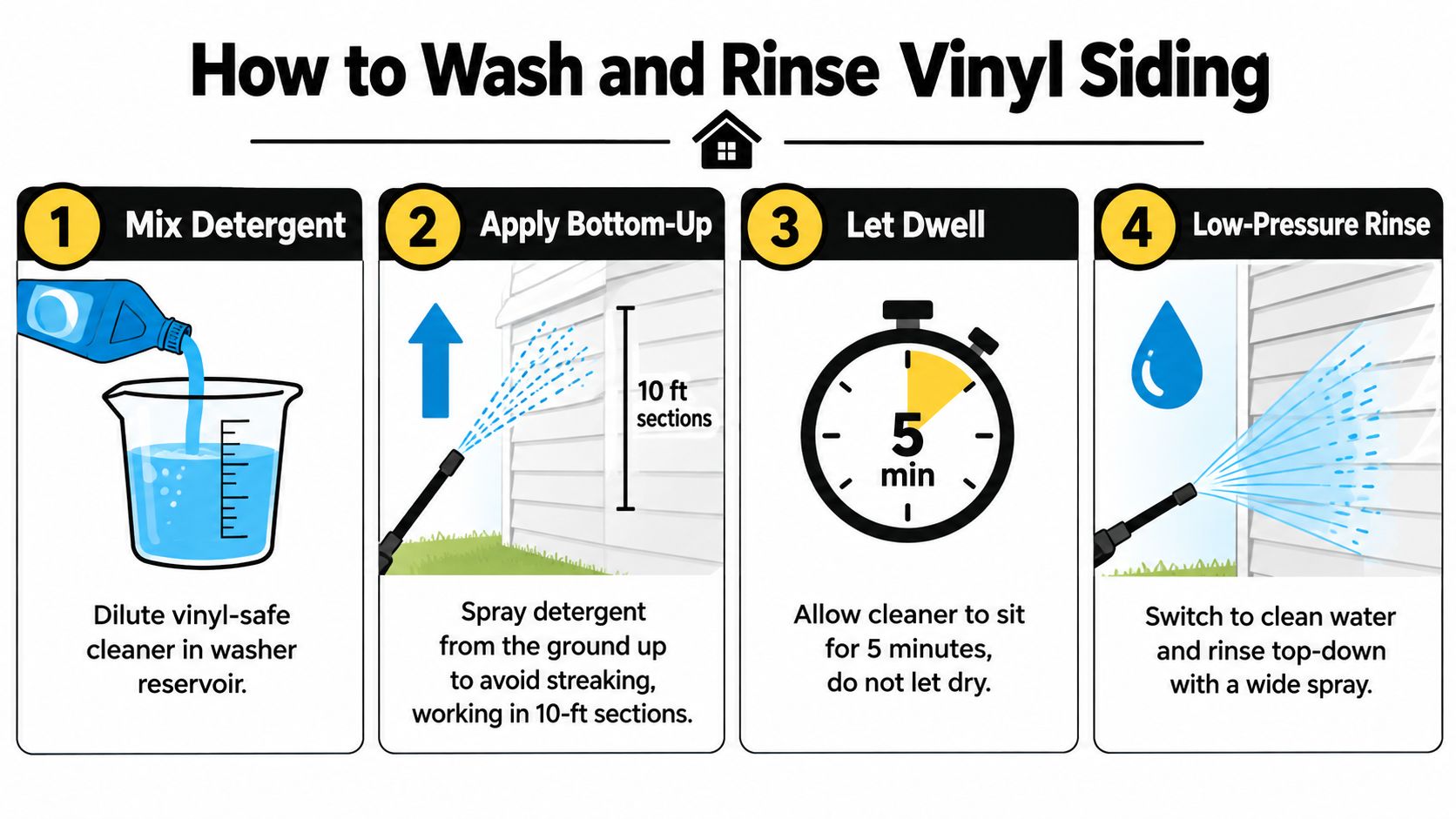
Mix a vinyl-safe detergent according to the product label. Apply it at roughly 100 to 200 PSI with a 25-degree fan tip, holding the wand 12 to 18 inches from the siding. Work in manageable sections from the bottom upward. This application pattern limits dirty solution running across dry areas and leaving uneven streaks.
Give the detergent time to work
Allow the solution to dwell for about 5 to 15 minutes, or approximately 10 to 15 minutes when conditions allow. Keep it wet and never let it dry on the siding. Hot, sunny weather can shorten the working window, so divide the wall into smaller sections and watch the surface as you work. Dried detergent may leave haze, increase spotting, and affect nearby vegetation.
A dusty wall may respond better to a careful second application than to a stronger stream. On shaded siding with algae-like staining, let the detergent do the lifting before using a soft-bristle brush where needed. A gentle pressure washer siding brush can help with stubborn areas when you avoid excessive pressure. Cultivate House Detailing provides guidance on using this tool as part of a controlled cleaning approach.
Rinse with the siding, not against it
Switch to clean water and rinse at roughly 200 to 500 PSI with a 25-degree or 40-degree nozzle. Start at the top and work downward, keeping the spray angled toward the ground. Maintain the stand-off distance and use broad, overlapping passes. Overlaps of 2 to 3 inches help prevent visible grime lines.
Keep the wand moving, and do not pause close to the panels. Never sweep upward beneath the laps. Watch runoff around windows, doors, plants, and walkways. If the siding still looks dirty after rinsing, repeat the detergent step instead of moving closer with a narrow tip.
For another practical overview of how to clean vinyl siding without damage, Water Works Power Washing discusses detergent use, controlled pressure, and downward rinsing.
Pro Tips for Stubborn Stains and Long Lasting Results
A basic wash removes loose dirt, pollen, and surface grime. It may not fully correct oxidation, mineral spotting, or long-established organic staining. Treat the remaining mark based on what it is, and don't assume that more pressure will solve a chemistry problem.
Match the response to the stain
Green or dark organic growth usually needs a suitable siding detergent and enough dwell time. Hard water spots may require a product designed for mineral deposits, applied carefully and kept away from glass and sensitive finishes. Oxidized vinyl can appear chalky or uneven, and aggressive scrubbing can make that appearance worse instead of restoring the original finish.
- For algae and mildew: Use a vinyl-safe treatment, keep it wet during dwell, and rinse thoroughly.
- For hard water spotting: Identify the mineral residue first and use a compatible spot treatment rather than a narrow pressure stream.
- For oxidation: Test a concealed area and consider professional evaluation before brushing or applying a stronger product.
- For detergent haze: Work in smaller sections, prevent drying, and rinse until runoff is clear.
Colorado Springs homes also benefit from simple maintenance. Keep gutters clear so dirty runoff doesn't stripe the siding, trim plants back from the walls, and inspect for loose panels after severe weather. A gentle seasonal rinse can remove fresh dust before it becomes a heavier cleaning project.
Practical decision: If you can't keep your footing, control the spray angle, or identify the stain, professional help is the safer choice.
Multi-story homes, delicate trim, persistent staining, and aging siding all increase the cost of a mistake. A professional exterior cleaning visit can also be coordinated with exterior window cleaning, screen cleaning, and track cleaning, so runoff and overspray are managed as one property-maintenance plan. That's often more practical than cleaning the siding now and discovering streaked glass afterward.
Enjoy Brighter Siding and Know When to Call a Pro
The safest method uses low pressure, a wide fan nozzle, a downward spray angle, controlled dwell time, and patient overlapping passes. Vinyl siding doesn't need brute force. It needs enough detergent contact to loosen the buildup, followed by a thorough rinse that respects the seams and surrounding surfaces.
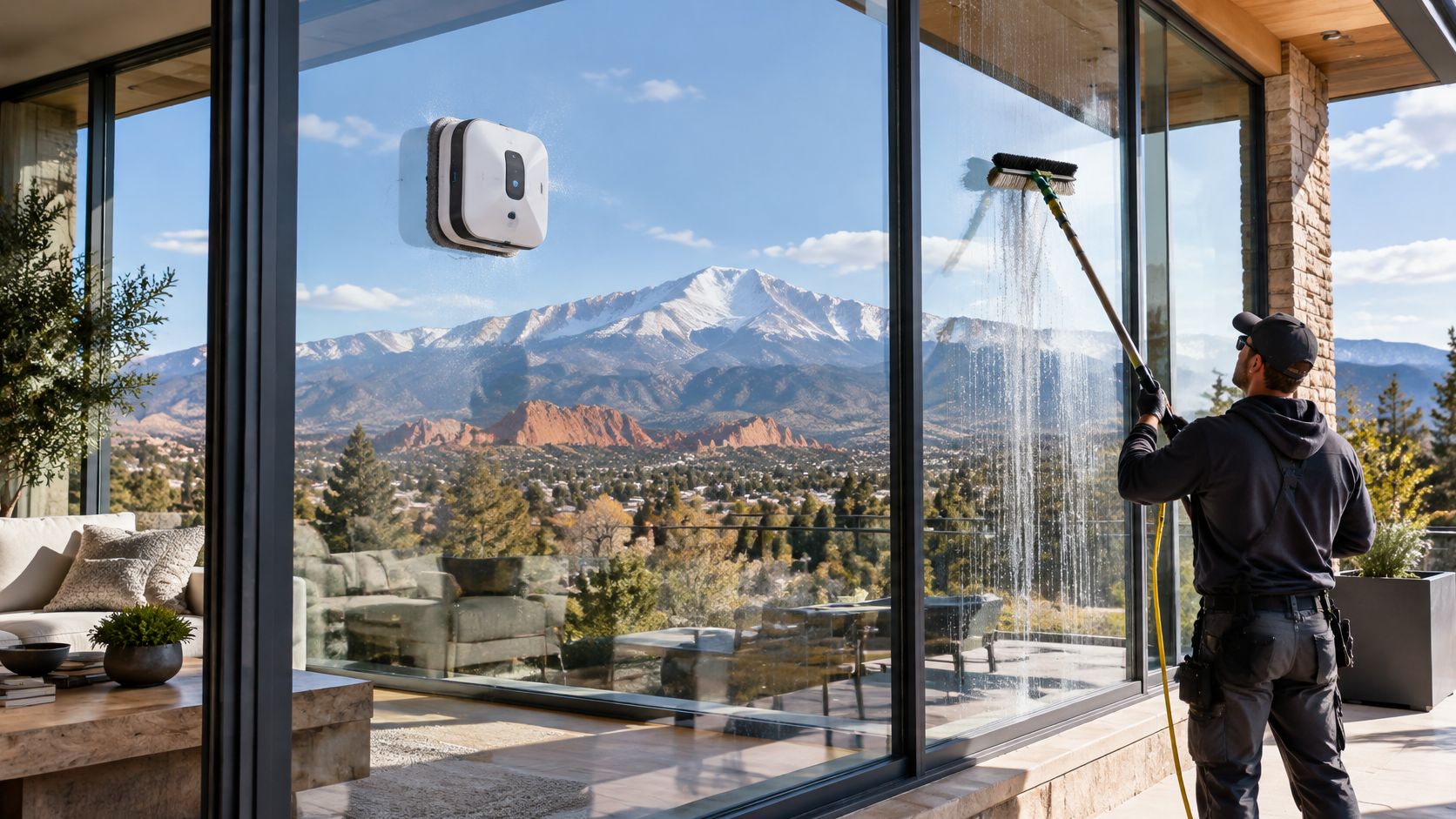
DIY cleaning can work on a low, accessible wall when the siding is sound and the operator can maintain stable footing. Professional service makes more sense when the home has high sections, fragile panels, delicate trim, difficult runoff, or stains that remain after a careful wash. Cultivate House Detailing serves Colorado Springs and nearby communities with siding pressure washing, residential and commercial window cleaning, gutter cleaning, and related exterior services. The team can clean windows up to the fourth story, which can reduce ladder work when siding and glass need attention together.
Clean siding improves the home's first impression, while clean glass brings more natural light into the rooms and helps the entire exterior look maintained. For homeowners searching for window cleaning near me, window cleaning in Colorado Springs, CO, or a dependable exterior cleaning provider, choosing one team for the related work can simplify scheduling and communication.
For safe vinyl siding washing, exterior window cleaning, screen and track cleaning, and other residential or commercial exterior services in Colorado Springs, contact Cultivate House Detailing to request a quote. Schedule an evaluation for your home or business so the team can recommend the right low-pressure cleaning approach and help restore a brighter, cleaner exterior.