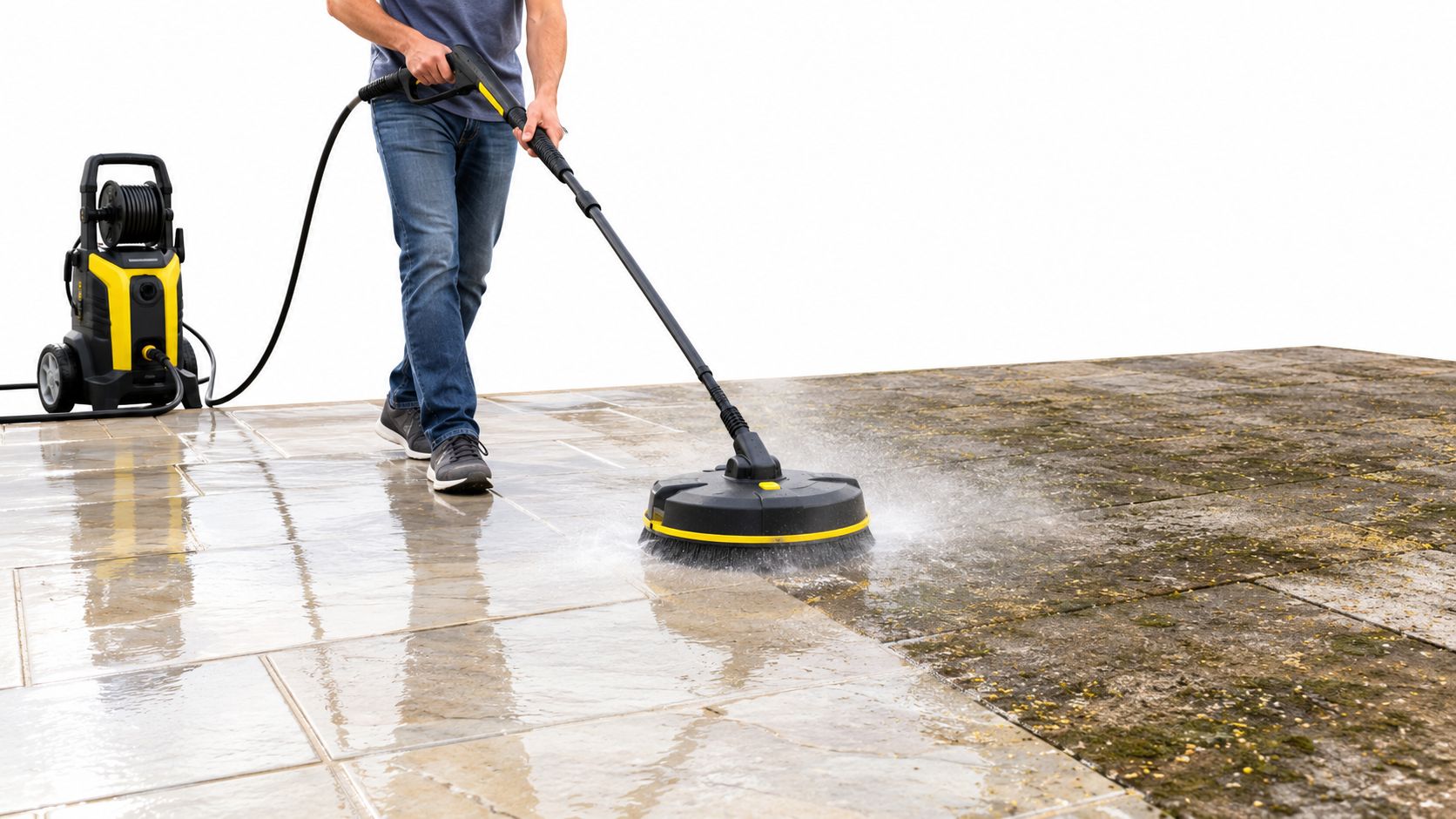
A pressure washer with patio cleaner is effective for concrete and pavers when matched to the surface and water flow. Results depend more on the correct attachment, detergent, and dwell time than on choosing the highest PSI available.
You may be looking at a patio in Colorado Springs that has collected dust, pollen, muddy footprints, hard-water splash-back, or dark organic growth. A normal hose won't shift much of it, but a bare pressure-washer wand can leave stripes, blast joint sand away, or etch the surface. The practical solution is controlled cleaning, not maximum force.
A pressure washer with patio cleaner combines water pressure with a rotating surface-cleaning head that keeps the spray contained and coverage consistent. It can make a patio, walkway, or driveway look refreshed, but only when the machine, cleaner diameter, surface material, and cleaning chemistry work together.
What a Pressure Washer with Patio Cleaner Actually Does
After a dry Colorado Springs season, a patio can look dirty even when the rest of the property appears tidy. Windblown grit settles into textured concrete, pollen clings to pavers, and runoff leaves darker edges near walls and steps. A homeowner may reach for a pressure washer wand, sweep it across the surface, and then discover alternating clean and dirty bands.
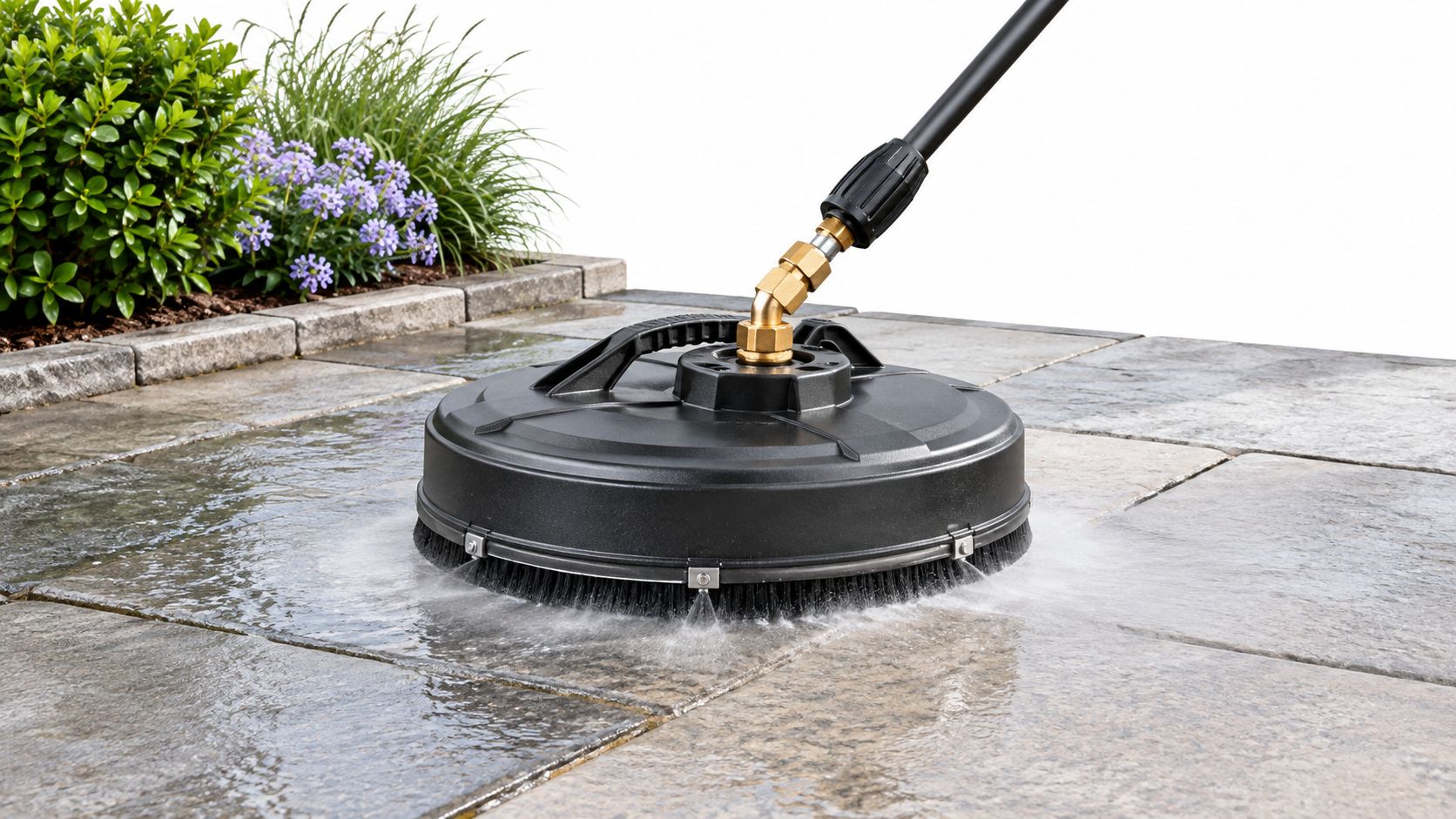
A patio cleaner attachment solves that coverage problem. Under its protective housing, rotating jets move across a defined area while the head glides over the patio. Instead of holding one open spray against the surface, you clean a wider section with a more consistent distance and pattern.
Why the attachment matters
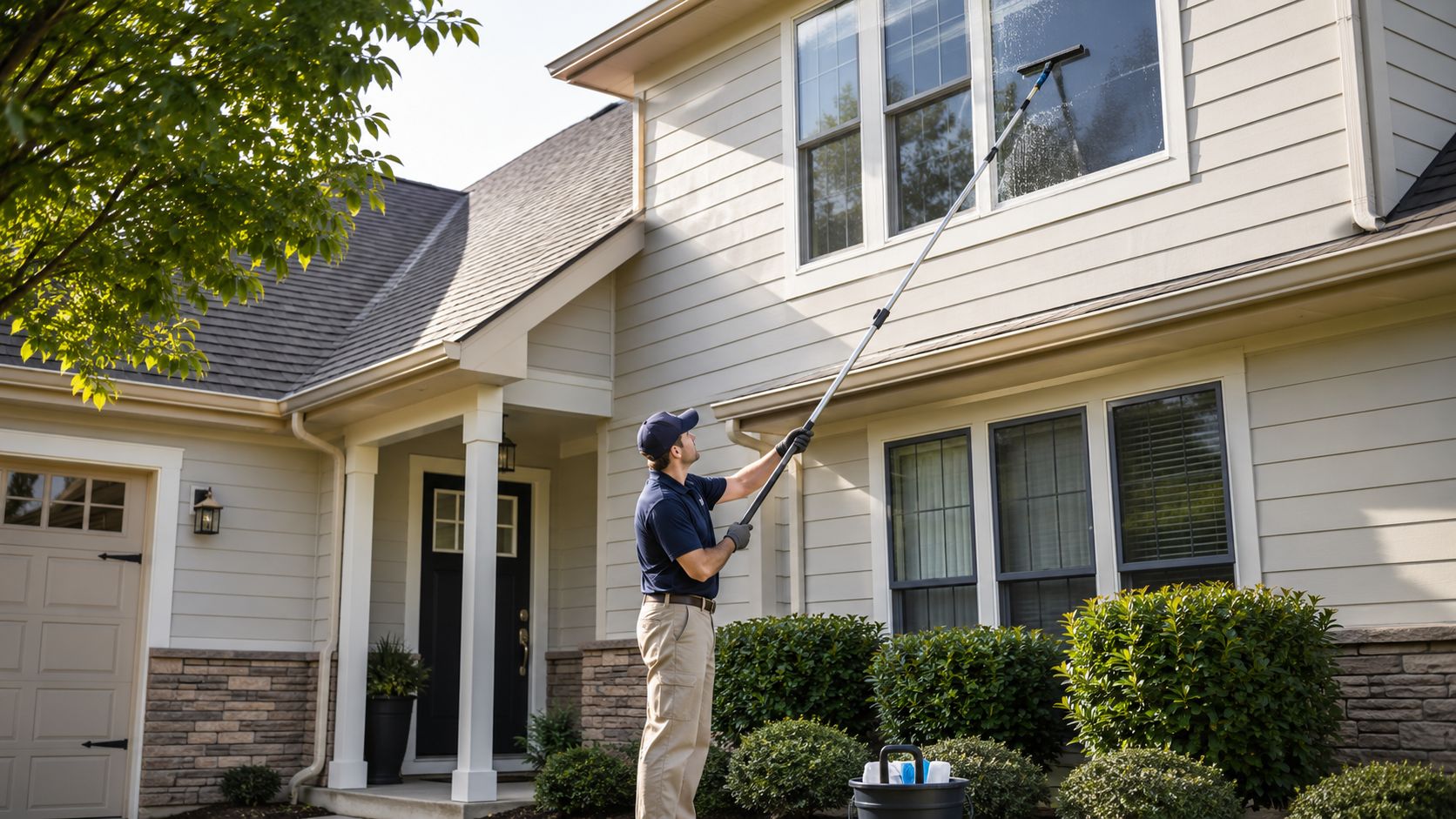
A wand still has uses. It can reach corners, rinse steps, clean edges, and address isolated marks. It isn't the most reliable choice for broad flatwork because a small change in height or speed changes the impact on the surface.
A surface cleaner offers:
- More even coverage: The rotating jets reduce the visible striping associated with freehand wand work.
- Better splash control: The housing helps contain dirty spray around patios and walkways.
- More predictable passes: You can move in overlapping lanes instead of tracing random arcs.
- Less temptation to overpressure: The attachment encourages controlled movement rather than holding a concentrated jet in one place.
The tool doesn't remove the need for judgment. Old concrete, loose paver joints, soft stone, and wood can all react differently to pressure. The attachment improves consistency, but the operator still needs to inspect the surface, test a small area, and choose suitable detergent and flow.
Practical rule: A patio cleaner is primarily a coverage and control tool. It isn't a substitute for matching pressure to the material.
How Pressure Washers and Flow Rate Work Together
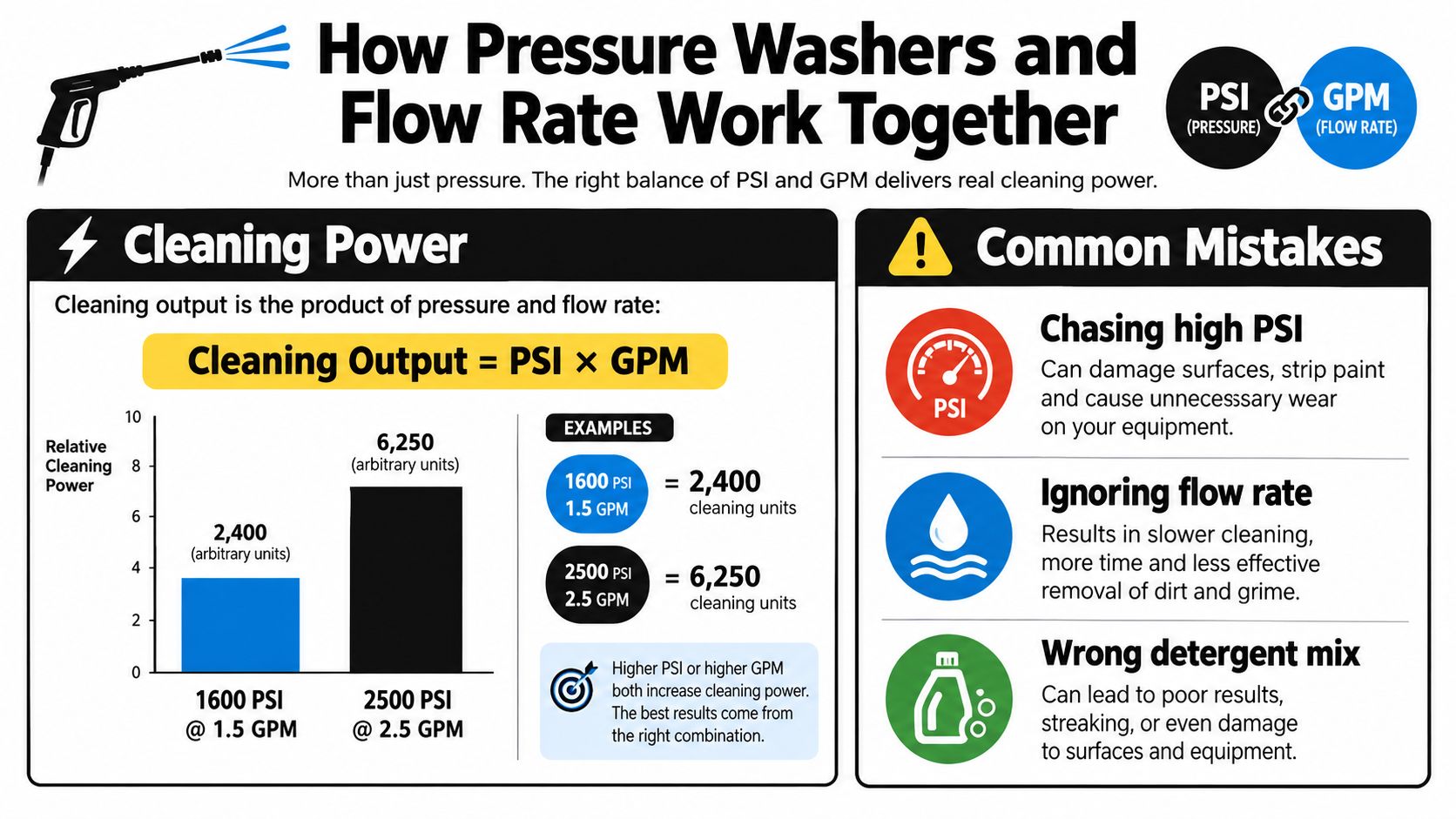
A pressure washer's PSI controls impact. Its GPM controls how much water reaches the surface and carries loosened soil away. Patio cleaning depends on both, but higher PSI is not automatically better. Surface material, nozzle or cleaner compatibility, and detergent dwell time often matter more than raw pressure.
For concrete flatwork, Concrete Network's equipment overview places an effective setup at at least 3,000 PSI and 4 GPM. Contractors often prefer 5 to 6 GPM for quicker soil removal and rinsing. Those figures describe demanding concrete work, not a requirement for every homeowner. A lightly soiled patio may need less capacity, while a large or heavily soiled area can expose the limits of a small machine.
Flow also determines whether a patio cleaner performs properly. A wide attachment spreads water across more surface, so a low-GPM washer may leave the jets rotating slowly or produce uneven cleaning. A narrower cleaner can be a better match for a smaller electric unit. Use detergent and allow suitable dwell time before increasing pressure, especially on older concrete, pavers, or surfaces with organic buildup.
The residential market includes many electric machines and patio attachments. Mordor Intelligence's pressure washer market analysis estimates the global market at USD 5.46 billion in 2025, projecting USD 7.37 billion by 2031 at a 5.12% CAGR. It reports residential owners accounted for 56.40% of units in 2025, North America held 43% of global market share in 2024, electric machines held 54% of the market, and garden washing led applications in 2024.
Choose the washer and attachment as one system. Check both rating plates before buying. This guide to pressure washers for patios and driveways can help compare equipment, but the machine's actual flow and the cleaner's specifications should determine the final match.
Step-by-Step Guide to Cleaning Patios Safely
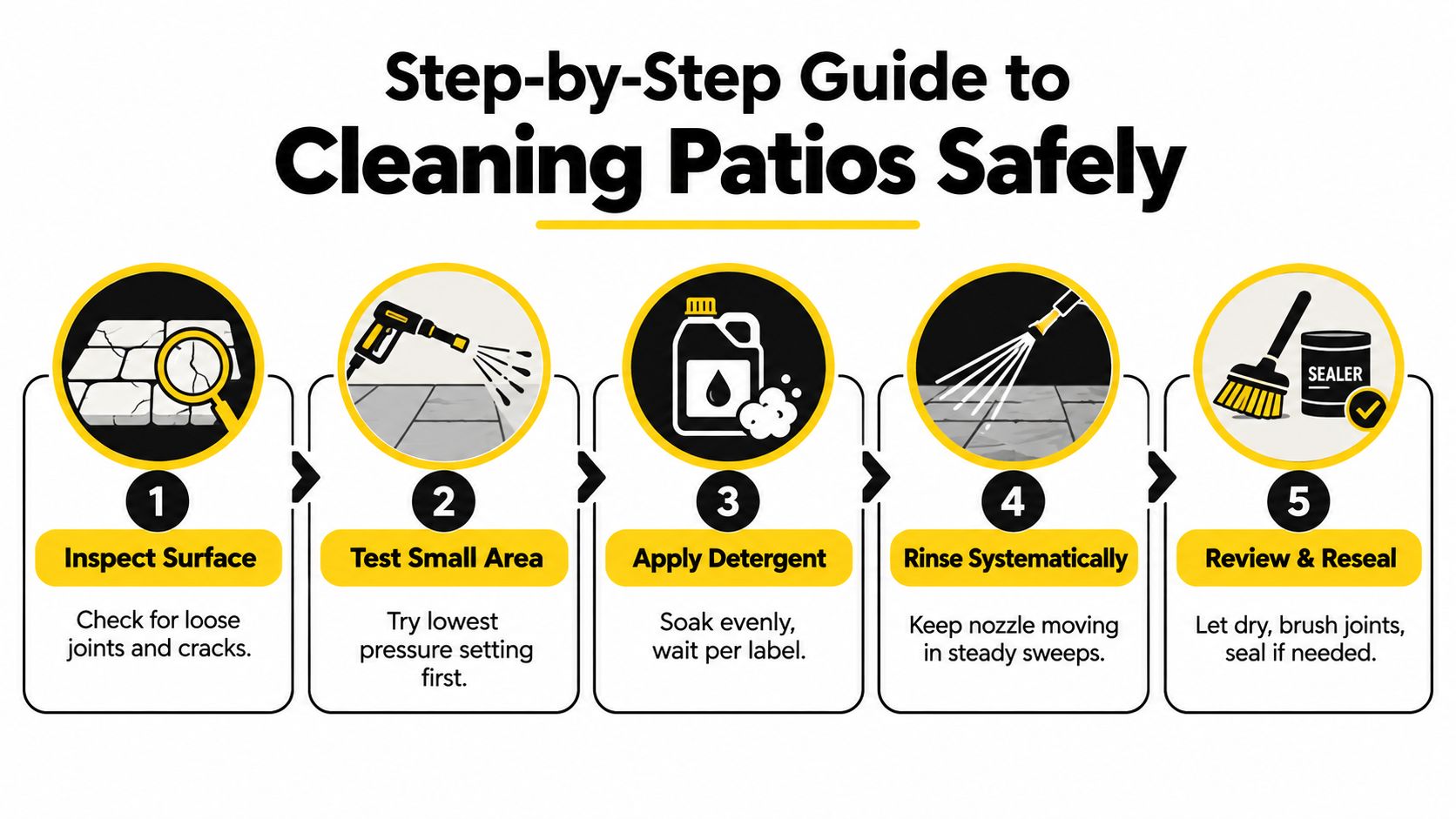
A patio can look clean while wet, then reveal streaks, etched areas, or loose joint material after drying. Work in a set order. Preparation, surface compatibility, flow rate, and detergent dwell time usually matter more than just selecting the highest PSI.
Inspect and prepare the surface
Remove furniture, pots, grills, toys, and other loose items. Sweep away grit and leaves, then check for cracks, loose pavers, failing joints, flaking concrete, and places where runoff could enter the building.
Test a hidden area at the lowest practical pressure. Let it dry before judging the result, since water can conceal light etching or uneven cleaning.
Loosen soil with chemistry
A patio detergent can soften organic grime and embedded soil, reducing the mechanical work required from the washer. Apply it through a suitable feed or lance, cover the surface evenly, and follow the product label for dwell time. Keep it wet and prevent it from drying in place.
Dwell time helps on older concrete, pavers, and areas with biological buildup. More PSI may remove a visible mark while leaving surrounding grime untouched or harming the surface. Let the detergent do part of the work before adjusting pressure.
Match the cleaner to the flow rate
A common sizing rule is approximately 1 GPM for every 4 inches of surface-cleaner deck width, according to J. Racenstein's commercial concrete cleaning guidance. Under that rule, a 20-inch cleaner needs at least 5 GPM. A smaller machine may rotate the bar slowly, leave stripes, or clean unevenly.
For concrete patios and driveways, a baseline of 3,000 PSI and 4 GPM is often cited as an effective starting point, while contractors may prefer 5 to 6 GPM for faster coverage. Treat those figures as a reference, not a target for every material. Soft or vulnerable surfaces need lower pressure, a compatible attachment, or a different cleaning method.
Make controlled passes and rinse completely
Keep the surface cleaner moving at a steady pace. Overlap passes slightly, avoid stopping while the jets are running, and work toward a suitable drainage point. Use the wand around edges and corners after cleaning the main area.
Rinse until runoff is clear and detergent has been removed from joints and textured sections. Allow the patio to dry, then inspect it from several angles. If paver joints have loosened, brush compatible joint material back into place before applying any sealer.
For a concrete-focused walkthrough, use this guide to pressure washing a concrete patio as a practical reference.
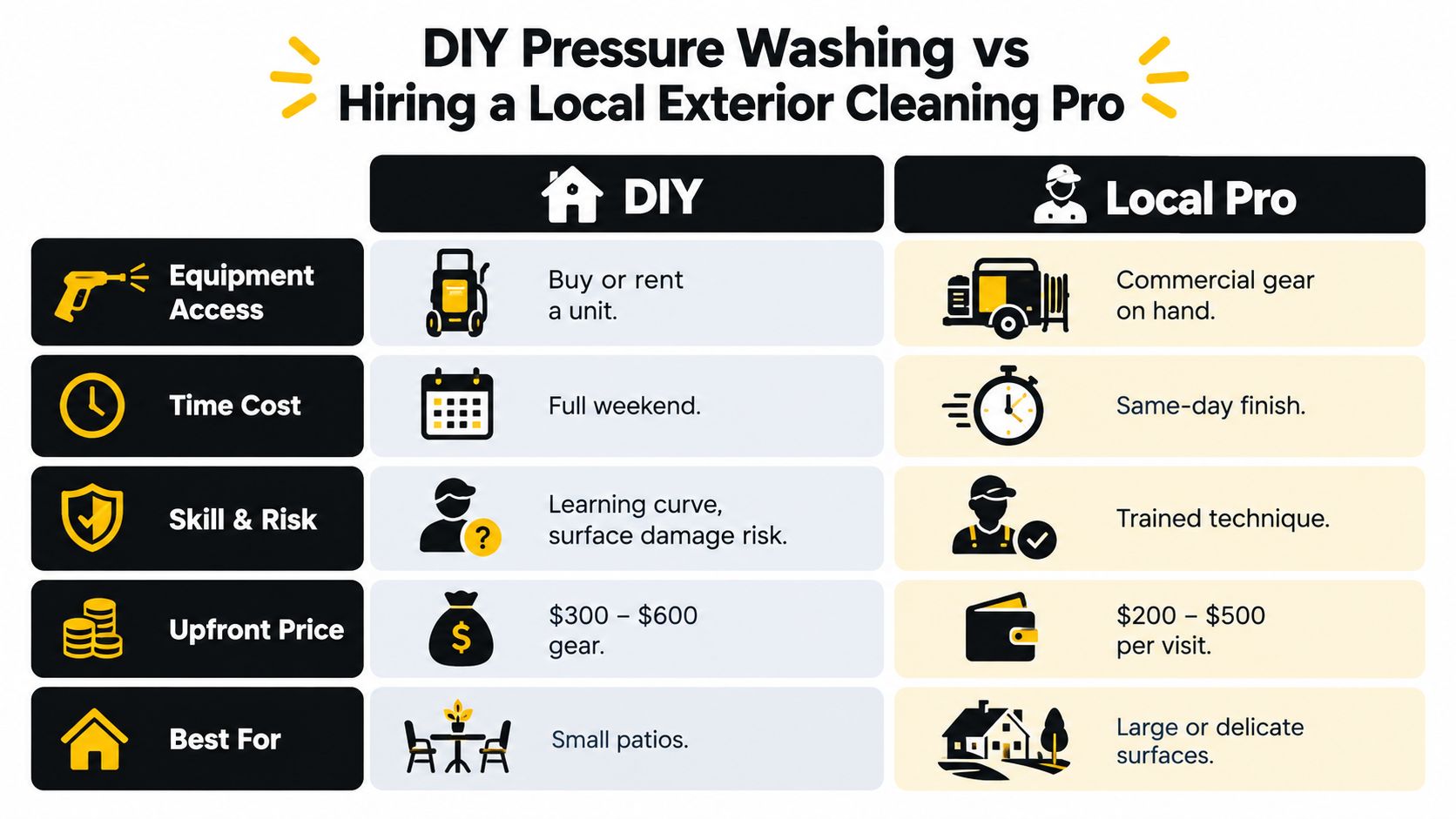
DIY Pressure Washing vs Hiring a Local Exterior Cleaning Pro
DIY patio cleaning can make sense when the area is small, the material is sound, and the soil is light. You also need access to a compatible washer, a surface cleaner, suitable detergent, hose connections, protective equipment, and enough time to work carefully.
The risk rises with size and surface complexity. Large driveways take longer to rinse, delicate pavers can lose joint material, and mixed patios may include concrete beside wood, block paving, or natural stone. Hard-water staining and biological growth can also require more than a quick pass with water.
Where the equipment categories fit
A Lowes pressure-washer buying guide classifies light-duty machines at 1,899 PSI and 0.5 to 2 GPM, medium-duty machines at 1,900 to 2,788 PSI and 1 to 3 GPM, heavy-duty machines at 2,800 PSI with 2 GPM or more, and commercial units beginning at 3,100 PSI and up to 4 GPM. The guide places medium-duty equipment with patios and decks, while heavy-duty equipment suits larger jobs such as driveways and two-story homes.
That classification is helpful, but it doesn't remove the need to check the attachment. A cleaner may have a lower maximum flow or pressure rating than the washer, and the smaller limit controls safe use.
| DIY may suit you | A professional assessment may suit you |
|---|---|
| Small patio with light soil | Large patio, walkway, or driveway |
| Sound concrete with stable joints | Loose pavers, cracks, or mixed materials |
| You already own compatible equipment | You'd need to buy or rent several tools |
| You can test and work slowly | You need consistent results without the learning curve |
Timing matters too. Homeowners planning seasonal maintenance can use this resource on when to power wash your driveway to think through routine care rather than waiting until buildup is severe.
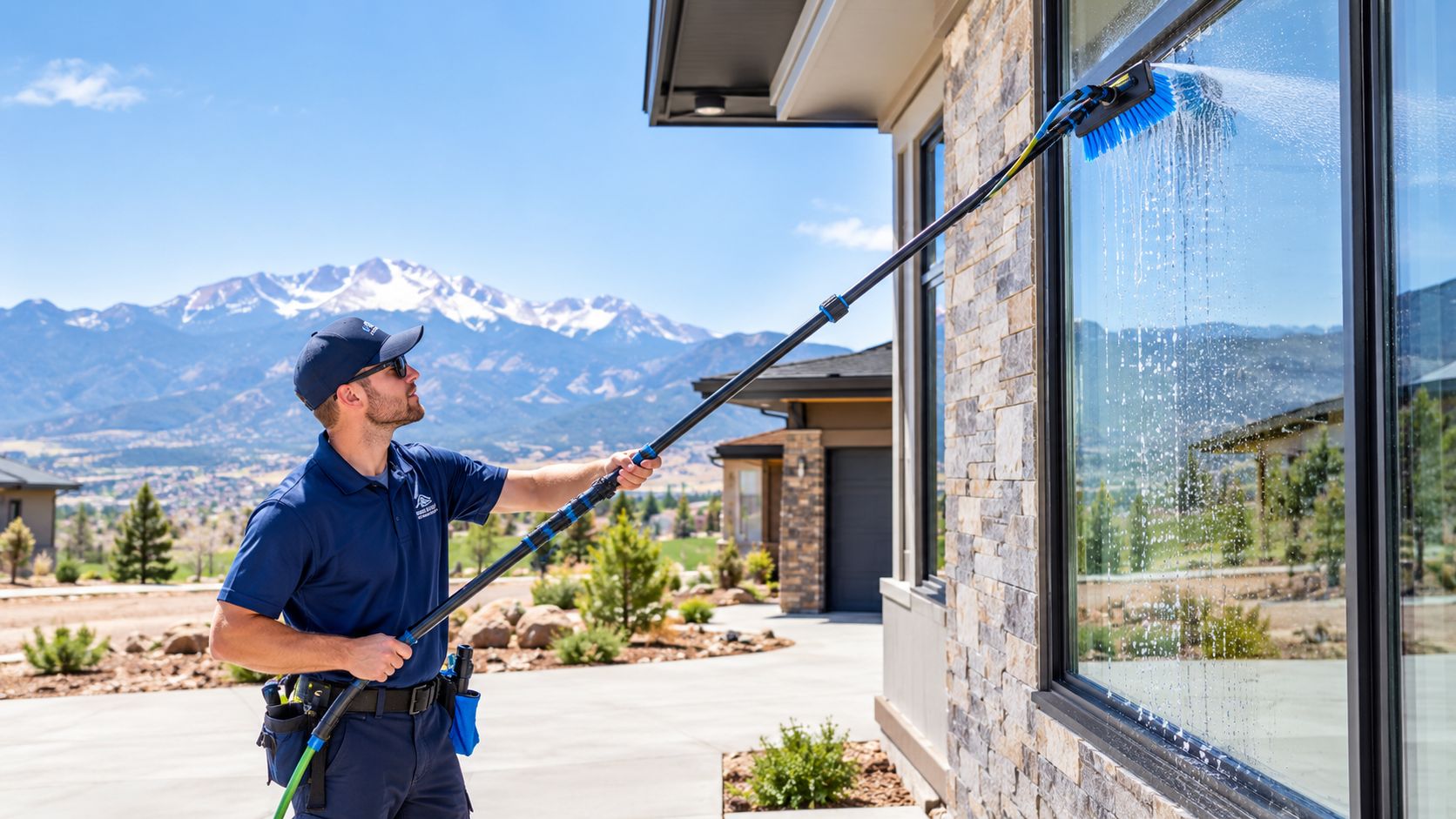
A local exterior cleaning professional brings surface-specific technique, compatible equipment, and a repeatable process. In Colorado Springs, that can be useful when windblown debris, hard-water residue, and shaded biological growth affect different parts of the same property.
Matching Surface Type to Pressure and Attachment Choice
The right setup changes with the material. Concrete tolerates more cleaning force than wood, but even concrete can show etching when an operator holds a high-pressure jet too close or stays in one spot.
Pavers need a careful balance. A lower-pressure machine can still perform well when paired with a suitable surface cleaner, effective detergent, and adequate dwell time. Paved patios often suit medium-duty equipment, while block paving and wooden decking generally benefit from lower pressure and a controlled rinse.
A normal high-PSI wand and a patio cleaner aren't interchangeable. The wand concentrates force in a narrow stream. The surface cleaner spreads rotating jets across a defined area, which helps produce a more uniform finish. On mixed surfaces, you may use the surface cleaner on stable concrete, a gentler method on decking, and the wand only for edges or detail work.
Check both PSI and GPM
Accessory limits make compatibility more specific. A consumer 12-inch surface cleaner may be rated up to 3,000 PSI and 1.7 GPM, while an 18-inch rotating cleaner may be designed for gas machines at 4 GPM or greater and up to 4,000 PSI, as shown in this Lowe's accessory listing. These are product specifications, not universal recommendations, so check the exact label for your attachment.
For a wider patio, flow may become the limiting factor before maximum PSI does. Bob Vila's surface-cleaner guide gives a sizing rule of 4 to 5 inches of cleaning width for every 1 GPM, meaning a 3 GPM machine generally pairs with a 12 to 15-inch cleaner.
A compatible smaller cleaner often produces a better result than an oversized head attached to a machine that can't supply enough water.
Homeowners planning a renovation can also use an AI patio design tool to think through layout and surface choices before cleaning or rebuilding. The cleaning decision still comes down to the material already underfoot, its condition, and the equipment's actual ratings.
Choosing the Right Next Step for Your Colorado Springs Property
Start by identifying the surface, not by shopping for the largest PSI number. Concrete, pavers, decking, and mixed outdoor areas each need a different balance of pressure, flow, attachment size, detergent, and dwell time.
For a small, stable patio with light dirt, inspect the surface, test a hidden area, confirm the cleaner's PSI and GPM limits, and work in controlled overlapping passes. If the area is broad, joints are loose, stains are persistent, or several materials meet, a professional assessment can prevent a repair problem disguised as a cleaning project.
Consistent maintenance also beats occasional aggressive washing. Removing soil and organic buildup before it becomes firmly established makes future cleaning more manageable and reduces the temptation to compensate with excessive pressure.
In Colorado Springs and nearby communities, local conditions can vary from exposed, dusty patios to shaded areas that hold moisture and growth. A practical next step is to photograph the surface, note the material and approximate condition, and ask an exterior cleaning provider what method they recommend before committing to equipment.
Cultivate House Detailing provides patio pressure washing for exterior living spaces, along with related exterior cleaning for homeowners and businesses in Colorado Springs and nearby communities. Visit Cultivate House Detailing to request a quote and discuss a surface-appropriate cleaning plan for your patio, walkway, or driveway.