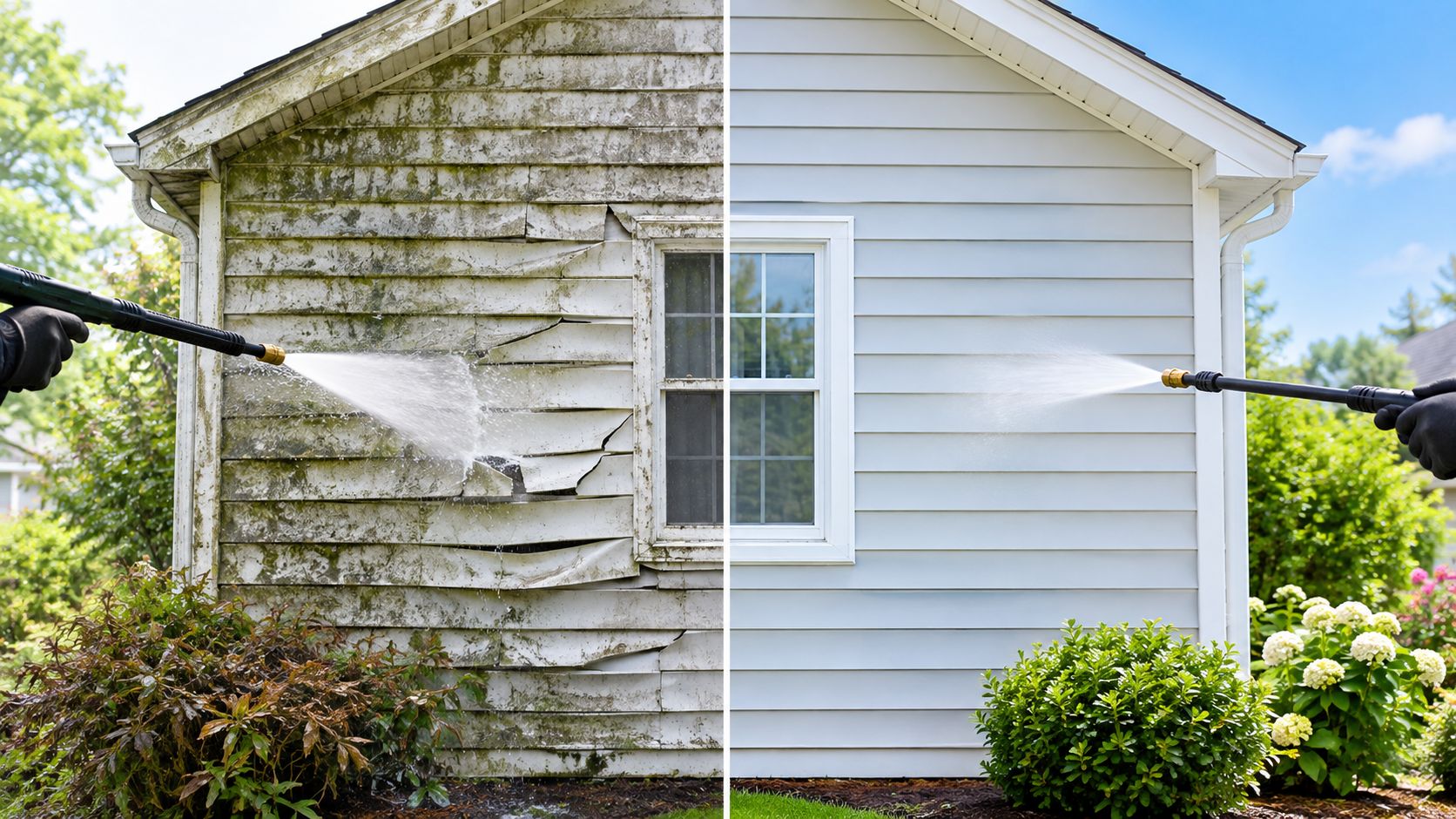
A Colorado Springs homeowner notices the problem after a windy week and a passing storm. The vinyl siding has dark streaks, pollen, and greenish buildup, so a pressure washer seems like the fastest fix. A few minutes later, the surface looks brighter, but some panels are wavy, a seam has loosened, or stains begin returning near the wall.
Those are common pressure washing vinyl siding problems, but the siding itself usually isn't the main culprit. The trouble comes from the combination of spray pressure, nozzle shape, distance, and angle. A stream aimed upward into the panel laps can force water behind the cladding, where house wrap, insulation, and sheathing may stay damp without any obvious exterior warning. Industry guidance on soft wash vs pressure wash vinyl offers useful context for homeowners comparing these two cleaning methods.
Why the washer can create a bigger repair
Homeowners reach for pressure washing because dirt, algae, and storm residue look like surface problems. On vinyl, however, brute force can crack or loosen panels, blow out caulk, strip the finish, and create hidden moisture issues. Traditional high-pressure washing has increasingly given way to soft washing for vinyl because chemical treatment and controlled rinsing remove buildup without attacking the siding's joints.
This guide focuses on the practical questions Colorado Springs homeowners ask: how vinyl manages water, what damage looks like, which mistakes cause it, and how to clean the exterior more safely. It also connects siding care with exterior window cleaning, screen cleaning, and other property maintenance services that help a home look cared for from the street.
How Vinyl Siding Is Designed to Handle Water and Pressure
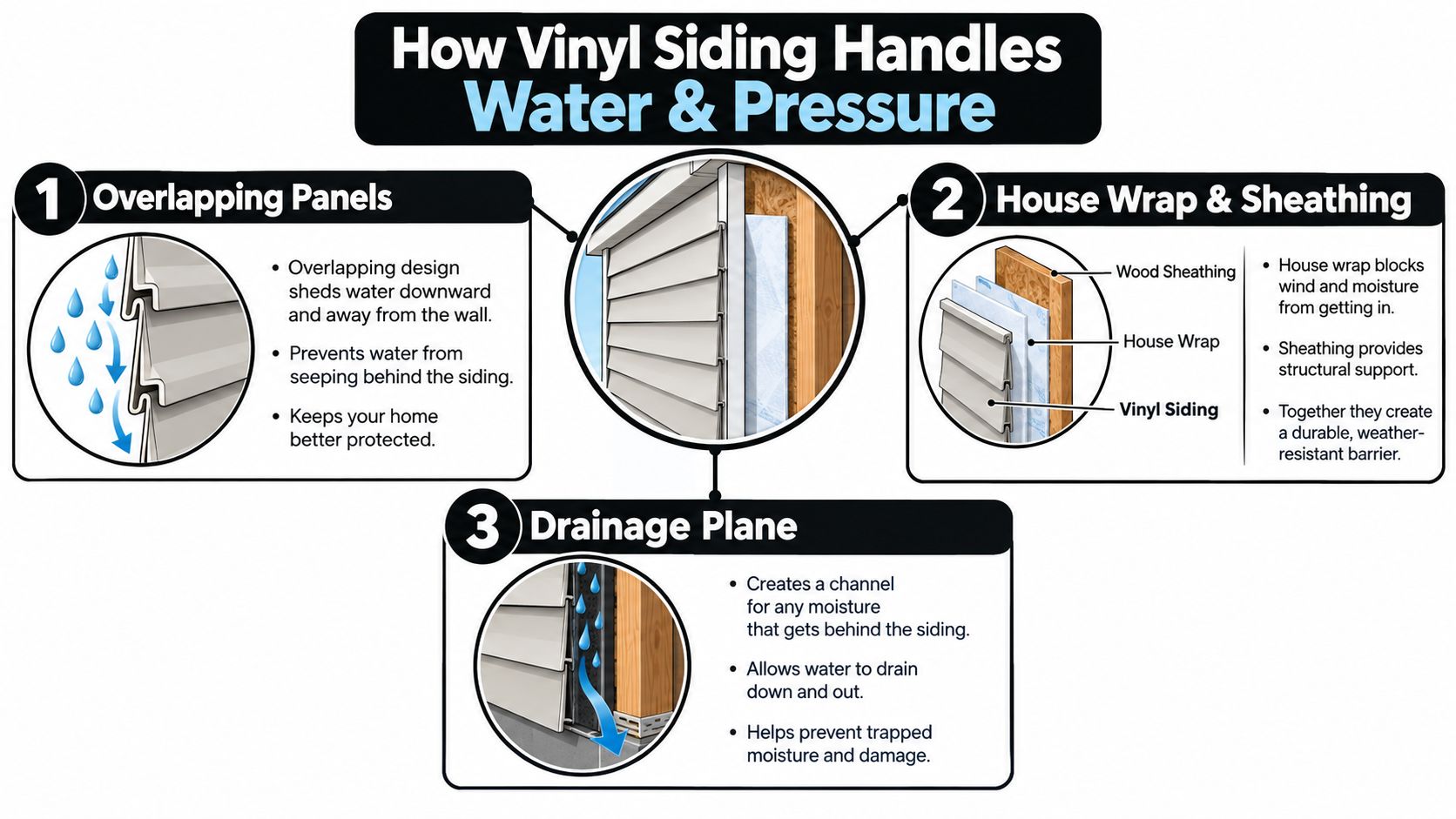
Vinyl siding is installed as a water-shedding system, not as a sealed wall surface. Each panel overlaps the panel below it, much like roof shingles. Rain lands on the outer face and moves downward, while the wall assembly behind the panels provides additional protection if small amounts of moisture reach the back.
The overlap is the important detail
Look at a siding wall from the side and you'll see that the laps create a direction for water to follow. A downward spray works with that design. An upward spray works against it, pushing water into the small openings beneath the lower edge of a panel, around trim, or near a window and door.
That doesn't mean vinyl is fragile under normal weather. It means a concentrated stream can behave differently from rainfall. Water from a pressure washer arrives with much more force and can reach places ordinary rain usually doesn't.
Behind the vinyl, the wall may include house wrap, insulation, and sheathing. These layers support the building envelope, but they aren't a reason to spray aggressively into the siding. If water gets behind the panels and can't dry promptly, homeowners may eventually notice recurring stains, musty smells, mold, rot, or insulation problems.
Practical rule: Treat vinyl siding like overlapping shingles. Clean with the water path, not against it.
Pressure, angle, and distance work together
Vinyl is most vulnerable when pressure, nozzle geometry, and standoff distance combine to exceed the panel's mechanical tolerance. Guidance commonly places a safer soft-wash working window around 100 to 500 PSI, while some practical cleaning advice uses low-pressure applications around 40 to 100 PSI. These ranges and the risk of hidden moisture are discussed in technical guidance on vinyl siding washing.
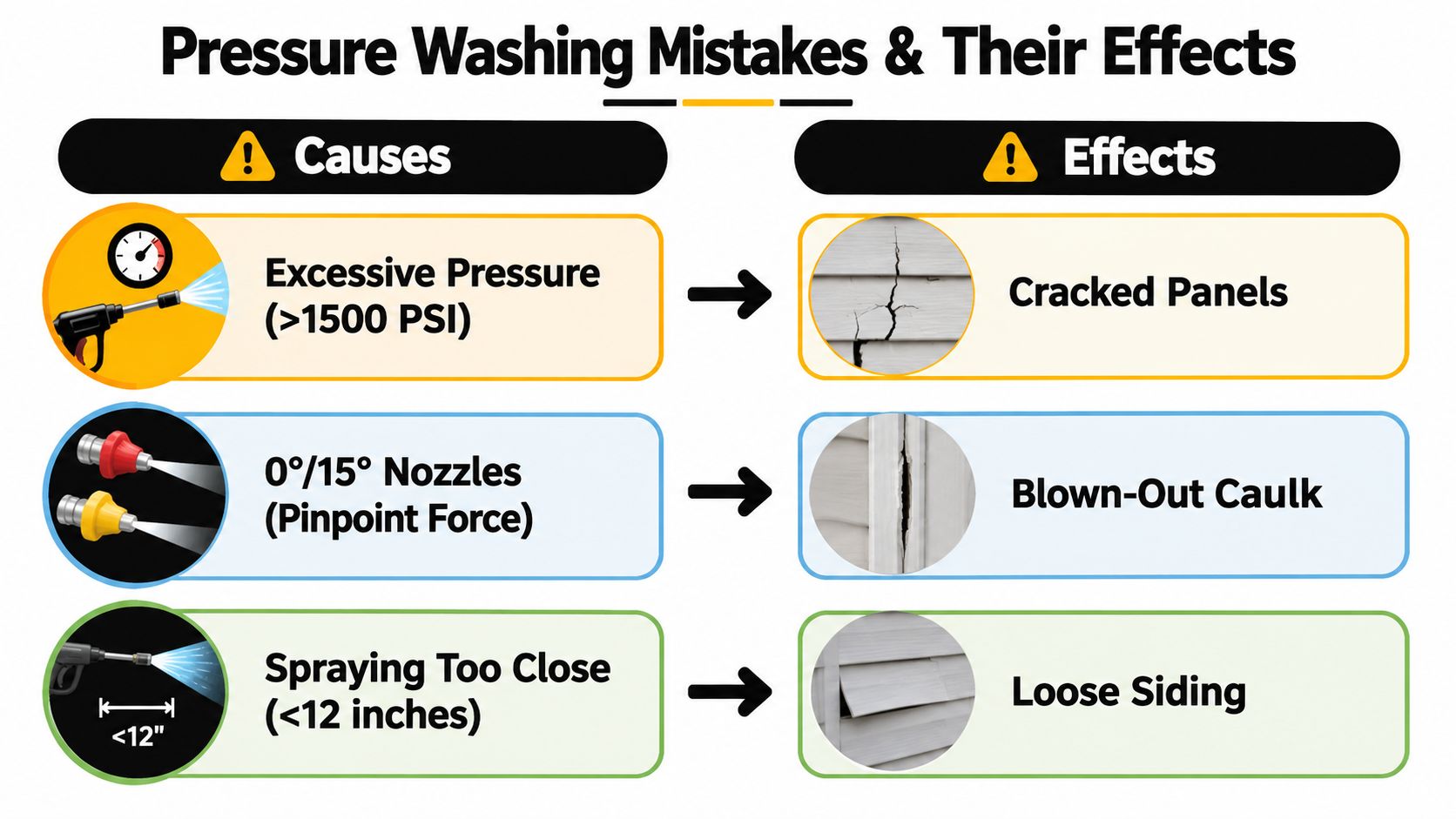
Many residential pressure washers operate between 1,300 and 3,000 PSI, and guidance identifies roughly 1,000 to 1,200 PSI as an upper limit for vinyl in some circumstances. Above about 1,500 PSI, the jet can crack panels, blow out caulk, or drive water behind lap joints, as explained in this vinyl siding pressure washing overview. The exact reading on the machine isn't the only factor. A narrow tip held close can be more damaging than a wide fan used at a safer distance.
Most Common Pressure Washing Damages to Vinyl Siding
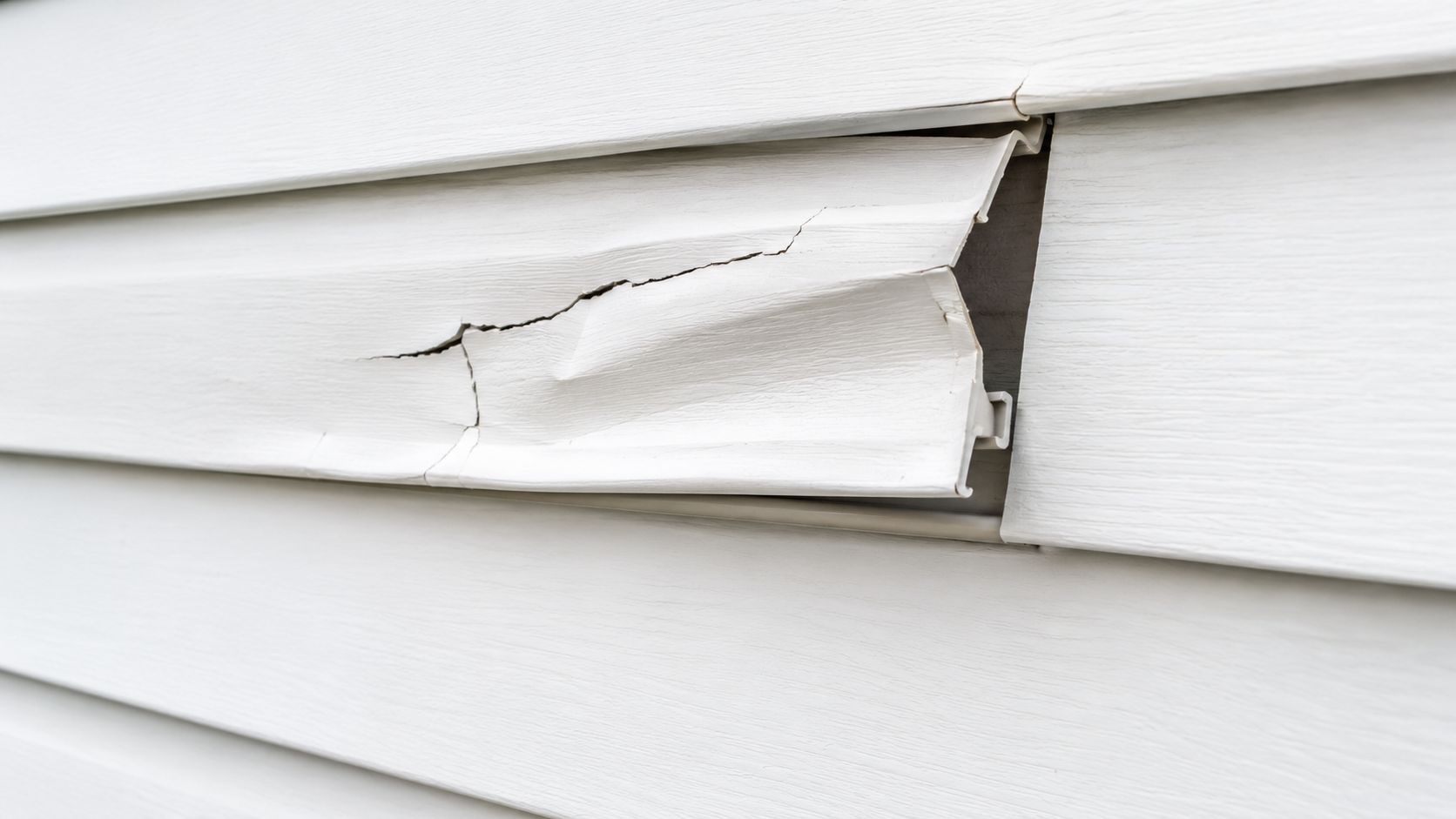
The first signs are often easy to see. A panel may look bowed, a lock may pop loose, or a previously even finish may show a pale, chalky patch. Other damage stays behind the wall, which makes a careful post-wash inspection important.
Visible damage homeowners can spot
Cracked panels may show as hairline fractures, spider cracks, or broken edges around seams. Vinyl can become more brittle in cool conditions, so a burst that only bows a panel in warmer weather may cause cracking when temperatures are lower. Colorado Springs homeowners should pay particular attention after washing during a cool morning or a sudden weather change.
Warped or wavy sections usually indicate that a panel has bowed, softened, or lost its proper position. Stand back and view the wall in changing light. Wavy siding can be easier to see from an angle than straight on.
Loose or popped siding appears when a panel no longer sits evenly in its lock or when a corner, trim piece, or channel has separated. A loose section can let future rain enter more easily, even if the original washing left no obvious stain.
Blown-out caulk and finish damage may appear around windows, doors, vents, and trim. Strong jets can remove caulk, etch the surface, or disturb oxidized finish. The result may be fading, chalking, brittle spots, or a patch that looks different from the surrounding siding.
Hidden moisture needs attention
The more serious problem may not be visible on the exterior. Water driven behind a lap can saturate house wrap, insulation, and sheathing. Hidden moisture can later contribute to mold, rot, or insulation failure, with symptoms such as recurring stains, a musty odor near an outside wall, damp interior trim, or paint that begins to discolor.
Don't assume a clean-looking wall is a dry wall. If stains return in the same place after cleaning, or if a room near the washed exterior develops a musty smell, stop spraying and investigate the source. A siding contractor or qualified building professional may need to inspect the wall assembly before anyone washes it again.
A recurring stain is a clue, not an invitation to use more pressure.
What Causes These Problems With Pressure Nozzles and Technique Mistakes
Vinyl siding usually suffers because of technique, not because the material cannot handle cleaning. Pressure becomes risky when the operator combines a narrow nozzle, short distance, slow movement, or an upward spray angle. Those choices can drive water behind the laps, where the exterior may look clean while moisture begins affecting the wall assembly.
The nozzle concentrates the force
A 0-degree nozzle produces a pinpoint stream. A 15-degree nozzle spreads it slightly, yet can still focus enough force to crack vinyl, damage its finish, or push water behind overlapping panels. A 25-degree or 40-degree fan nozzle creates a broader pattern. Used at least 12 to 18 inches from the wall, it distributes the spray more evenly. This nozzle and distance guidance for vinyl siding explains why a fan pattern is safer than a pinpoint jet.
The machine's pressure setting matters, but the tip controls how that pressure reaches the siding. Even a residential washer can be too aggressive with a narrow nozzle, short standoff, and slow pass.
Angle and distance determine where water goes
Keep the wand straight on or pointed downward. An upward spray can send water into laps, vents, doors, and windows instead of letting those areas shed it. Working too close can bow a panel, strip its finish, disturb caulk, or force water past the overlap.
Keep the wand moving, especially around corners and trim. A concentrated burst in one place can affect the edge, lock, or seal, not just the broad face of the siding. Hidden intrusion may remain unnoticed until mold, rot, or recurring interior dampness appears.
Temperature changes the risk
Vinyl becomes more brittle in cool weather. That can turn temporary flexing into a visible crack when high pressure meets a narrow spray. Cold, aged, cracked, or loose siding calls for extra caution.
Detergent does the loosening so the rinse never has to force water past the laps. A low-pressure application can break down organic buildup before a controlled rinse. This soft-washing versus pressure-washing comparison explains why cleaning solution should handle much of the soil removal instead of brute force.
Homeowners can also review ideas to maintain Cumming home siding, including inspection and controlled exterior care.
Safe Ways to Clean Vinyl Siding Without Causing Damage
A Colorado Springs homeowner may see green film on the north wall and reach for the pressure washer. The safer choice is to let cleaner loosen the buildup first, then use a broad, controlled rinse. Vinyl siding works like overlapping shingles. Water should travel down its face, not behind the laps, so the cleaning technique matters more than brute force.
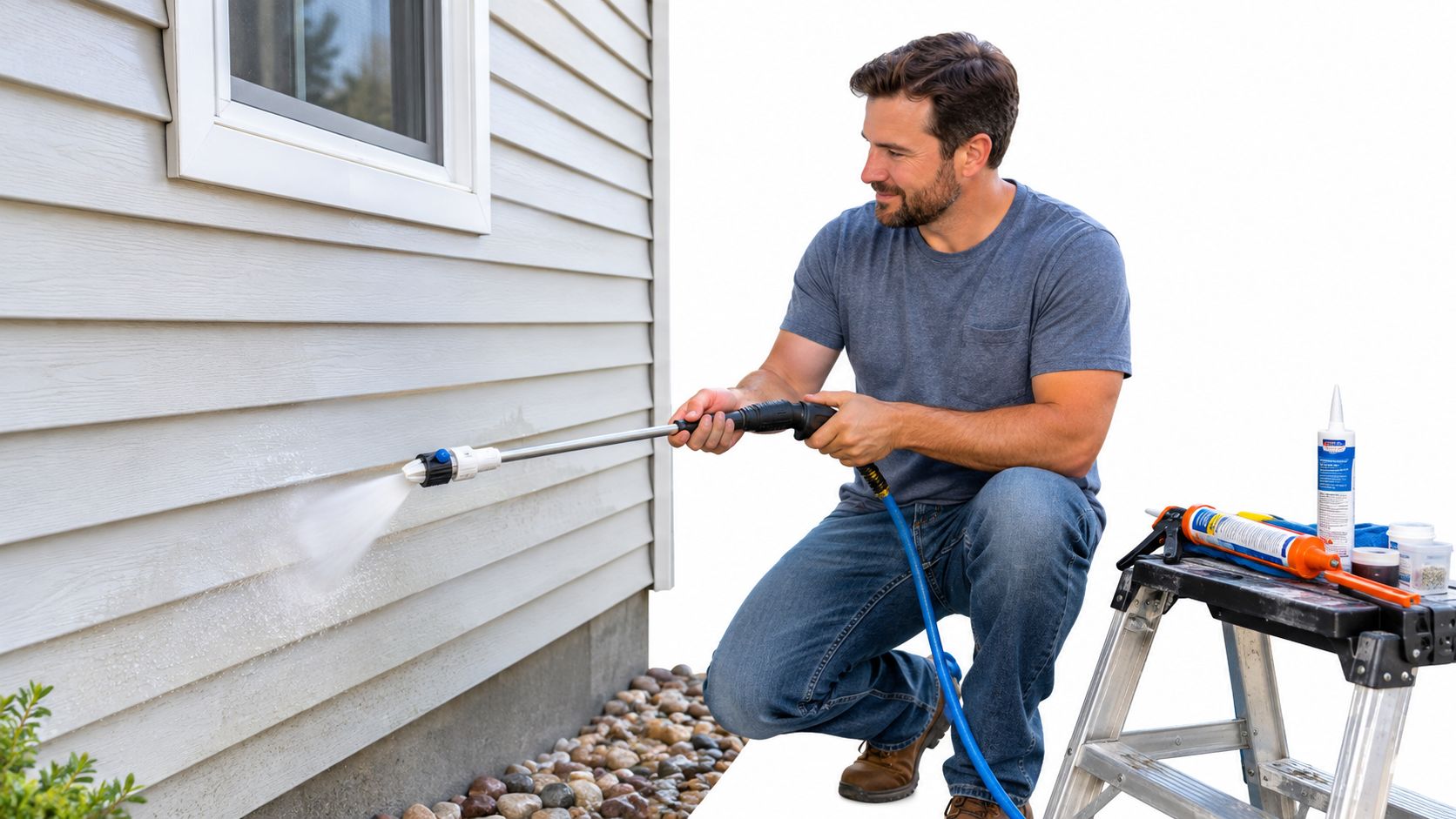
Start with a close inspection. Look for cracked panels, loose locks, open caulk, damaged trim, and gaps around windows or vents. Protect plants and electrical fixtures. Apply a vinyl-safe solution at low pressure, give it time to work according to the product directions, and rinse from the top down with a controlled fan.
A quick settings comparison
| Setting | Safe Approach | Risky Approach |
|---|---|---|
| Pressure | Use a low-pressure soft-wash range, commonly about 40 to 100 PSI, or another controlled setting suited to the surface. See the cleaning guidance. | Use excessive force or treat vinyl like concrete. Pressure that is too high can drive water behind panels. |
| Nozzle | Choose a 25-degree or 40-degree fan nozzle for a wider spray pattern. | Use a 0-degree or 15-degree tip that concentrates force on one small area. |
| Distance | Keep the wand about 12 to 18 inches away and adjust it according to the surface response. Review this operator guidance. | Hold the wand close enough to bow the panel or push water into a seam. |
| Direction | Spray straight on or downward, following the siding's water-shedding design. | Aim upward into laps, under panels, or directly at trim, vents, doors, and windows. |
| Cleaning method | Let mild detergent loosen buildup, then rinse carefully. | Depend on pressure alone to remove every stain. |
What homeowners should protect during washing
Close and check windows before cleaning. Keep spray away from open vents, door seals, light fixtures, outlets, and fragile trim. If exterior window cleaning, screen cleaning, or patio washing is part of the same job, schedule the work so dirty runoff does not land on clean glass.
Low-pressure methods, mild detergents, wide-fan nozzles, downward spraying, and adequate distance all reduce the chance of forcing water behind the cladding. These habits matter because hidden moisture can remain unnoticed until mold, rot, or recurring dampness appears. The central Ohio siding guide offers another example of the same care principles, even though that climate differs from Colorado Springs.
Cultivate House Detailing's guidance on pressure washing for siding is also relevant for homeowners comparing siding-safe exterior cleaning methods. The goal is a clean surface without turning the spray into a source of water intrusion.
Prevention Repair Options and When to Call a Professional in Colorado Springs
Prevention starts with observation. Before seasonal cleaning, walk the perimeter of the home and look for loose panels, cracked edges, open caulk, recurring discoloration, and areas where gutters or downspouts leave the wall wet. A gentle rinse may be reasonable for light dust, but visible defects change the decision.
Match the response to the damage
A small surface mark can sometimes wait for a careful cleaning. A loose panel may need to be resecured before water reaches the wall behind it. A minor crack may require a compatible replacement piece rather than another washing attempt.
More serious signs deserve professional evaluation:
- Warped sections: Don't force a bowed panel back into place with a pressure stream.
- Recurring stains: Look for moisture behind the siding instead of repeatedly treating the surface.
- Musty odors: Check nearby interior walls and trim, then consider an inspection for hidden moisture.
- Mold or rot concerns: Stop washing the area until the wall assembly has been assessed.
- Warranty questions: Review the siding manufacturer's care terms before using high pressure.
Repair work and cleaning aren't the same service. A cleaner can identify vulnerabilities and avoid making them worse, while a qualified siding or building professional may need to handle damaged panels, concealed rot, or mold behind the cladding.
What local professional care should include
A careful Colorado Springs exterior cleaning provider should inspect the surface before starting, select a method appropriate for vinyl, use controlled pressure, and communicate any pre-existing damage. The work should protect windows, screens, trim, landscaping, and exterior fixtures rather than treating every surface the same way.
Cultivate House Detailing serves Colorado Springs and nearby communities with siding pressure washing, residential and commercial window cleaning, screen cleaning, gutter cleaning, and related exterior maintenance. For a homeowner, that can make it practical to address siding and streak-free window cleaning during the same property-care visit, with clear communication from estimate through follow-up.
Protect Your Siding and Keep Your Colorado Springs Home Shining
Most pressure washing vinyl siding problems are preventable. The material is designed to shed water, but the wrong angle can defeat the overlap, a narrow nozzle can concentrate force, and a close spray can turn ordinary cleaning into panel or moisture damage.
A safer plan is straightforward. Inspect first, use cleaning chemistry to loosen buildup, choose a wide fan, keep your distance, spray downward, and stop when the surface shows a vulnerability. If the wall has loose panels, cracks, recurring stains, or signs of moisture, solve that problem before attempting a deeper wash.
Clean siding improves the appearance of a Colorado Springs home, while clean glass brings more natural light indoors and helps maintain curb appeal. Professional residential window cleaning, commercial window cleaning, screen cleaning, track cleaning, and exterior washing can be coordinated around the needs of homes, storefronts, offices, and rental properties in Colorado Springs, Black Forest, Monument, Manitou Springs, and Woodland Park.
You don't need to guess whether a pressure washer is appropriate for your siding. A trained local technician can review the surface, explain the safest option, and help you avoid repeating a mistake that may stay hidden behind the panels.
Cultivate House Detailing offers siding-safe pressure washing, exterior and interior window cleaning, screen cleaning, and related maintenance for homes and businesses in Colorado Springs and nearby communities. Visit Cultivate House Detailing to request a quote or schedule a careful exterior cleaning service before the next wash creates a bigger siding problem.