By late winter in Colorado Springs, a patio can look a lot rougher than you remember. Wind pushes grit into every corner, snowmelt leaves grime behind, and the strong sun seems to highlight every stain once the weather turns nice enough to sit outside again. A lot of homeowners step onto the pavers in spring, look toward Pikes Peak, and realize the patio itself is the one part of the yard that still feels tired.
That's usually when the pressure washer comes out. Sometimes that works. Sometimes it strips out joint sand, leaves wand marks, and turns a straightforward cleanup into a repair project.
Power washing patio pavers isn't just about blasting away dirt. Here in the Front Range, the way you clean matters because our freeze-thaw cycles and dry, windy conditions punish weak joints and exposed edges fast. If you're maintaining a patio in Colorado Springs, Manitou Springs, Monument, Black Forest, or nearby areas, the goal isn't maximum force. The goal is cleaning the surface while protecting the installation underneath.
A well-built hardscape holds up better over time, too. If you're still planning your outdoor space or comparing construction details before you ever wash it, this guide on how to build a durable patio is a useful companion read.
Bringing Your Colorado Patio Back to Life
A common spring scenario goes like this. The furniture is still stacked in the garage, the grill needs to come back out, and the patio has a film of dust with a few dark spots where snow sat longer than it should have. The pavers aren't ruined. They just don't look like a place where you want to spend the evening.
In Colorado Springs, that buildup rarely comes from one source. It's usually a mix of airborne dust, organic residue in shaded corners, runoff from planters, and stains from normal backyard use. South-facing patios often fade and dry out faster. North-facing or partially shaded patios tend to hold moisture longer, which can leave slick patches or darker discoloration.
What homeowners usually notice first
It's not the entire patio that typically draws attention. They notice a handful of specific problems:
- Uneven color: One area looks clean enough, while another looks dingy or blotchy.
- Dark joint lines: The pavers may still be solid, but the spaces between them look dirty or washed out.
- Furniture shadows: Tables, planters, and grills often leave obvious outlines.
- Stubborn stains: Grease, leaf tannins, rust, and mildew don't lift with a quick hose rinse.
Those are the moments when DIY advice online can be misleading. A lot of generic guides act like every paver surface responds well to more pressure. In practice, that's one of the fastest ways to scar the top layer or loosen what's holding the field together.
Clean pavers should still look like pavers when you're done. If they look freshly carved, the pressure was too aggressive.
A patio can absolutely be restored without overdoing it. The catch is that paver cleaning is part surface work, part damage prevention. That second part matters more in Colorado than many homeowners realize.
Preparation and Safety Before You Start
Good paver cleaning starts before water ever hits the surface. The prep work is what keeps a cleaning job from turning into chipped edges, broken fixtures, or soaked landscaping beds.
Inspect the patio like a pro would
Walk the whole area slowly. Look for pavers that rock underfoot, corners that have settled, cracked units, and open joints where sand is already missing. If a paver is loose before washing, pressure won't fix it. It usually makes the problem easier to see and worse to leave alone.
Pay attention to the perimeter, too. Edges are often the first place where instability shows up. If the border is moving, a pressure washer can push debris and water into weak spots and expose more of the issue.
Use a broom first. Remove leaves, twigs, dirt piles, and anything loose on top of the patio. If you skip this step, the washer turns dry debris into muddy slurry and drives it into corners and joints.
Protect what surrounds the pavers
Paver patios rarely sit in isolation. They're close to siding, deck posts, outlet covers, windows, screen doors, planters, and irrigation components. Before you start, move furniture and lightweight décor out of the way and cover vulnerable items that shouldn't take direct spray.
A few areas deserve extra attention:
- Glass nearby: Overspray can throw grit against lower windows and doors.
- Plants and mulch beds: Dirty runoff can bury low plantings or spread cleaner where you don't want it.
- Electrical points: Keep outlets, string light connections, and low-voltage fixtures protected.
- Grill zones: Grease-heavy areas may need separate pretreatment before washing starts.
Wear the right gear
Pressure washing feels familiar enough that many people treat it casually. That's a mistake. Water under pressure can bounce debris back at your face, make surfaces slick, and tire your hands and shoulders faster than expected.
Use basic protective gear every time:
- Safety glasses: They keep grit and sand out of your eyes.
- Closed-toe shoes with traction: Wet pavers can get slippery fast.
- Hearing protection: Gas-powered units are loud enough to wear you down.
- Work gloves: They help with grip and reduce hand fatigue.
Practical rule: If you wouldn't kneel in front of the spray, don't let the wand sweep carelessly across your legs, windows, or flower beds either.
The right mindset helps here. Paver washing isn't brute force. It's controlled cleaning with a margin for error that gets smaller when the surface is older, softer, or already losing joint material.
Choosing Your Pressure Washer Settings and Nozzle
Most DIY damage happens before the first full pass. It happens when the machine is set too aggressively or when the wrong nozzle goes on the wand.
The setting range that protects most pavers
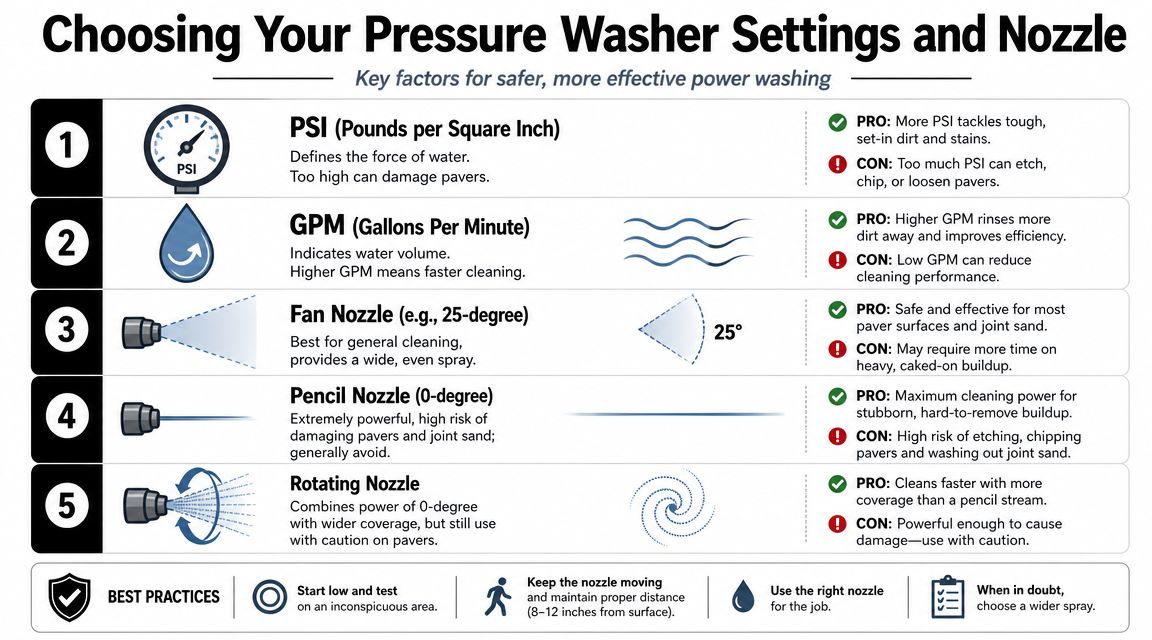
For most pavers, the commonly cited safe cleaning range is 1,000 to 1,500 PSI, and going over 1,500 PSI can increase the risk of surface damage or joint-sand loss, according to guidance on pressure washing pavers safely. That same guidance recommends a 25° to 40° fan-tip nozzle instead of a pinpoint 0° tip.
That range matters because pavers don't need extreme force to get clean. Dirt, algae, and surface film usually release with the right angle, enough water flow, and a consistent pass. Excess pressure tends to remove material you wanted to keep.
PSI versus GPM
Homeowners often focus only on PSI. That's understandable, but it's only part of the picture.
| Term | What it affects | Why it matters on pavers |
|---|---|---|
| PSI | Water force | Too much force can etch the face and blow out joints |
| GPM | Water volume | Better flow helps rinse soil away more evenly |
| Nozzle pattern | Spray width | Wider fans reduce concentrated damage |
A machine with moderate pressure and a wide fan tip usually gives you more control than a machine set to hit as hard as possible.
Nozzle choice is where patios get ruined
The nozzle determines how concentrated the spray is when it hits the surface. A narrow tip takes all that force and compresses it into a much tighter stream. On pavers, that's risky.
Use this simple comparison:
- 25° fan tip: Good all-around choice for general paver cleaning
- 40° fan tip: Gentler option for lighter buildup or more delicate surfaces
- 0° tip: Avoid it on pavers unless you enjoy repair bills
- Rotary or turbo nozzle: Use extreme caution, if at all, because it can still behave aggressively on softer surfaces and open joints
A 0° tip can leave visible lines almost immediately. Even if the patio looks clean at first glance, you may have etched the top surface enough that it weathers unevenly later.
Test before you commit to the full patio
Start in a less visible corner with the lowest effective pressure. Watch what happens to the face of the paver and the joint material around it. If sand is moving or the color is changing in a way that looks raw instead of clean, stop and adjust.
For a broader look at how pressure, surface type, and technique interact on hardscapes, this guide on pressure washing a concrete patio is also helpful. Concrete and pavers aren't identical, but the lesson is the same. The wrong setup does damage fast.
The Correct Technique for a Streak-Free Finish
Technique is what separates a clean patio from one with obvious stripes, patchy color, and empty joints. Even with the right machine and nozzle, careless movement can leave a finish that looks worse once the surface dries.
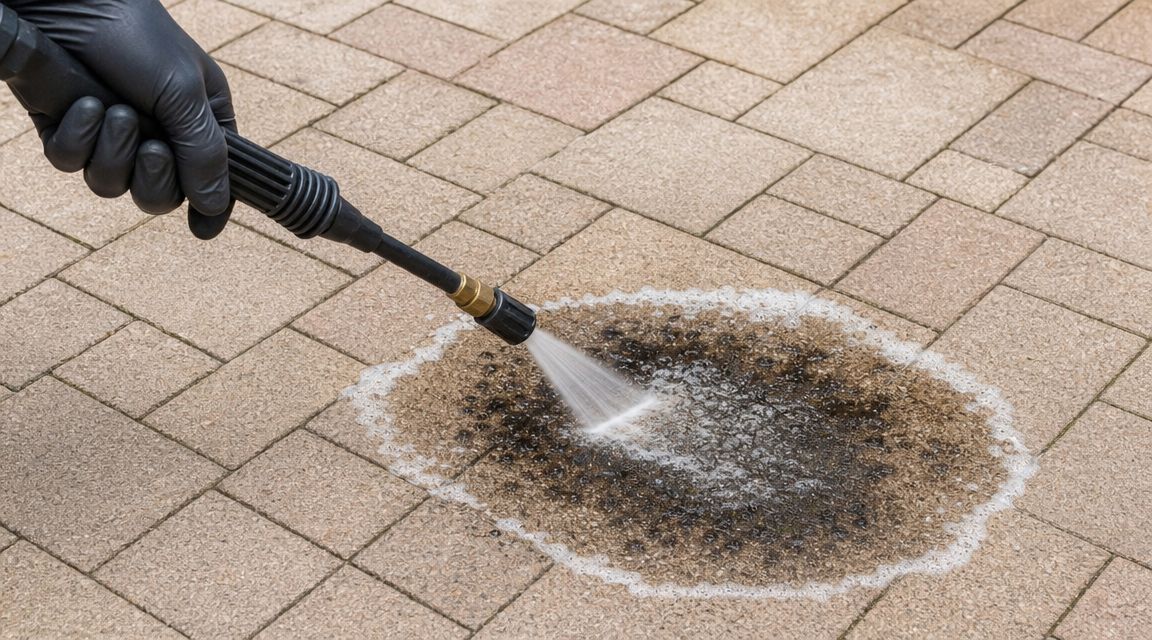
For patio pavers, a practical low-damage workflow is to clear loose debris, pre-treat stubborn stains, start at the lowest pressure setting, work from one corner in a systematic pattern, keep the nozzle about 45 degrees to the surface, and finish with a clean-water rinse, as outlined in this guide to pressure washing a patio without removing sand.
Start with the stains, not the whole field
If there's grease under a grill, rust near metal furniture, or a dark patch where organic matter sat all winter, don't assume pressure alone should solve it. Pretreat the trouble spots first with a paver-appropriate cleaner, then give that product time to work according to its label.
This does two things. It reduces the temptation to overwork a single area with the wand, and it helps the rest of the patio clean more evenly.
Keep your passes controlled
A good wash pattern is boring to watch. That's usually a sign it's being done right.
Work from one corner and move in a steady, overlapping pattern. Don't jump around the patio. Don't chase one dark spot, then another, then another. Inconsistent movement is what creates zebra striping.
A few habits help:
- Hold a consistent angle. The spray should hit at roughly a 45-degree angle rather than straight down into the joints.
- Keep a steady distance. If your hand drifts closer and farther every few seconds, the finish will show it.
- Overlap each pass slightly. That keeps the cleaned path even across the field.
- Move at a uniform pace. Slowing down too long in one section can leave a lighter streak.
The best-looking patio wash is almost mechanical. Same pace, same arc, same overlap.
Rinse with purpose
After washing, rinse the loosened soil off the surface completely. If muddy residue settles back into the texture of the paver, the patio can dry with a dusty haze or dirty edges near the joints.
This short visual gives a good sense of wand control and pass consistency in action:
What doesn't work
A few common DIY habits almost always create problems:
- Holding the wand in one place: This can scar the surface fast.
- Spraying directly into joints: That strips stabilizing material where you need it most.
- Cleaning only the visibly dirty spots: The patio dries blotchy.
- Trying to finish too quickly: Speed usually shows up as uneven passes and missed rinse water.
If your patio has multiple stain types, mixed paver textures, or areas that stay damp longer than others, expect to adjust your pace. Streak-free work depends on consistency, but consistency doesn't mean rushing. It means using the same disciplined method across the whole surface.
Managing Joint Sand in Colorado's Climate
The most overlooked part of power washing patio pavers isn't the visible surface. It's the material between them.
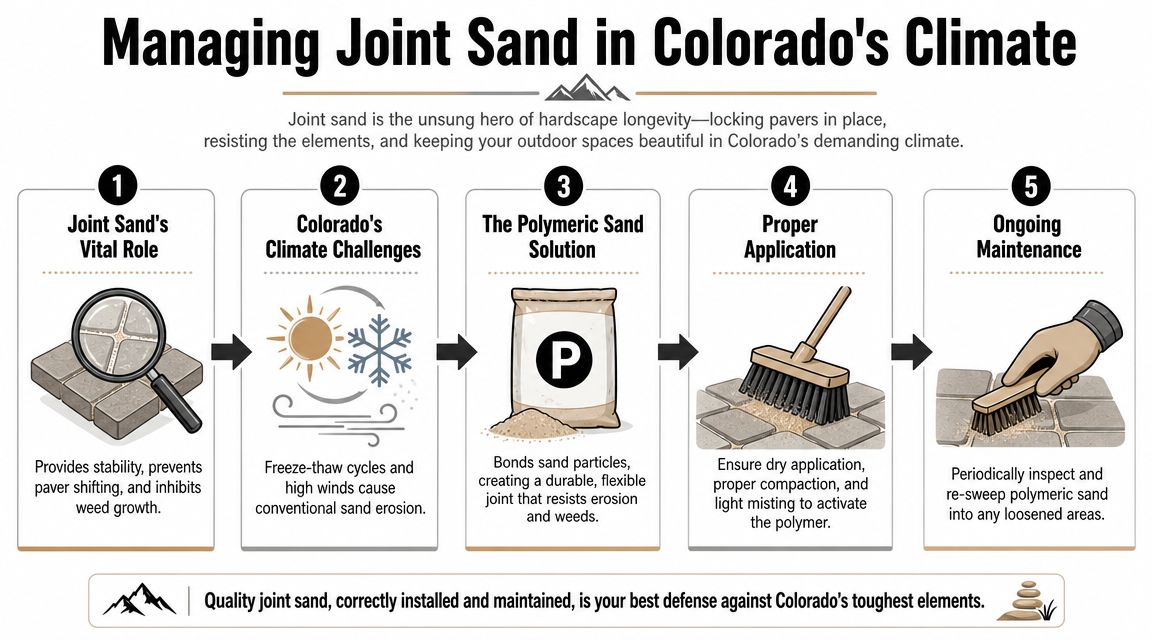
Joint sand does real work. It helps lock the pavers together, limits shifting, and reduces open gaps where weeds and debris can collect. When that sand gets washed out, the patio may still look acceptable for a while, but it becomes more vulnerable.
That's especially important here. A key question many homeowners should ask first is whether pressure washing is even the right starting point, because high pressure can erode paver surfaces and strip joint sand. That matters even more in freeze-thaw climates like Colorado Springs, where joint sand loss can destabilize pavers and increase maintenance needs, as noted in this article on cleaning pavers without damaging the surface.
Why Colorado makes sand loss a bigger problem
Once joint spaces open up, water has more room to move into the system. In a climate with repeated freezing and thawing, that can lead to small shifts becoming larger ones over time. Add dry wind, intense sun, and seasonal moisture swings, and the patio starts to age unevenly.
That's why a patio can look freshly washed in June and show movement later if the cleaning stripped more sand than the owner realized.
Know when less cleaning is the smarter choice
Not every patio needs pressure washing first. Sometimes a broom, hose, or detergent scrub is the lower-risk option, especially if:
- The pavers are older and the surface already looks worn
- The joints are shallow or visibly underfilled
- The buildup is light and mostly on the surface
- The patio has recent movement or rocking pavers
If the dirt is cosmetic but the joints are vulnerable, aggressive washing solves the smaller problem and creates the larger one.
After washing, inspect the joints before you call it finished
Look closely once the patio dries. Are the joints still filled adequately, or do you see gaps and low spots? If the sand level dropped, the job isn't done. Refill and stabilize the joints before heavy use or the next stretch of weather exposure.
Polymeric sand is often the better repair choice for many paver systems because it's designed to bind more firmly than loose dry sand when installed correctly. The application still has to be done carefully. The surface needs to be clean and dry enough for placement, the joints need to be filled properly, and activation with water has to be controlled so the material cures as intended.
This part isn't glamorous, but it protects the whole patio. The clean look people want from washing lasts longer when the joints are restored instead of ignored.
Sealing and Maintaining Your Clean Pavers
A freshly washed patio looks good for a short time on appearance alone. Sealing is what helps that cleanup hold up.
Why sealing matters after cleaning
Colorado is hard on exterior surfaces. Intense sun, blowing dust, snowmelt, and temperature swings all work against pavers and joint material. A quality sealer can help reduce how quickly the surface takes on new staining, make routine cleanup easier, and support the sand between joints once that system has been restored.
For homeowners thinking about exterior protection more broadly, it can help to compare how different surface coatings are priced and maintained. This overview of average sealcoating prices is useful context when you're evaluating long-term maintenance costs across driveways, patios, and other hardscape surfaces.
Two goals matter most
On pavers, sealing usually serves two practical purposes:
- Surface protection: It helps the patio resist everyday grime, spills, and UV exposure more gracefully.
- Joint support: It can help preserve the integrity of properly installed joint sand so the field stays tighter over time.
Not every patio needs the same type of sealer. Some homeowners prefer a more natural-looking finish, while others want enhanced color. The right choice depends on the paver material, the existing condition, and whether the patio has already been sealed before.
Keep maintenance simple
Once the patio is clean and protected, the best maintenance plan is usually the least dramatic one. Sweep regularly, rinse off seasonal dust, spot-treat problem stains early, and avoid treating every bit of dirt like a reason to bring out high pressure.
Many patios can be kept in good shape with light maintenance between more involved cleanings. That approach protects the finish and reduces the odds of unnecessary wear.
When to Hire a Professional in Colorado Springs
By the time most homeowners work through the prep, test the settings, clean carefully, inspect for joint loss, and think about resealing, the DIY version starts to look less simple than it did at the beginning.
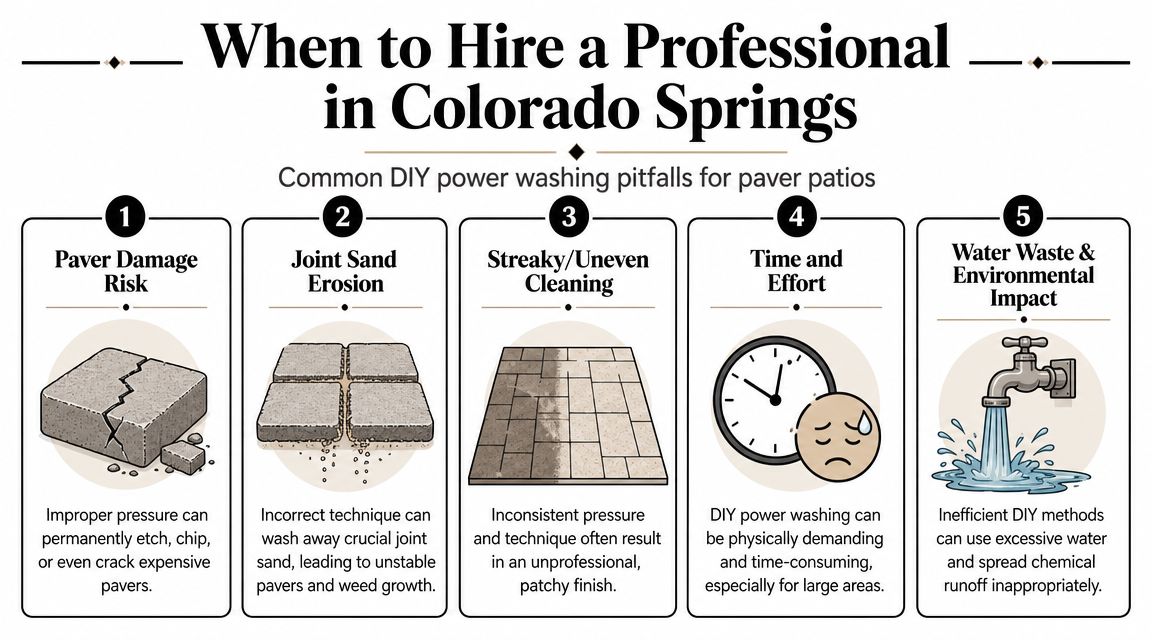
A professional is usually the better call when the patio has stubborn staining, existing joint issues, older pavers, uneven settling, or a finish that you don't want to risk scarring. It also makes sense when you don't want to spend your weekend learning by trial and error on an expensive hardscape surface.
The cost is often more approachable than people expect
Professional patio pressure washing is commonly priced at $0.10 to $0.50 per square foot, with total project costs for brick or paver patios averaging $210 to $250, according to Angi's patio power washing cost guide. That same pricing context makes it easier for a homeowner with a 400-square-foot patio to estimate what a reasonable quote should look like.
That matters because DIY costs don't stop at equipment access. There's also the value of your time, the risk of visible mistakes, and the chance that blown-out joints create another maintenance task right after the cleaning is done.
Situations where hiring out makes sense fast
A few cases usually justify calling in help right away:
- Deep stains that won't lift easily: Oil, rust, and mineral-related residue often need more than pressure.
- Joint sand already failing: Cleaning without a restoration plan can make the field less stable.
- Large patios or mixed surfaces: Consistency gets harder as the footprint and material variety increase.
- Nearby glass, landscaping, or drainage concerns: The margin for error gets tighter.
If you're comparing service options locally, Colorado pressure washing services can give you a sense of what's typically included for exterior surface cleaning in this area. Cultivate House Detailing is one local option for patio and hardscape washing in Colorado Springs and nearby communities.
A professional wash should leave the patio cleaner, not weaker.
For many homeowners, that's the key decision point. If the project can be done safely with light cleaning, careful settings, and no collateral damage, DIY may be fine. If the patio is a meaningful investment and the risks are easy to trigger, professional cleaning is often the smarter way to protect it.
If your patio pavers need more than a quick rinse, Cultivate House Detailing can help you clean them carefully and protect the surface you've already invested in. Reach out for a quote if you're in Colorado Springs or a nearby community and want a practical recommendation on whether your patio needs light cleaning, full power washing, joint-sand attention, or follow-up sealing.
Looking for a professional to take care of it? Cultivate House Detailing offers pressure washing in Colorado Springs. Get a free quote.