Your patio usually doesn't get dirty all at once. In Colorado Springs, it happens a little at a time. Wind pushes dust into the corners. Afternoon storms leave runoff lines across the surface. Pollen settles in the spring, and outdoor meals leave behind grease spots and drink rings that don't rinse away on their own.
A lot of homeowners start noticing it when they walk outside with coffee and realize the space feels dull instead of relaxing. The furniture is fine. The view is still there. But the concrete, pavers, or stone underfoot looks tired, and in some spots it may even feel slick.
That's usually when customers look for patio cleaning near me. They're not just looking for someone with a pressure washer. They want the patio cleaned correctly, without etching the surface, stripping sealant, or leaving uneven lines behind. That's the significant difference between a quick blast and professional exterior cleaning.
Enjoy Your Colorado Patio Again
One of the most common situations around Colorado Springs looks like this. A homeowner gets the backyard set up for the season, wipes down the chairs, uncovers the grill, and then notices the patio itself is the one thing making the whole space look neglected. The surface has dark patches from moisture, dust packed into texture lines, and a general film that doesn't come off with a hose.
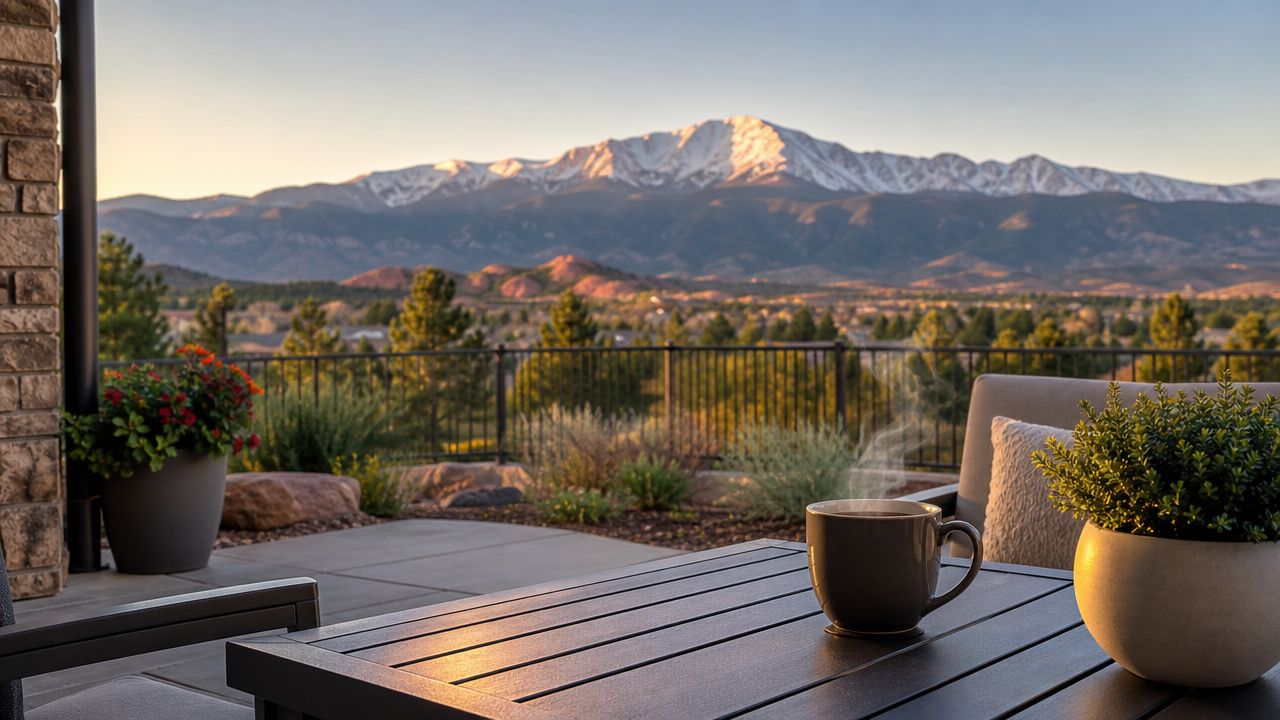
That's frustrating because patios are meant to be used. They're where people in Colorado Springs start slow mornings, host family dinners, and spend cool evenings outside after the sun drops. When the surface looks stained or feels grimy, people avoid the space instead of enjoying it.
What local weather does to a patio
Colorado's climate is hard on outdoor surfaces in a very specific way. It isn't just one problem.
- Wind-blown dust: Fine dirt settles into concrete pores, paver joints, and textured finishes.
- Sudden moisture: Storms can leave behind dark organic buildup in shaded sections.
- Strong sun: Residue and dirty rinse lines often become more visible after the surface dries.
- Seasonal use: Grills, planters, furniture legs, and foot traffic create spotty wear patterns.
Homeowners also make changes to their outdoor spaces over time. If you've added shade, screens, or dividers for privacy, cleaning needs can change too. Some people looking at patio upgrades also like ideas such as Sunbelly privacy screens Ottawa, especially when they want a backyard that feels more comfortable and finished.
A patio doesn't need to be ruined to need professional cleaning. It just needs enough buildup that normal rinsing stops working.
The goal isn't just a cleaner surface
A proper patio cleaning should do three things at once. It should remove the grime you can see, deal with the slick organic growth you may not notice until the surface is wet, and protect the material so it still looks right after the job is done.
That last part matters most. Concrete, pavers, and natural stone don't all respond the same way to pressure. A patio can look dirty one day and damaged the next if the cleaning method doesn't match the surface.
Pressure Washing vs Soft Washing for Patios
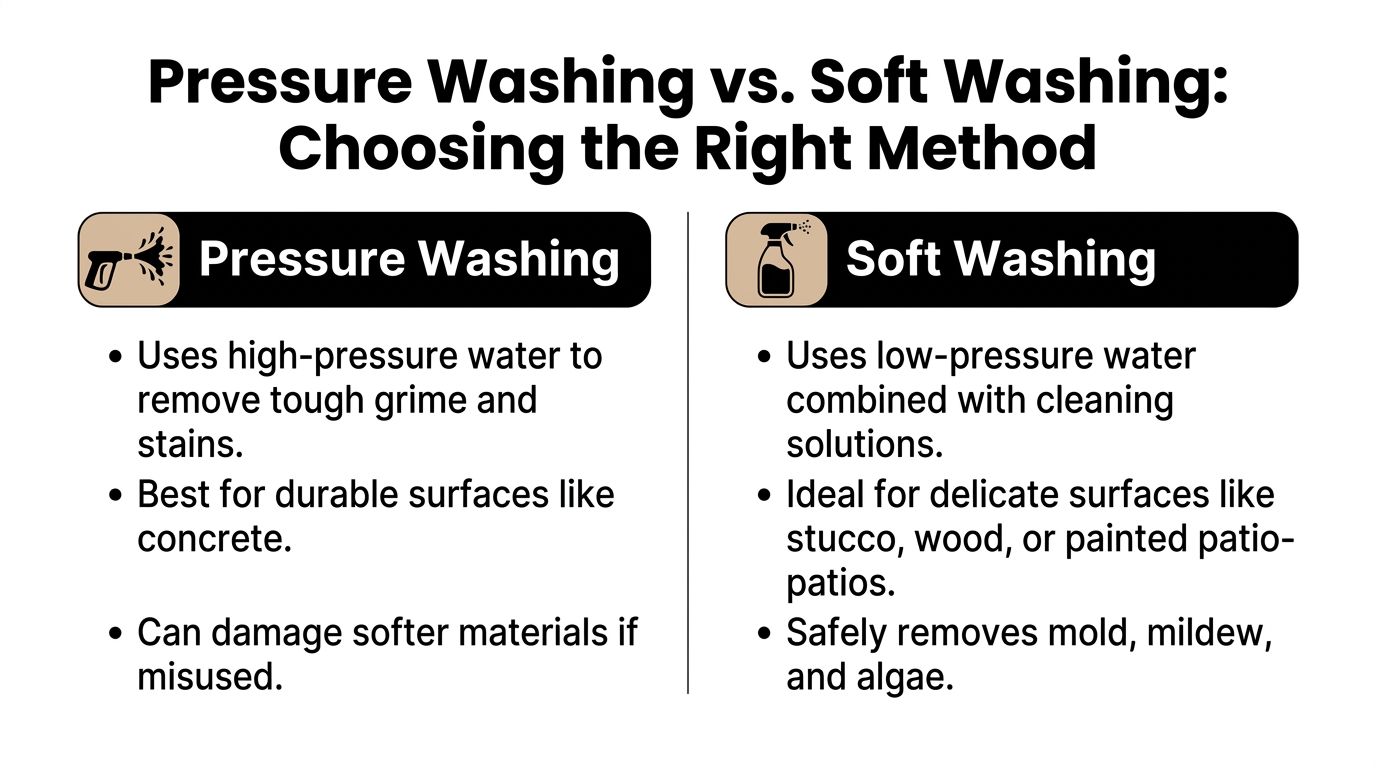
Not every patio should be cleaned the same way. That's where many homeowners get bad advice. They assume more pressure means a better result, but the opposite is often true on decorative or more delicate materials.
Professional guidance has pointed out that a major gap in patio cleaning advice is explaining when not to use pressure washing, because the wrong pressure on the wrong surface can lead to pitting, etched stone, or stripped sealants, especially on mixed-material patios (vegaswash.com).
What pressure washing does well
Pressure washing uses force to break loose built-up grime. On the right surface, it works very well.
Concrete is the usual example. Standard poured concrete can handle more aggressive cleaning than many other patio materials, especially when the operator uses a professional surface cleaner instead of a narrow spray pattern. If your patio is plain concrete with embedded dirt, dark traffic lanes, or weather staining, pressure washing is often the right starting point.
For homeowners comparing methods on this material, this guide on how to pressure wash a concrete patio is helpful because it shows why equipment choice and technique matter just as much as raw pressure.
Practical rule: If the surface is durable but the finish matters, controlled cleaning beats aggressive cleaning every time.
Where soft washing is the safer choice
Soft washing uses lower pressure and cleaning solutions to loosen and remove buildup without relying on force alone. That makes it a better fit when the patio material can be marked, scarred, or stripped.
Think about these common cases:
| Patio material | Usually the safer approach | Why |
|---|---|---|
| Concrete | Pressure washing with the right setup | Durable surface that responds well to even cleaning |
| Stamped concrete | Lower-pressure approach with care | Decorative finish can be scarred or lose visual definition |
| Pavers | Controlled washing, often with lower pressure | Too much force can disturb joint material or affect sealant |
| Flagstone and natural stone | Soft washing or very cautious cleaning | Some stone surfaces can etch or roughen |
| Wood patio surfaces | Soft washing | High pressure can fur, gouge, or splinter wood |
| Composite decking near patios | Soft washing | Surface can streak or abrade if over-pressurized |
The biggest mistake homeowners make
The mistake isn't cleaning the patio. It's assuming one machine setting works for everything in the backyard.
A mixed outdoor space might have a concrete pad, a border of pavers, nearby stone caps, painted vertical surfaces, and wood furniture feet sitting on all of it. That's not a job for guesswork. It requires changing tools, adjusting pressure, choosing the right cleaner, and knowing when to stop forcing the issue.
In practical terms, if your patio has decorative texture, joint sand, sealant, softer stone, or older surfaces, don't judge the method by how dramatic it looks while water is spraying. Judge it by how the material looks after it dries.
Our Professional Patio Cleaning Process
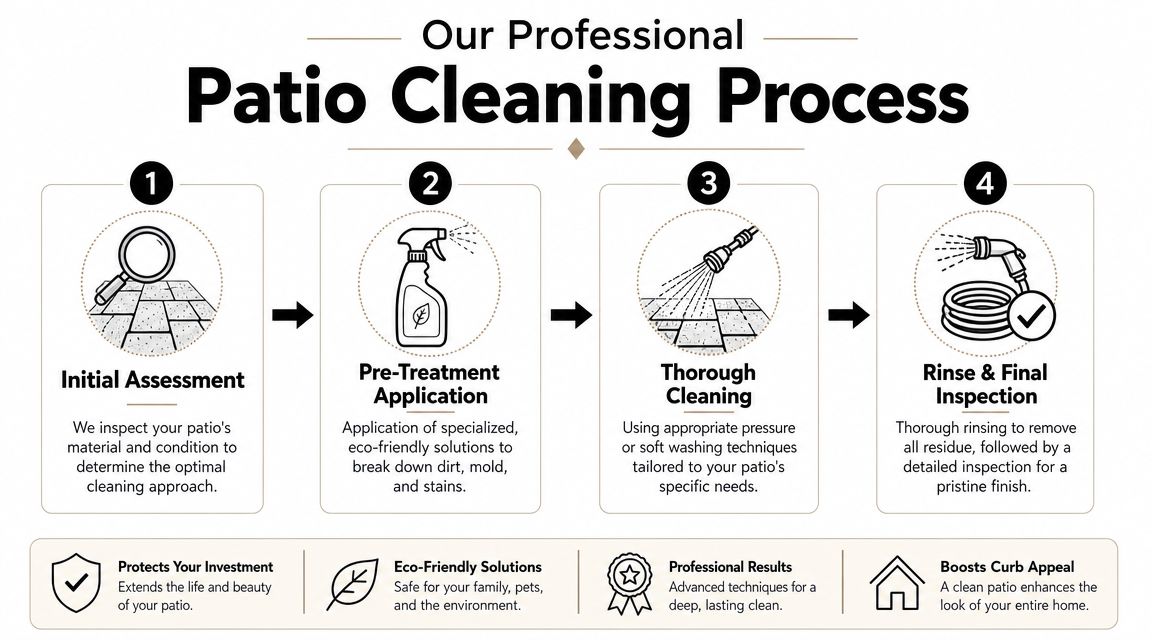
A good patio cleaning job should feel organized from the first conversation to the final rinse. Most homeowners don't want a long technical explanation. They want to know what's happening on their property, what will be protected, and whether the finish will be clean and even when everything dries.
It starts with the surface, not the machine
Before any cleaning begins, the patio needs a material check. Concrete, pavers, natural stone, and stamped finishes each need a different approach. The condition matters too. A newer sealed patio calls for different handling than an older surface with deep staining and exposed wear.
That's where a service like Cultivate House Detailing fits in. They provide pressure washing for patios and other exterior surfaces in Colorado Springs, which makes the initial assessment important because the right process depends on the patio itself, not a one-method routine.
The cleaning sequence that actually works
For concrete, the technically correct sequence is to pre-wet the surface, apply a cleaner made for concrete or patios, agitate it with a stiff-bristle brush, and rinse until all residue is removed, because leftover cleaner can leave a streaky or slippery film and should be fully gone before the area goes back into use (Lowe's concrete patio cleaning guidance).
Here's what that looks like in practice:
Initial walkthrough
The surface is inspected for material type, staining, drainage patterns, edges, and anything nearby that needs protection.Site prep
Furniture is moved if needed, loose debris is cleared, and surrounding areas are noted so runoff and splash are controlled.Pre-wetting and treatment
The patio is wetted first, then the appropriate cleaner is applied. On surfaces that need agitation, a deck brush or similar tool helps break loose embedded dirt.Even cleaning and thorough rinse
The patio is cleaned with the right pressure or soft washing method, then rinsed completely so no film is left behind.
Residue is one of the most overlooked parts of patio cleaning. A patio can look clean while it's wet and still dry with haze if detergent wasn't fully removed.
A short visual example helps homeowners understand what proper technique looks like in the field.
What homeowners should expect on service day
The best patio cleaning appointments are simple. You should know when the crew is arriving, whether access is needed through a gate, what needs to be moved, and how long the surface should stay clear afterward.
A careful final check matters too. That's when uneven spots, remaining organic growth, and rinse quality are easiest to catch. If a contractor rushes out before the surface settles and dries properly, that's often when details get missed.
Benefits of a Professionally Cleaned Patio
A clean patio looks better, but appearance is only part of the value. Most homeowners notice the visual change first. The more important benefits show up in safety, maintenance, and how often the space gets used.
Better footing and a safer surface
Outdoor buildup isn't always dramatic. Sometimes it's a thin layer of organic growth or grime that only feels slippery after rain, sprinklers, or morning moisture. Cleaning that off gives the patio more reliable footing for kids, guests, and anyone carrying food or furniture across the yard.
Less wear on the material
Patio surfaces last longer when dirt, residue, and growth aren't left to sit season after season. Concrete can hold grime in its pores. Pavers collect buildup along the edges and joints. Stone can lose its clean, natural appearance when deposits keep accumulating.
If your patio includes a deck transition, steps, railing hardware, or attached wood features, maintenance should include those details too. Homeowners who like checking accessories and repair items can also browse hardware for deck maintenance to think through the parts of the outdoor area that often get ignored until something loosens or rusts.
A patio usually feels newer after cleaning because the surface texture comes back. Dirt tends to flatten the look of everything.
More use from the space you already have
This is the lifestyle benefit people underestimate. Once the patio is clean, it becomes part of the house again.
You notice it when you stop avoiding that one corner with the dark stain. You notice it when guests step outside and the whole backyard feels cared for. In Colorado Springs, where people try to take advantage of cool mornings and long evenings outdoors, a clean patio gets used more often and with less hesitation.
Patio Cleaning Costs and Service Areas in Colorado Springs
You get one quote for a small concrete patio and another for a paver patio of similar size, and the numbers are not close. That usually comes down to method, prep, and surface condition, not random pricing.
Patio cleaning costs in Colorado Springs are shaped by the material underfoot and the work needed to clean it correctly. A concrete slab with light surface dirt is usually more straightforward than pavers with weed growth in the joints or natural stone that needs lower pressure and more care. The cheapest quote is not always the best value if it skips prep, uses too much pressure, or treats every patio the same.

Why one patio quote can differ from another
Square footage matters, but it is only part of the price. Other variables show up once the surface is inspected.
Here are the factors that usually change a patio cleaning quote:
- Material type: Concrete, stamped concrete, pavers, and natural stone each need a different cleaning approach.
- Level of buildup: Dust and normal weathering clean up faster than grease spots, rust marks, black algae, or heavy organic staining.
- Cleaning method: Some patios can handle surface cleaning with pressure. Others need soft washing, specialty treatment, or a combination of both.
- Access and setup: Gates, elevation changes, hose runs, and limited work space affect labor time.
- Prep work: Moving furniture, protecting nearby surfaces, and managing runoff all add time.
- Add-on work: Joint sand replacement for pavers, sealing prep, steps, walkways, and connecting hardscape can change the scope.
Homeowners comparing full exterior options can also review our pressure washing services in Colorado Springs to see how patio cleaning fits into a larger maintenance plan.
A good estimate should reflect those differences. If a contractor gives the same price and the same method for concrete, pavers, and stone, that is usually a sign they are pricing fast, not pricing carefully.
Service areas around Colorado Springs
Local experience matters here because patios in this area take a beating from windblown dust, strong sun, spring runoff, and freeze-thaw cycles. Crews who clean hardscapes around Colorado Springs see the same patterns over and over, from shaded paver patios on the north side to exposed concrete in the Broadmoor area and foothill properties with mixed stone surfaces.
Common service areas include:
- Central Colorado Springs: Downtown, Old Colorado City, Patty Jewett, and the Broadmoor area
- North and northeast communities: Briargate, Northgate, Black Forest, and Monument
- West side and mountain-adjacent areas: Manitou Springs and Woodland Park
If your neighborhood is nearby but not listed, it is still worth asking. Service range often depends on route scheduling, project size, and whether the job is a patio-only visit or part of a larger exterior cleaning appointment.
Your Patio Cleaning Questions Answered
You notice it when the grill comes out and the patio still looks dingy after a quick hose-off. The surface may even feel a little slick in the morning shade. At that point, a few smart questions usually come up before booking service.
How often should a patio be professionally cleaned
That depends on the material, the amount of shade, and how the patio drains. Concrete in full sun often stays cleaner longer than pavers under trees or natural stone near irrigated beds. In Colorado Springs, windblown dust, cottonwood debris, and freeze-thaw grime also shorten the gap between cleanings.
A good rule is to pay attention to what the surface is doing, not just the calendar. If the color looks uneven, dark spots keep coming back, or the patio stays slippery when damp, it is time to have it cleaned with the right method for that surface.
Do I need to be home during the service
Not always. Many jobs can be handled while you are away if access is clear and the scope has been agreed on ahead of time.
What helps most is simple prep. Open gates, secure pets, and move anything fragile or anything you do not want exposed to overspray. If there are problem spots you want addressed, such as grease near the grill or runoff staining along one edge, point those out before the appointment so the crew knows where to focus.
Is the process safe for plants and pets
It should be, if the contractor knows how to control water, runoff, and pressure. The method matters here. Concrete can usually handle more force than sandstone, older mortar joints, or some decorative pavers, which may need a softer approach and more attention to surrounding areas.
Plants, grass borders, and pet areas should be part of the plan before cleaning starts. A careful crew pre-wets sensitive landscaping when needed, avoids blasting soil out of joints, and fully rinses the patio before normal use resumes. If your dog uses that part of the yard every day, say so up front.
What should I expect to pay
Pricing varies with size, buildup, access, and patio material. A straightforward concrete slab usually prices differently than a paver patio that needs joint sand touched up after cleaning, or a stone patio that calls for lower pressure and slower detail work.
If you already read the cost section above, the same principle applies here. Quotes make more sense when they match the surface and the labor involved, not when every patio gets the same flat method and the same sales pitch.
When you compare estimates, ask what the crew is actually doing. Surface prep, stain treatment, protection for nearby plants, rinse quality, and whether the method fits concrete, pavers, or stone all affect the result.
If your patio has started looking weathered, slick, or harder to use, get it looked at before the buildup settles in deeper. Cultivate House Detailing serves Colorado Springs and nearby communities with exterior cleaning that matches the surface instead of treating every patio the same. Request a quote, mention your patio material, and get a clear recommendation on whether pressure washing or soft washing makes more sense for your space.
Need it done properly the first time? Cultivate House Detailing offers pressure washing in Colorado Springs. Get a free quote.