You clean the glass, step back, and somehow the windows look worse. The smudges catch the afternoon light, the lower panes show a hazy film, and the view you wanted of Pikes Peak feels muted instead of sharp. That’s a familiar weekend project in Colorado Springs.
A lot of homeowners search for the best streak free window cleaner expecting the answer to be one bottle. In practice, streak-free results come from the right cleaner, the right water, the right tools, and timing that works with our local conditions. Colorado Springs windows deal with intense sun, mineral-heavy water, wind-blown dust, and seasonal buildup that can turn a simple wipe-down into a streak factory.
For homes and businesses around Colorado Springs, CO, the cleaner matters. The method matters more. If you’re comparing DIY window washing to professional window cleaning, this guide will show you what is effective, what usually fails, and when it makes sense to call for help with residential window cleaning or commercial window cleaning.
The Frustration of Streaky Windows in Colorado Springs
A homeowner in Colorado Springs will often do everything that sounds right. Spray the glass. Wipe with paper towels. Buff a little harder where the streaks show. Then the sun shifts, and every pass lights up on the pane.
That frustration gets worse when the view is the whole point. You want clean glass framing the Front Range, not a layer of swirls and dried drips. It’s even more annoying after you’ve already spent half a Saturday moving furniture, popping screens, and climbing around flower beds just to reach the exterior window cleaning side.
Why good effort still gives bad results
Most streak problems start before the glass is even touched. Dust sits in the frame, pollen clings to the screens, and loose debris mixes with cleaner into a muddy film. Then a household spray gets applied too heavily, the towel leaves lint, and the edges dry unevenly.
A lot of homeowners also clean only the center of the pane and save the edges for last without really drying them. That’s where drips creep back in.
Practical rule: If the frame, screen, and edges aren’t part of the process, the glass usually won’t stay clean-looking for long.
Here’s what that usually looks like in real homes around the Pikes Peak region:
- South-facing windows pick up glare fast, so even light residue shows.
- Sprinkler-hit lower panes collect mineral spotting that ordinary wiping won’t remove.
- Interior glass near kitchens and pets ends up with a mixed film of dust, oils, and fingerprints.
- Second-story windows often get skipped or cleaned in a hurry because ladder work is awkward.
What people usually mean by the best cleaner
Many individuals aren’t really asking for the strongest spray. They’re asking for the combination that leaves the glass clear without streaks, haze, or lint. That’s a different question.
For many homes, the answer is an ammonia-free approach with distilled water or purified water, applied with microfiber and finished with a squeegee technique that removes the water cleanly. For harder jobs, especially where there’s mineral spotting, cleaner alone won’t solve it.
That’s where a local service becomes useful. In Colorado Springs, the challenge isn’t just dirty windows. It’s dirty windows in a climate that exposes every shortcut.
Why Colorado's Climate Makes Window Cleaning a Challenge
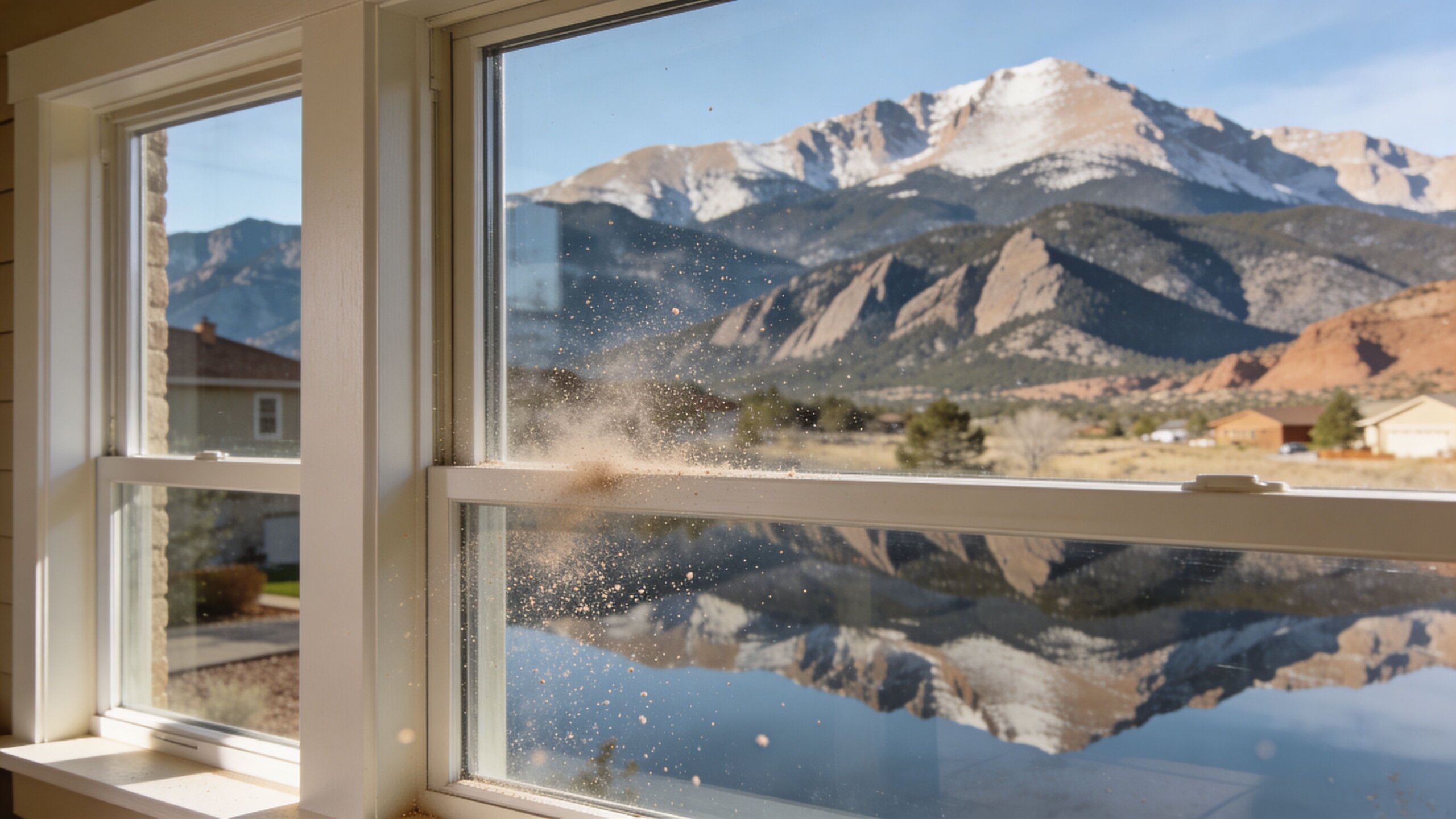
Colorado Springs gives you bright views and rough cleaning conditions at the same time. Generic window-cleaning advice usually says to avoid direct sunlight, but it often skips the local reasons that streaks keep showing up here. Existing coverage also misses how Colorado’s high altitude, intense UV, and hard water mineral content affect streak formation and why some cleaners fail in these conditions, as noted by this local-relevance window cleaning report.
Sun changes everything
On a cool-looking morning, the glass can still heat up quickly. When cleaner flashes off too fast, it doesn’t have time to lift grime evenly. What’s left behind is the part you notice later: residue, drag marks, and dried edges.
That’s why a window can look acceptable in shade and then suddenly show every mistake once the sunlight hits it. In Colorado Springs, timing matters almost as much as product choice.
Hard water leaves behind more than spots
Our local water is another reason the best streak free window cleaner isn’t just a spray bottle from the shelf. Mineral-heavy water can dry on the glass and leave visible spotting. If that happens repeatedly, especially from sprinklers, those deposits build into a stubborn film that regular maintenance cleaning won’t fully fix.
A simple comparison helps:
| Local condition | What happens on the glass | What usually works better |
|---|---|---|
| Intense sun | Cleaner evaporates too fast | Work in shade and use controlled moisture |
| Hard water | Mineral spots and haze remain | Distilled or purified water methods |
| Wind and dust | Freshly cleaned glass gets contaminated | Better prep and edge detailing |
| Seasonal pollen | Film sticks to glass and screens | Full cleaning, not glass-only wiping |
Dust and pollen don’t stay on the sidelines
A lot of streaks blamed on cleaner are really dirt-management issues. Colorado Springs gets wind, dust, and seasonal pollen that settle on the frame and screen first. If those aren’t removed before washing, they get dragged back onto the pane.
Clean windows start with dry soil removal. If loose debris stays in the frame, it turns into slurry as soon as moisture hits it.
That’s one reason interior window cleaning and exterior window cleaning are often more involved than people expect. The glass is only one part of the job. Screens, sills, and tracks affect the final look too, especially when sunlight highlights every corner.
Your Toolkit for a Flawless Finish
On a Colorado Springs afternoon, a window can look clean from the kitchen and streaked the second the sun hits it from the side. That usually comes back to the toolkit, not elbow grease. Good results depend on controlling how dirt gets lifted, how water stays on the glass, and how cleanly that water comes off before our dry air and strong sun bake the residue in place.
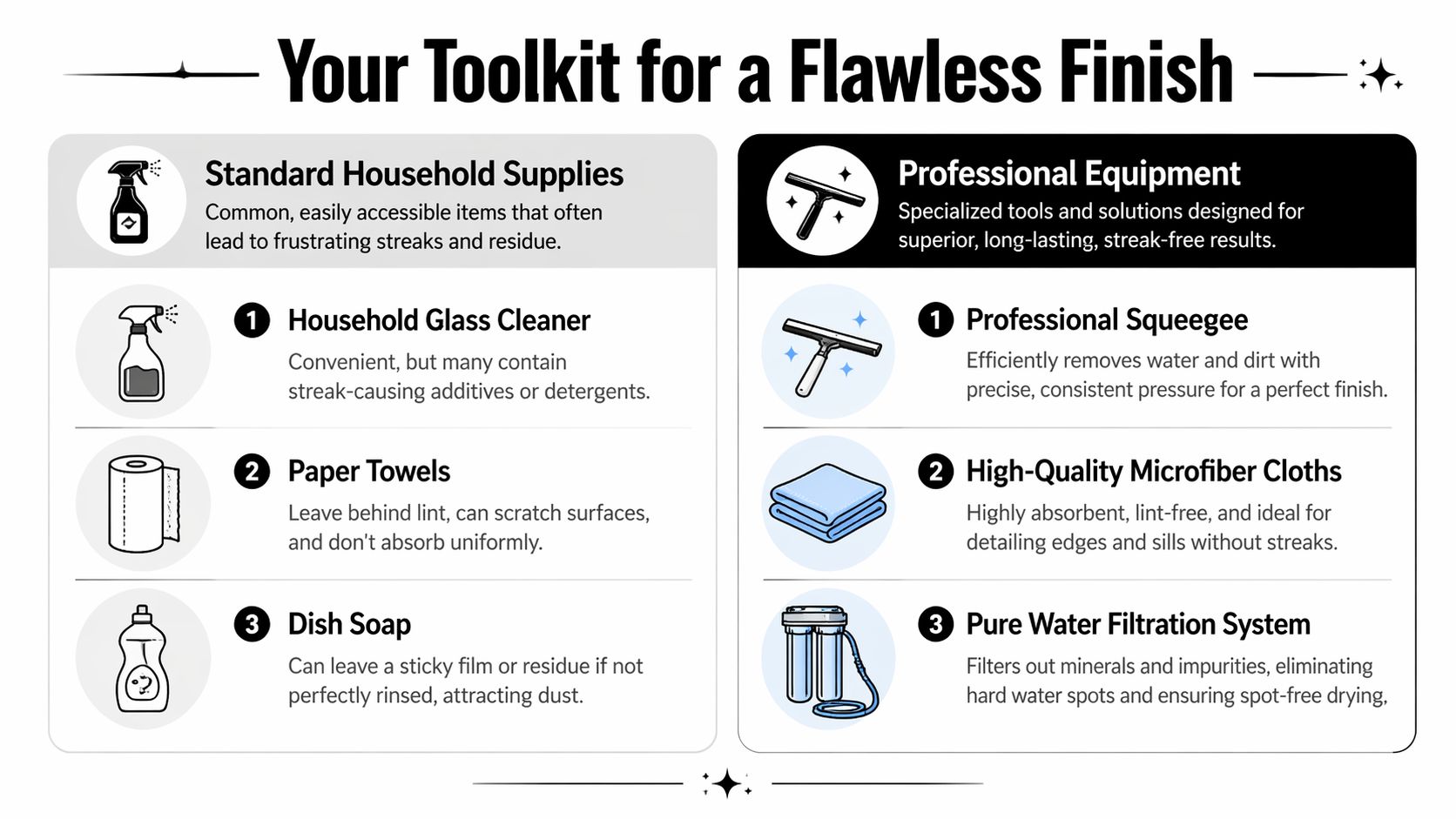
What common household supplies do well and where they fall short
For quick bathroom mirrors or a fingerprint near the patio door, basic supplies can do the job. On full-size windows, they usually create extra work.
Paper towels shed lint. General-purpose sprays often flash off too fast in direct sun. Tap-water mixes can leave light mineral marks, especially in areas of town where hard water is more noticeable. A heavy hand with the spray bottle also sends dirty runoff into the edges and lower frame, which then gets dragged back onto the glass during detailing.
Dish soap is another mixed bag. A small amount can help a scrubber glide, but too much leaves a slick film that shows up as haze once the light changes. I see that a lot on west-facing glass here, where late-day sun exposes every mistake.
What pros use instead
A better kit is not complicated. Each piece just needs a clear job.
- Professional squeegee for removing water evenly, instead of smearing it across the pane
- Microfiber scrubber or washer for loosening pollen, film, and traffic grime without scratching
- Lint-free detailing cloths for drying edges and corners where water likes to hide
- Extension poles for second-story reach and safer ground-based work
- A bucket with a measured mix so the solution stays consistent from window to window
- Purified or distilled water when spotting is a concern
Microfiber earns its place because it holds soil instead of pushing it around. Good rubber on the squeegee matters just as much. Once the blade gets nicked, hardened, or rounded over, it starts leaving fine lines that look like cleaner streaks but are really tool marks.
The trade-offs that matter in real use
Better tools improve the finish, but they also ask for better habits. A scrubber that is too wet leaves extra runoff at the edges. A squeegee with too much pressure can skip or chatter. A cloth that has fabric softener on it will smear glass no matter how expensive it was.
Colorado Springs adds another wrinkle. On hot, bright days, the workable window is short. That means smaller sections, less solution on the glass, and tools that let you move with control instead of rushing. If you want a clearer explanation of how the gear and method work together, this guide on streak-free windows and the right tools and techniques lays it out well.
For upper windows and larger homes, access becomes part of the toolkit too. Cultivate House Detailing uses water-fed poles and commercial-grade squeegees for residential and commercial glass, which makes sense when the goal is consistent results on hard-to-reach windows without turning the job into a ladder problem.
The Professional Squeegee Technique for a Streak-Free Shine
A window can look clean for about thirty seconds in Colorado Springs. Then the sun hits it from the side, the glass heats up fast, and every missed line shows up at once. That is why pros focus as much on water control as on the cleaner itself.
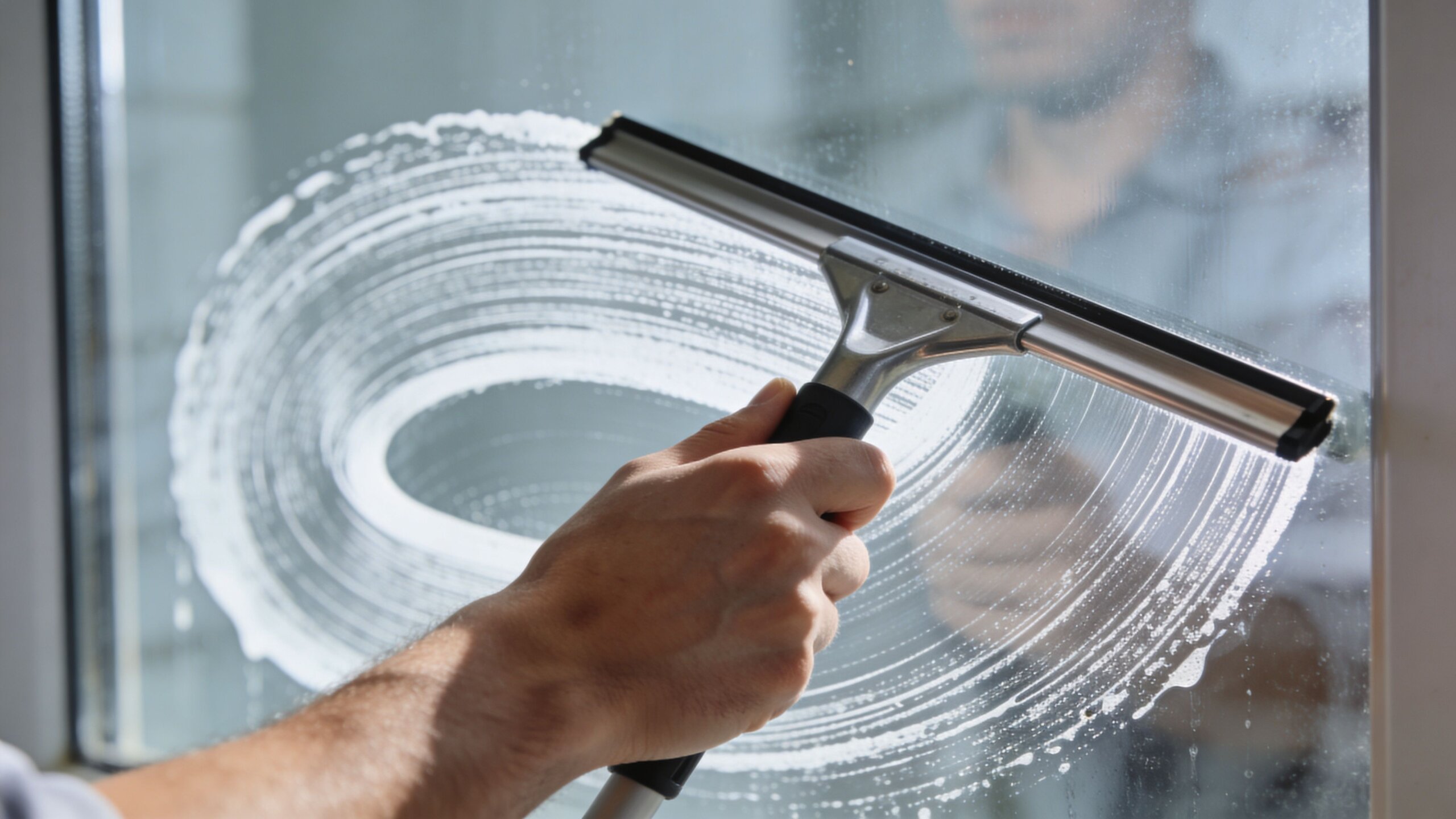
If you want the method that comes closest to a professional result, use the S-pattern squeegee technique. People searching for the best streak free window cleaner often assume the product does all the work. On real glass, the streak-free finish comes from removing the solution cleanly before it flashes dry.
Primetime Window Cleaning’s explanation of the S-pattern method gives a good basic overview. It describes the same continuous zigzag motion many professional cleaners use because it keeps the rubber in contact with the glass, overlaps the wet edge, and limits the stray lines that show up with choppy pulls.
Good prep makes the pull easier
Start with the frame and edges. If dust, pollen, or screen debris is sitting there, the scrubber drags it onto the pane and turns a simple wash into a smear.
Use a damp microfiber cloth on the frame first, then wet the glass evenly with your cleaning solution. Keep the pane slick, not dripping. In our dry climate, too much solution runs into the edges and creeps back out later. Too little causes the squeegee to chatter and skip.
A simple mix of distilled water, white vinegar, and a tiny amount of dish soap can work well for maintenance cleaning. Distilled water helps in Colorado Springs because hard tap water leaves minerals behind once the moisture evaporates.
How the S-pattern works
Start in the upper corner and keep the rubber on the glass in one controlled motion as you move across and downward. The goal is to guide dirty water toward the bottom without leaving isolated wet strips behind.
Here is the method in plain terms:
- Wet the pane evenly so the rubber glides.
- Set the squeegee near the top corner with full blade contact.
- Pull in smooth S-shaped passes across and down the glass.
- Overlap each pass slightly so thin wet lines do not get left behind.
- Use light, even pressure and let the blade do the work.
- Wipe the blade regularly with a clean microfiber cloth.
A quiet squeegee is usually a happy squeegee. Chatter usually means the glass is drying too fast, the blade is dirty, or the pressure is too heavy.
That last point matters more at altitude. On a cool morning, you can work a larger pane without trouble. On a hot, bright afternoon in Colorado Springs, the same pane may need to be broken into smaller sections so the solution does not dry before you finish the pass.
Where DIY jobs usually pick up streaks
The common mistake is not using the wrong cleaner. It is leaving too much water behind.
Straight pulls can work on small panes, but they demand very even pressure and careful detailing along each edge. Circular wiping with towels tends to spread residue instead of removing it cleanly. Tap water can also leave spotting, especially on west-facing windows and glass near sprinklers.
Edges deserve extra attention. Water collects in the gasket, the frame corners, and along the bottom seal. If you do not catch that runoff with a detail cloth, it can slide back onto the glass after the pane looks finished. On homes with sprinkler overspray or visible spotting, a standard wash may clean the dirt but leave the mineral marks behind. For that problem, this guide on how to remove hard water stains from windows is the better next step, and a dedicated best water spot remover can help when regular glass soap is no longer enough.
A visual helps if you want to practice it
This short demo gives a useful look at the movement and pacing involved:
Why this technique matters more in Colorado Springs
Fast drying changes the job. The S-pattern gives you one continuous path to remove water before the sun bakes residue onto the pane. That is why it holds up better here than wiping around with paper towels or making a few random pulls and hoping for the best.
For homeowners doing their own window cleaning in Colorado Springs, CO, this is the first technique worth learning well. For storefronts, upper-story glass, and larger homes, it is also one reason commercial window cleaning crews get more consistent results. The method is repeatable, and repeatable is what keeps streaks from showing up at 3 p.m. when the light gets unforgiving.
Tackling Hard Water Stains and Stubborn Film
Hard water spots are a different problem than routine grime. In Colorado Springs, I see them most often on south and west facing windows that catch sprinkler overspray, dry fast in direct sun, and get hit again the next day. What starts as a few dots can turn into a cloudy film that regular glass cleaner will not touch.
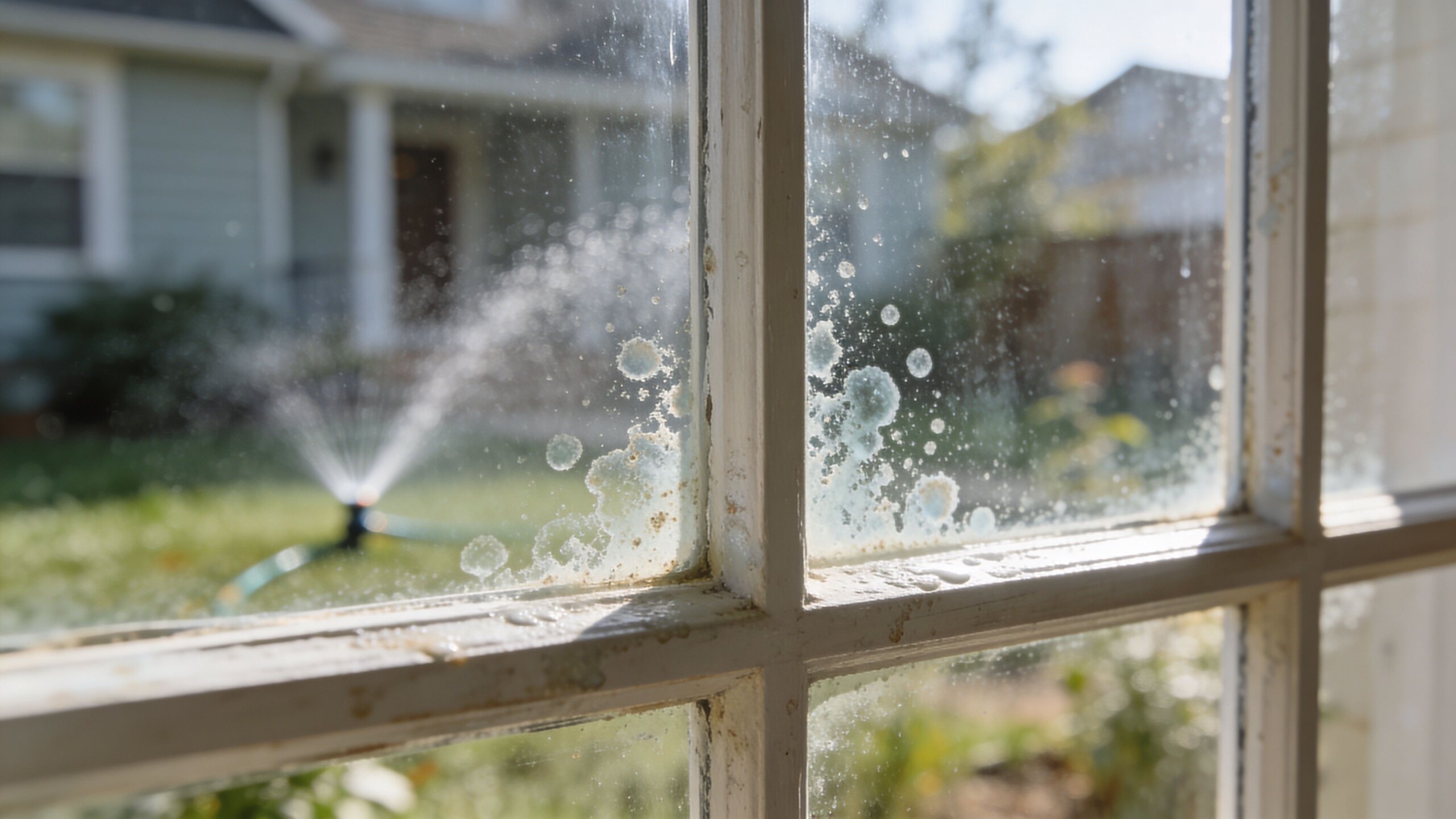
Know the difference between soil and deposits
A quick test saves a lot of wasted effort. Wash a small corner of the pane the normal way, then dry it fully. If the haze disappears, you had dirt, pollen, or traffic film on the surface. If the spotting stays in the same pattern, minerals are bonded to the glass.
That matters because harder scrubbing is usually the wrong move. On dusty exterior glass, extra pressure can drag fine grit across the surface. On older stains, it also leads homeowners to keep wiping long after the cleaner has flashed off, which is a common way to create streaks in our dry air.
What you can try and when to stop
Light mineral film sometimes responds to distilled water, a microfiber applicator, and patience. A mild vinegar solution can help on fresh deposits, especially around the edges of sprinkler patterns, but it is not a cure-all. Once the spotting has sat through enough hot afternoons, the minerals start clinging much more stubbornly.
If you want a step-by-step breakdown before trying stronger methods, this guide on how to remove hard water stains from windows lays out the safer progression. If you are comparing specialty products, this review of the best water spot remover is useful for understanding what these formulas are meant to remove.
Use this rule of thumb:
- If the glass clears up after a normal wash, stick with standard cleaning and better rinse water.
- If the marks remain but feel raised or chalky, a targeted mineral remover may still work.
- If the spots look dull, etched, or unchanged from every angle, the glass may be permanently affected.
Fresh spotting is usually a cleaning problem. Older spotting can become a restoration problem.
For upper-story windows and exterior glass that gets frequent mineral exposure, pure water systems help because they rinse without adding new dissolved solids back onto the pane. That approach makes a bigger difference here than it does in softer-water areas, especially on sun-exposed sides of the house where every leftover mineral shows.
The Cultivate House Detailing Difference
At some point, most homeowners stop asking what bottle to buy and start asking a better question. Who can get this done safely, cleanly, and without turning it into a full-day project?
That’s where hiring a local crew makes sense. Good residential window cleaning doesn’t just improve the glass. It saves you ladder work, helps you avoid trial-and-error with products, and gives you a complete result that includes the details people notice right away.
What a full service visit should handle
A proper service should address more than visible smudges in the middle of the pane. Windows look clear when the whole system is cleaned together.
That often includes:
- Interior window cleaning for fingerprints, film, and everyday buildup
- Exterior window cleaning for dust, weather residue, and water spotting
- Screen cleaning so debris doesn’t blow back onto fresh glass
- Track and sill cleaning so the finished window looks complete
For homeowners in Colorado Springs, Manitou Springs, Monument, and Black Forest, local experience matters because the cleaning approach has to match local conditions. A method that works in a mild, humid climate can fail fast here once sun and minerals get involved.
Why property owners hire out this job
Some jobs are awkward. Tall foyer windows, second-story panes over landscaping, storefront glass that needs to stay presentable, and office windows that can’t be left streaky before opening hours all require more than enthusiasm.
For commercial window cleaning, consistency is the main value. Businesses want glass that looks clean from the curb and from inside the building. For homeowners, the win is different. More natural light, better curb appeal, and less frustration every time the sun hits the windows.
There’s also peace of mind in having someone else handle the process correctly. No guessing on cleaners. No balancing on ladders. No doing the same window twice because the edges bled back onto the pane.
What to expect from a local Colorado Springs provider
A strong local service should be punctual, clear about scope, and comfortable working on homes and buildings with the access challenges common in the Pikes Peak region. It should also be able to tell the difference between ordinary grime, hard water residue, and glass that may already be etched.
That’s the practical difference with Cultivate House Detailing. The service is built around streak-free window washing for local homes and businesses, including upper-story work, with related services like screen cleaning and track cleaning so the end result looks complete rather than partial.
If you’re searching for window cleaning near me and you’re tired of chasing streaks, the best solution usually isn’t a stronger spray. It’s a cleaner matched to the glass, water that won’t leave minerals behind, and a process done by people who work in Colorado Springs conditions every day.
If your windows still look cloudy after DIY cleaning, or you’d rather skip the ladders and get a professional finish the first time, contact Cultivate House Detailing to request a quote for window cleaning in Colorado Springs, CO and nearby communities. Whether you need residential window cleaning, commercial window cleaning, screen cleaning, or help with hard water buildup, you’ll get clear communication and a service plan built for local conditions.
Prefer to leave it to a professional? Cultivate House Detailing offers residential window cleaning in Colorado Springs. Get a free quote.
Based in Colorado Springs — see our window cleaning services in Colorado Springs.