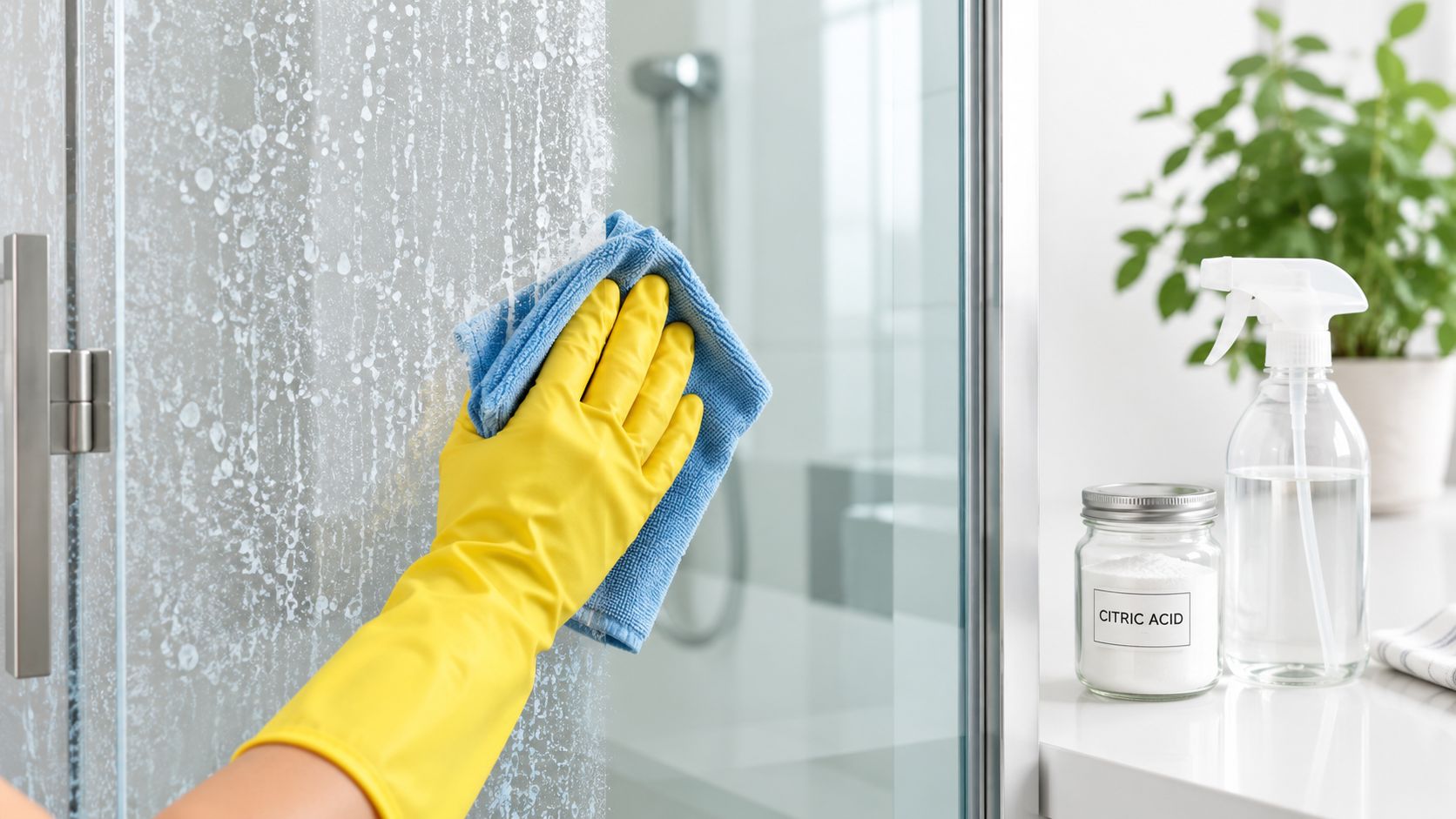
You know the feeling. The light is good, the mountains are out, and the view from your living room or office should look incredible. Instead, the glass shows streaks, dust, dried sprinkler spots, and that hazy film that only seems to appear once the Colorado Springs sun hits it.
That's where most frustration with professional window cleaning starts. A window can look fine at first glance and still fail where it matters most. High-altitude sunlight, windblown dust, seasonal buildup, and hard water all expose shortcuts fast. What looked “clean enough” in the shade can look messy by noon.
That gap between “looks okay” and “finished right” is where cleaning quality control matters. For homeowners and property managers searching for window cleaning in Colorado Springs, CO, the crucial question isn't just who will wash the glass. It's who has a system to make sure the work is checked, verified, and consistent from one visit to the next.
The Difference Between Clean and Professionally Clean
A lot of homes in Colorado Springs are built around the view. Big front windows, tall entry glass, back patios facing the mountains, and upstairs panes that catch every bit of afternoon light. When those windows are dirty, you notice it right away. When they're cleaned poorly, you notice it even more.
The problem is that “clean” often gets treated as a visual guess. Someone wipes the glass, steps back, and calls it done. Then the sun shifts, and streaks show up. A sprinkler leaves mineral spots on the lower panes. Dust sticks to damp edges. Dirty water dries along the frame. By the next day, the windows don't feel freshly cleaned at all.
Why Colorado windows are harder to get right
Colorado Springs adds a few challenges that make streak-free window cleaning more demanding than many homeowners expect:
- Hard water exposure from sprinklers and runoff can leave stubborn spotting on exterior glass
- Strong sunlight makes residue and smudges more visible
- Wind and dust settle quickly on frames, screens, and tracks
- Tall or hard-to-reach windows make careful, repeatable technique harder with DIY tools
That's why a professional result isn't just about effort. It's about standards.
Clean glass is the outcome. Quality control is the process that gets you there consistently.
A true residential window cleaning or commercial window cleaning service doesn't rely on a quick glance and good intentions. It defines what finished work should look like, uses a repeatable method to get there, and checks the result before the job is considered complete.
For homeowners searching window cleaning near me, that difference matters. It's the difference between a one-time improvement and a service you can count on season after season. It also matters for property care. Regular exterior window cleaning helps remove dirt, grime, and pollutants, and standard exterior cleaning should happen 2–4 times per year to prevent buildup that can obscure visibility and degrade the glass over time, according to Valcourt's guide to professional window cleaning.
What professional standards feel like on site
You can usually tell when a crew is working from a system instead of winging it.
They don't only focus on the center of the glass. They pay attention to edges, frames, screens, and tracks. They notice where runoff might drip onto an interior sill. They work in an order that prevents re-soiling areas they already finished. And they don't assume that because a window looked good during cleaning, it will still look good after the light changes.
That's the heart of cleaning quality control. It turns window washing from a basic chore into a dependable service.
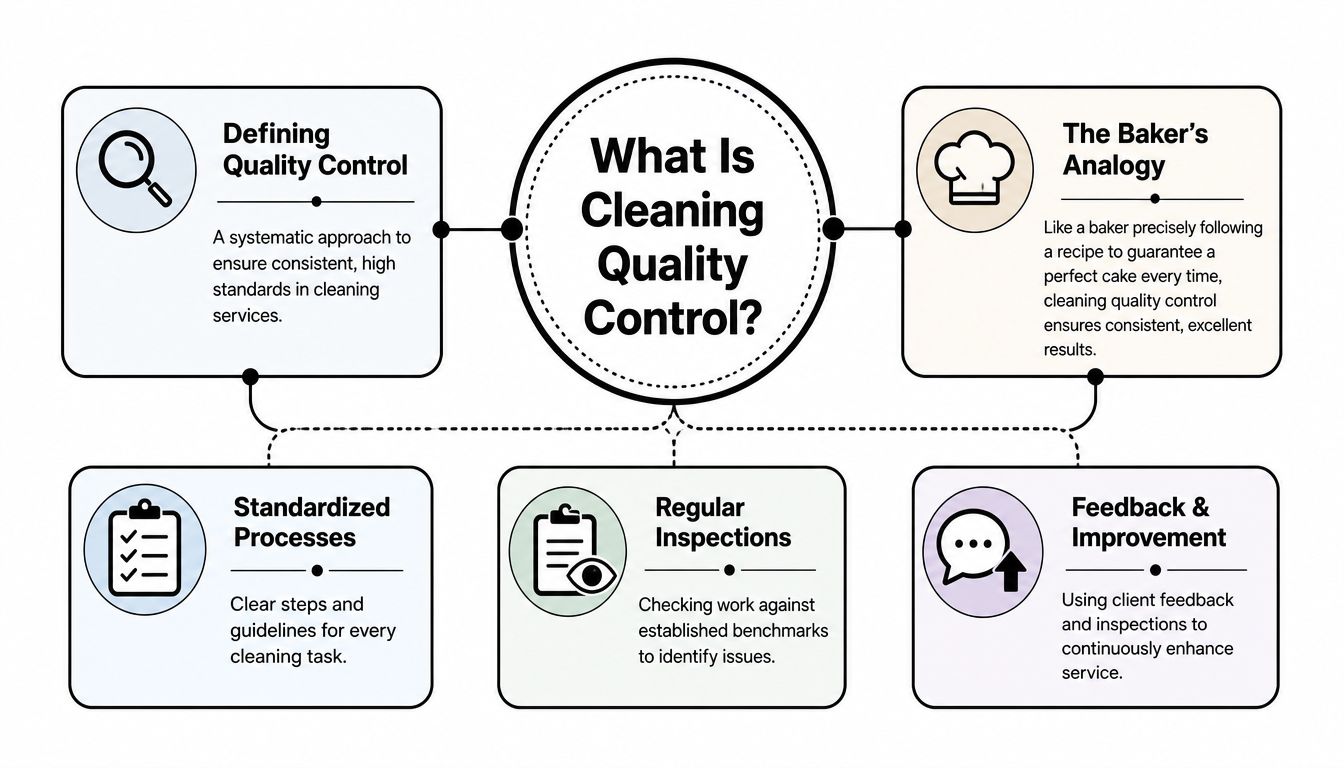
What Is Cleaning Quality Control
Consider baking. A baker who follows a tested recipe can produce the same cake over and over. A baker who throws ingredients together by feel might get lucky once, then miss the mark the next three times.
Cleaning works the same way. If the result depends on mood, memory, or whoever showed up that day, consistency disappears. If the work follows a standard, a process, and a final check, the result becomes predictable.
In commercial cleaning, quality control is defined as the systematic comparison of actual cleaning outcomes against documented specifications, where inspections yield an overall compliance percentage. This replaces subjective assessments with a formal system of checks and digital reports, according to the National Janitorial Authority's explanation of janitorial quality control methods.
A clear standard
First, the company has to decide what finished work means.
For windows, that doesn't just mean “glass was touched.” It means the service has a defined standard for visible clarity, residue-free surfaces, clean edges, and follow-through on related areas like screens or tracks when those are included. A documented standard is what keeps one technician from calling a job done while another would still see obvious misses.
A similar principle shows up in other home service trades. If you want a good example of how standards and training shape workmanship, this air duct cleaning certification guide is a useful reference point.
A repeatable process
Second, good cleaning quality control depends on a repeatable method.
That means the crew follows a sequence instead of improvising. They know which surfaces get handled first, how tools are used, how dirty water is controlled, and what details need special attention in direct sun or on mineral-stained glass. Process matters because it reduces avoidable mistakes.
Here's the practical version:
- Define the finish line so everyone knows what “done right” looks like.
- Use the same proven workflow so quality doesn't depend on guesswork.
- Verify the result instead of assuming the work passed.
A consistent check
The third piece is verification. At this juncture, many basic services often fall apart.
A company can have good intentions and still miss issues if nobody checks the finished work against the standard. That's why modern quality programs use inspections, checklists, and digital reporting. The goal isn't paperwork for its own sake. The goal is to replace “I think it looks fine” with a more objective review.
Practical rule: If quality depends on memory alone, quality will drift.
For homeowners and business owners looking for window cleaning in Colorado Springs, CO, this matters because local conditions punish inconsistency. Dust, water spotting, and strong light make flaws easy to miss during the job and easy to notice later. Quality control closes that gap.
Why DIY and Basic Services Fall Short
The decision to hire out interior window cleaning or exterior window cleaning isn't driven by an enjoyment of spending time on ladders with a spray bottle and paper towels. Rather, it stems from the understanding that windows are easy to make wet and surprisingly hard to make flawless.
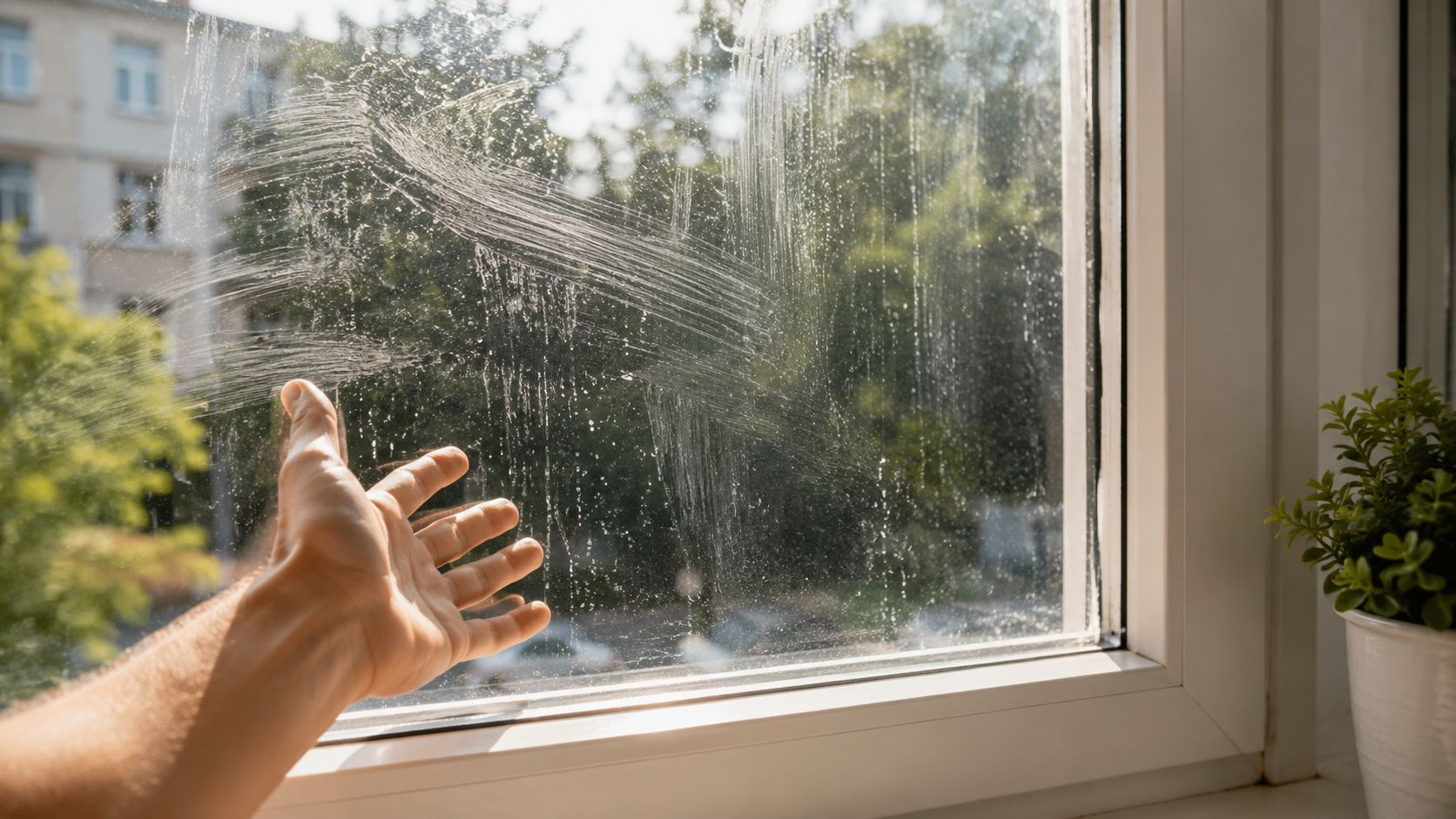
DIY window washing usually runs into the same problems. The lower panes may look decent. The upper glass gets rushed. Edges hold water. Frames stay damp. By the time everything dries, streaks and spots are still there. In Colorado Springs, hard water makes that even tougher because residue often doesn't reveal itself evenly across the pane.
The self-check problem
A lot of disappointment comes from one simple issue. People are not great at grading their own work while they're doing it.
That isn't just a homeowner issue. It shows up in service companies too. Relying on cleaners to self-score their own work inflates quality pass rates by 22–30%, masking recurring defects until a client finally complains, according to Bell Janitorial's discussion of cleaning business quality control.
That explains why cheap services can sound fine on paper and still leave you unimpressed in person. If the same person doing the work is also the only person deciding whether the work passed, missed details tend to slide.
What gets missed most often
Basic service usually misses the details that customers notice later:
- Sun-revealed streaks that don't show up until afternoon light hits the glass
- Hard water film on lower exterior panes
- Screen and track debris that makes a “clean” window still feel dusty
- Drips on sills or frames after the main glass looks finished
- Inconsistent upper-story results where access and angles are harder
For many homeowners, these issues connect to bigger exterior maintenance concerns too. If you're thinking about the long-term condition of your property, this article on how professional cleaning services extend the life of your home exterior is worth reading.
A quick visual example helps show what low-quality results often look like in practice.
Why “looks good from inside” isn't enough
Many disappointing jobs pass the easiest test. The cleaner stands in one spot, looks straight at the glass, and sees no obvious smear. But windows aren't viewed under controlled showroom lighting. They're viewed in changing sun, across rooms, from patios, from sidewalks, and at angles.
That's why low-effort checks fail. They don't account for how people experience the finished result. For those seeking professional window cleaning or window cleaning near me, that's the practical lesson. The quality problem usually isn't effort. It's the lack of an independent, repeatable verification step.
The Cultivate House Detailing Quality Control System
A reliable quality system for window cleaning in Colorado Springs, CO has to do more than wash the glass. It has to control the small points where jobs usually go wrong. That means technique, order of operations, and final verification all have to work together.
For streak-free results, the actual mechanics matter. Professional guidance states that cleaners should overlap each squeegee pass by a few inches on the previous dry portion and tilt the blade toward the remaining wet section, then use a microfiber towel to wipe residual water from the frame, as outlined in the IPC Eagle window cleaning whitepaper.
That one detail says a lot about quality control. Good results don't come from “wipe until it looks better.” They come from a specific method that prevents streaks before they happen.
The process starts before the glass
A strong system begins with the areas around the pane, not just the pane itself.
If tracks are full of debris, dirty water has somewhere to go. If screens are ignored, the glass may be clear while the overall window still looks dingy. If the order is sloppy, the crew can accidentally push grime back onto surfaces that were already finished.
For interior work, the sequence matters even more. Tracks should be cleaned first before solution goes on the glass. After exterior screens and windows are cleaned, a spot check on every single door and window helps catch issues, and tracks are double-checked on the inside so dirt hasn't leaked back in during the wet wash. That kind of sequence is what keeps a finished job from unraveling in the last few minutes.
What the checklist looks for
A quality checklist doesn't need to be flashy. It needs to be useful. The point is to inspect the job the way the customer experiences it.
| Area | Check Point | Standard |
|---|---|---|
| Glass | Visible clarity | No obvious streaks, smears, or residue from normal viewing positions |
| Glass edges | Water control | No dirty edge lines or drying marks along borders |
| Frames | Residual moisture | No leftover drips or wipe marks on surrounding frame surfaces |
| Screens | Surface condition | Dust, loose debris, and buildup removed when screen cleaning is included |
| Tracks | Debris removal | Loose dirt and visible buildup cleared before glass cleaning |
| Sills | Interior protection | No dirty runoff left behind on interior ledges or trim |
| Entry glass | Final appearance | High-visibility panes receive extra review because customers see them first |
| Upper-story windows | Finish consistency | Results match lower-level quality, not a lower standard because access is harder |
Verification has to be separate from the work
The system transitions to quality control rather than simple window washing.
The final review should not depend only on the person who just cleaned the pane. A lead technician or manager spot-checking the finished work catches things that are easy to miss in the middle of production. This matters on entry glass, patio doors, and any window where lighting or hard water makes defects more likely to show up later.
Most quality problems aren't caused by a lack of effort. They happen because nobody stopped to verify the result from a fresh set of eyes.
This mindset also influences product choices and workflow decisions. Many professionals now pay more attention to sustainability and waste reduction along with finish quality. For a useful look at that broader conversation, Fillaree's sustainable cleaning solutions offers a practical perspective for service-minded businesses.
What this solves for Colorado Springs properties
The local advantage of a real system is simple. It catches the issues Colorado creates.
Hard water spotting on lower panes. Dust settling on frames. Bright light exposing streaks that weren't obvious during the wash. Residue around patio doors and high-traffic entry glass. Multi-story windows that need the same finish quality as eye-level panes.
A checklist alone won't solve those problems. A trained process alone won't solve them either. The result improves when the process, the inspection, and the accountability work together. That's what turns residential window cleaning and commercial window cleaning into a service people trust instead of a recurring frustration.
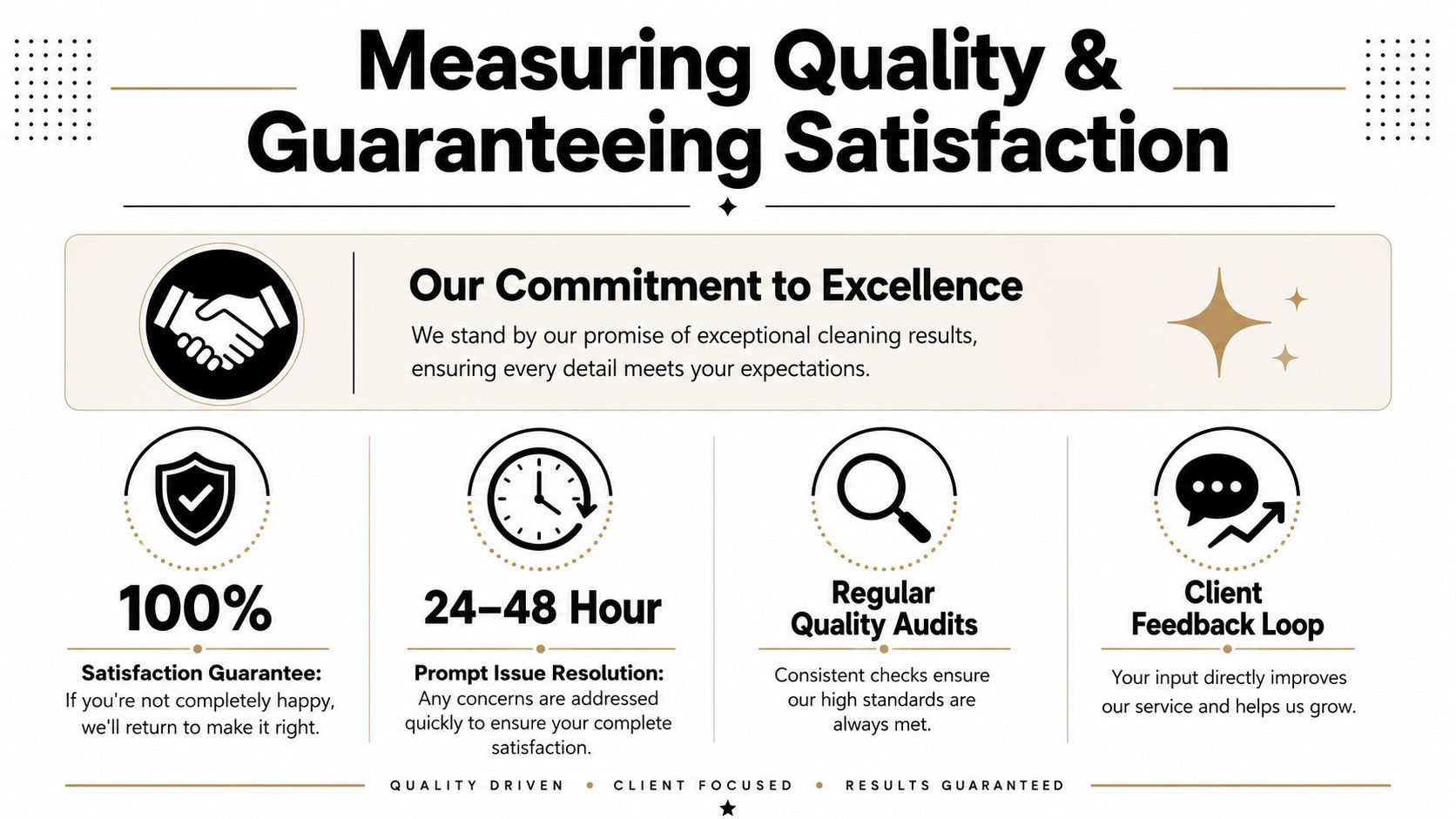
Measuring Quality and Guaranteeing Your Satisfaction
A company's standards matter. What matters more is whether those standards are measured.
The strongest cleaning programs don't rely on vague promises. They track performance with practical indicators like inspection pass rates, re-clean request rates, response times to client complaints, and client satisfaction gathered through surveys. In top-tier systems, monthly or quarterly service reports and review meetings help keep those feedback loops active, and digital audit tools with timestamped photos and real-time dashboards are now standard for transparency and rapid issue resolution, according to GoAudits' guide to cleaning standards.
Why measurement protects the customer
For a homeowner or business owner, internal tracking might sound like back-office detail. It isn't. It directly affects your experience.
If a company measures pass rates, it knows whether crews are finishing to standard. If it tracks re-cleans, it sees where the process is breaking down. If it responds quickly to complaints and records what happened, recurring issues are easier to fix instead of repeat.
That's the difference between a team that shrugs off mistakes and a team that learns from them.
What accountability should look like
A dependable service should have a simple answer to one question. What happens if something is missed?
The right answer is not a debate. It's a correction process. The issue gets reviewed, the problem gets addressed, and the work gets brought up to standard. That's what quality control is for. Not just proving when things went right, but creating a clean path to fix things when they didn't.
Customer-first standard: If a company takes quality seriously, it should be easy to report an issue and easy to get it resolved.
For customers who want a closer look at how that kind of accountability works in practice, this page on service quality assurance gives a helpful overview.
Good reporting builds trust
This matters even more for recurring commercial window cleaning and maintenance work. Property managers and business owners need consistency over time, not just one strong visit. Review meetings, documented inspections, and photo-backed audits help everyone stay aligned without turning the service into a paperwork exercise.
For window cleaning near me searches, this often gets overlooked. People compare price, availability, and reviews. Those are important. But the companies that hold quality over time usually have one more thing in place. They measure what happened after the water dries.
Experience the Difference of True Quality in Colorado Springs
The clearest windows usually come from the least dramatic process. Good tools. Trained technique. A checklist that covers more than the obvious. A final review that doesn't rely on guesswork. That's what separates a basic wash from work that holds up in Colorado Springs light.
For interior jobs, details matter in a very practical order. Tracks should be cleaned first before solution touches the glass. After screens and exterior windows are handled, every door and window should get a spot check, and interior tracks should be checked again so grime didn't wash back in during the process, as shown in this window cleaning quality control walkthrough on YouTube.
What homeowners and businesses should expect
If you're hiring professional window cleaning in Colorado Springs, CO, you should expect more than someone who can make the glass look better for a few hours.
You should expect:
- A clear scope of work that tells you whether the service includes glass only or also covers screens, tracks, and sills
- Consistent workmanship on both easy-to-reach windows and difficult upper-story glass
- Respect for the property including attention to runoff, interior surfaces, and surrounding trim
- A final check that catches issues before you do
- Straightforward communication if weather, access, or hard water staining affects the service plan
Why this matters beyond appearance
Clean windows improve curb appeal. They also change how a home feels from the inside. More natural light comes through. Views feel open again. Entry glass looks cared for. Commercial storefronts and office windows create a sharper first impression.
There's a maintenance benefit too. Regular exterior window cleaning, screen cleaning, and track cleaning help prevent buildup from turning into a bigger restoration problem later. That's especially useful in nearby service areas where wind, dust, and irrigation exposure can keep reintroducing grime between visits.
The next step is simple
If you've dealt with streaks, missed corners, or service that looked good until the sun came out, you don't need more trial and error. You need a window cleaning company that treats quality as a system.
That applies whether you need residential window cleaning, recurring commercial window cleaning, interior window cleaning, or seasonal window washing for a home that's due for a reset. In Colorado Springs and nearby communities such as Monument and Black Forest, the best results come from crews who know what to look for and how to verify it before they leave.
If you're ready for clearer views, cleaner glass, and a service process that doesn't rely on guesswork, contact Cultivate House Detailing for a quote. Whether you need window cleaning in Colorado Springs, CO for your home, storefront, office, or multi-story property, the team can help you schedule service, answer questions, and get your windows back to a professional standard.
Want it handled by a local crew? Cultivate House Detailing offers residential window cleaning in Colorado Springs. Get a free quote.