Dirty second-story windows usually start as a small annoyance. You notice dust in the morning light, sprinkler spots when the sun hits the glass, or that hazy film that makes the Front Range look a little duller than it should. Then Saturday comes, and the simple idea of cleaning them turns into a question of ladders, poles, streaks, and whether this is really the project you want to tackle yourself.
Around Colorado Springs, that decision gets harder fast. High-altitude sun dries glass quickly, local hard water leaves mineral residue, and upper windows are rarely forgiving if your technique is off. Homeowners searching for window cleaning near me, window cleaning in Colorado Springs, CO, or reliable professional window cleaning usually aren't just looking for cleaner glass. They're looking for a safe way to deal with a frustrating job and get a result that lasts.
Your Gateway to Colorado Views Deserves to Be Clear
If your home faces Pikes Peak or catches that warm evening light off Garden of the Gods, clean glass changes the way the whole house feels. Natural light looks brighter. Rooms feel sharper. Even the exterior looks more cared for from the street. That's why second-story windows bother people so much when they get dirty. They sit right in your line of sight, but they're awkward enough that many homeowners put them off.
A common pattern goes like this. The lower windows get wiped down. The inside glass gets attention. The second-story exterior stays untouched because reaching it means dealing with a ladder or a long pole, and neither option feels especially easy on a windy afternoon in Colorado Springs. By the time one decides to handle it, the glass has collected dust, bug residue, and mineral spotting that won't come off with a quick spray-and-wipe.
What homeowners usually run into
The frustration isn't just access. It's results.
- Streaks in direct sun: The glass looks clean from one angle, then the afternoon light exposes every pass.
- Hard water spots: Mineral buildup clings to upper windows, especially where irrigation overspray or runoff reaches the glass.
- Missed corners and dirty frames: Long tools can touch the center of the pane but leave edges, screens, and tracks looking half-finished.
- A project that eats a weekend: What sounds like a quick job often turns into setup, cleanup, and another round because the first try didn't come out right.
Clean windows don't just improve the view. They make the whole property look maintained.
There's also the bigger maintenance picture. If you're noticing failed seals, aging frames, or drafty windows while you clean, it can help to compare upkeep with longer-term improvements like replacement windows, especially when older units no longer clean up the way newer glass does.
For homeowners from Monument to Manitou Springs, the goal is usually simple. Get clear windows without risking a fall or spending hours fighting streaks. That's where residential window cleaning, exterior window cleaning, and detailed follow-up work like screen cleaning and track cleaning start to make more sense than a one-off DIY attempt.
Safety First Assessing the Risks of High Window Cleaning
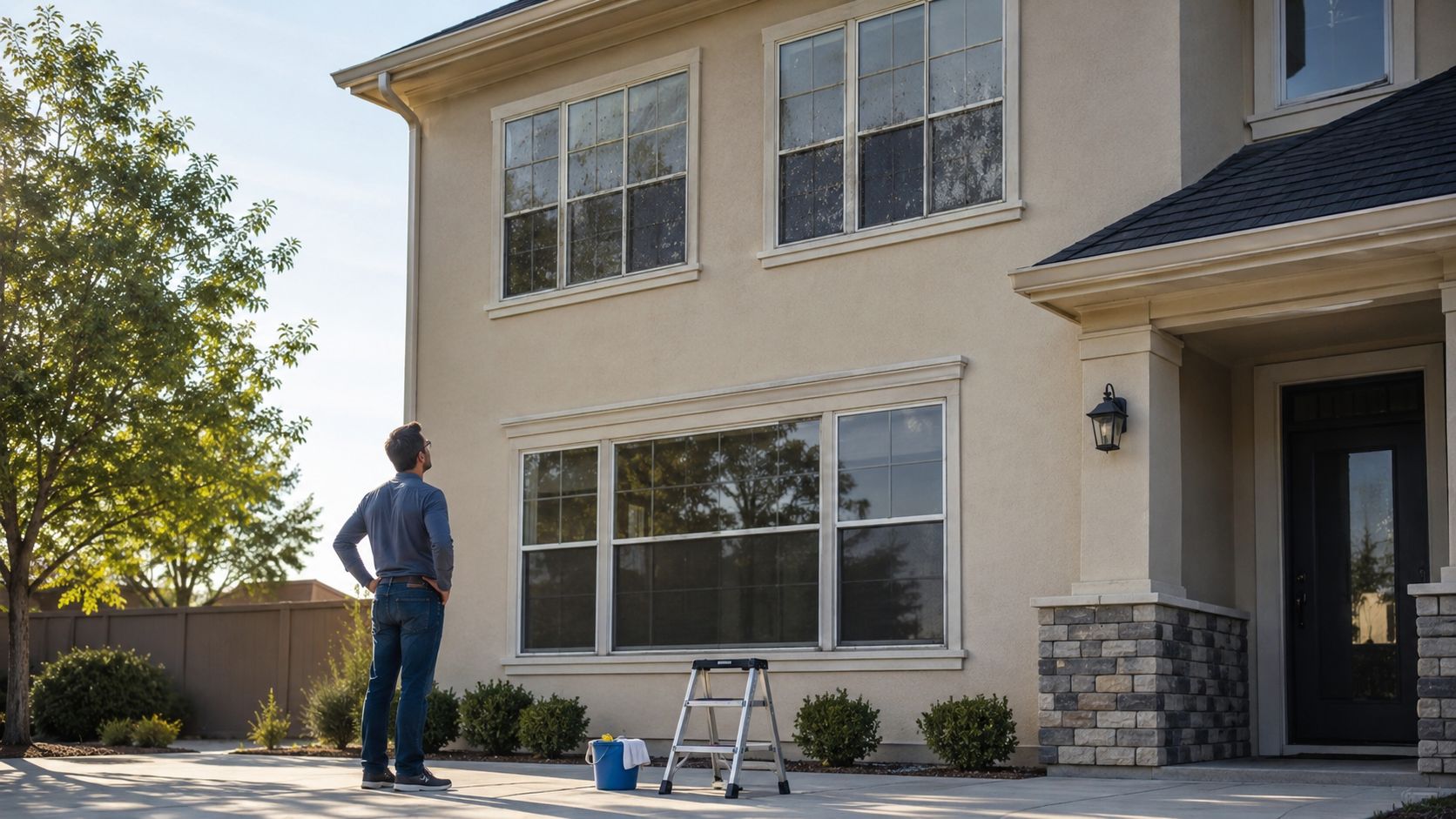
The hardest part of learning how to clean second story windows isn't the soap or the squeegee pattern. It's knowing when the setup itself has crossed into unsafe territory. The initial thought often turns to ladders, but plenty of injuries happen before anyone climbs. Uneven landscaping, decorative rock, wet concrete, shrubs below the window, and overhead lines all turn a basic cleaning job into a risk-management problem.
The numbers behind the risk
The safety data is more direct than most homeowners expect. The U.S. Bureau of Labor Statistics reports that 65% of window-cleaning injuries involve falls from inadequate ground-based equipment, emphasizing that cleaning from the ground with a sturdy pole reduces injury risk by 92% compared to ladder-based methods. Furthermore, industry data shows 78% of high-window cleaning accidents occur when DIYers use poles longer than 10 feet without proper anchoring according to Consumer Reports on cleaning high windows safely.
That matters because homeowners often assume a longer pole is automatically safer than a ladder. In practice, once a pole gets too long and unwieldy, control drops fast. The head twists. Pressure gets inconsistent. The tool starts bouncing against the frame instead of gliding across the glass.
What to check before you touch the window
A safer setup starts with the area around the house, not the glass itself.
- Keep your distance: Maintain a 10-foot minimum ground-to-pole distance and don't extend a telescoping pole beyond 10 feet without professional stabilization, as noted in the Consumer Reports guidance above.
- Check the window first: Use binoculars to confirm the glass, frame, and screen look intact before you start extending tools upward.
- Look for power hazards: Check for electrical wiring within 3 feet of the work area before raising a pole.
- Watch the footing: Decorative stone, sloped soil, and wet grass make ground-based work less stable than it appears.
Practical rule: If you can't keep the pole controlled with both hands and steady footing, the job has already become less about cleaning and more about avoiding an accident.
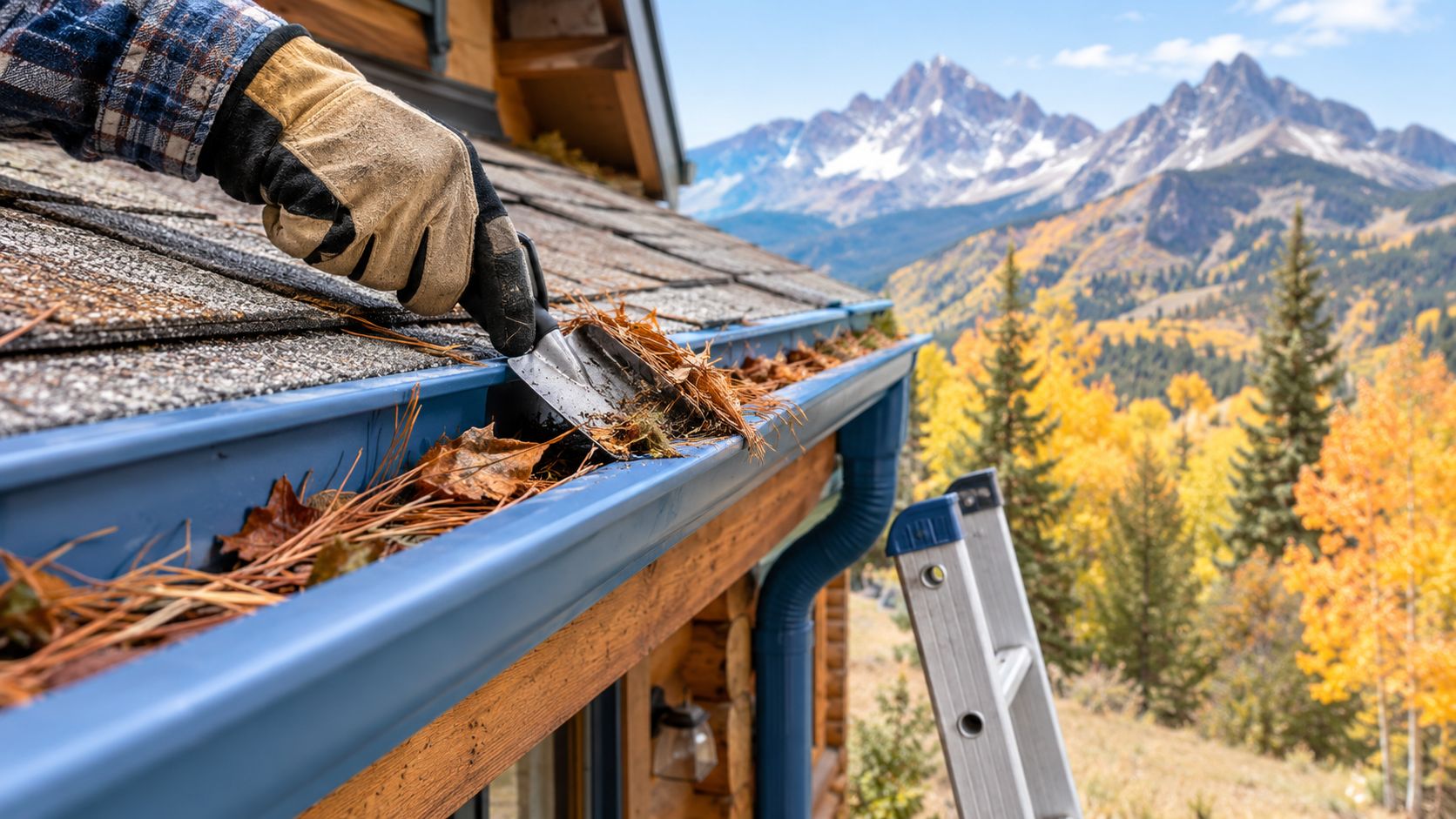
Some homeowners who are already handling exterior maintenance may find it helpful to review Superior Home Improvement's guide to gutter care, because the same issue shows up there too. Reach, balance, surface conditions, and overconfidence cause more problems than the cleaning task itself.
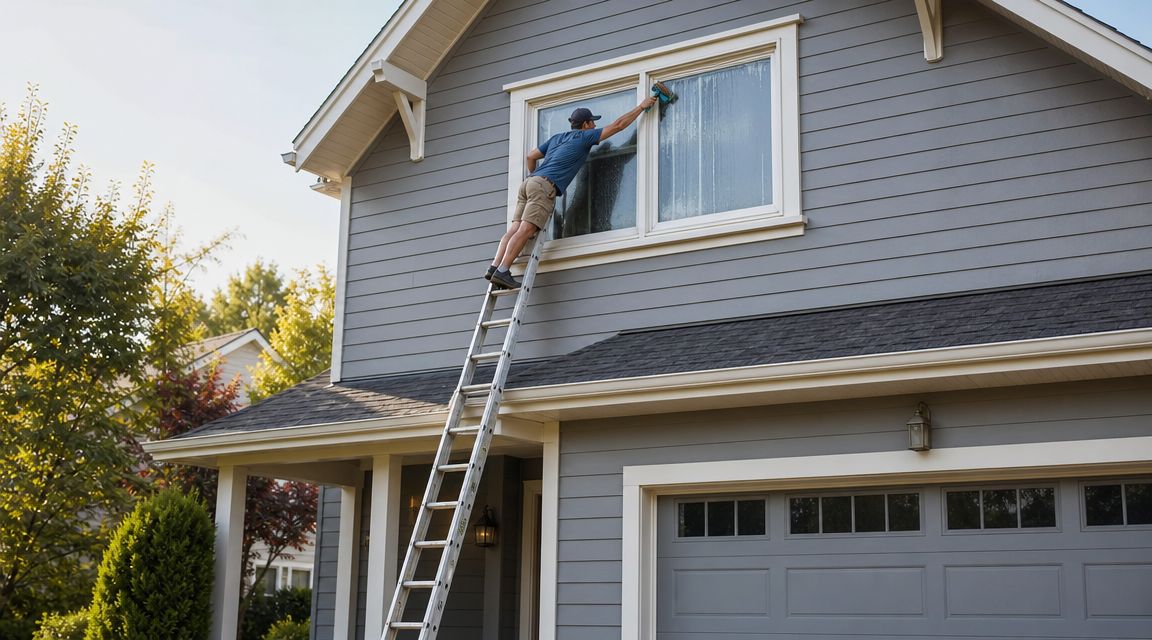
For anyone considering a ladder approach, it also helps to understand where the setup usually fails. This breakdown of window cleaning ladder considerations is useful because it puts the focus where it belongs: stability, reach, and whether the structure around the window supports safe access.
Why professionals treat access as part of the job
Professional window cleaning isn't just about cleaner glass. It's about deciding which method fits the property. Some homes allow safe ground-based access with the right equipment. Others don't. Tall entryways, narrow side yards, retaining walls, and tight landscaping often remove the margin for error.
That's why experienced crews assess the work area first, then choose tools second. Homeowners usually do the opposite, and that's where a manageable chore can turn into a bad idea.
Common DIY Methods for Cleaning Upper Windows
Most homeowners use one of two approaches. They either clean from the ground with an extension pole, or they clean from the inside if the windows tilt inward. Both methods can work. The difference is whether your windows, your lot, and your patience are a good match for them.
Method one using a pole from the ground
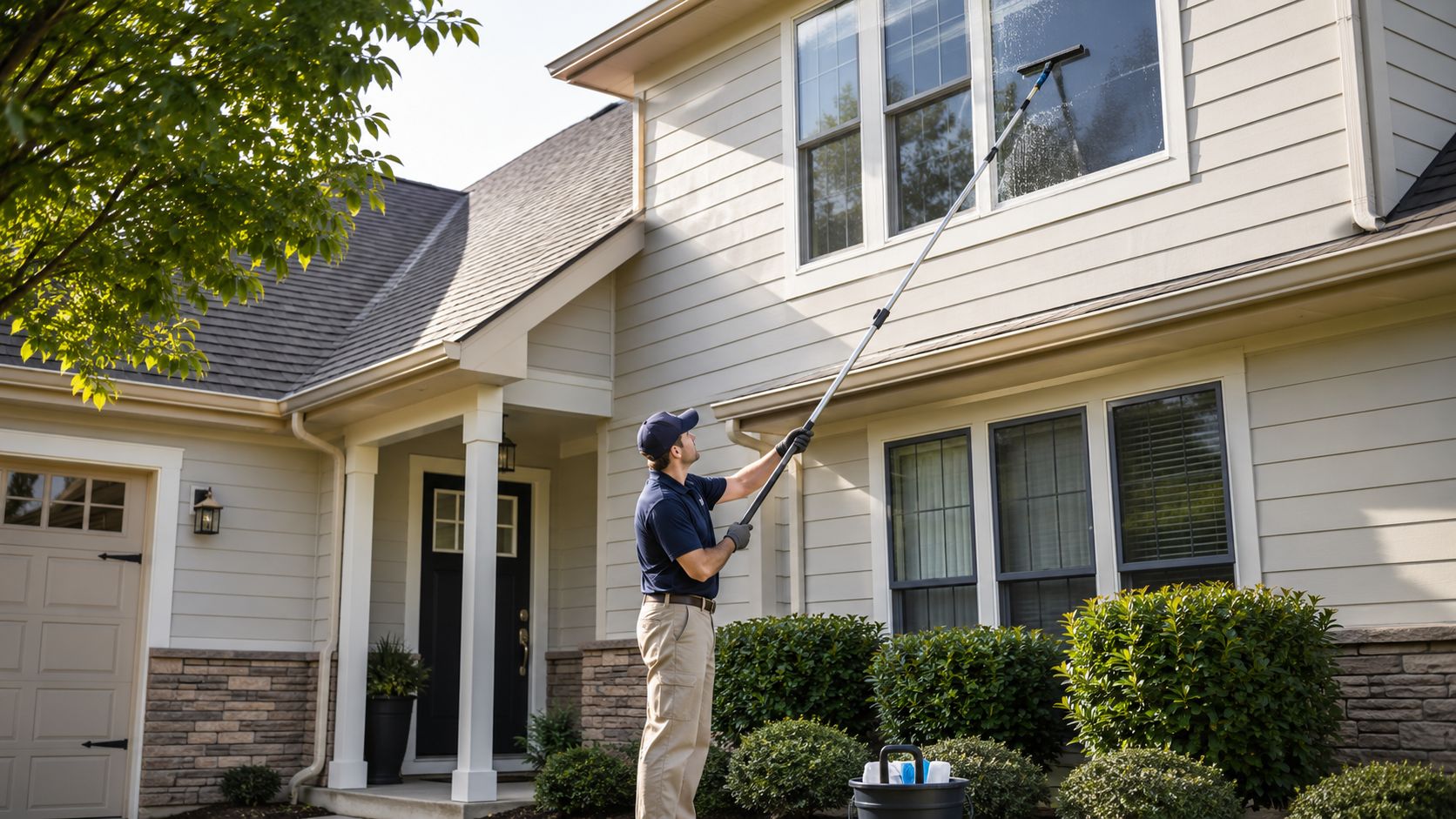
This is the usual first choice for exterior window cleaning. It keeps you off a ladder, and when the house layout cooperates, it's the most practical DIY method.
A basic setup usually includes a telescoping pole, a scrubber or microfiber head, a swivel squeegee, a bucket, and a light cleaning mix. For homemade solution, Andersen's commonly referenced approach is 2 to 3 gallons of water with only a 10-second squeeze of dish detergent, which is intended to keep soap residue low, as summarized by Purilly's guide on washing second-story windows.
A workable sequence
- Wet the glass from the top down.
- Scrub with overlapping strokes so you don't leave dry lanes.
- Pull the squeegee in controlled top-down passes.
- Wipe the blade often. A dirty blade drags debris and leaves lines.
- Check the window from different angles before moving on.
A few technique details matter more than homeowners expect. Work in shade or on an overcast stretch if you can. Keep pressure steady. Don't flood the window with soap. Most streaks come from too much residue, a dirty blade, or solution drying before you finish.
The method sounds simple on paper. The challenge is controlling a long tool overhead while trying to keep the rubber edge flat on glass you can barely inspect up close.
That's where the DIY trade-off shows up. You can clean the window, but getting it streak-free is another matter. Upper-story glass is hard to read from the ground, so many people don't notice the misses until they step back inside.
Method two cleaning from inside on tilt-in windows
Some second-story windows are much easier if they're designed to open inward. That gives you safer access to the exterior-facing side without working outside the house.
For cleaning from the inside, tilt-and-turn double-hung windows should be tilted inward by pressing top latches. This method's success hinges on using a squeegee with overlapping downward strokes and frequently cleaning the blade to prevent streaks, as each common error can reduce success probability by 30-40%, based on the demonstration in this inside window cleaning video.
If your windows function this way, the process is fairly direct:
- Remove and wash screens first: Use mild soapy water and a soft brush away from the window opening.
- Apply a light solution: Dish detergent diluted in water works, and a 1:1 vinegar-water solution is also used for glass.
- Squeegee carefully: Start high and move downward with overlapping strokes.
- Detail the blade and edges: Clean the rubber often, then wipe any edge moisture with microfiber.
- Finish the tracks: Baking soda, vinegar, a toothbrush, and a wet/dry shop vac can help pull debris out of the channel.
This video gives a visual sense of the motion and tool control involved.
Where DIY usually gets frustrating
The method that works on one house may fail on the next. Some second-story windows don't tilt inward. Some side yards are too narrow for good pole angles. Some upper panes are blocked by landscaping, rooflines, or decks.
Then there's the renter problem. In some properties, ground access is limited or legally restricted, and standard poles may still be too short for upper panes in dense layouts. Magnetic cleaners also aren't dependable for many double-hung setups without retrieval systems, which leaves renters and tenants in an awkward spot if exterior glass is inaccessible.
For homeowners and property managers, that's usually the point where professional window cleaning becomes the practical option rather than the luxury option. DIY can work. It just doesn't work consistently across every window style or property layout.
Why DIY Window Cleaning Falls Short in Colorado Springs
Generic advice about window washing usually assumes mild conditions, soft water, and enough time to fuss over the result. Colorado Springs changes that equation. The local climate leaves many homes dealing with mineral-heavy residue, and the sun at altitude dries solution fast enough to expose every small mistake.
In Colorado Springs, the local climate produces mineral-rich hard water that requires a specific cleaning approach to effectively combat the mineral buildup on second-story windows, a technique essential for streak-free results in this region, as noted by Angi's Colorado Springs window cleaning guidance. On upper windows, those spots tend to linger longer because people clean them less often and can't scrub them as precisely.
Why local conditions punish average technique
A lot of homeowners use the right general steps and still get disappointing results. That usually comes down to three local issues.
- Hard water residue: Tap water and sprinkler overspray can leave minerals behind, especially on glass that faces sun and wind.
- Fast drying: Warm, bright conditions shorten your working time and make soap or rinse water flash off before you can finish.
- Upper-story visibility: You often can't see light haze, edge residue, or small drips until the window catches the sun from inside the room.
DIY vs Professional Window Cleaning in Colorado Springs
| Factor | DIY Methods (Ladder/Pole) | Professional Service (Cultivate HD) |
|---|---|---|
| Safety | Depends heavily on footing, access, and tool control | Built around job-site assessment and tools matched to access conditions |
| Hard water stain removal | Often limited by household solution and tap-water rinse | Better equipped for mineral-related spotting common in Colorado Springs |
| Streak control | Hard to judge from the ground, especially in bright sun | More consistent process for spotting edge residue and finish defects |
| Time | Usually takes longer than expected, especially on multi-story homes | Faster workflow with service-focused equipment and repeatable technique |
| Screens and tracks | Often skipped after the glass is done | Can be handled as part of a more complete window cleaning visit |
| Overall result | Can be decent on lightly soiled windows | More reliable for second-story glass that needs a cleaner finish |
In Colorado Springs, clean glass isn't just about washing away dirt. It's about dealing with minerals and drying conditions that keep reappearing if the method isn't right.
The other issue is that homeowners compare DIY cost to the price of service without counting their own time, setup, cleanup, and the chance that they'll have to redo the work. For many households, especially with larger homes or multiple elevations, residential window cleaning starts to look less like outsourcing and more like avoiding a recurring headache.
The Professional Difference for a Perfect Streak-Free Shine
Professional results come from solving the root problem instead of just moving dirt around. On second-story windows in Colorado Springs, the root problem is often mineral residue left behind by ordinary water and inconsistent contact with the glass. That's why the equipment matters so much.
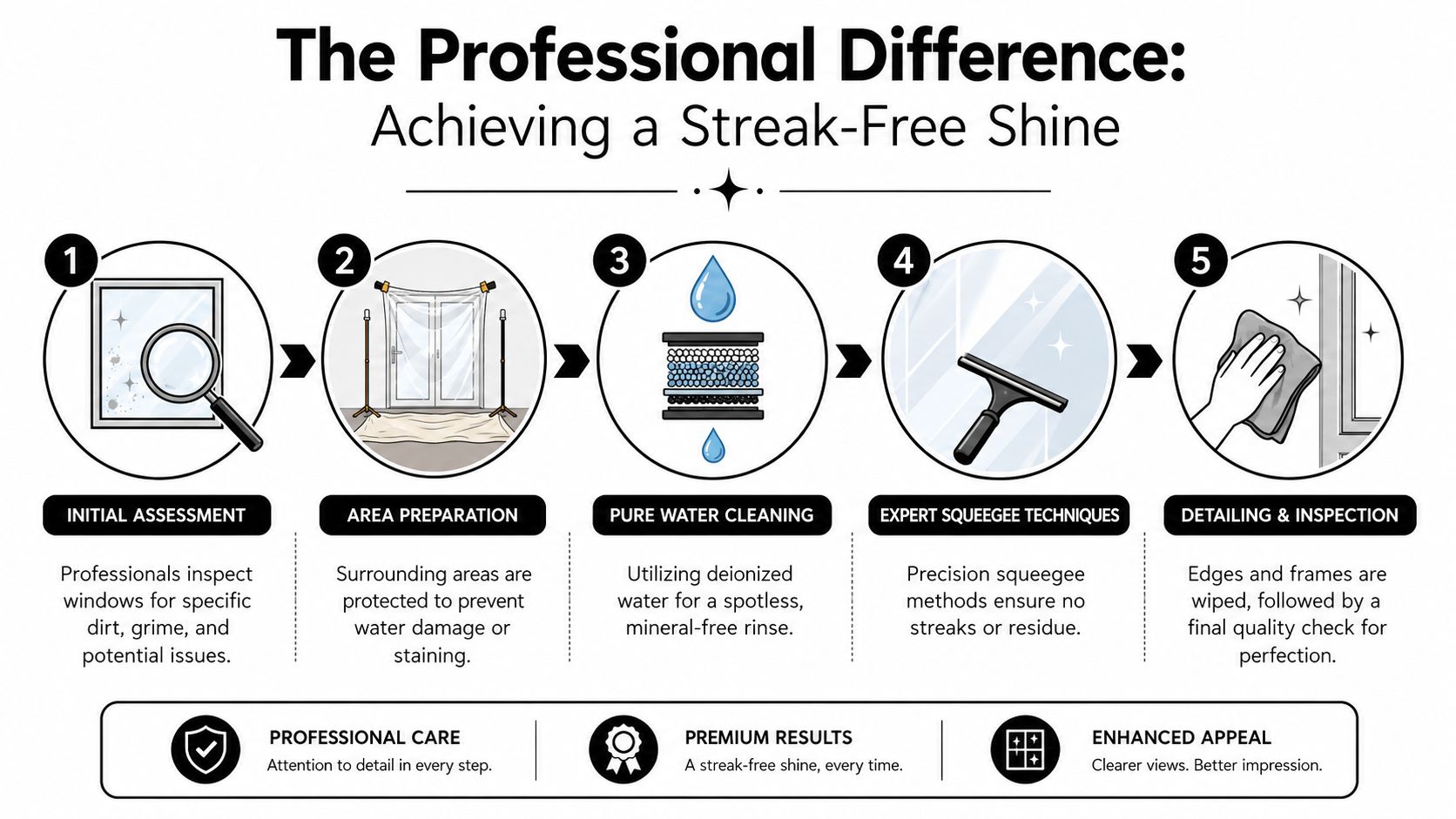
The professional gold standard is a telescopic water-fed pole that pumps purified (demineralized) water, achieving streak-free results on over 95% of applications by eliminating hard-water spotting caused by mineral deposits in tap water, as described in The DIY Playbook's overview of professional-style window cleaning.
What purified water changes
Purified water doesn't leave the same mineral deposits that create spotting on glass. With a water-fed pole system, the technician can scrub and rinse from the ground while the glass dries cleaner. That's a big difference from standard DIY rinsing, especially on upper-story panes where you can't easily go back and detail every edge.
The process also improves consistency. A professional can work top to bottom, maintain even contact, and keep tools clean enough that dirt isn't dragged from one window to the next. On larger homes and commercial properties, that repeatable process matters as much as the cleaning solution itself.
The workflow homeowners usually don't see
A clean result depends on more than one pass across the glass.
- Assessment first: Window condition, access, surrounding landscaping, and mineral buildup change the approach.
- Tool matching: Not every pane gets the same head, pressure, or finishing method.
- Controlled rinse: Purified water helps remove residue instead of depositing more of it.
- Edge detailing: Frames and edges get attention so the final look stays clean after drying.
- Final inspection: The glass is checked from the angles where streaking usually shows up.
One practical example is Cultivate House Detailing, which provides window cleaning up to the fourth story using service-specific tools rather than a homeowner ladder-and-bucket setup. That matters most on properties where second-story windows are visible from key living areas and minor streaking stands out immediately.
For homeowners who want the technical side without the guesswork, this explanation of what causes window streaks and how professionals prevent them is useful because it connects the finish on the glass to the water, weather, blade condition, and drying pattern.
A pro isn't just bringing labor to the job. They're bringing a method that's designed for the exact problems your windows have.
That's the primary difference between DIY and professional window washing in Colorado Springs. One approach can work if conditions are favorable. The other is built for the conditions you have.
When to Hire a Window Cleaner in Colorado Springs
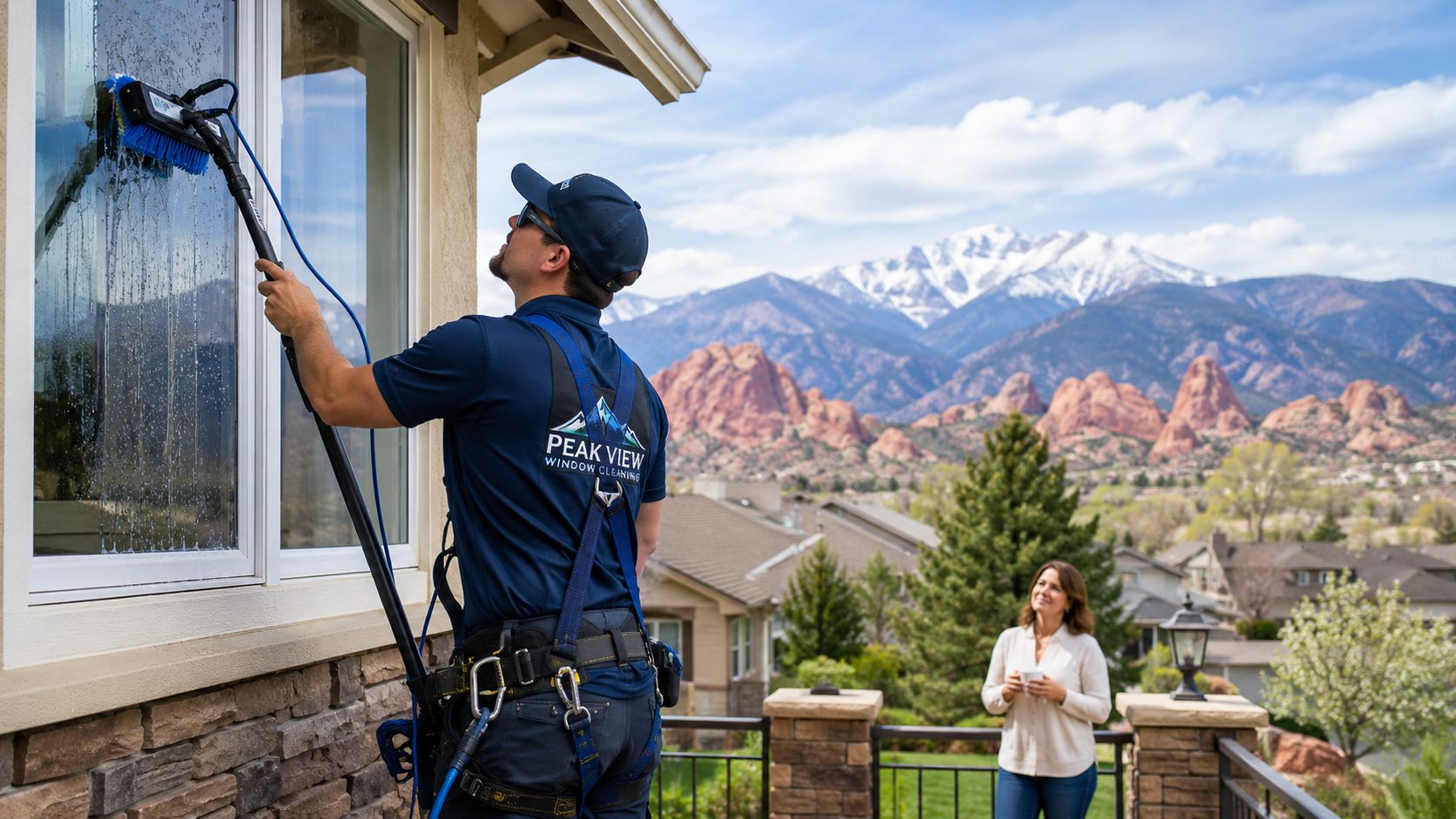
Most homeowners don't need help cleaning every pane in the house. They usually need help with the windows that are risky, time-consuming, or impossible to get right with normal tools. Second-story exterior glass checks all three boxes.
If you've tried once and still see spotting in the afternoon light, that's a sign. If the windows sit over landscaping, decks, or uneven ground, that's another. If hard water buildup has turned a simple wash into a restoration project, it's usually smarter to stop experimenting and book professional window cleaning.
Signs it's time to call for service
- Your upper windows are visibly streaked after cleaning: That usually means the water, drying conditions, or technique worked against you.
- You're dealing with mineral spotting: Colorado Springs hard water often needs a more specific approach than household soap alone.
- You want complete service: Interior window cleaning, exterior window cleaning, screens, and tracks are easier to finish in one visit than piecemeal.
- Your time matters more than the project: Losing half a weekend to a result you don't love isn't a bargain.
There's also the value side. The average cost to clean windows in Colorado Springs, CO, is around $125-$180, a price point reflecting the added labor and safety equipment required for multi-story homes. Most homes benefit from professional cleaning at least twice per year to combat seasonal buildup, according to Thumbtack's Colorado Springs window cleaning pricing.
Why regular cleaning pays off
Colorado weather doesn't leave glass alone for long. Dust, wind, winter grime, and mineral deposits build up in layers, especially on upper windows that are easy to ignore. Routine service protects the appearance of the home, improves natural light, and makes each cleaning easier because buildup doesn't have months to set.
Some of the same homeowner habits show up in broader service advice too. For example, insights from Auckland Window Services reflect a point that applies here as well: regular window maintenance is easier, safer, and more effective than waiting until the glass is heavily soiled.
If you're searching for window cleaning in Colorado Springs, CO, commercial window cleaning, or dependable window cleaning near me, the right time to hire help is usually before the job becomes a safety issue or a repeat project.
If you want clear second-story windows without the ladder stress, weekend hassle, or streaky finish, Cultivate House Detailing offers practical help for homes and businesses in Colorado Springs and nearby communities. Request a quote, schedule service, and get the glass, screens, and upper windows handled with the right equipment for the job.
Looking for a professional to take care of it? Cultivate House Detailing offers residential window cleaning in Colorado Springs. Get a free quote.
Serving Manitou Springs and the surrounding Colorado Springs area — see our window cleaning services in Manitou Springs.